Understanding fractions Adding up to 1000 with Regrouping Worksheets for Ages 5-9
18 filtered results
-
From - To
Introducing "Understanding Fractions Adding up to 1000 with Regrouping Worksheets for Ages 5-9"! These engaging worksheets are designed to help young learners, aged 5-9, master essential math skills, focusing on fractions and addition with regrouping. Each worksheet is crafted to build a solid foundation in understanding fractions and performing addition operations up to 1000. Through fun, interactive exercises, students enhance their problem-solving abilities and gain confidence in their math skills. Perfect for classroom or at-home practice, these worksheets provide a seamless and enjoyable learning experience for every young mathematician. Boost your child's math skills today!
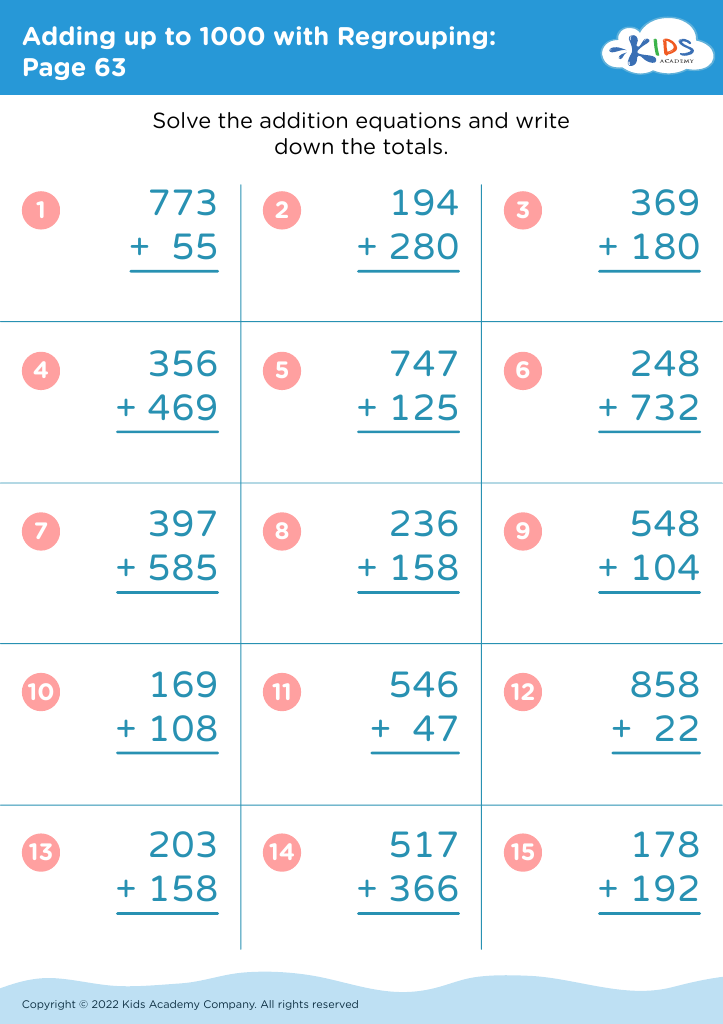
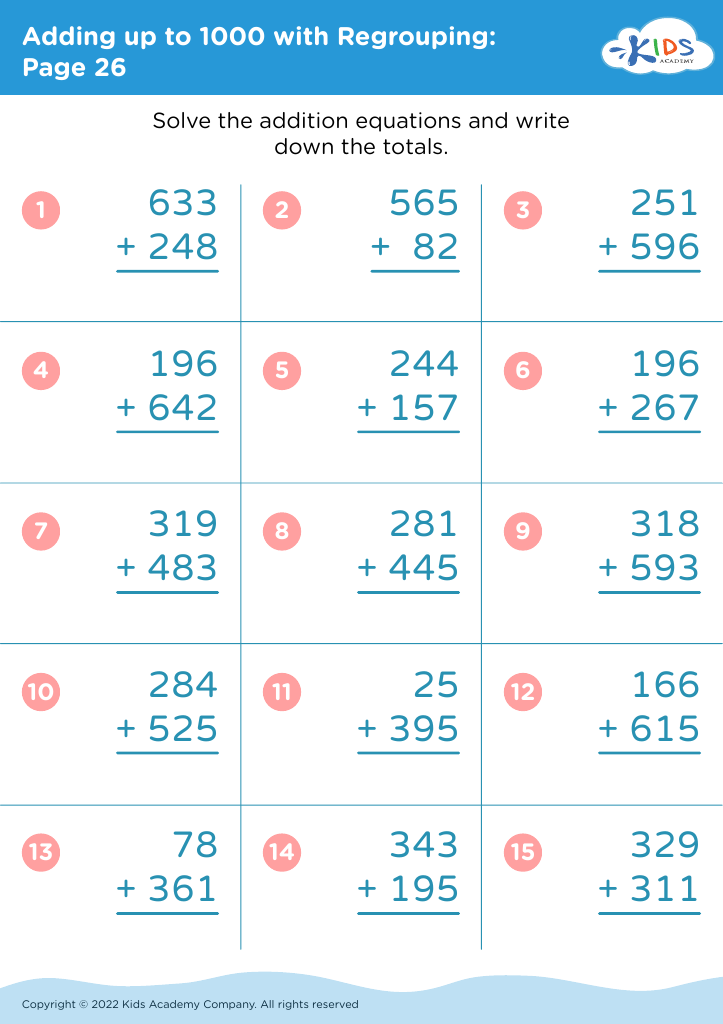
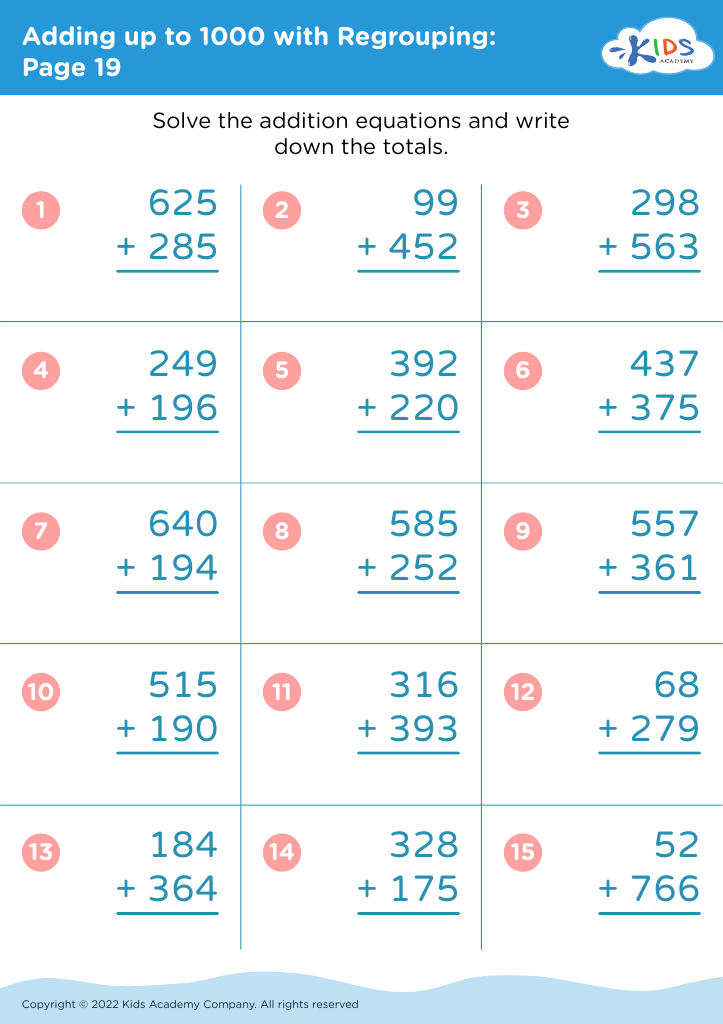
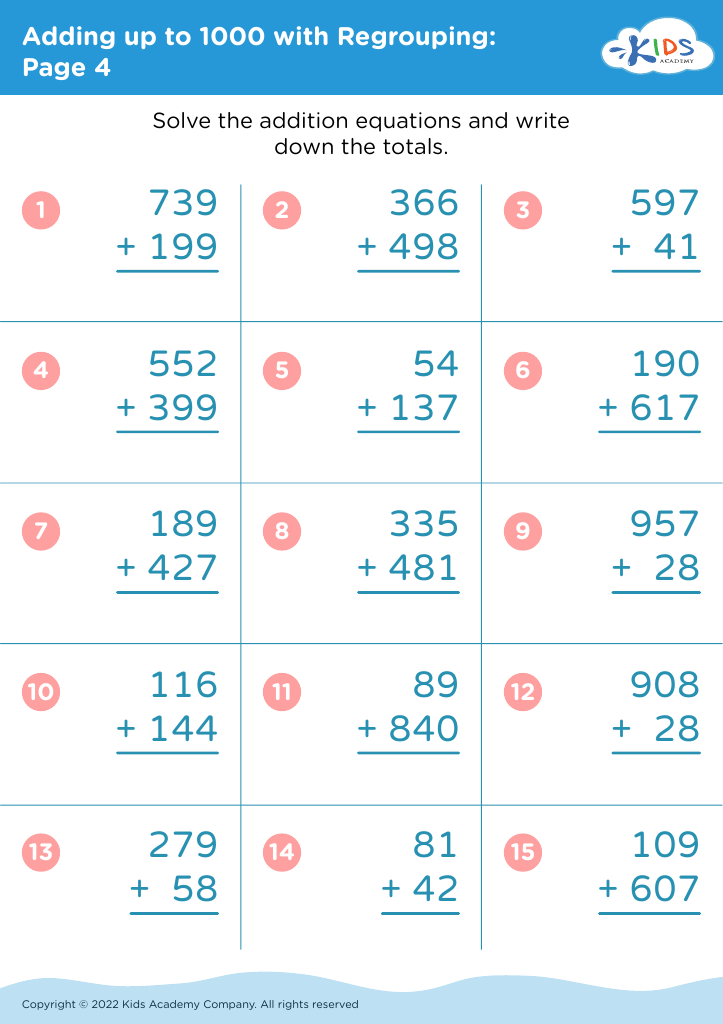
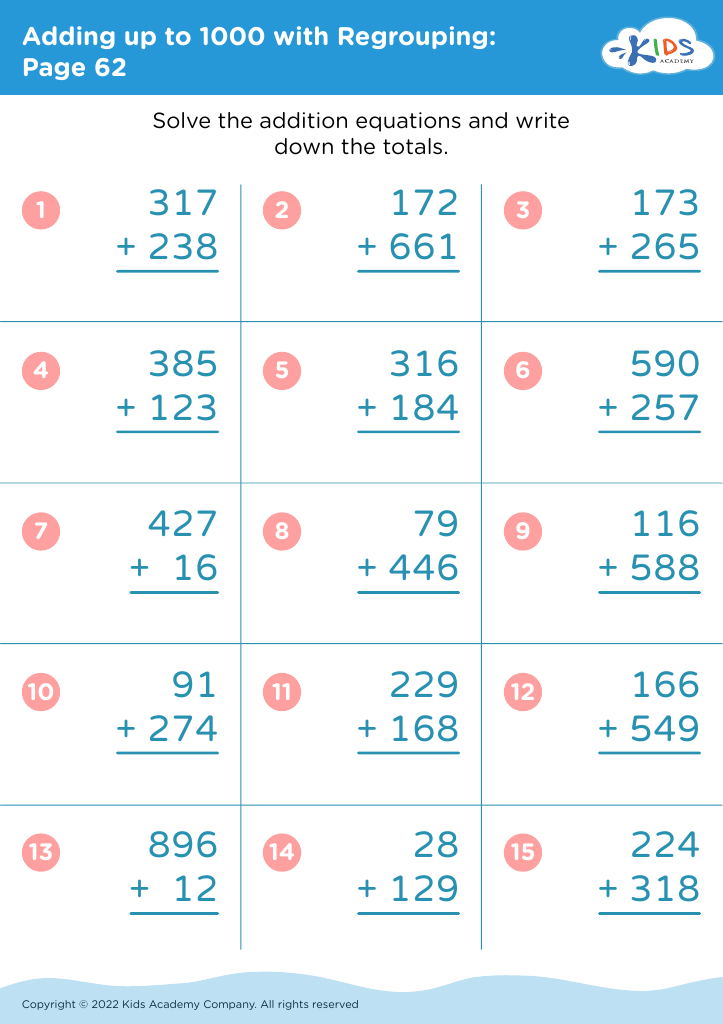
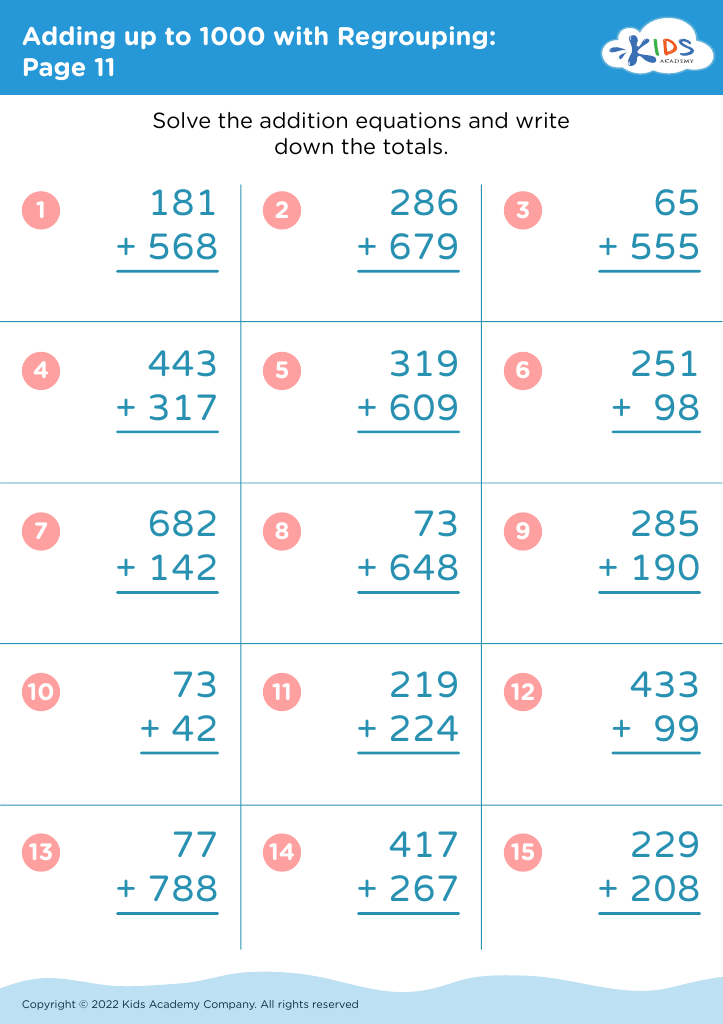
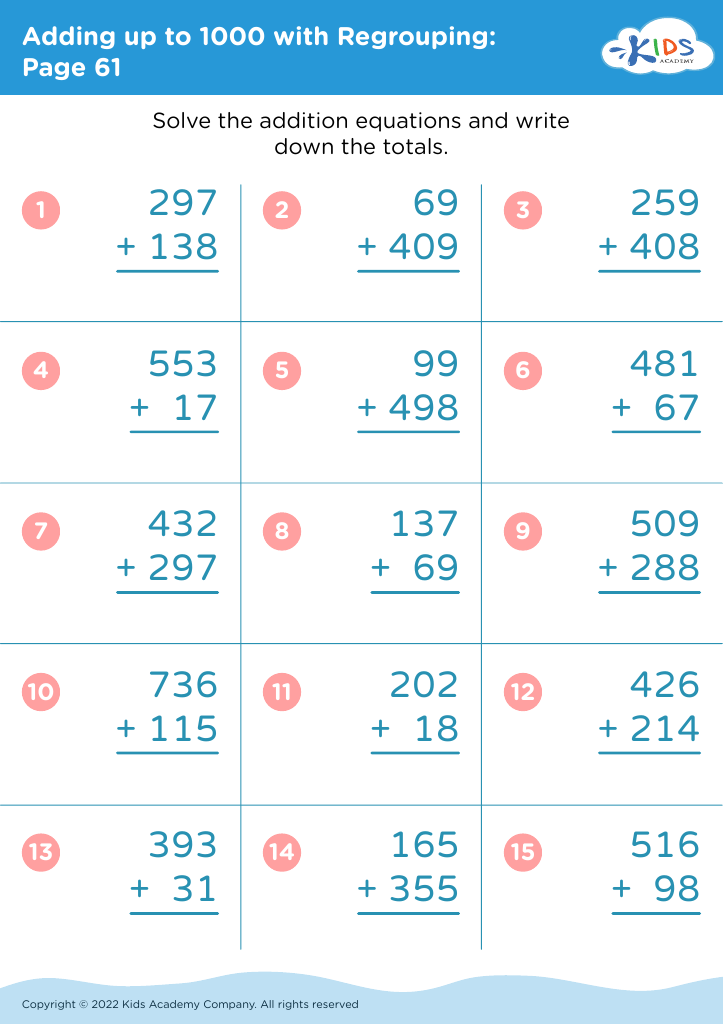
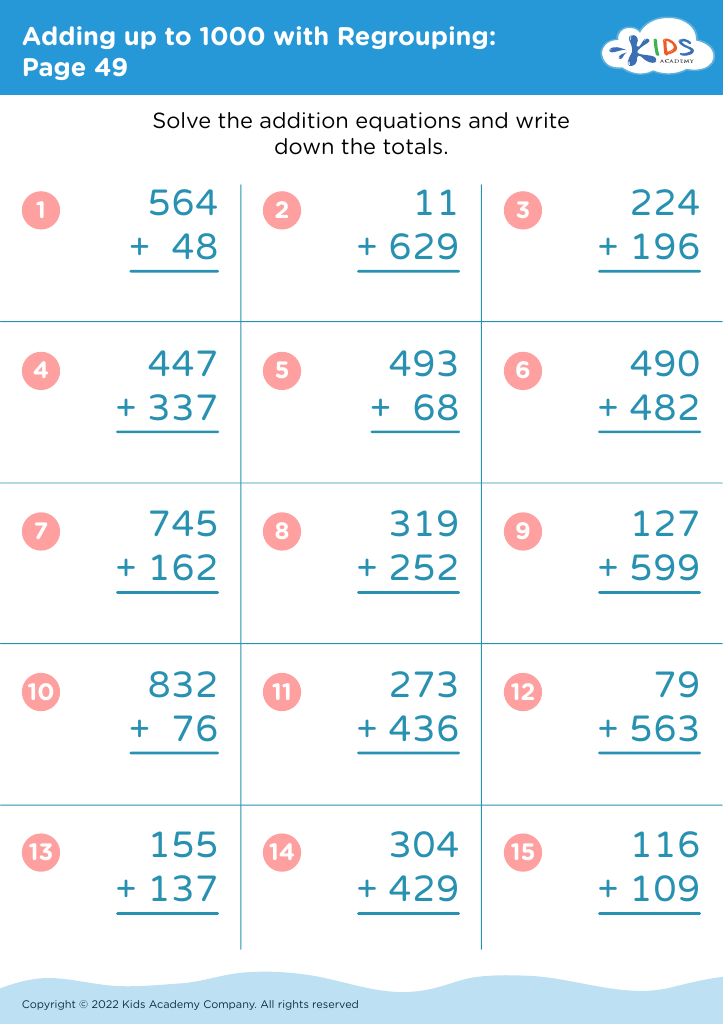
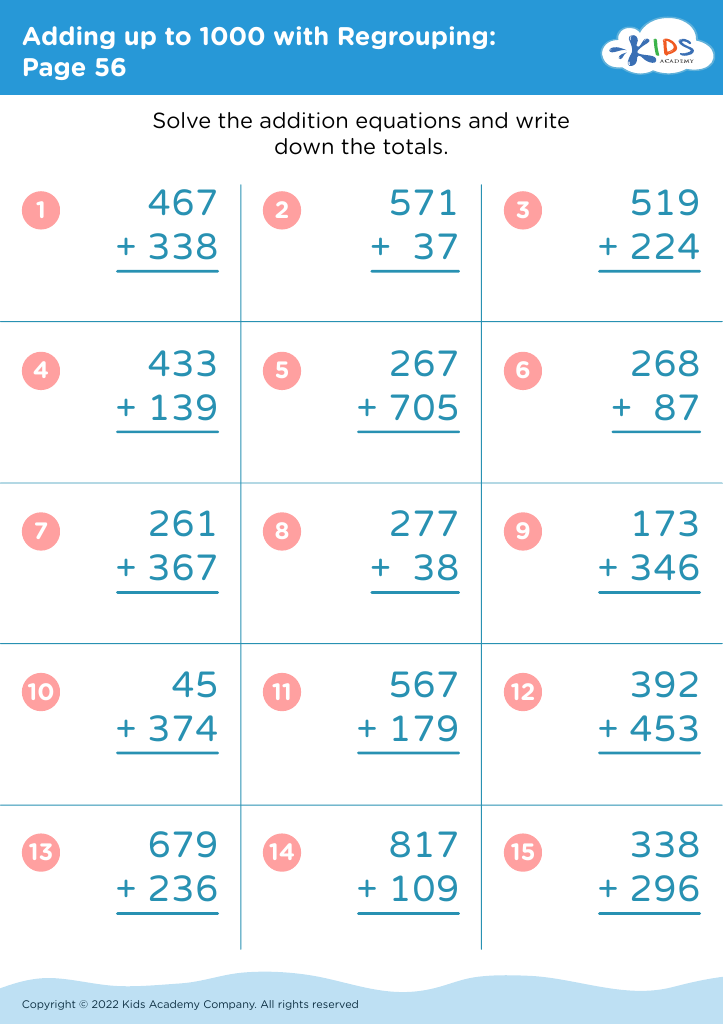
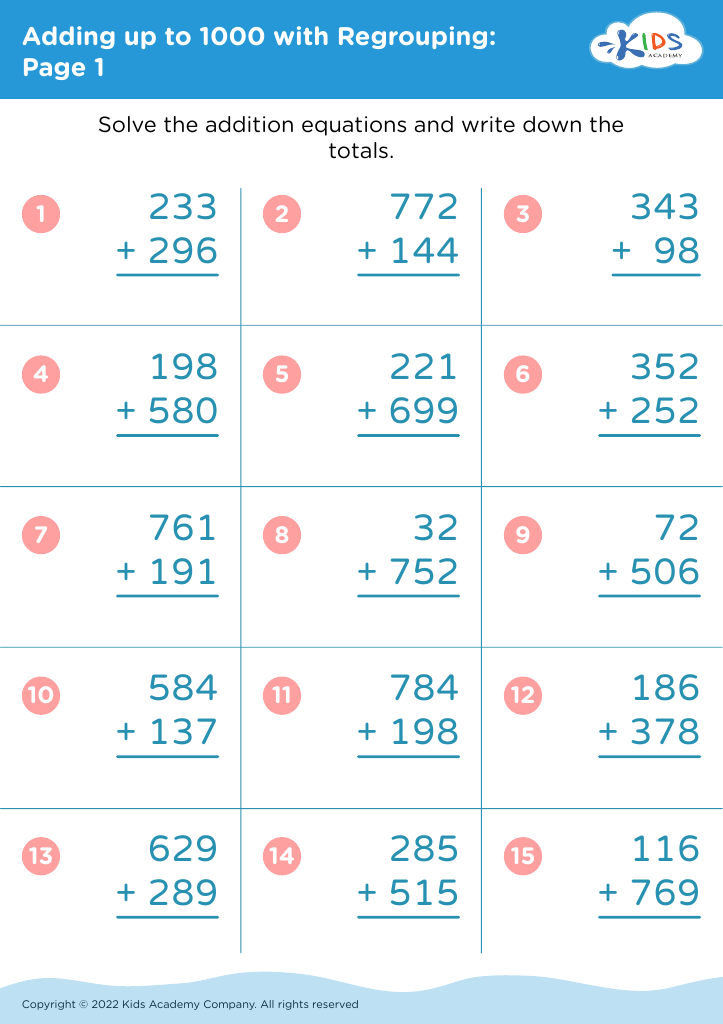
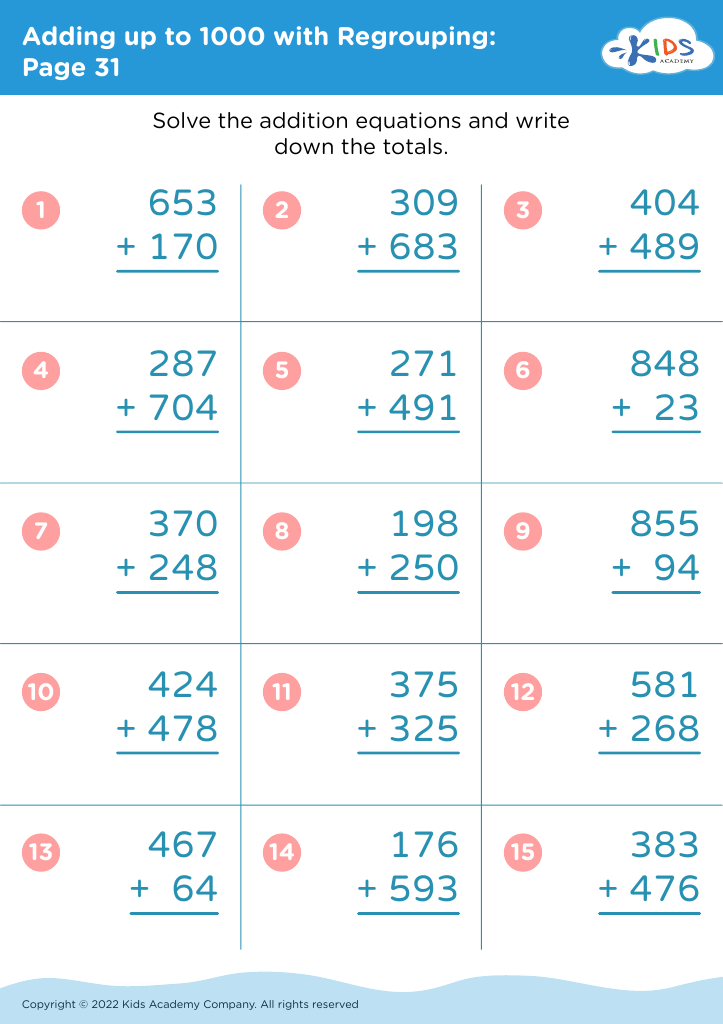
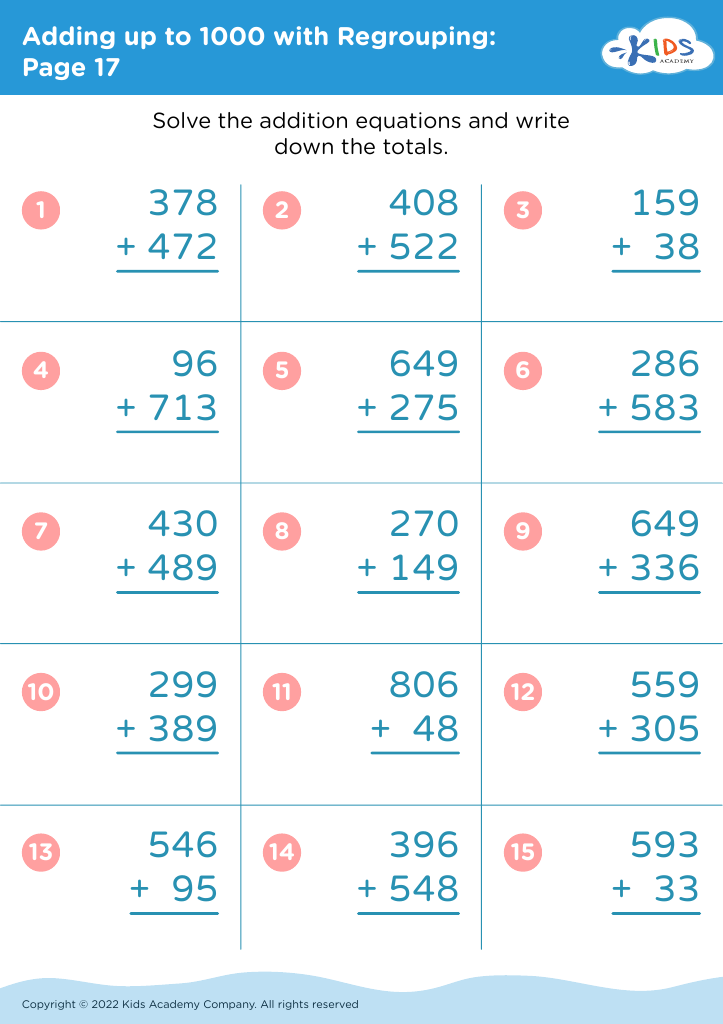
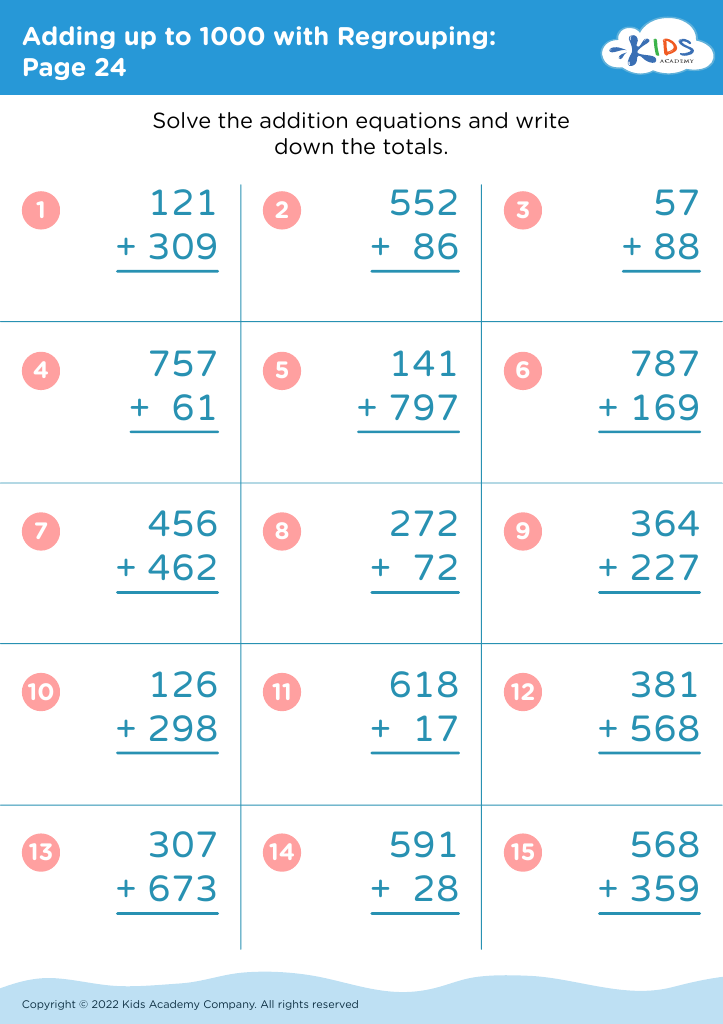
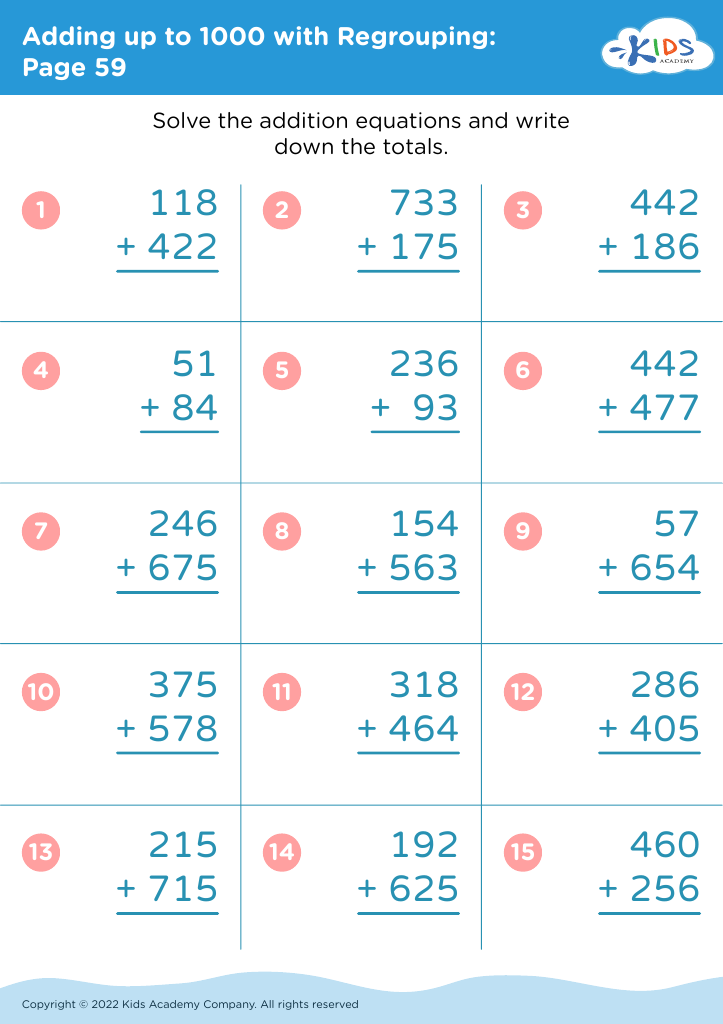
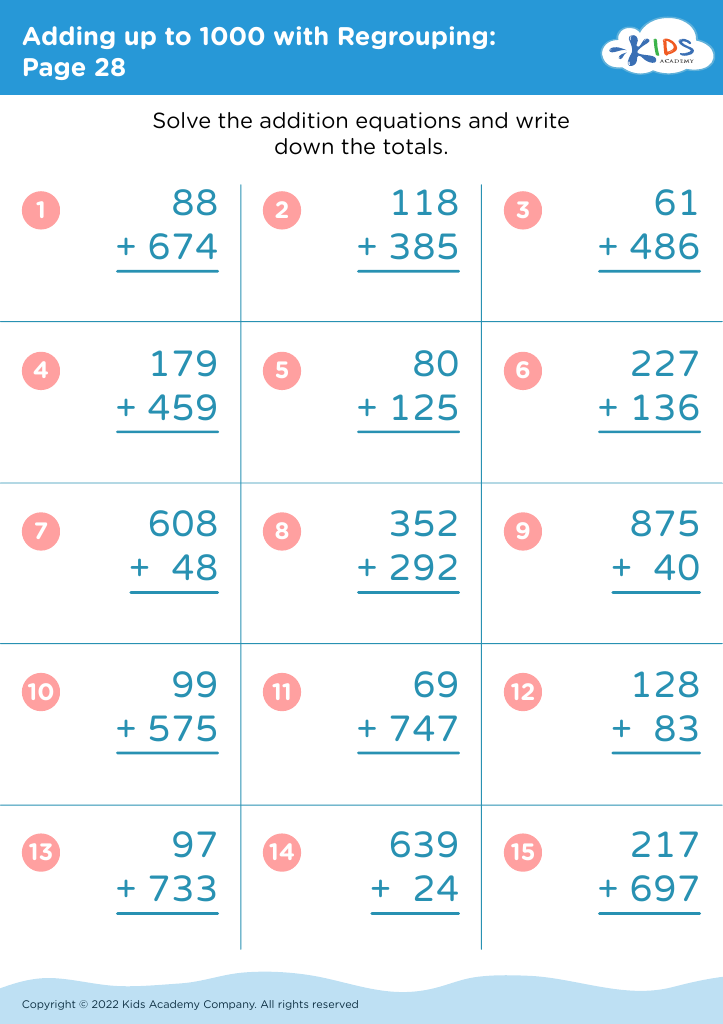
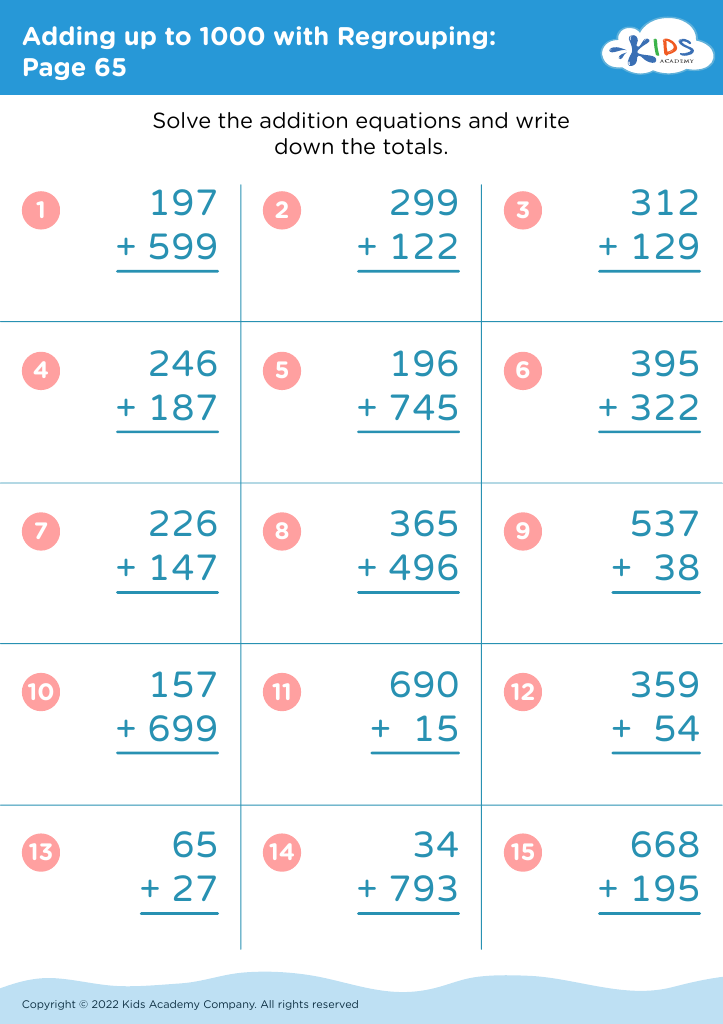
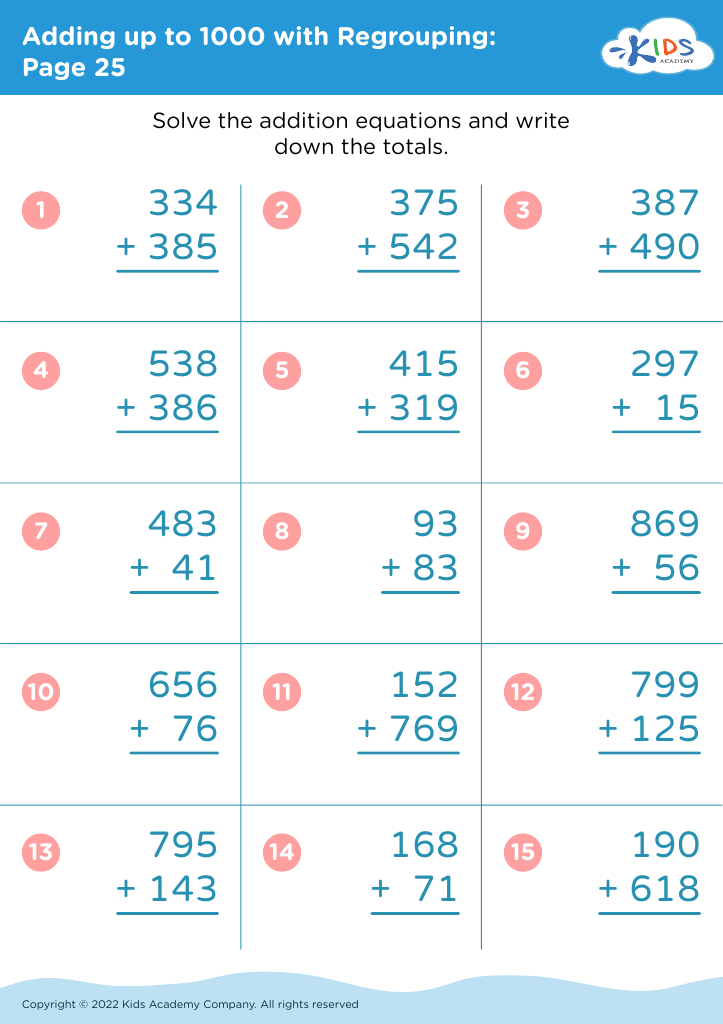
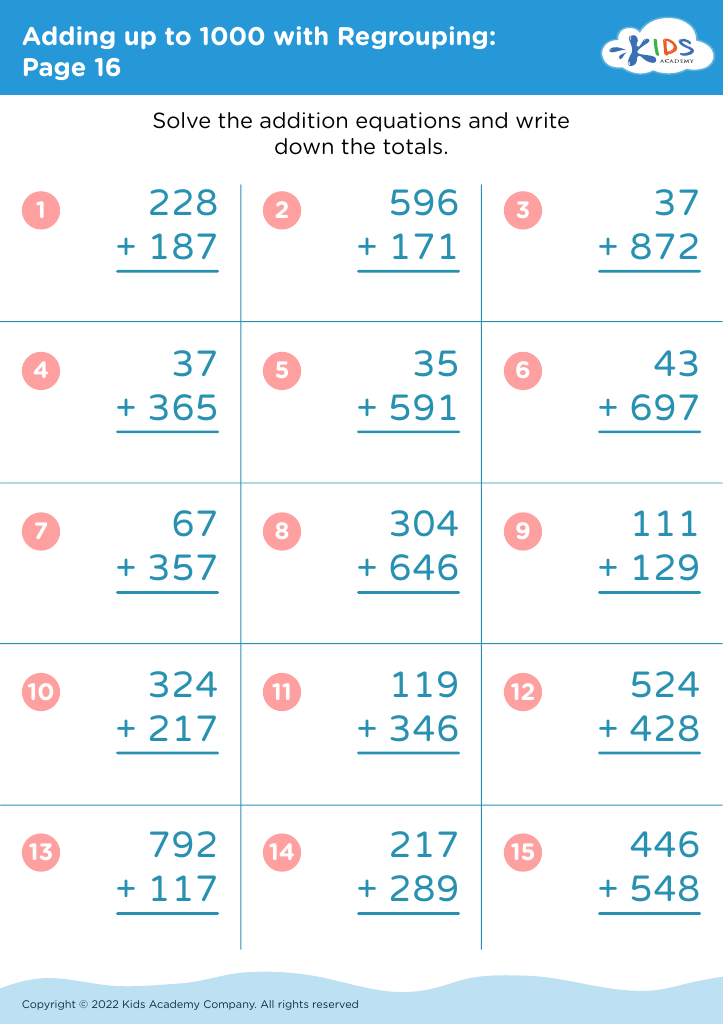


Understanding fractions and adding up to 1000 with regrouping are fundamental skills for children ages 5-9 because they provide a critical foundation for future math success and overall cognitive development.
Fractions introduce young learners to the concept of parts of a whole, which is pivotal for building their number sense. Grasping fractions at an early age helps children better understand division, ratios, and the idea of proportionality. This understanding also supports later learning in more advanced topics like algebra, geometry, and even real-world tasks ranging from measuring ingredients while cooking to grasping statistical data.
Adding up to 1000 with regrouping (or carrying/borrowing) is equally important. It enhances a child's arithmetic proficiency and encourages logical thinking and problem-solving. Regrouping teaches children how to handle larger numbers, an essential skill not just in academic settings but also in daily life, where they might need to manage money, measure distances, or organize quantities.
Both these skills incrementally build a child’s confidence and interest in mathematics. This cognitive development at an early age lays the groundwork for advanced analytical skills, critical thinking, and the ability to manage complex problems later in life. Hence, teachers and parents play a vital role in fostering these skills to ensure a robust mathematical foundation.