Alphabet Recognition Adding up to 1000 Without Regrouping Worksheets for Ages 5-9
3 filtered results
-
From - To
Enhance your child's learning experience with our "Alphabet Recognition Adding up to 1000 Without Regrouping Worksheets," designed specifically for ages 5-9. These engaging worksheets combine fundamental math skills with alphabet recognition, making learning fun and interactive. Each worksheet encourages young learners to practice addition up to 1000 without regrouping, while simultaneously strengthening their recognition of letters. Perfect for home or classroom use, this resource fosters essential cognitive skills through carefully structured activities. Empower your child to build confidence and proficiency in both math and literacy with our delightful and effective worksheets. Start their educational journey with the best foundational skills today!
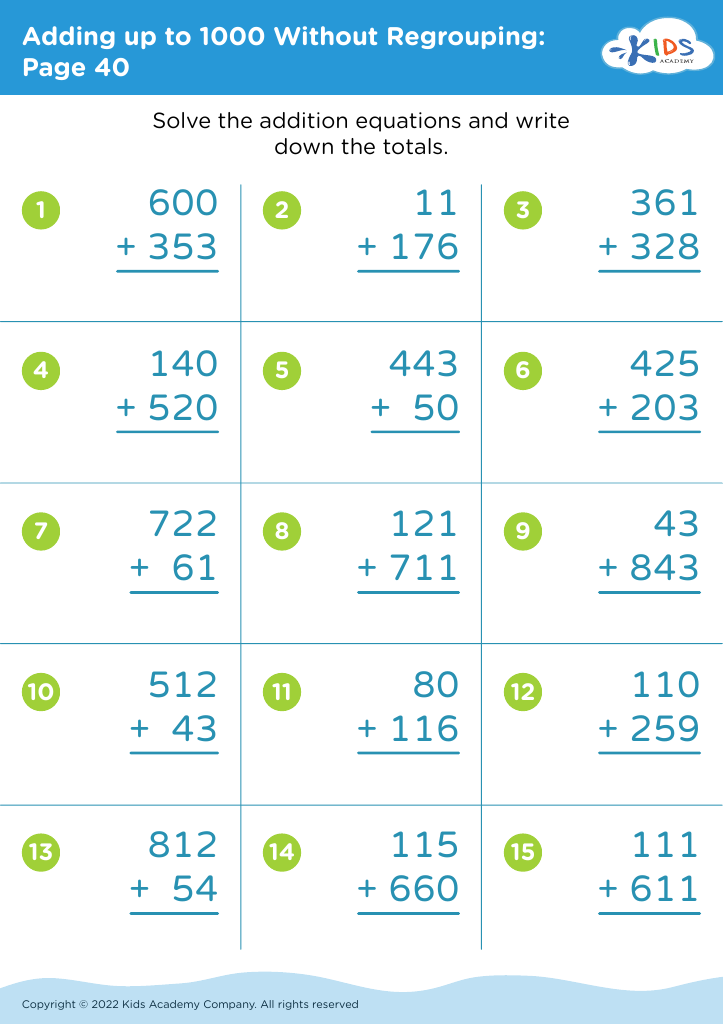
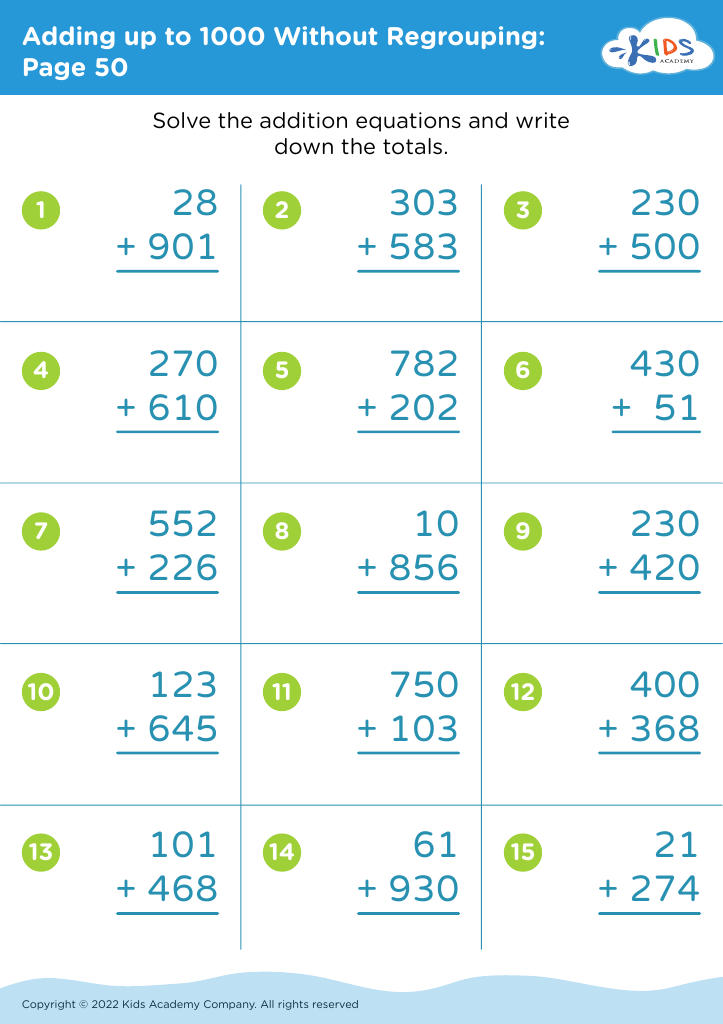
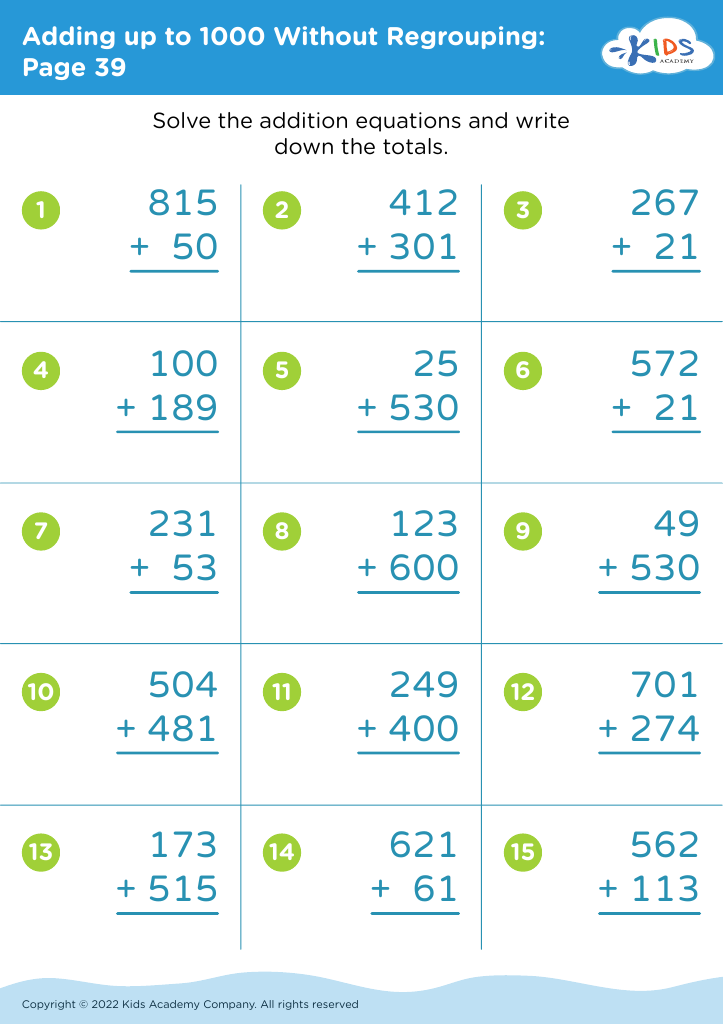


Alphabet recognition and foundational math skills, such as adding numbers up to 1000 without regrouping, are crucial for children aged 5-9. These skills form the cornerstone of academic success and cognitive development.
Firstly, alphabet recognition is essential for literacy. When children can identify letters and their corresponding sounds, they are better equipped to read and spell, enhancing their communication skills. Early mastery of the alphabet lays the groundwork for reading fluency, comprehension, and cognitive efficiency, essential in almost every subject matter.
Similarly, understanding addition, particularly without regrouping, helps build a solid mathematical foundation. Mastery of basic addition ensures that children develop confidence in their math abilities, enabling them to tackle more complex concepts later on. It promotes critical thinking and problem-solving, skills that are invaluable throughout life.
Moreover, these competencies contribute to children's overall academic readiness and boost their enthusiasm for learning. Parents and teachers alike play a key role in nurturing these foundational skills through engaging, age-appropriate activities. Invested efforts in reinforcing alphabet recognition and addition skills ensure children are well-prepared for future academic challenges and instills lifelong learning habits. Ultimately, prioritizing these areas sets children on a path towards success in school and beyond.