Comparing Fractions Adding up to 1000 Without Regrouping Worksheets for Ages 5-9
3 filtered results
-
From - To
Discover our engaging "Comparing Fractions Adding up to 1000 Without Regrouping" worksheets designed for children ages 5-9! These interactive resources enhance students' understanding of fractions while introducing them to addition concepts up to 1000, all without regrouping. Perfect for early-grade learners, each worksheet encourages critical thinking and problem-solving as kids compare fractions in a fun and educational format. With colorful designs and age-appropriate questions, children can build confidence in their math skills. Ideal for classroom instruction or at-home practice, these worksheets pave the way for a solid foundation in mathematics. Start your child's journey to mastering fractions today!
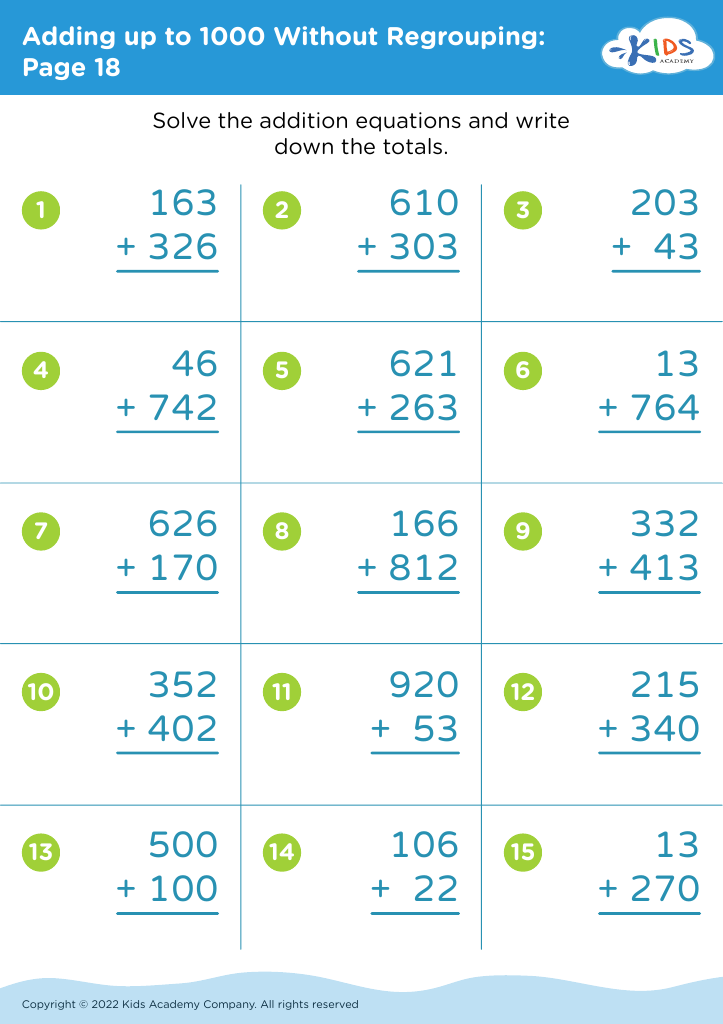
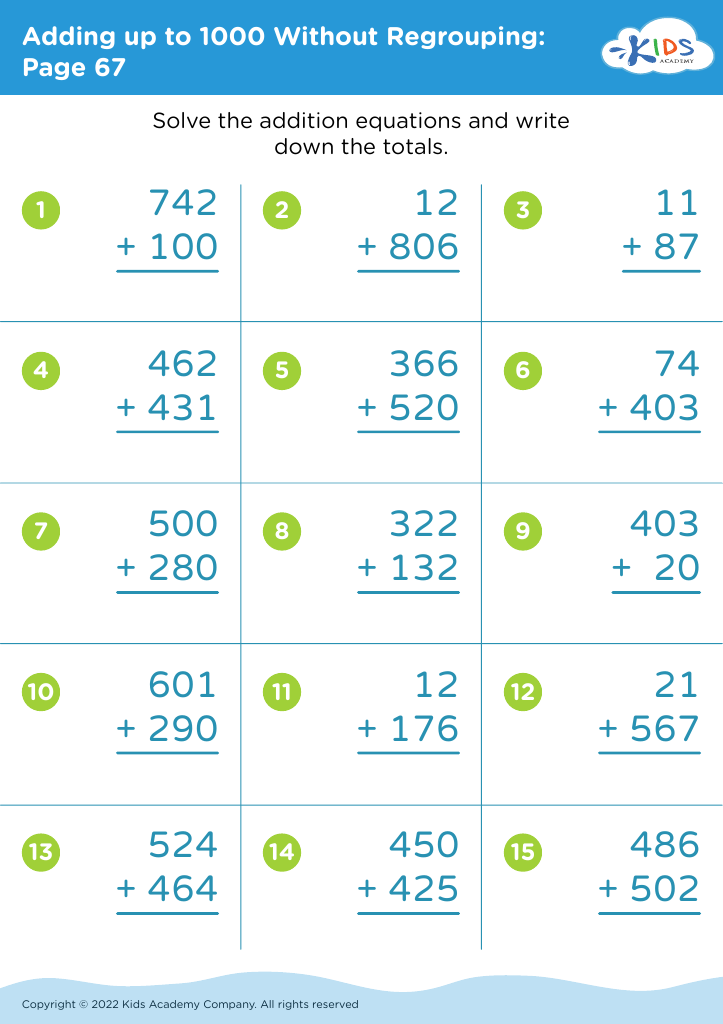
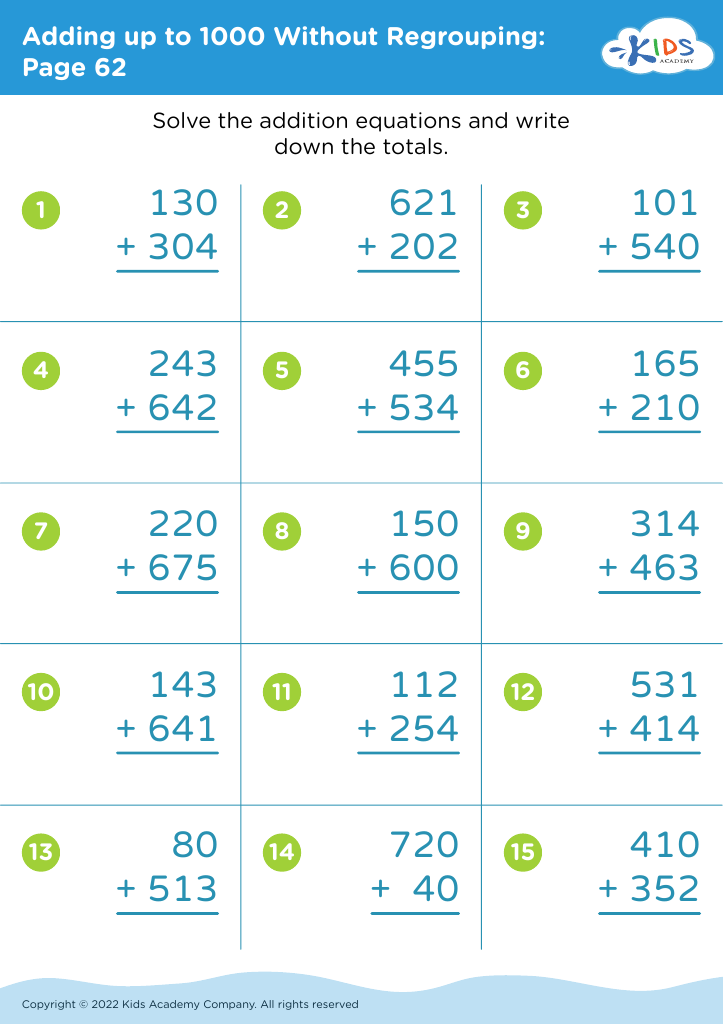


Understanding how to compare fractions, especially in contexts like adding them up to 1000 without regrouping, is fundamental for children aged 5-9. Learning to compare fractions fosters critical thinking and problem-solving skills, which are essential as students progress in mathematics. When children grasp how to identify which fractions are larger or smaller, they become more confident in their mathematical abilities.
For parents and teachers, emphasizing this concept is vital as children develop a solid foundation for later, more complex math topics. Comparing fractions helps illustrate the concept of part-to-whole relationships, which is crucial for understanding percentages, ratios, and real-world applications like cooking or allocating resources. Building these skills at an early age prepares students for higher mathematical concepts and enhances their ability to reason quantitatively.
Furthermore, engaging kids in activities related to comparing fractions can make math fun and relevant, helping them develop a positive attitude towards learning. By working with fractions and large numbers, children not only strengthen their math skills but also enhance their focus, perseverance, and ability to work through challenges—traits that are beneficial in all areas of education and beyond. Thus, fostering these skills can play a pivotal role in a child's overall academic success.