Fraction comparison Adding up to 1000 Without Regrouping Worksheets for Ages 5-9
4 filtered results
-
From - To
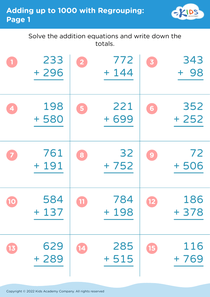
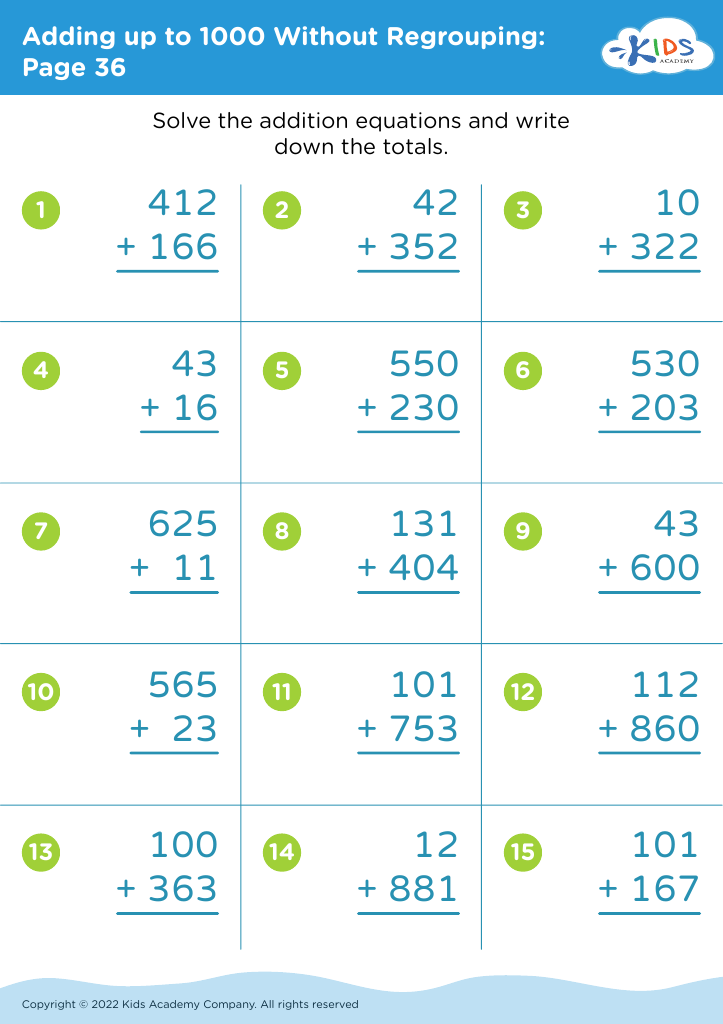
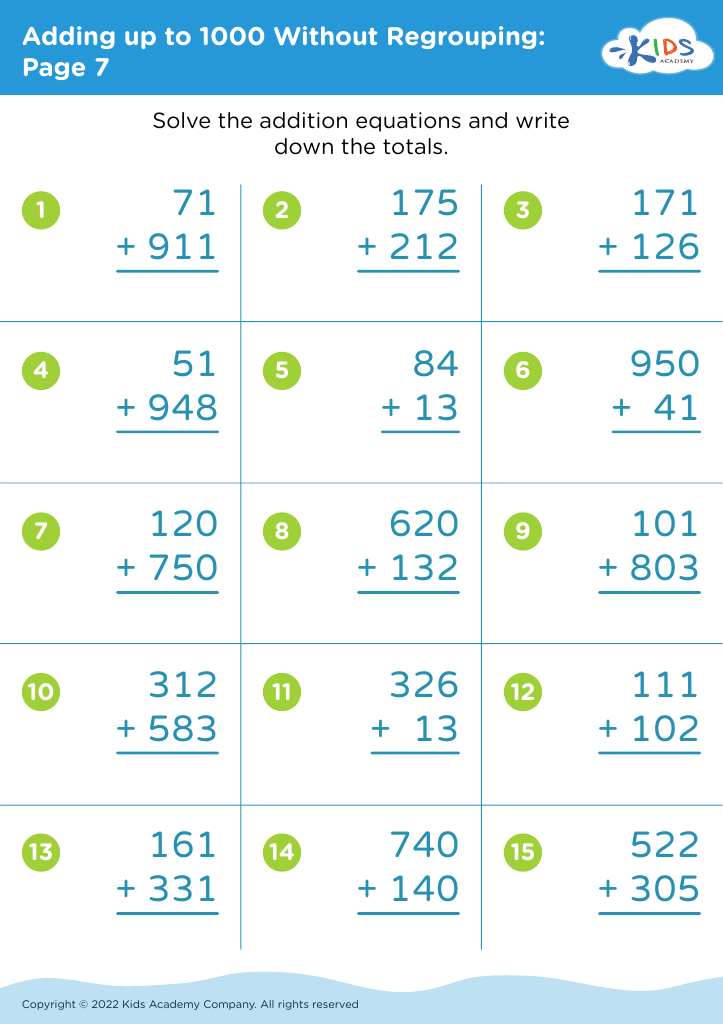
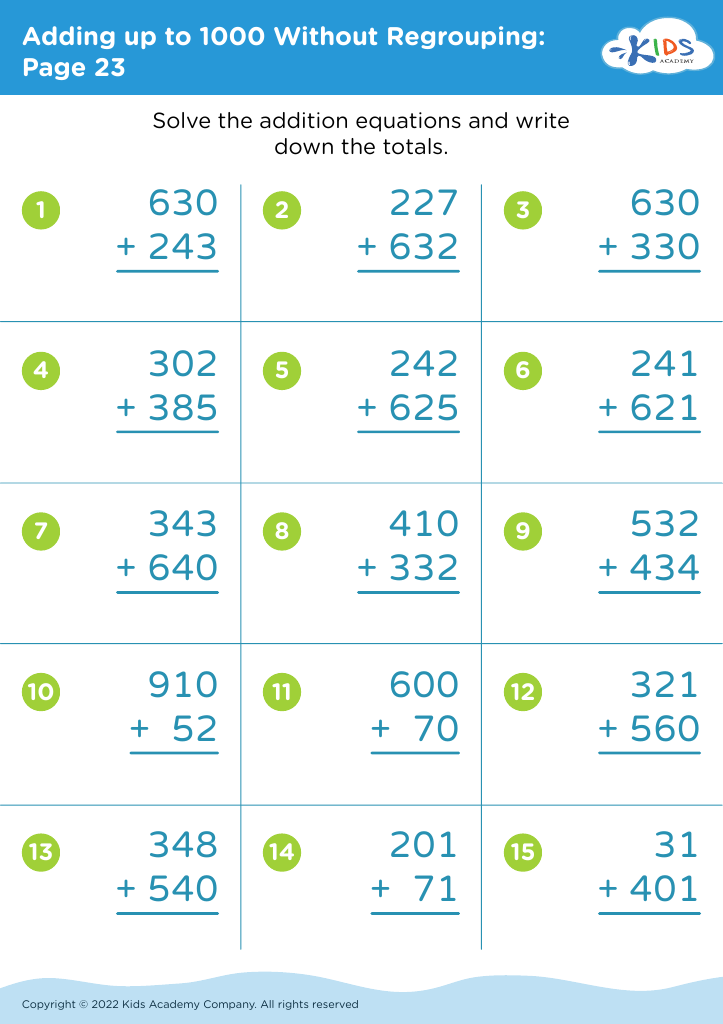
Explore our engaging Fraction Comparison worksheets designed specifically for ages 5-9. These interactive resources enable young learners to compare fractions effectively while mastering addition skills, focusing on numbers that total up to 1000 without regrouping. Our carefully crafted tasks encourage critical thinking and foster a deeper understanding of fraction concepts in a fun and approachable manner. Perfect for classroom or at-home learning, these worksheets provide clear instructions, vibrant visuals, and plenty of practice to help children build confidence in their math abilities. Empower your child with the skills they need for future math success! Start their learning journey today!
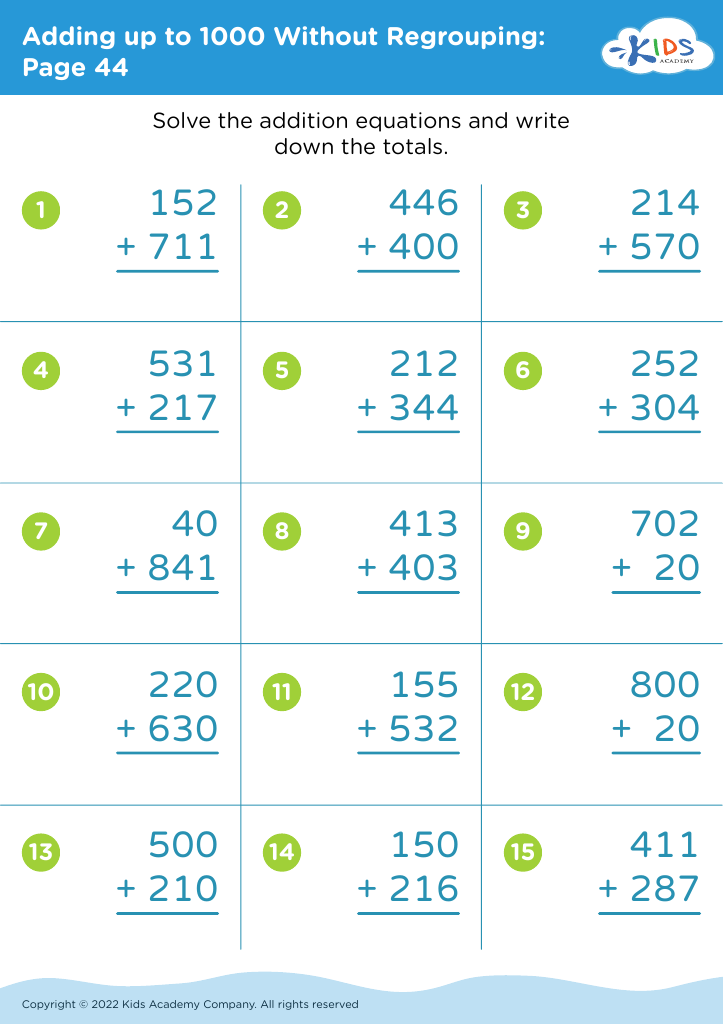


Understanding fraction comparison and addition without regrouping is essential for children ages 5-9. At this developmental stage, children build foundational mathematical skills that play a critical role in their future learning. Familiarity with fractions helps them grasp more complex concepts later, such as ratios, percentages, and decimals.
For parents and teachers, caring about this subject is important because it fosters critical thinking and problem-solving abilities. Comparing fractions helps children learn to evaluate and differentiate between quantities, instilling confidence in their ability to handle numbers. Furthermore, mastering addition without regrouping allows students to perform calculations mentally, promoting fluency and efficiency.
Additionally, both fraction comparison and addition skills support a child's overall academic growth. Early mastery can lead to increased achievement in math, reinforcing analytical skills that are applicable in various subjects. Beyond academics, these concepts encourage perseverance and a growth mindset, as children learn to tackle challenges systematically and find solutions independently.
By nurturing these skills in children, parents and teachers set the stage for lifelong mathematical confidence and competence, preparing them for future educational endeavors and real-world problem-solving tasks. This early investment in this formative stage can yield significant long-term benefits for each child's academic journey.