Reading comprehension Adding up to 1000 Without Regrouping Worksheets for Ages 5-9
4 filtered results
-
From - To
Unlock the power of reading comprehension with our engaging "Adding Up to 1000 Without Regrouping Worksheets" designed for children aged 5 to 9. These worksheets seamlessly integrate math and literacy by presenting relatable stories and scenarios that require students to apply their addition skills without regrouping. As kids tackle each problem, they’ll enhance their reading skills while building a solid mathematical foundation. Perfect for both classroom use and home learning, these resources are tailored to promote critical thinking and boost confidence. Empower your child’s learning journey today with our fun, interactive worksheets that make mastering math a delightful experience!
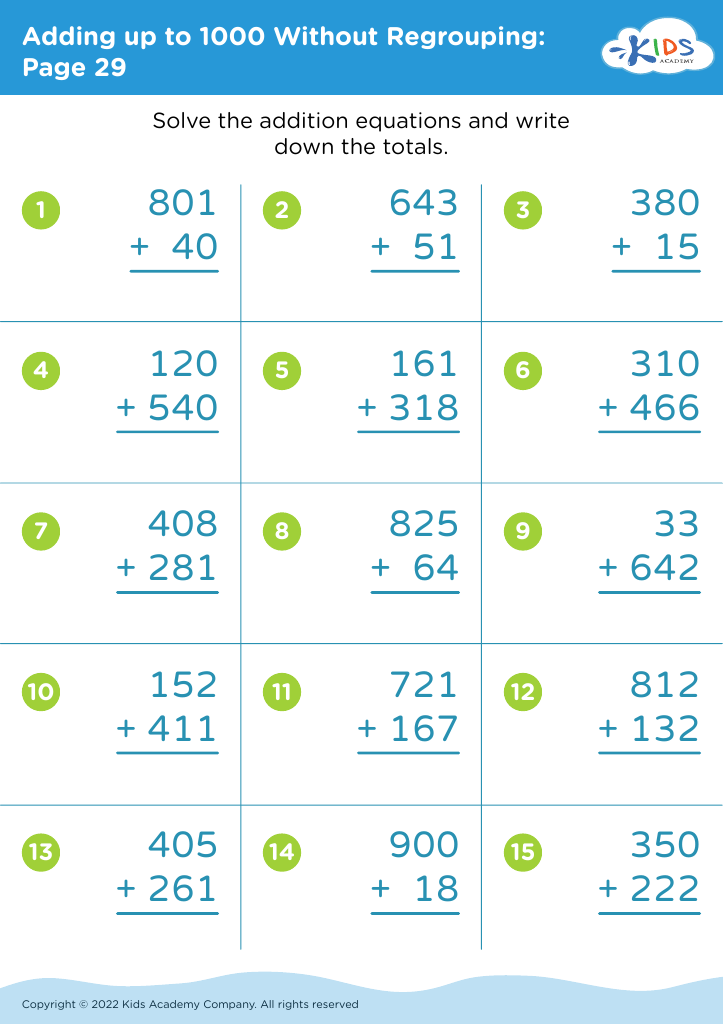
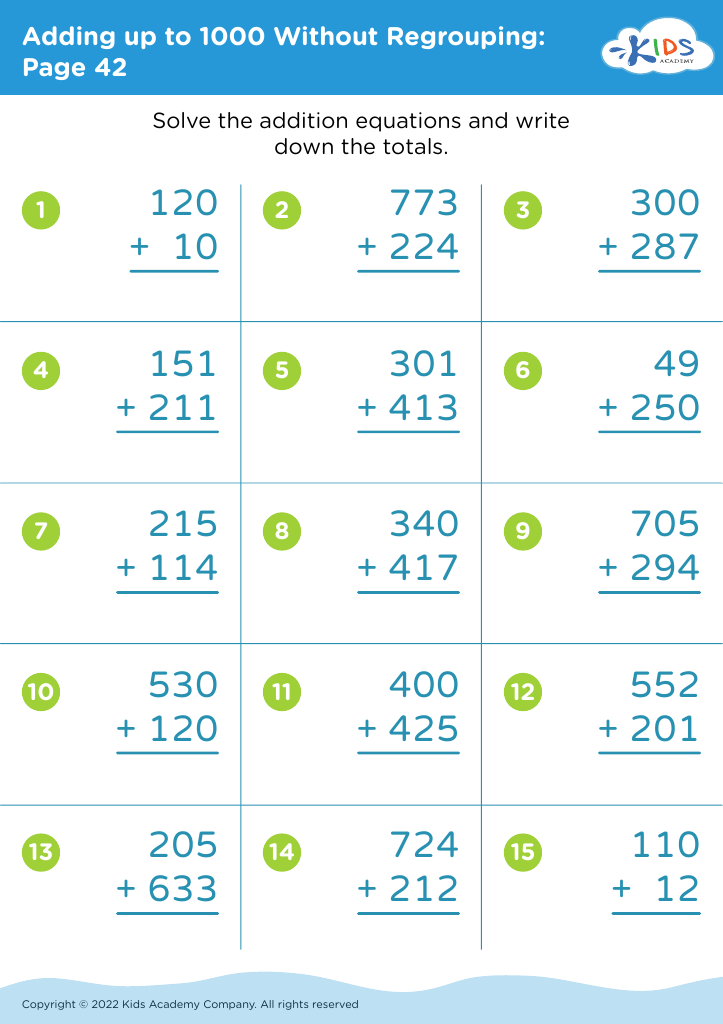
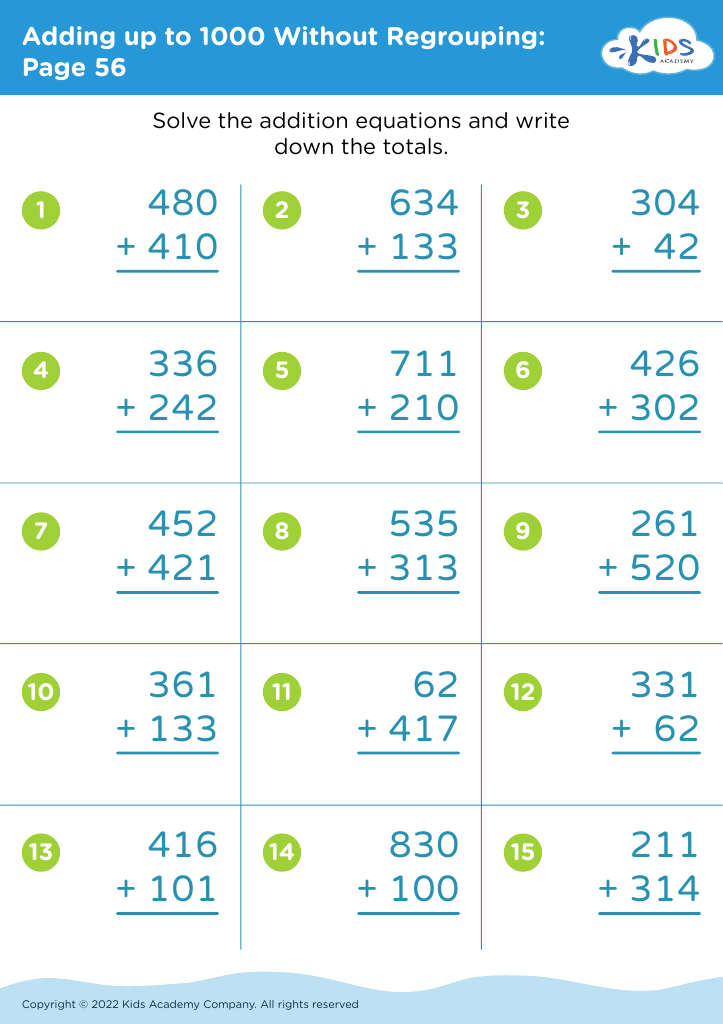
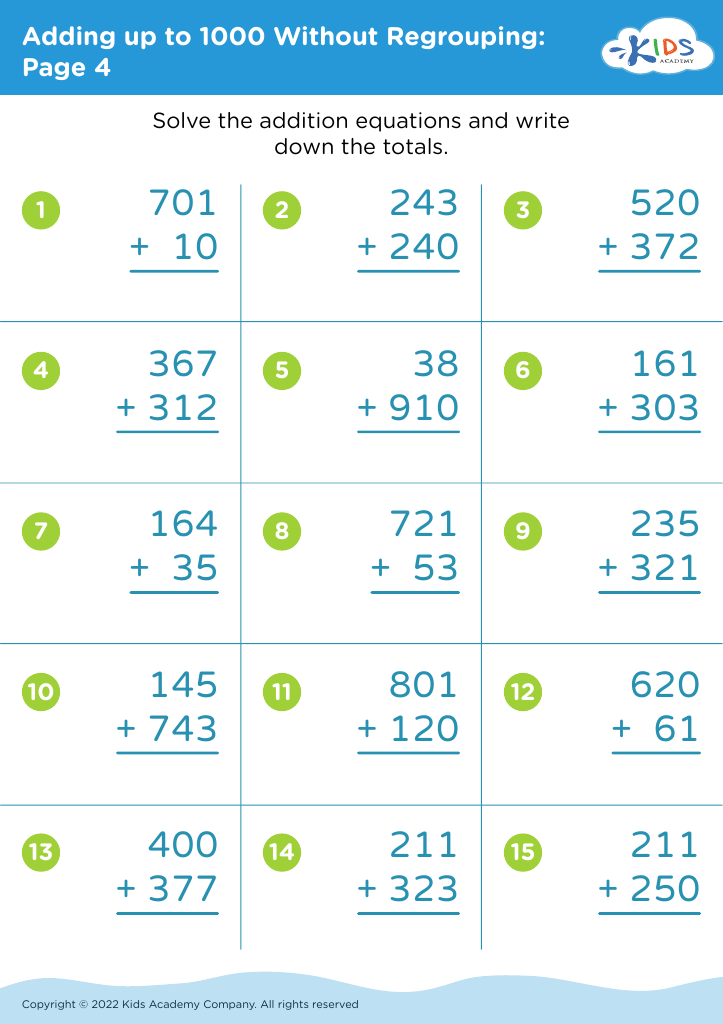


Parents and teachers should prioritize reading comprehension and math skills, such as addition without regrouping, for children ages 5-9 for several important reasons. Firstly, reading comprehension is fundamental for effective communication, critical thinking, and lifelong learning. As children read, they learn to synthesize information, make inferences, and connect ideas, which empowers them academically and socially. Effective comprehension skills also enable children to derive meaning from texts across subjects, fostering a love for reading and learning.
Simultaneously, mastering addition without regrouping establishes a solid foundation in mathematics. This skill is essential, helping children to develop number sense and basic arithmetic skills in a way that is tangible and relatable. Understanding addition in a straightforward manner builds confidence and allows for greater problem-solving abilities as they progress to more complex mathematical concepts.
By focusing on these two areas simultaneously, educators and parents create a holistic approach to skill-building that enhances cognitive development. Children who are proficient in both reading and basic math are better prepared for future academic challenges. Ultimately, investing time and resources in fostering these essential skills will promote well-rounded, capable learners equipped for success in school and beyond.








