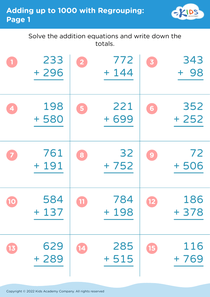
Understanding division Adding up to 1000 Without Regrouping Worksheets for Ages 5-9
3 filtered results
-
From - To
Unlock the mysteries of division with our "Understanding Division: Adding up to 1000 Without Regrouping" worksheets, designed specifically for children aged 5-9. These engaging worksheets introduce key division concepts in a fun and approachable way, helping young learners grasp fundamental math skills. Through interactive activities and clear examples, students will develop a solid foundation in dividing numbers while building their confidence in math. Aligning with educational standards, these worksheets encourage critical thinking and problem-solving, ensuring your child has all the tools needed to master division. Explore our collection today and watch your child's math skills soar!
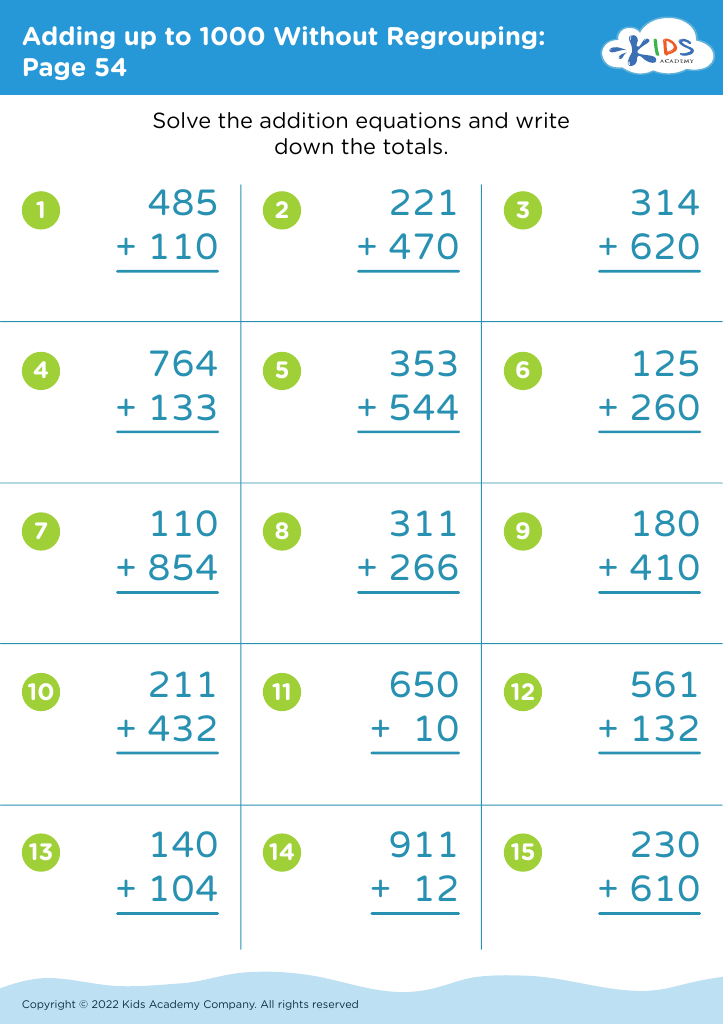
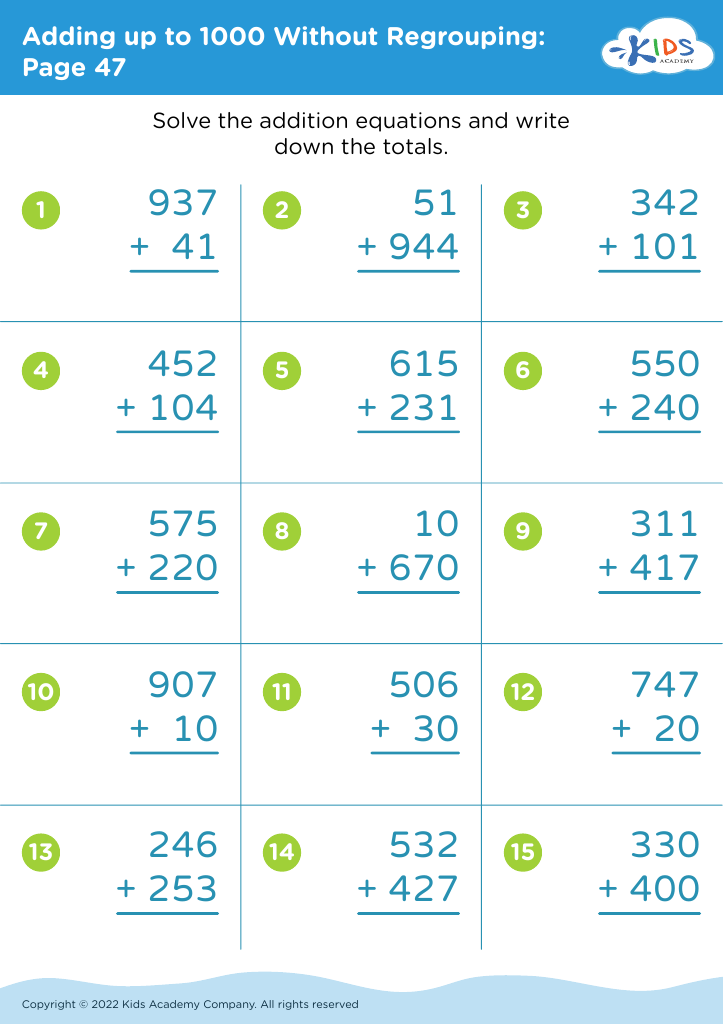
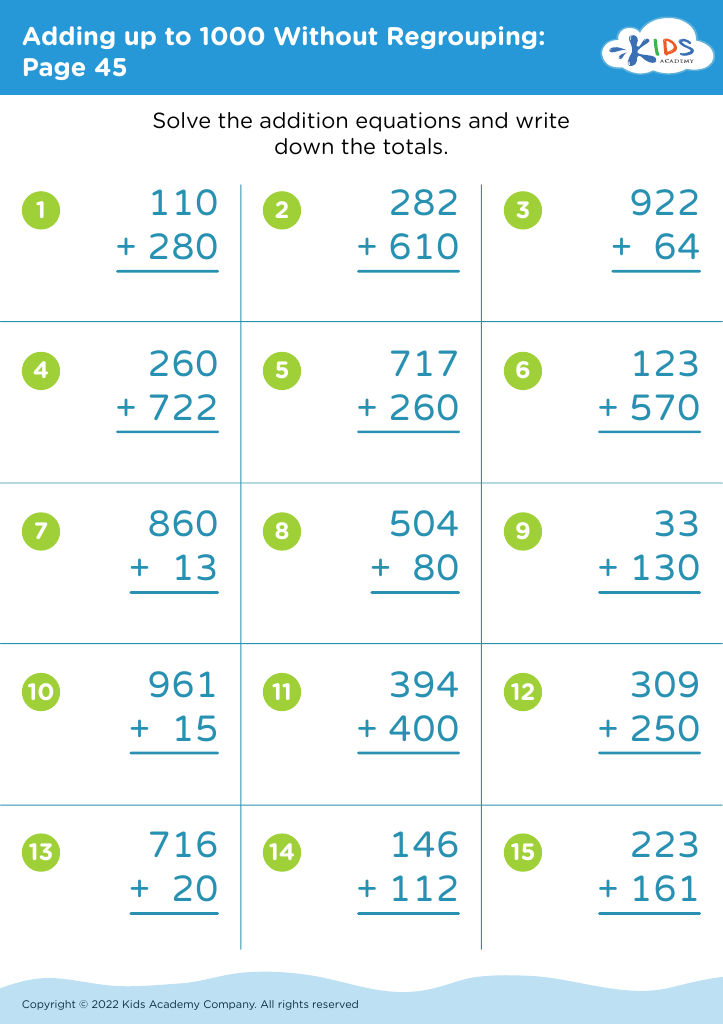


Understanding division and addition for children aged 5-9 lays a strong mathematical foundation essential for their academic growth. Teaching division, particularly when adding up to 1000 without regrouping, empowers children to grasp the concept of sharing and partitioning, which are critical in everyday situations. This understanding fosters logical thinking and problem-solving skills that extend beyond mathematics into real-life applications.
Moreover, mastering these skills with numbers up to 1000 prepares students for more complex arithmetic operations in later grades, such as larger numbers and regrouping. It boosts confidence, enabling children to tackle more challenging problems in the future.
For parents and teachers, focusing on these skills means actively supporting a child’s cognitive development. Engaging kids with fun, interactive methods encourages enthusiasm for learning, making math feel less intimidating. This early intervention can significantly influence academic attitudes, resistance to math anxiety, and a lifelong love for the subject.
Additionally, these skills are pivotal for standardized testing and future educational milestones, reinforcing the importance of mathematical fluency. Overall, cultivating a solid understanding of these concepts equips children with essential tools for both their academic journey and everyday decision-making, making it a priority for parents and educators alike.