Basic Addition Skills Adding up to 1000 Worksheets for Ages 5-9
3 filtered results
-
From - To
Welcome to our collection of "Basic Addition Skills Adding Up to 1000 Worksheets" designed for children ages 5-9! These engaging and interactive worksheets are perfect for developing essential math skills in a fun, accessible way. Your child will explore addition with numbers up to 1000 through various exercises tailored to enhance their understanding and confidence. Each worksheet includes vibrant illustrations and user-friendly formats, making learning math enjoyable. Ideal for at-home practice or classroom activities, these resources ensure children build a solid foundation in math in a playful environment. Empower your child's learning journey with our comprehensive addition worksheets today!
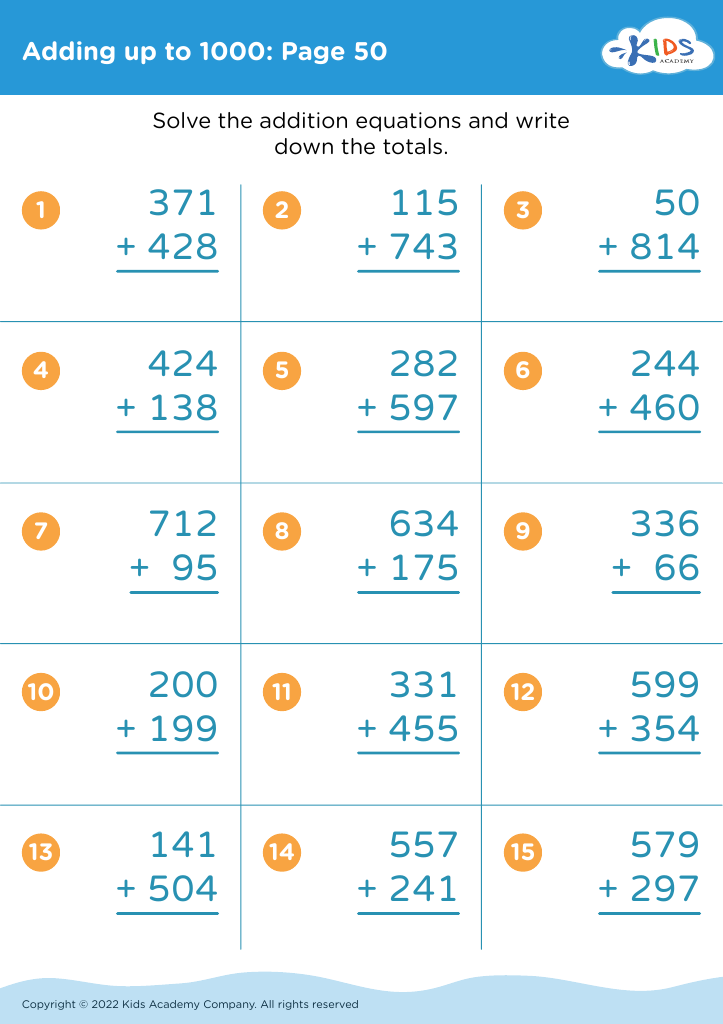
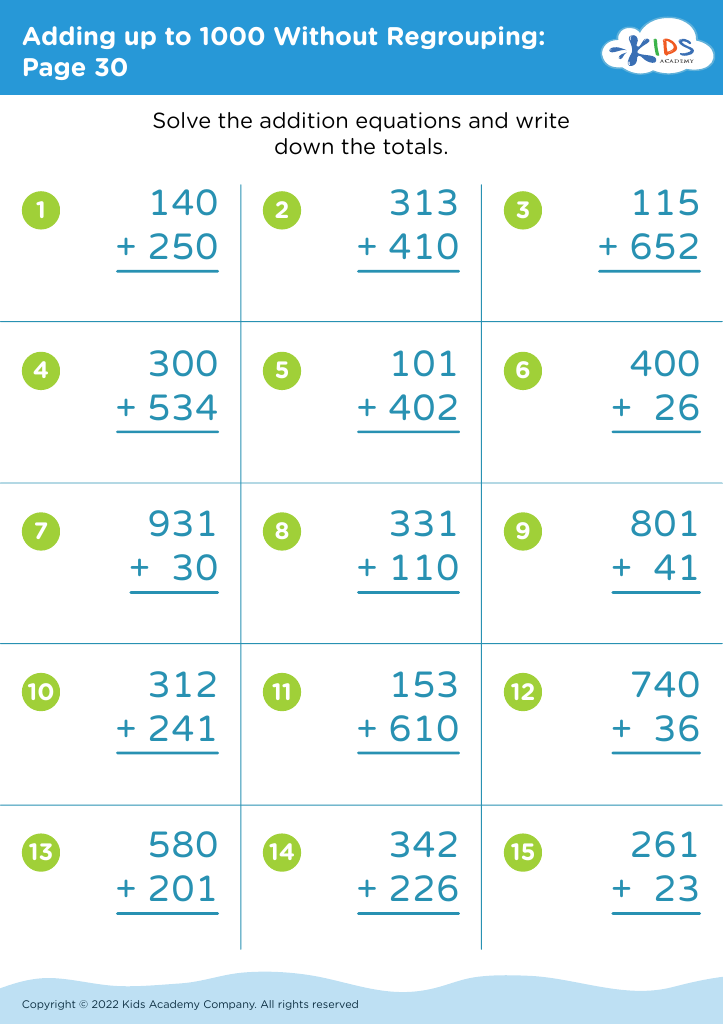
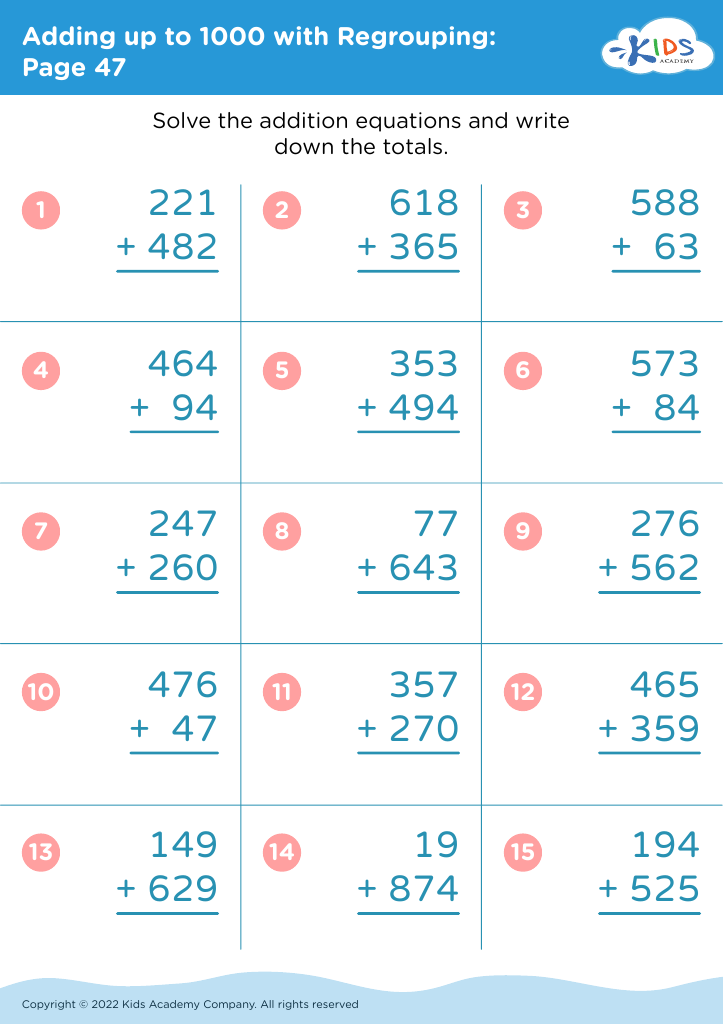



Basic addition skills are crucial for children aged 5-9 as they lay the foundation for their mathematical understanding and problem-solving abilities. Mastering addition helps children develop number sense, which is essential for grasping more complex concepts later on. For this age group, adding up to 1000 not only introduces them to larger numbers but also enhances their confidence as they successfully tackle progressively challenging tasks.
Parents and teachers should care about these skills because they play a vital role in a child's overall academic competence and future math success. Proficiency in addition enables children to perform tasks such as budgeting their allowance, measuring ingredients for cooking, or understanding time schedules, skills crucial for everyday life. Additionally, strong addition skills are directly related to performance in higher-grade math subjects like subtraction, multiplication, and division.
Furthermore, fostering good addition skills supports the development of critical thinking and analytical skills. Engaging with games and interactive activities can make learning enjoyable and boost motivation. Involving parents in this process promotes a supportive home environment that fosters a positive attitude toward learning, ensuring children grow up with both confidence and competence in their mathematical abilities. Ultimately, prioritizing basic addition sets the stage for lifelong learning.








