Color Identification Adding up to 1000 Worksheets for Ages 5-9
6 filtered results
-
From - To
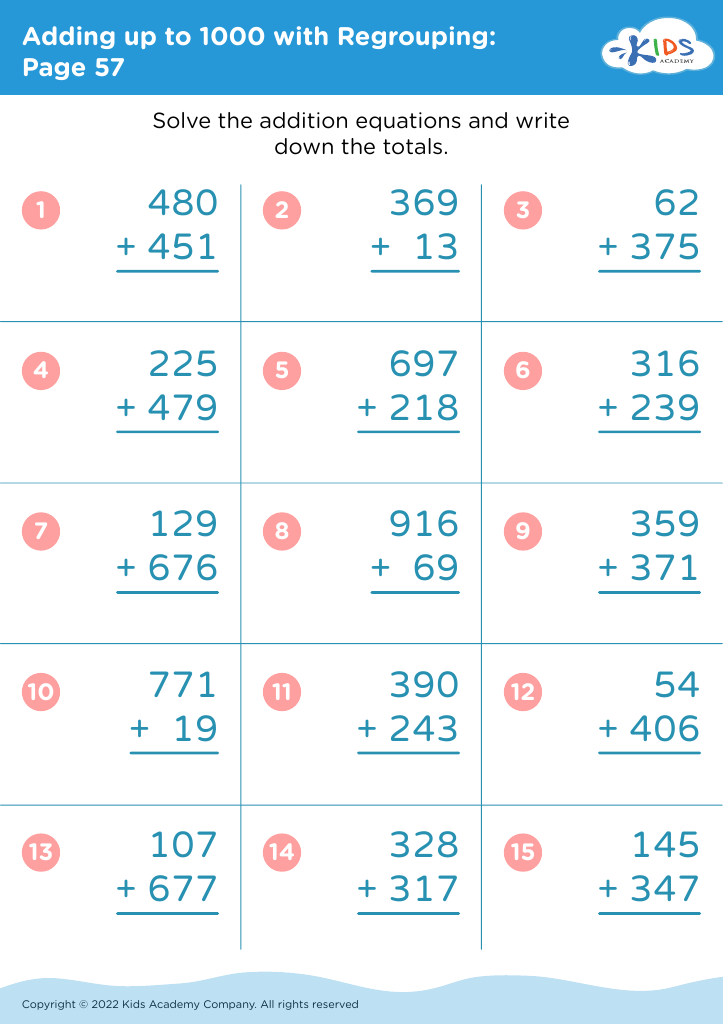
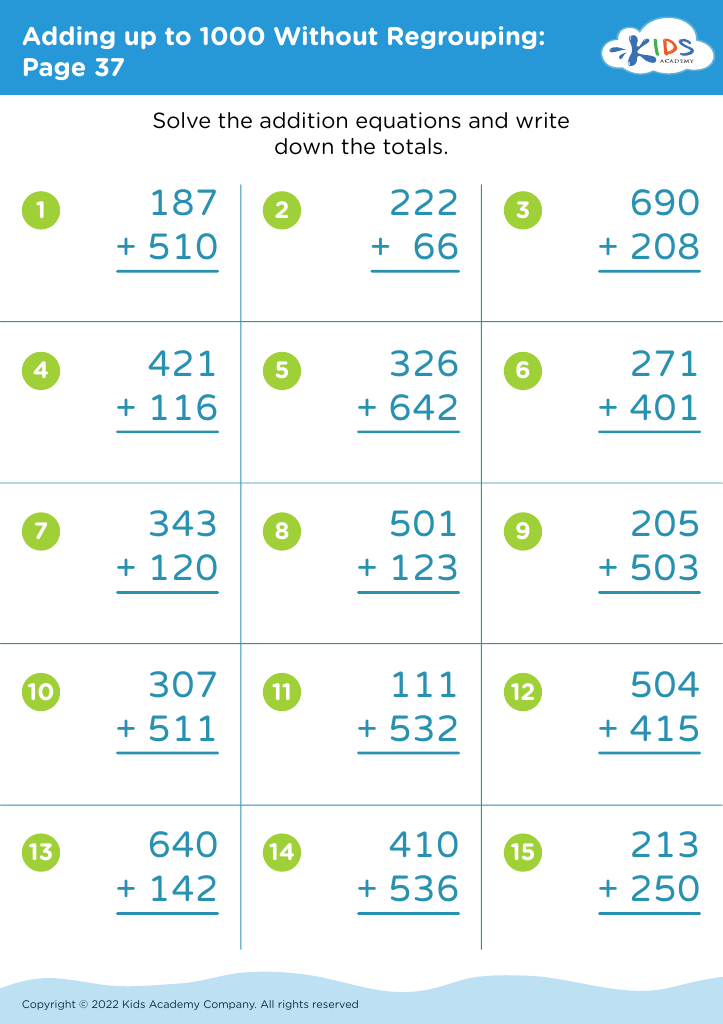
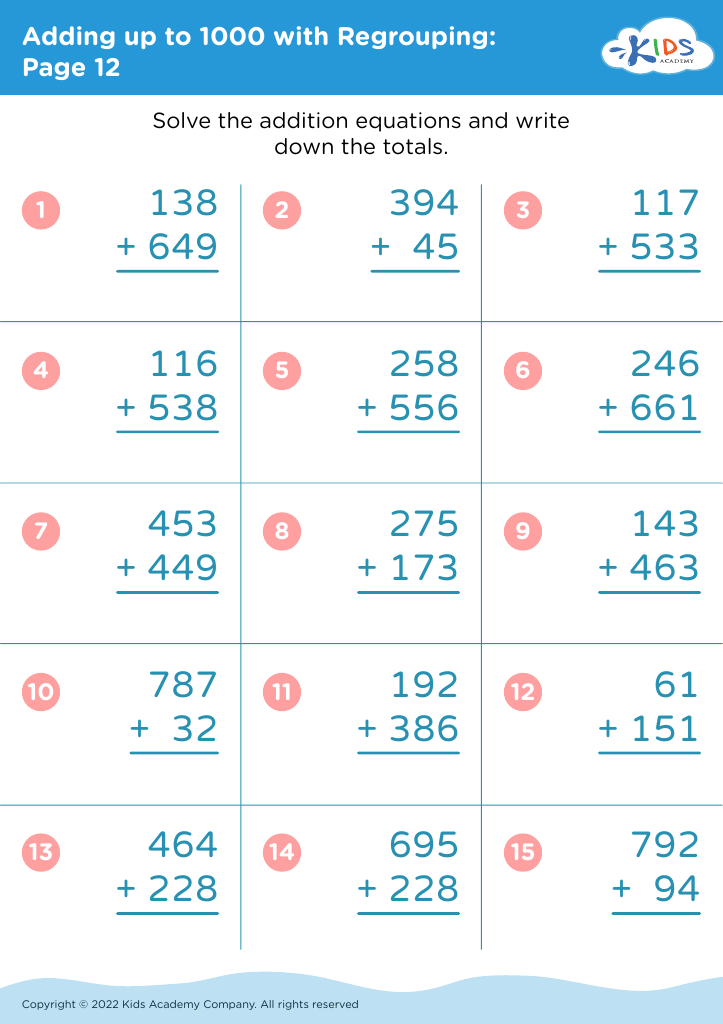
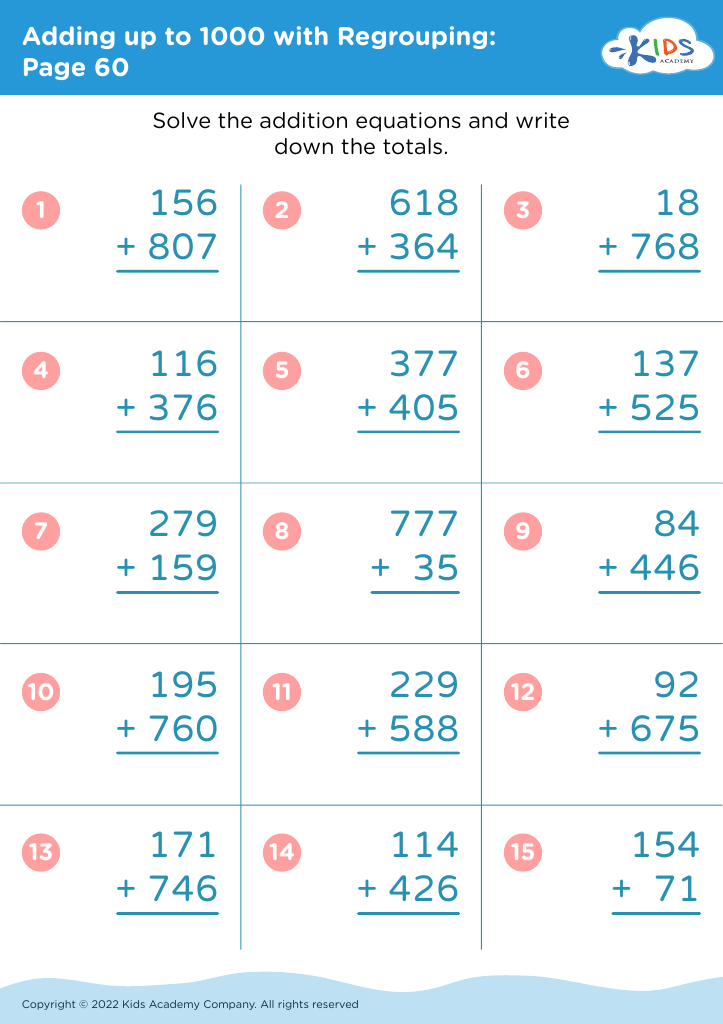
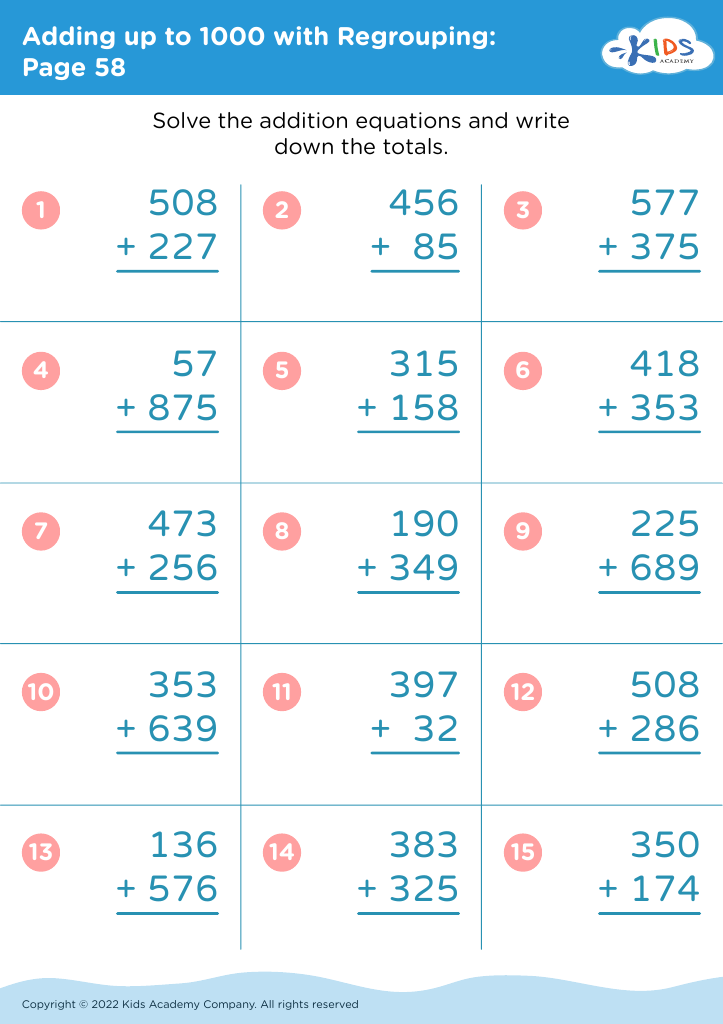
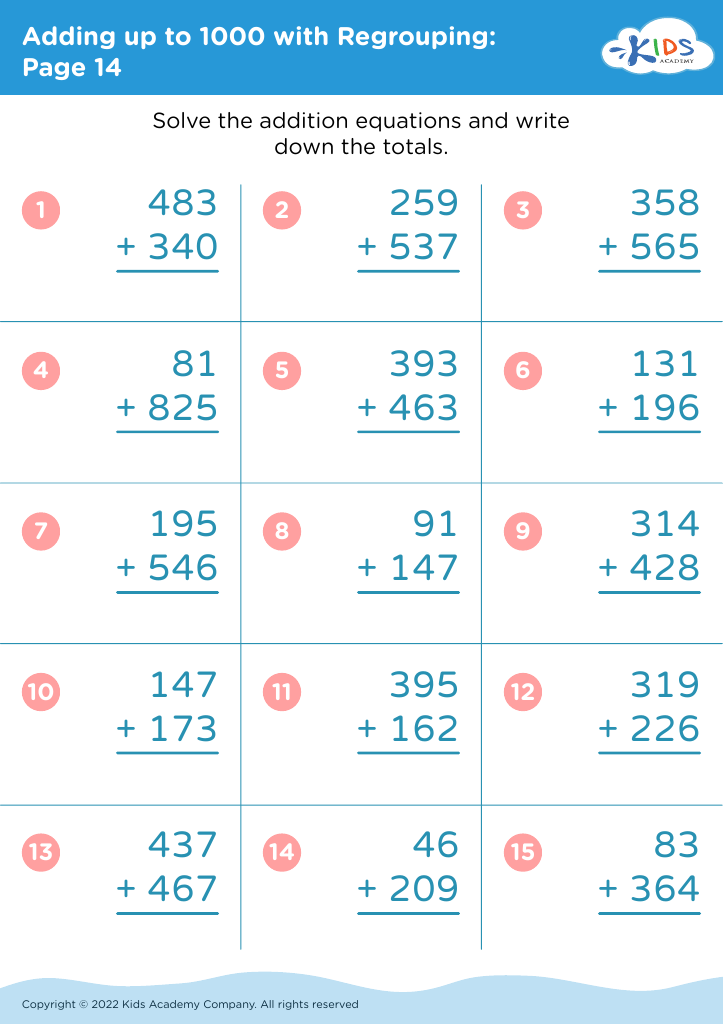
Welcome to our "Color Identification Adding up to 1000 Worksheets" page, designed specifically for children aged 5-9. These engaging worksheets not only introduce children to essential math concepts, but also enhance their color recognition and identification skills. Each fun-filled activity encourages learners to differentiate between colors while practicing addition skills up to 1000. Perfect for classrooms or home learning, our brightly designed worksheets are ideal for making math entertaining and visually stimulating! Help your child master their numbers while discovering the exciting world of colors. Download now to inspire their creativity and confidence in math!



Color identification and understanding are vital skills for children aged 5-9, laying a strong foundation for their cognitive development and creativity. For parents and teachers, fostering these skills supports children's ability to categorize and make sense of the world around them. Colors are inherently linked to language development, as naming colors enhances vocabulary and communication skills. When children recognize colors, they can express themselves more effectively, both verbally and through art.
Additionally, color identification plays a significant role in early math concepts, such as sorting, categorization, and pattern recognition. When combined with activities like adding objects of different colors, children develop critical thinking and problem-solving skills, which are essential for later mathematics. Teachers can utilize colorful materials in lessons to engage young learners, making learning experiences more memorable and enjoyable.
Furthermore, embracing diverse colors in teaching materials helps cultivate an appreciation for diversity within the classroom, promoting inclusivity and awareness. For parents, encouraging color identification at home can turn everyday activities into fun learning experiences. In summary, focusing on color identification enriches communication, boosts cognitive skills, and fosters creative expression, making it an essential aspect of early education that benefits both parents and teachers.








