Filters

16 filtered results

Clear all filters
Favorites
With answer key
Interactive

16 filtered results

Difficulty Level

Grade


Explore our engaging "Comparing Fractions Adding Up to 1000 Worksheets" designed for children ages 5-9! These interactive and educational resources make learning fun as students develop essential math skills related to fractions. Our worksheets guide young learners through comparing fractions effectively, enhancing their number sense and arithmetic abilities. By practicing, kids will gain confidence in identifying which fractions are larger, smaller, or equal. These exercises are perfect for classrooms or at-home practice, allowing children to master fractions in an enjoyable way. Visit our website to access these valuable learning tools and support your child’s math journey today!
Check out this FREE Trial Lesson on Adding up to 1000 for age 5-9!

Sorting Objects into 3 Categories

Favorites
With answer key
Interactive
  • 5-9
  • Comparing Fractions
  • Adding up to 1000
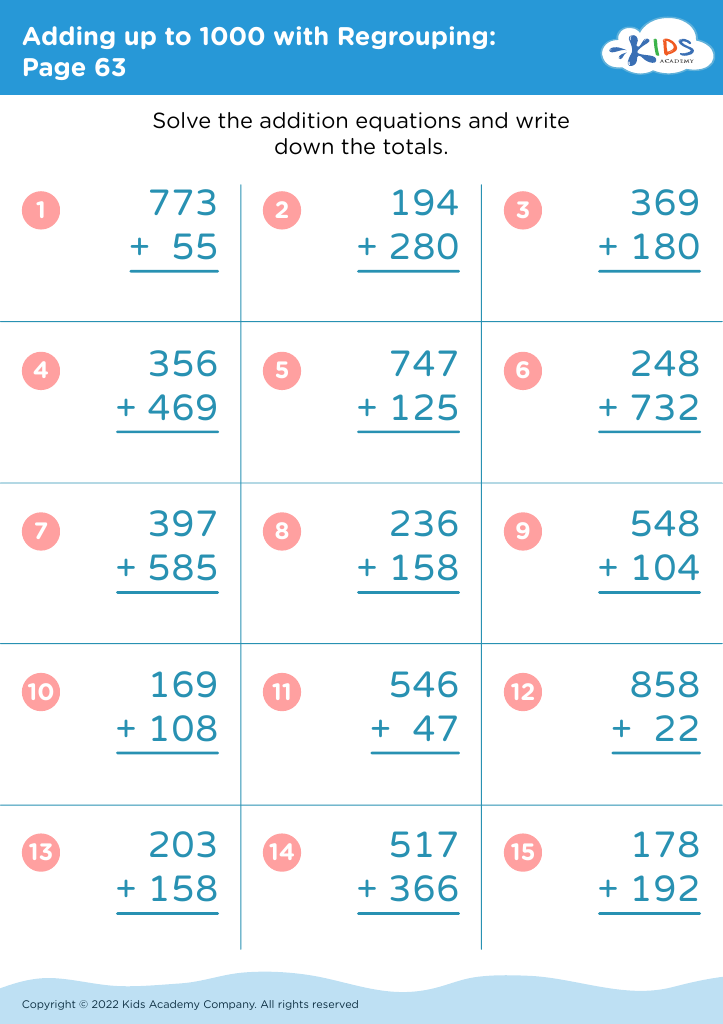
Adding up to 1000 with Regrouping: Page 63
Worksheet
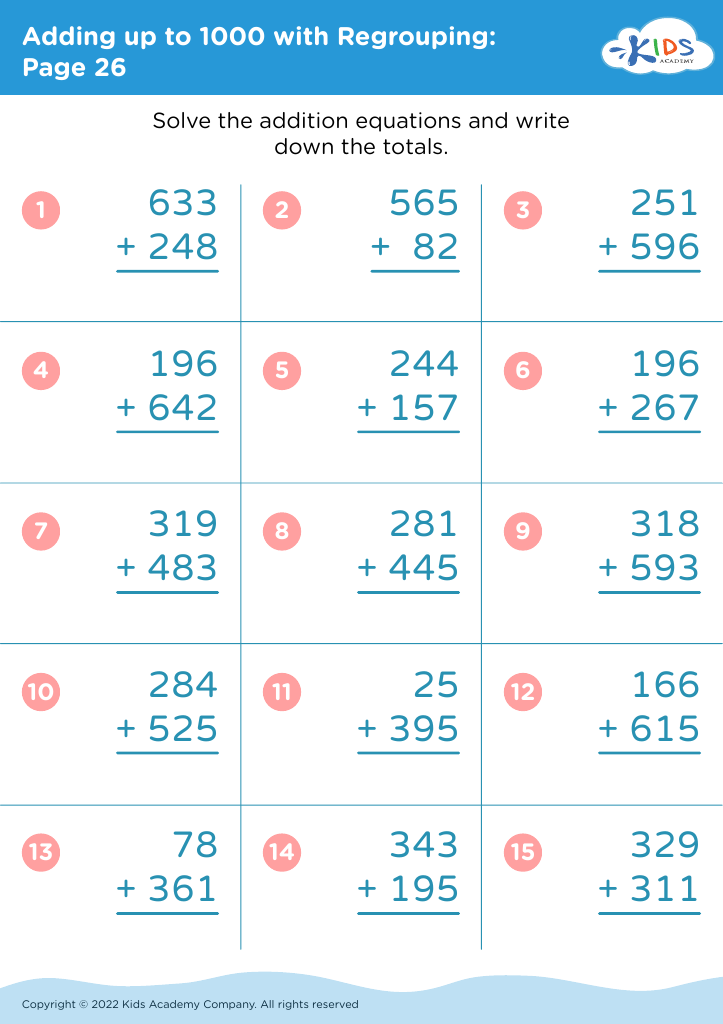
Adding up to 1000 with Regrouping: Page 26
Worksheet
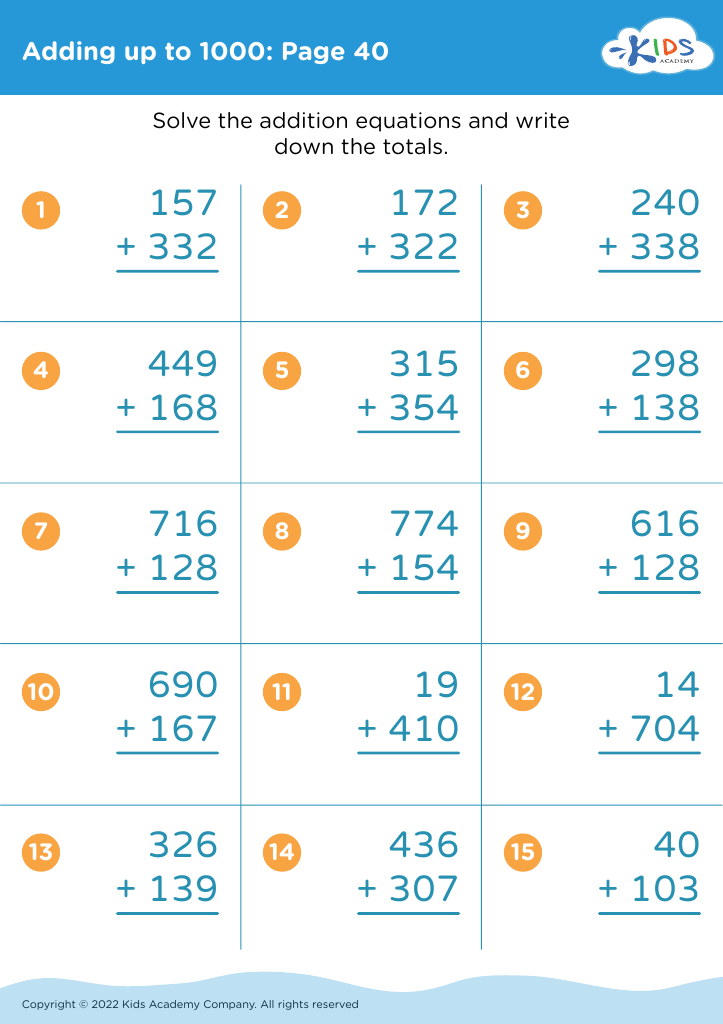
Adding up to 1000: Page 40

Adding up to 1000: Page 40

Adding up to 1000: Page 40
Worksheet
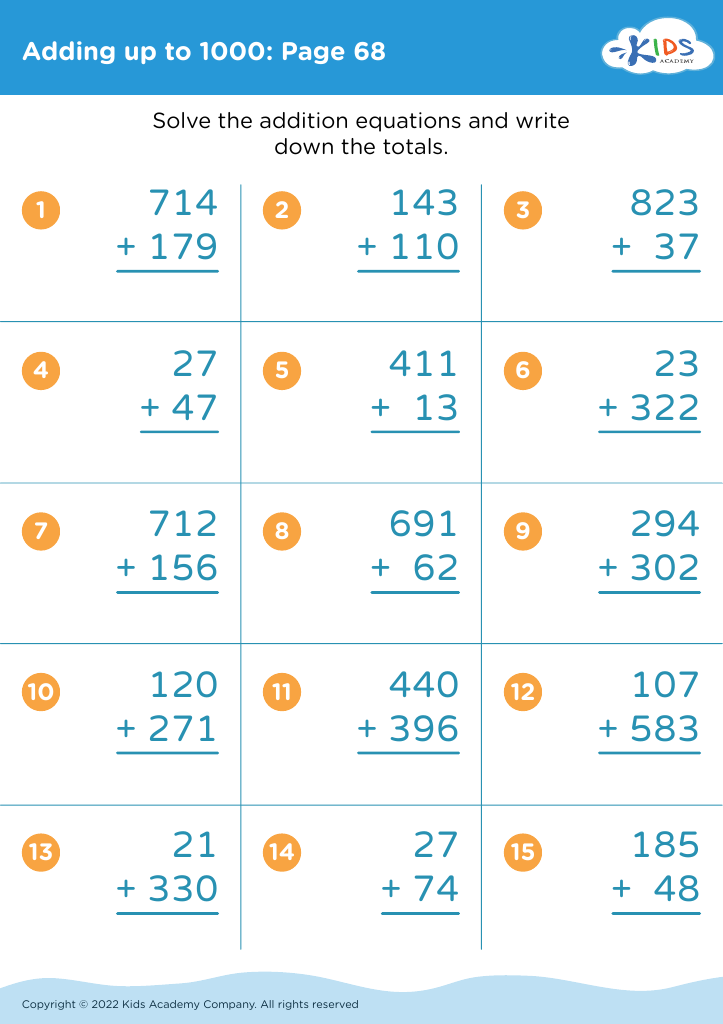
Adding up to 1000: Page 68

Adding up to 1000: Page 68

Adding up to 1000: Page 68
Worksheet
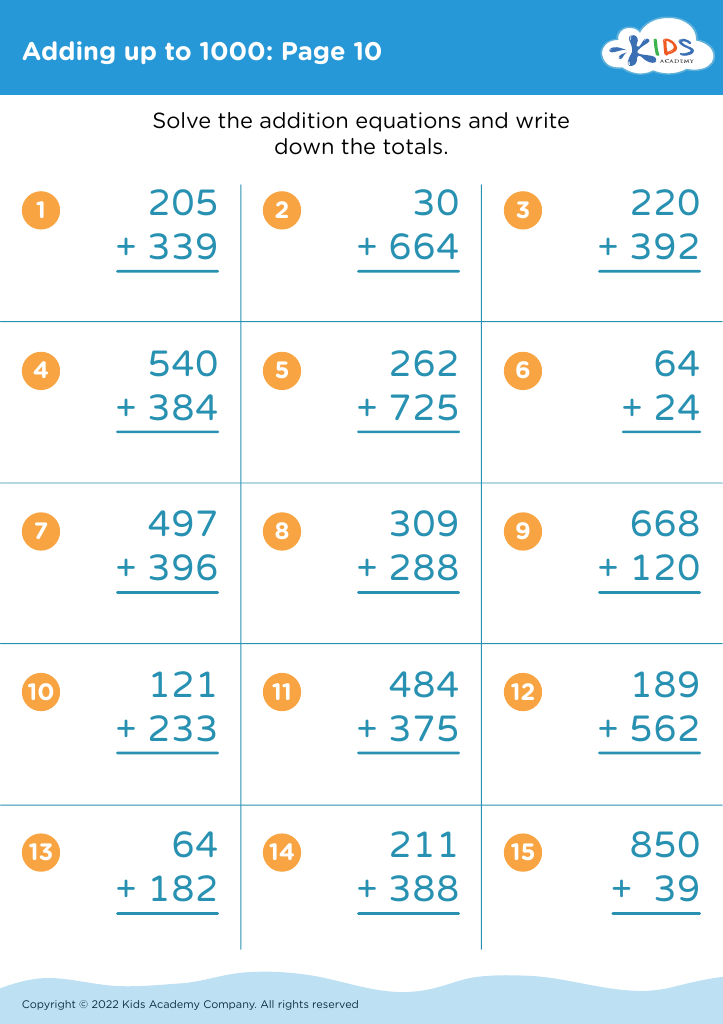
Adding up to 1000: Page 10

Adding up to 1000: Page 10

Adding up to 1000: Page 10
Worksheet
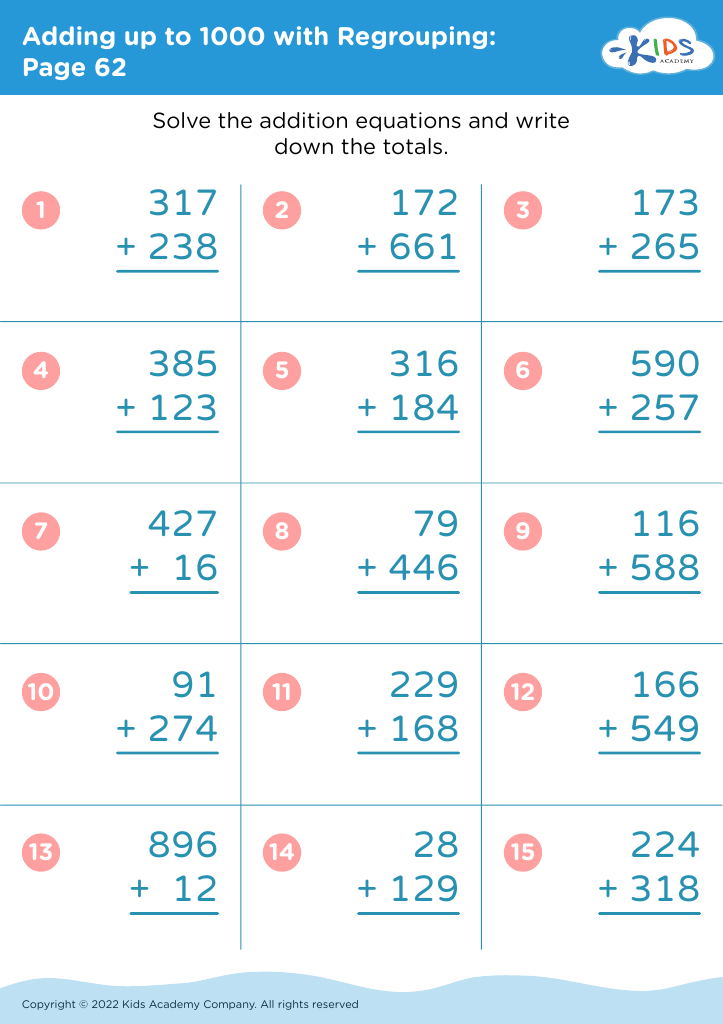
Adding up to 1000 with Regrouping: Page 62
Worksheet
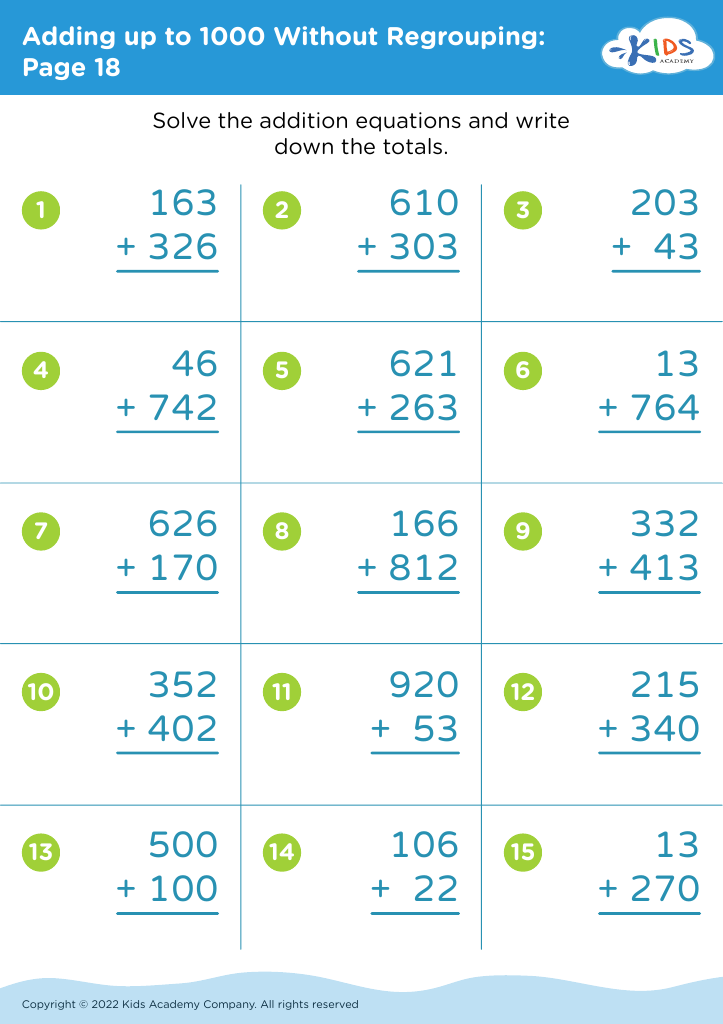
Adding up to 1000 Without Regrouping: Page 18
Worksheet
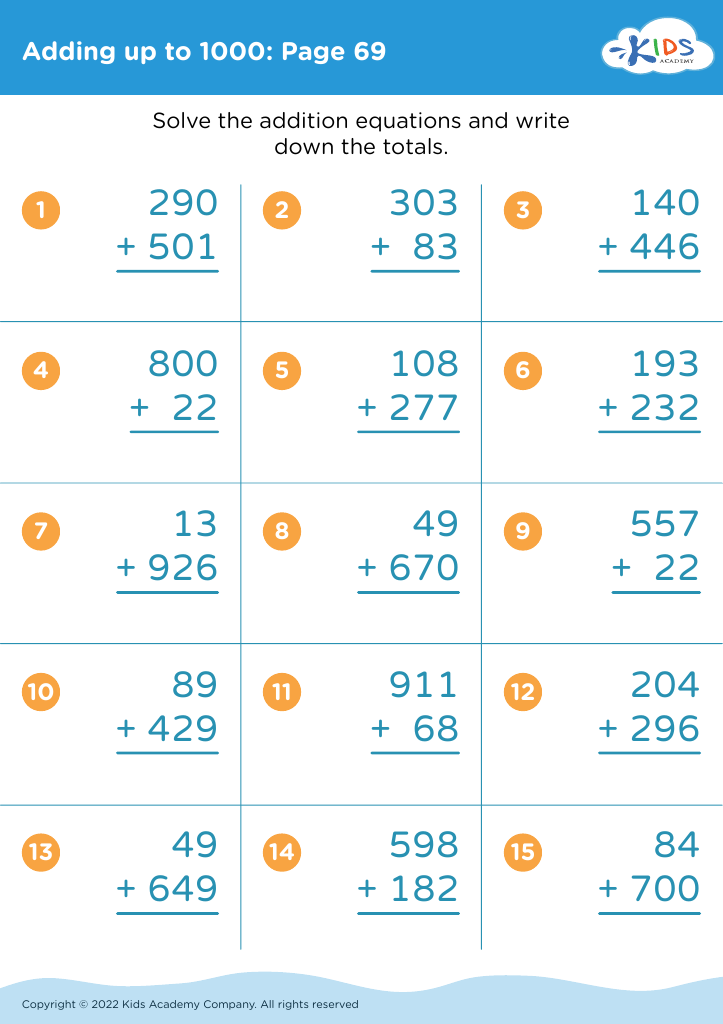
Adding up to 1000: Page 69

Adding up to 1000: Page 69

Adding up to 1000: Page 69
Worksheet
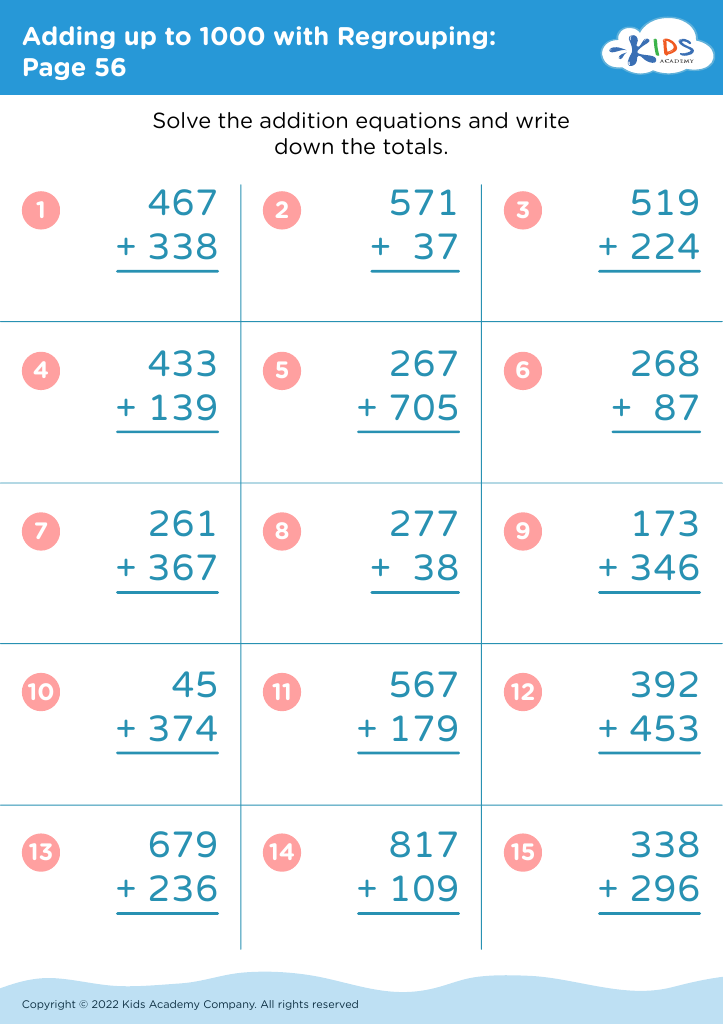
Adding up to 1000 with Regrouping: Page 56
Worksheet
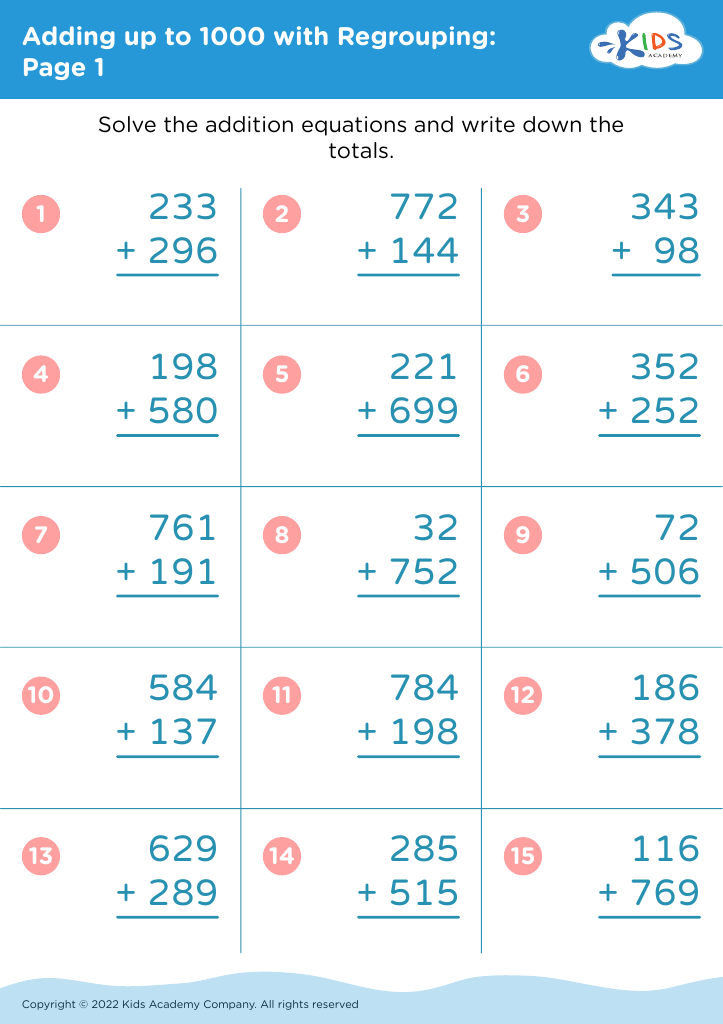
Adding up to 1000 with Regrouping: Page 1
Worksheet
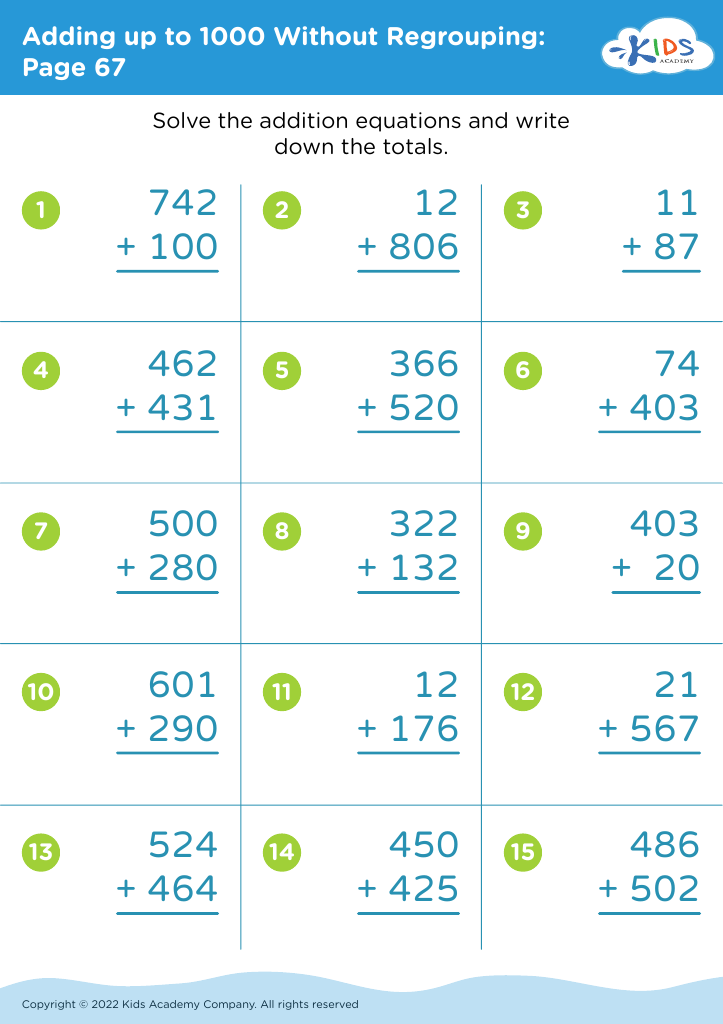
Adding up to 1000 Without Regrouping: Page 67
Worksheet
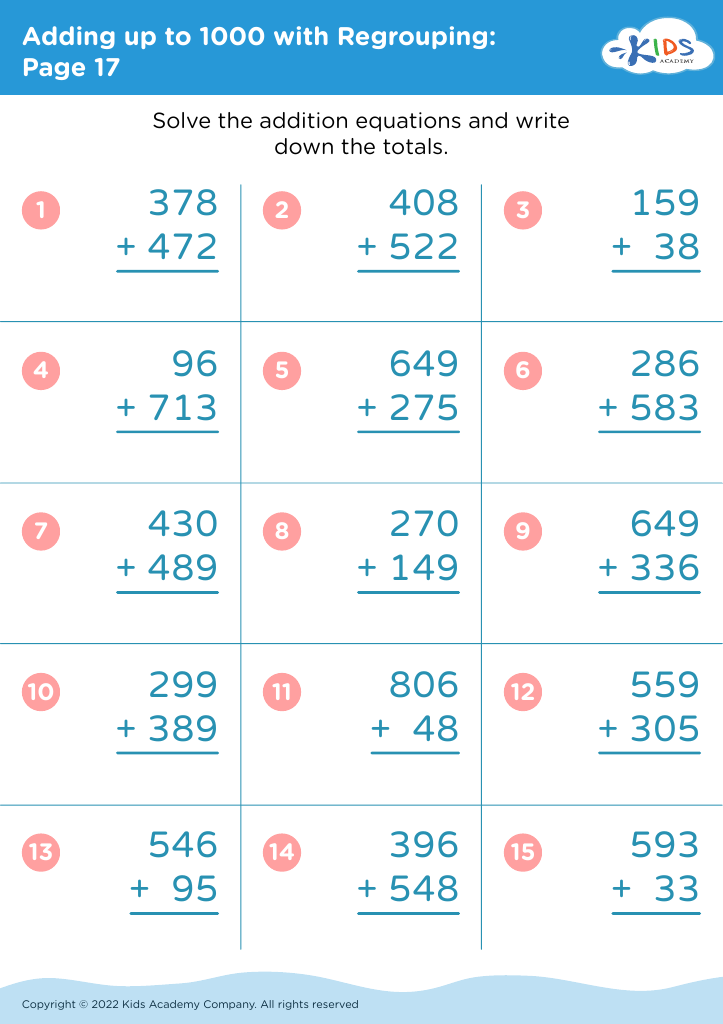
Adding up to 1000 with Regrouping: Page 17
Worksheet
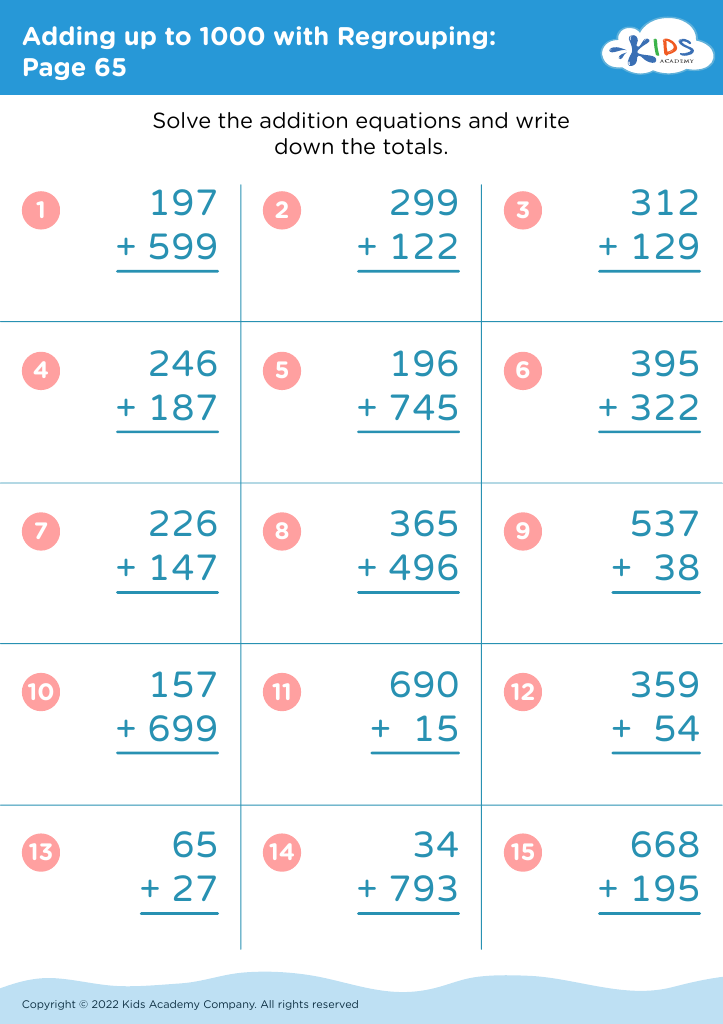
Adding up to 1000 with Regrouping: Page 65
Worksheet
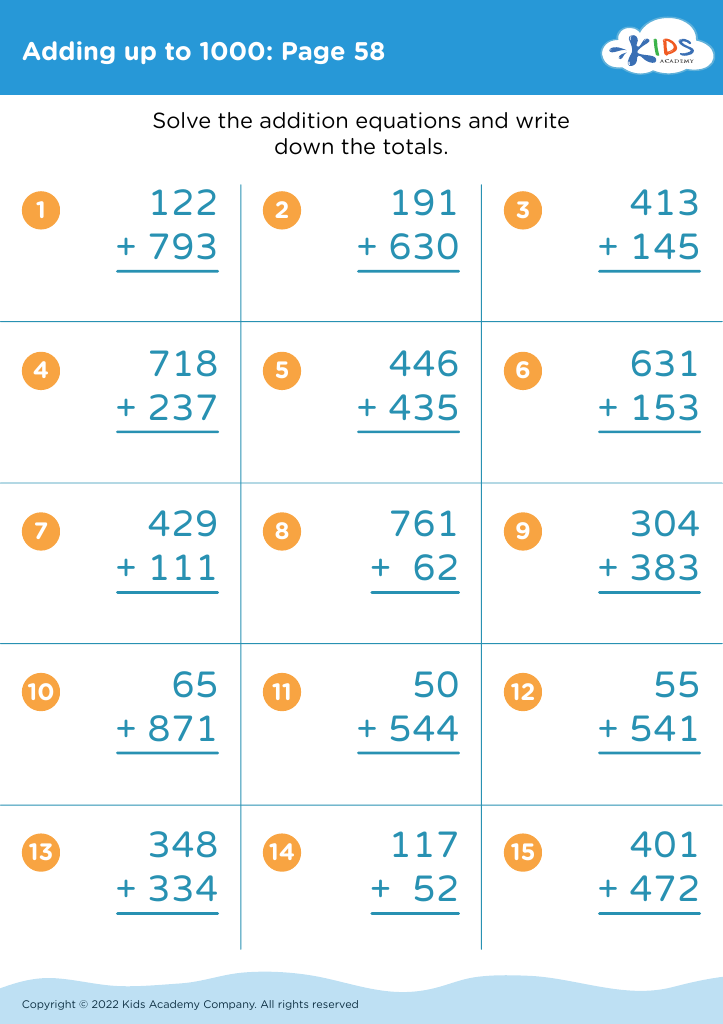
Adding up to 1000: Page 58

Adding up to 1000: Page 58

Adding up to 1000: Page 58
Worksheet
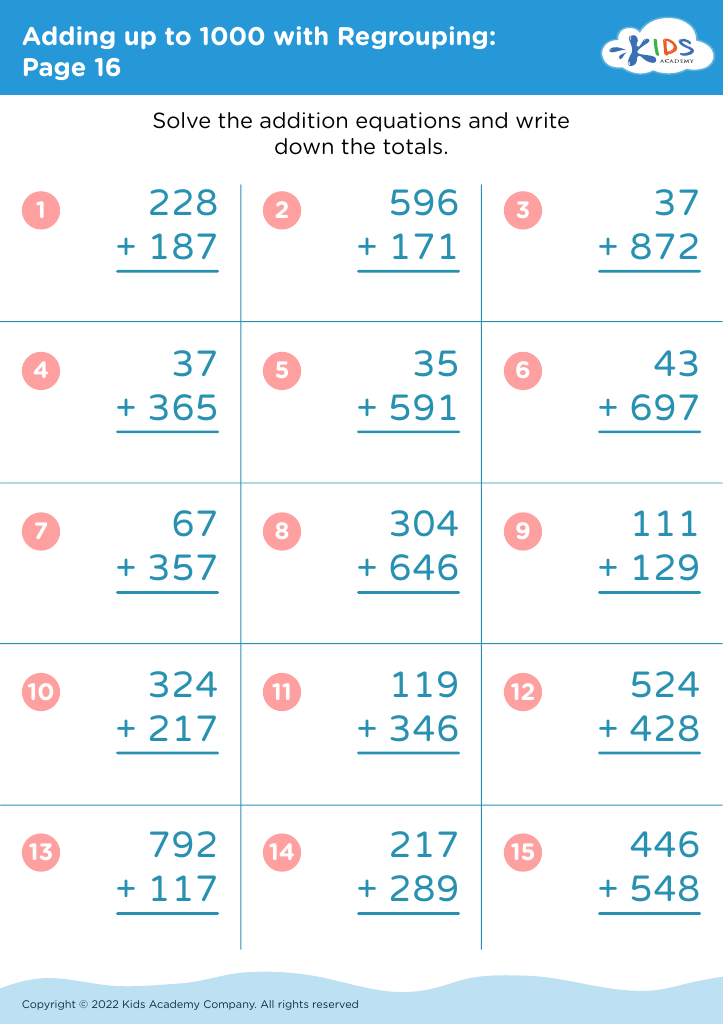
Adding up to 1000 with Regrouping: Page 16
Worksheet
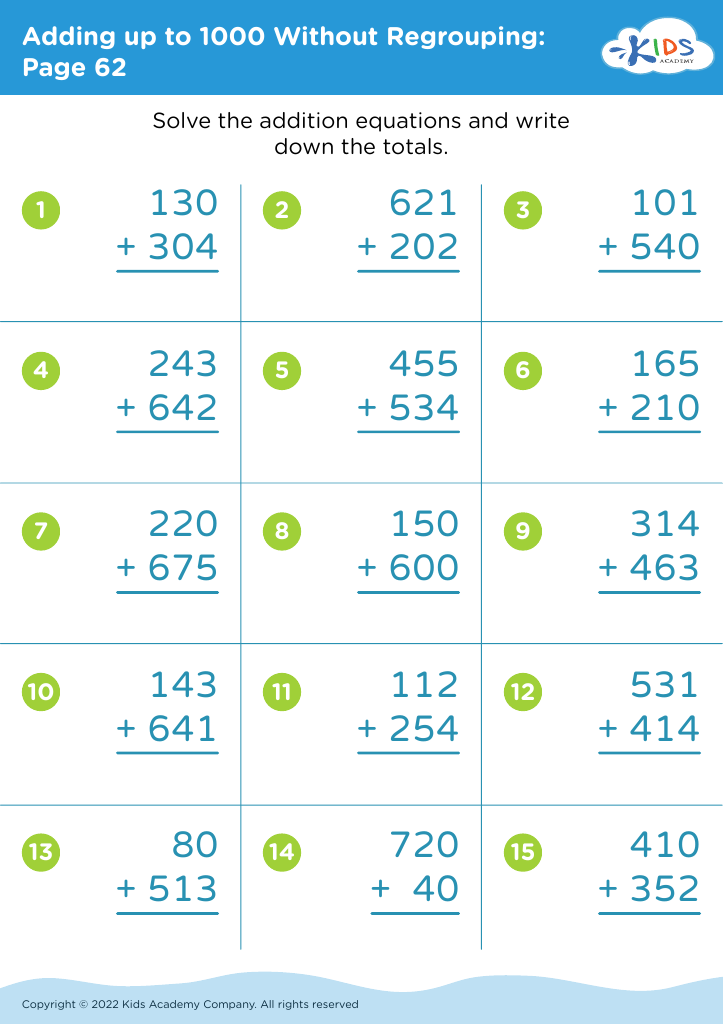
Adding up to 1000 Without Regrouping: Page 62
Worksheet


Understanding the concept of comparing fractions is critical for young learners, particularly ages 5-9, as it lays the foundation for stronger mathematical skills. At this age, children are developing their numerical understanding, and grasping the nuances of fractions helps them manipulate numbers more confidently. Learning to compare fractions can also enhance their problem-solving abilities, as it requires them to analyze and evaluate different quantities, promoting critical thinking.

Additionally, comparing fractions creates a strong basis for future mathematical concepts, such as addition, subtraction, and operations with larger numbers. When children comprehend how fractions relate to one another, they become adept at applying these skills in practical scenarios, which reinforces learning. Engaging in activities that involve fractions can also be a fun way to encourage parent-child bonding. Real-life applications, such as cooking or sharing pizza, bring math to life, making it relatable and enjoyable.

For teachers and parents, fostering this understanding not only aids academic achievement but also empowers children to approach math with enthusiasm and confidence, preparing them for more complex concepts in their educational journey. Investing time in teaching these foundational skills ensures a smoother transition to advanced topics in mathematics later on.