
Critical Thinking Adding up to 1000 Worksheets for Ages 5-9
5 filtered results
Difficulty Level
Grade
Age
-
From - To
Subject
Activity
Standards
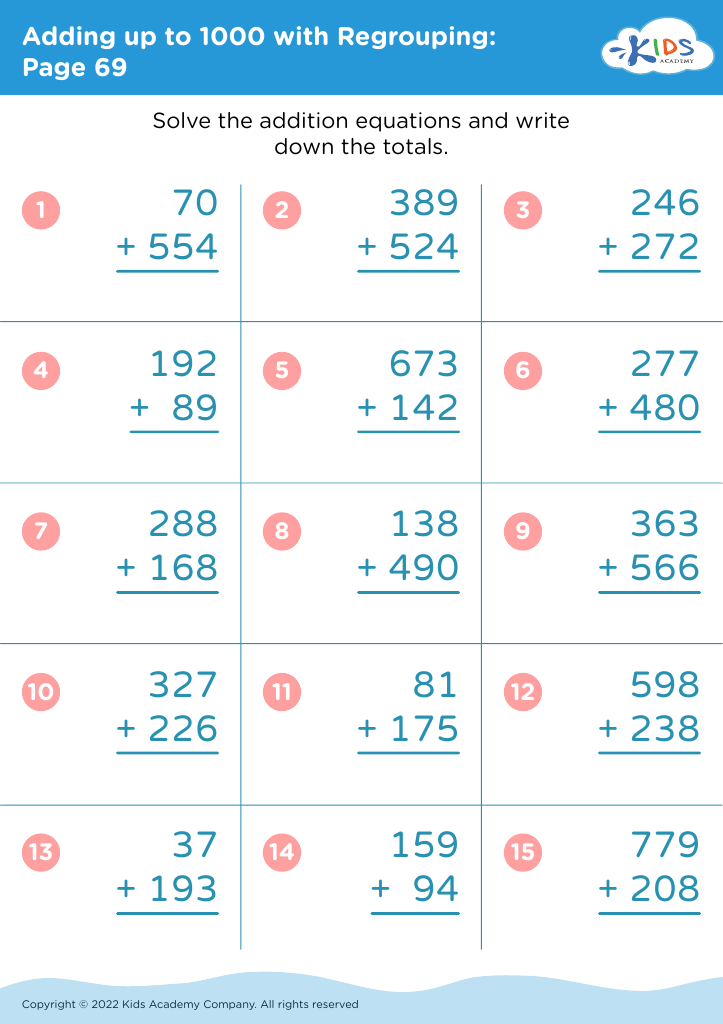
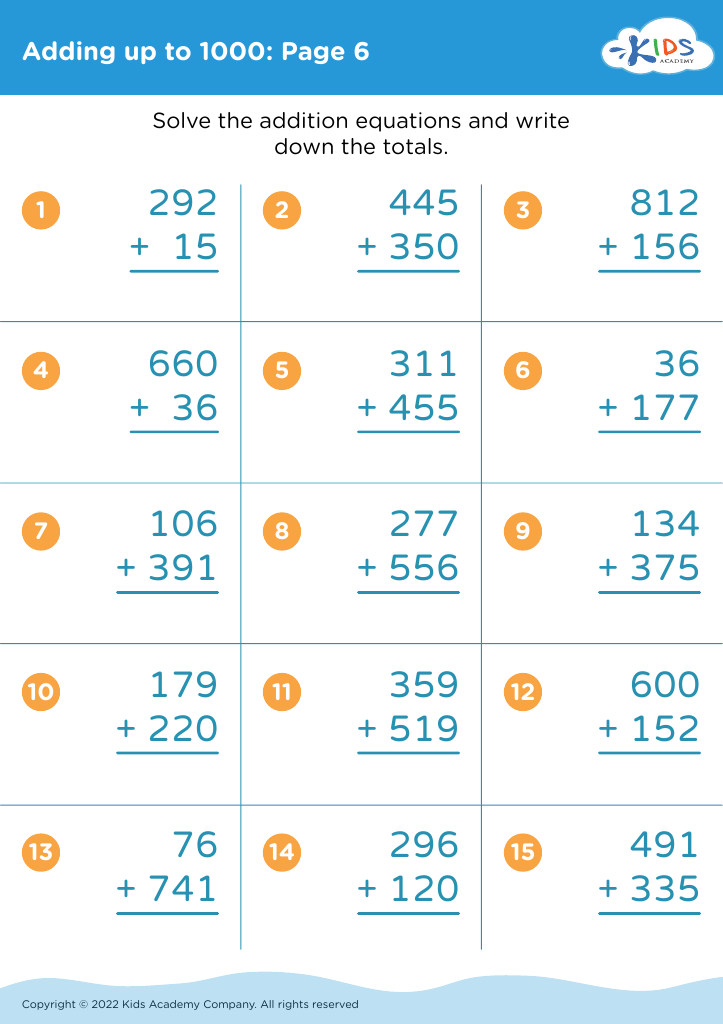
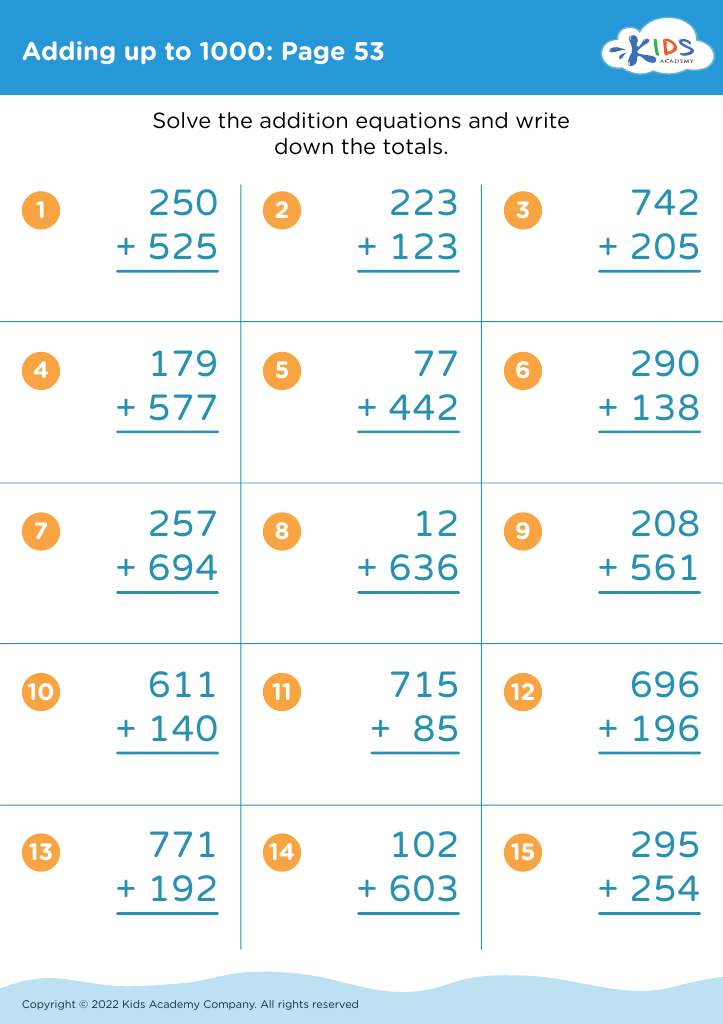
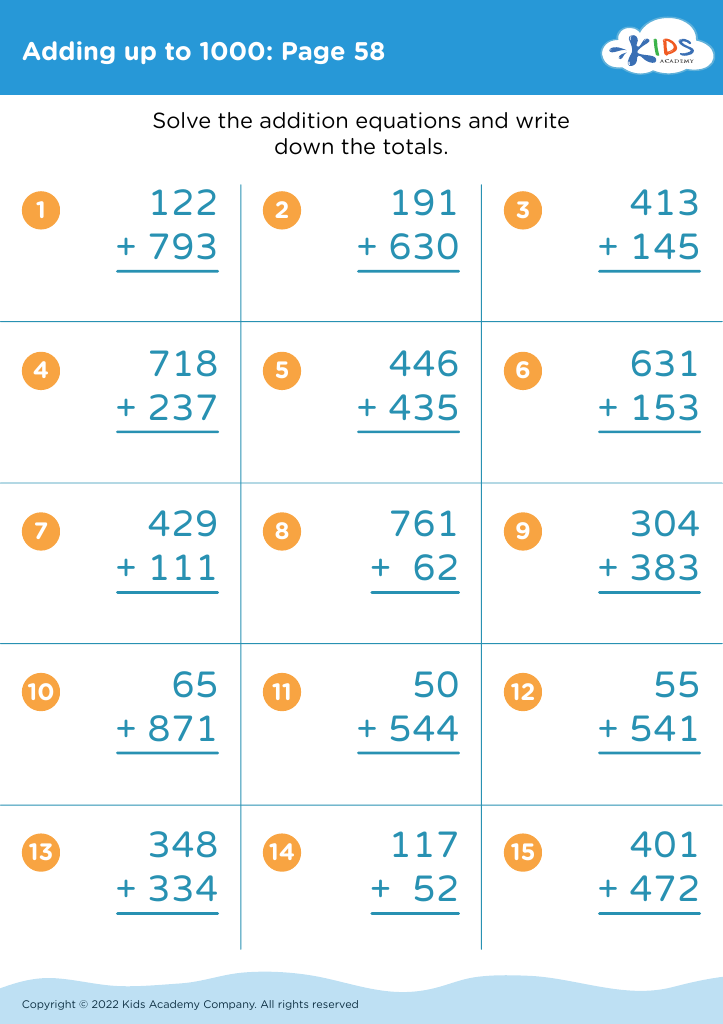
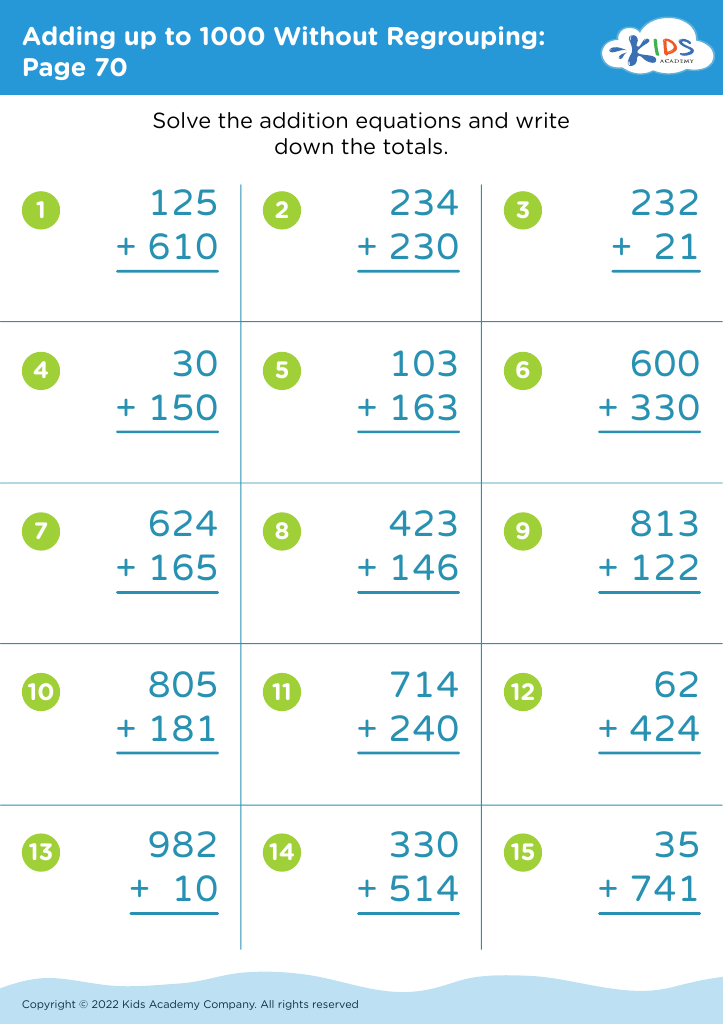
Discover our essential "Critical Thinking Adding Up to 1000 Worksheets" designed specifically for children aged 5-9. These engaging activities promote advanced problem-solving skills while allowing young learners to practice addition involving numbers up to 1000. Our thoughtfully crafted worksheets not only challenge students to refine their math abilities, but also encourage deeper analytical thinking. Each worksheet is tailored to foster curiosity and creativity, making math enjoyable and effective. Perfect for classroom use or at-home learning, these resources support your child's educational journey by building a solid foundation in mathematics and critical reasoning. Empower your child to think critically today!
Favorites
With answer key
Interactive
Join Kids Academy for Free
Who is primarily going to use this learning content?



Critical thinking is essential for children aged 5-9 as it lays the foundation for successful learning and future problem-solving abilities. Parents and teachers should prioritize fostering critical thinking skills for several reasons.
Firstly, critical thinking encourages independence. When children learn to analyze, evaluate, and synthesize information rather than just memorize it, they develop the confidence to tackle challenges on their own. This independence enhances their learning experience and fosters a lifelong love for discovery.
Secondly, critical thinking skills improve decision-making. Children learn to weigh options, consider outcomes, and make reasoned choices. This not only helps them academically but also equips them to handle social situations and conflicts effectively.
Additionally, nurturing critical thinking enhances creativity. As children learn to think outside the box, they become more innovative in their ideas and expressions. This imaginative approach can beneficially influence their academic work and personal hobbies.
Lastly, developing these skills early helps children prepare for a rapidly changing world. As future careers require adaptability and critical solutions, instilling these abilities at a young age gives children a significant advantage.
In conclusion, by emphasizing critical thinking, parents and teachers can support children's holistic development, equipping them to navigate both academic and real-world challenges successfully.








