Fine Motor Skills Adding up to 1000 Worksheets for Ages 5-9
12 filtered results
-
From - To
Enhance your child's fine motor skills and mathematical abilities with our "Fine Motor Skills Adding up to 1000 Worksheets for Ages 5-9". Designed by educational experts, these engaging activities provide a fun and interactive way to practice complex addition while boosting dexterity. Perfect for young learners, each worksheet emphasizes precision and hand-eye coordination, essential for writing and other school tasks. Watch your child build proficiency in math through colorful, creative exercises that make learning enjoyable. Equip them with the tools they need to succeed academically and beyond with this comprehensive resource from Kids Academy.
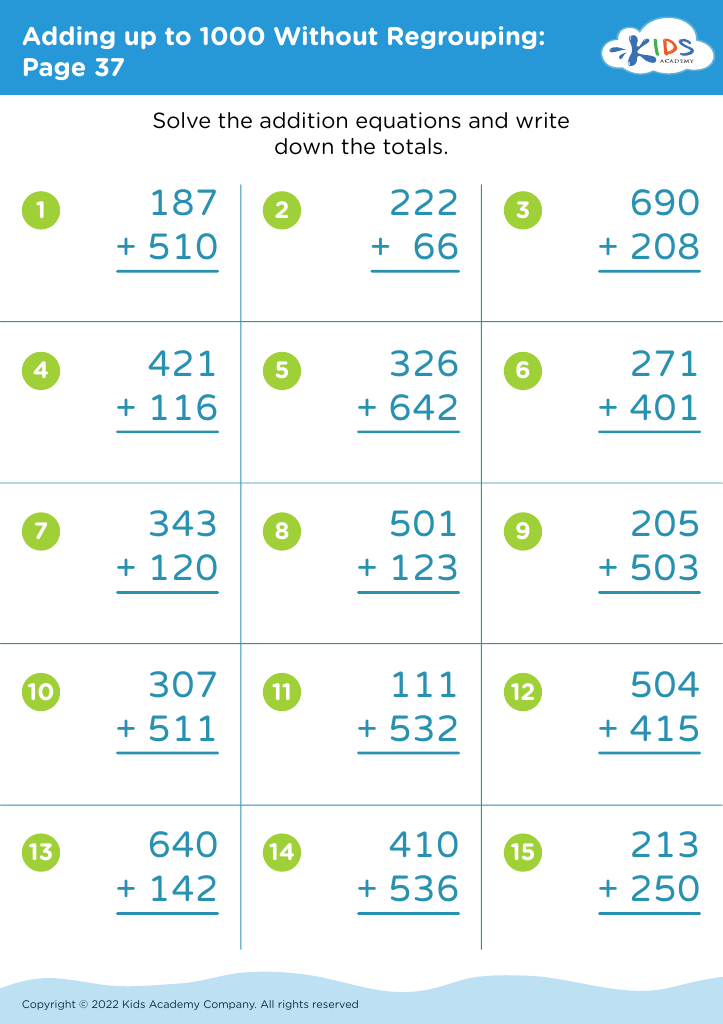
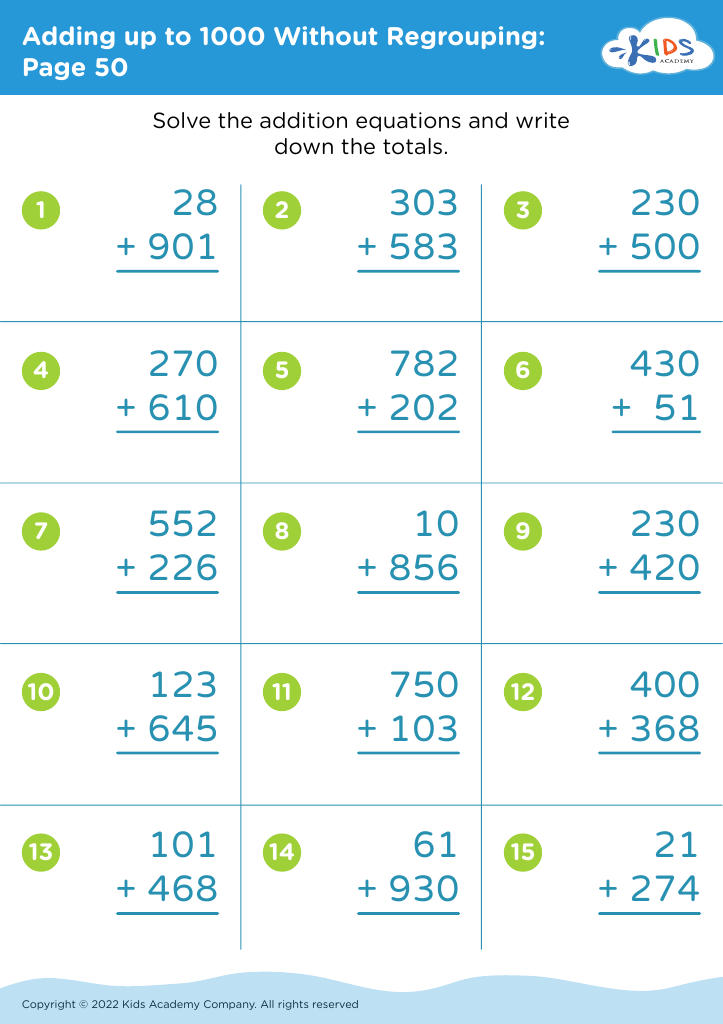
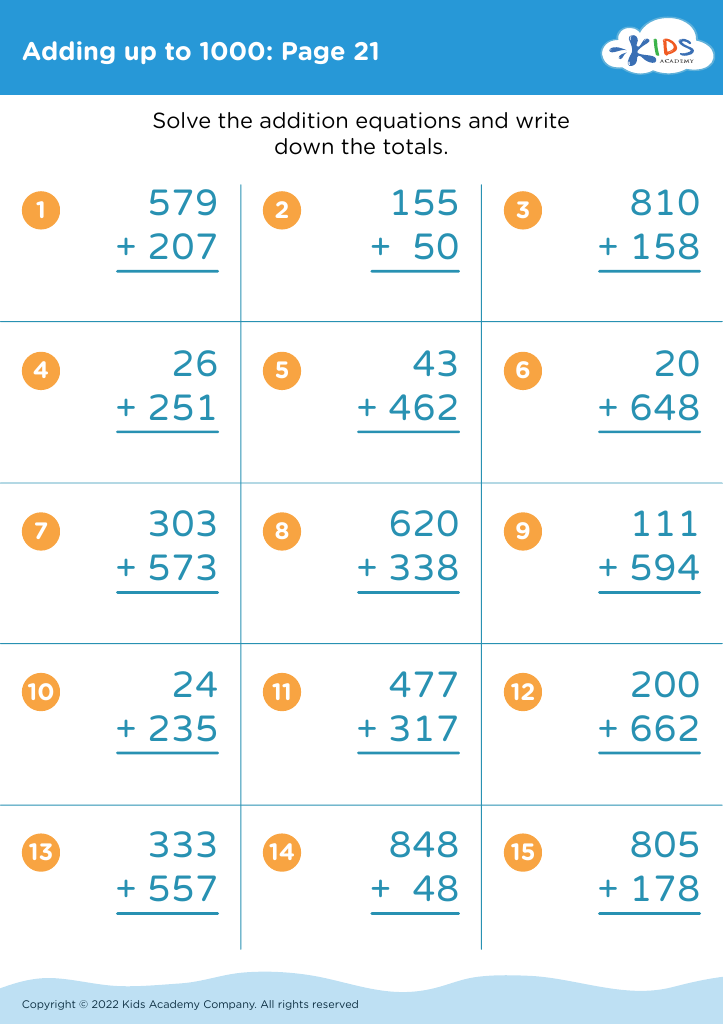
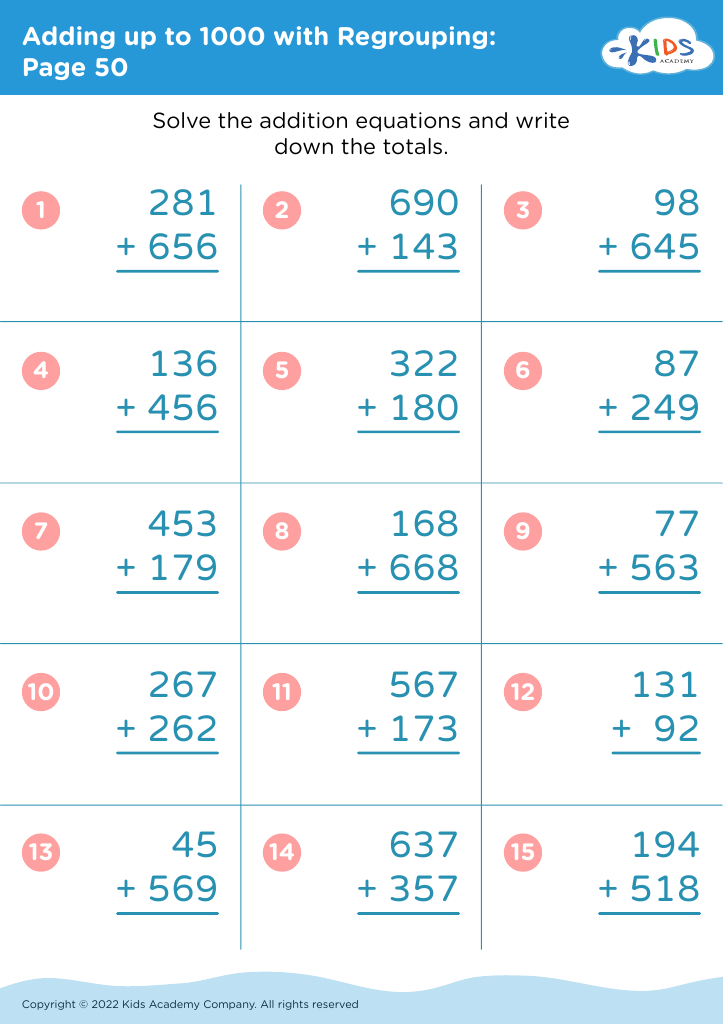
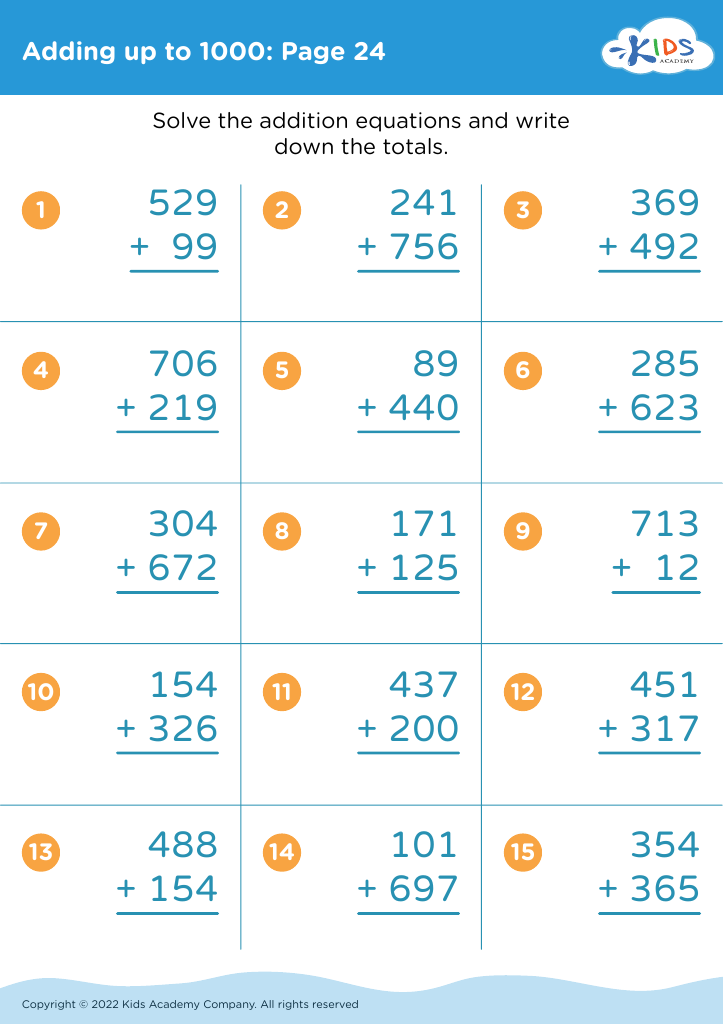
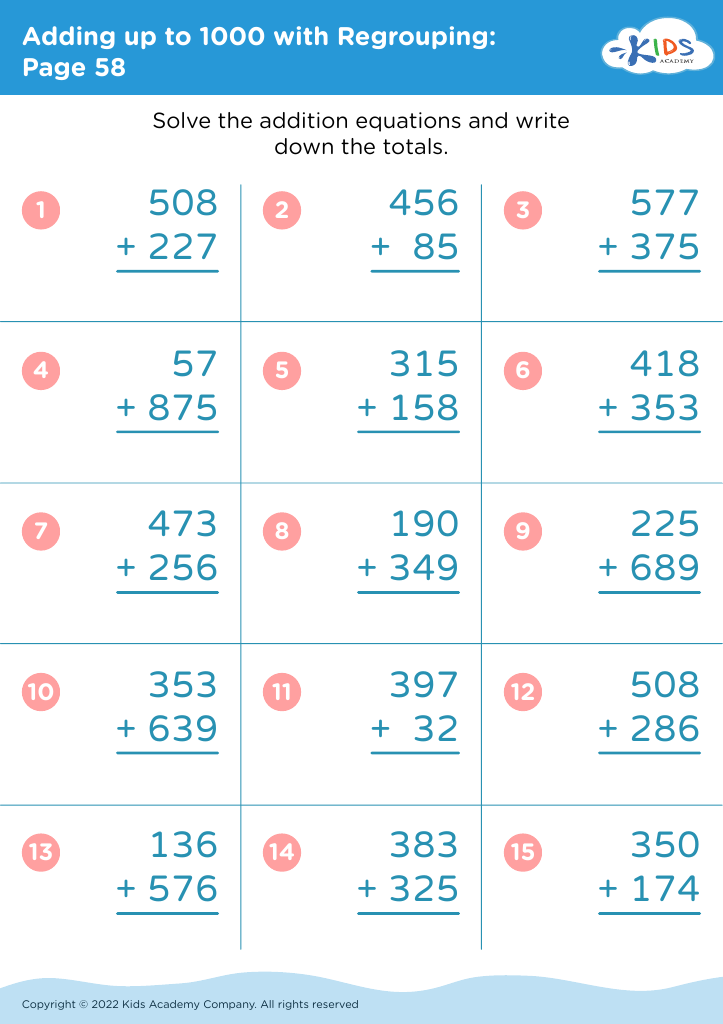
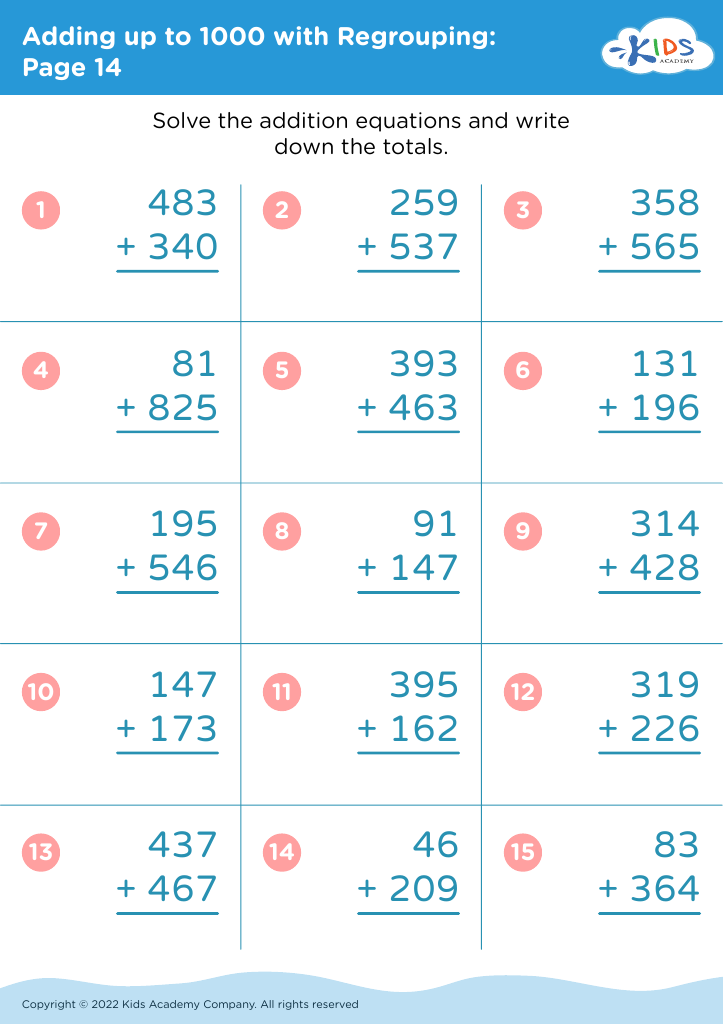
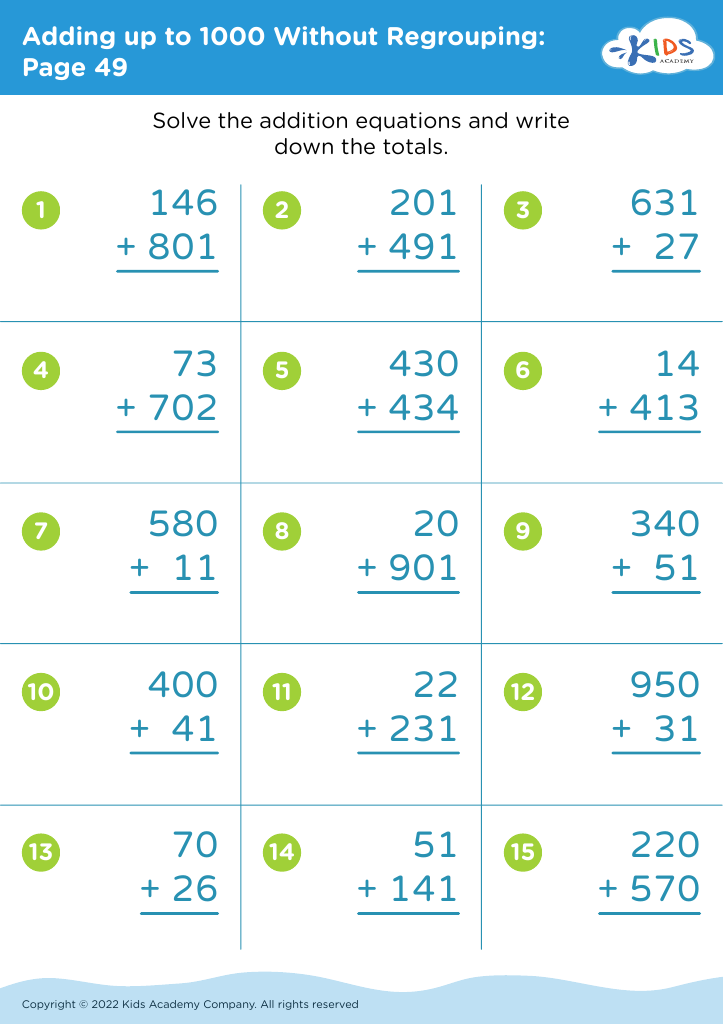
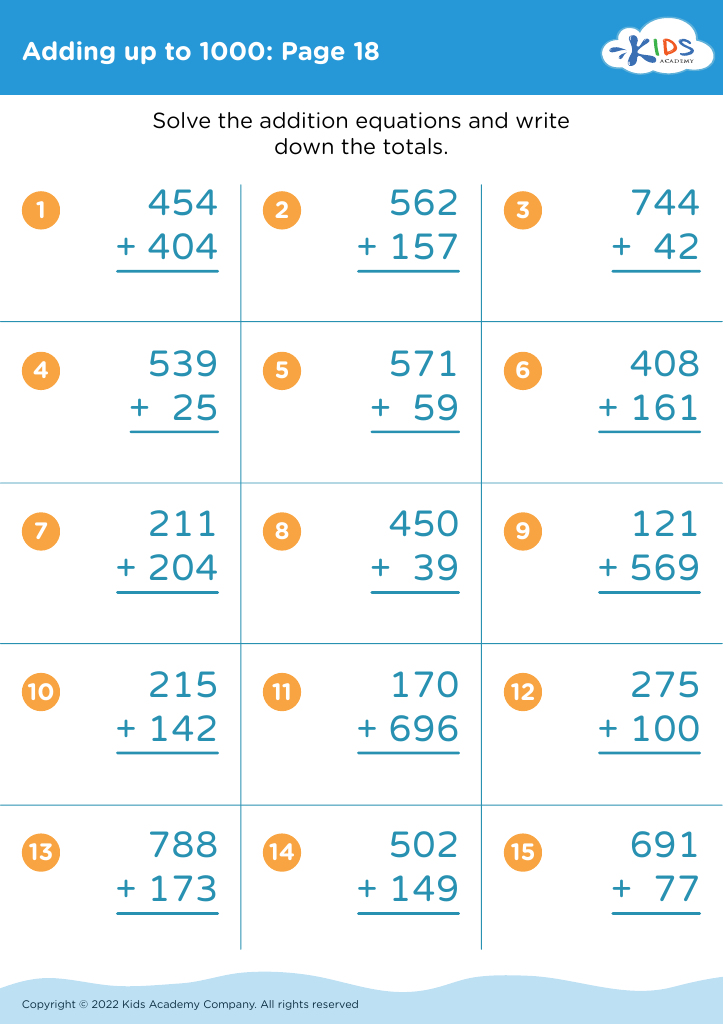
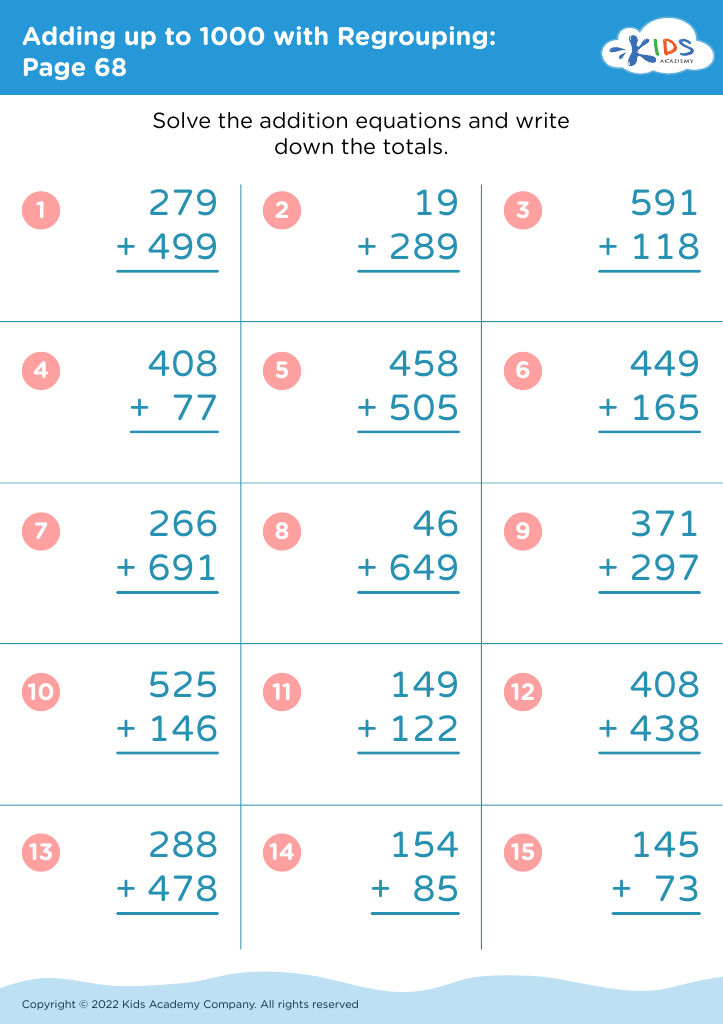
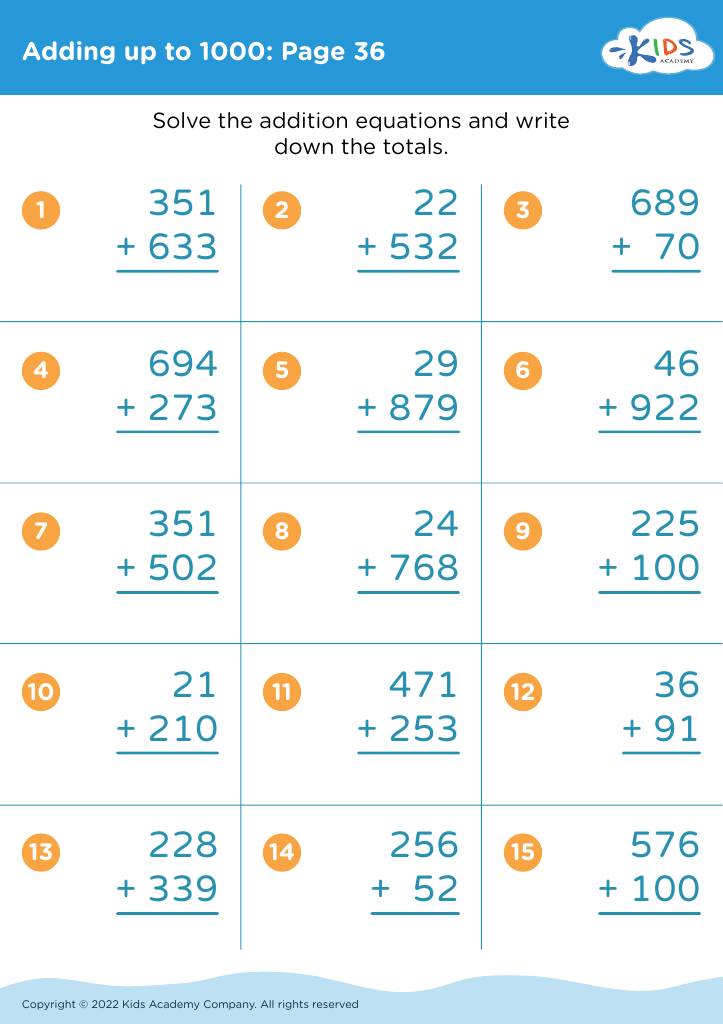
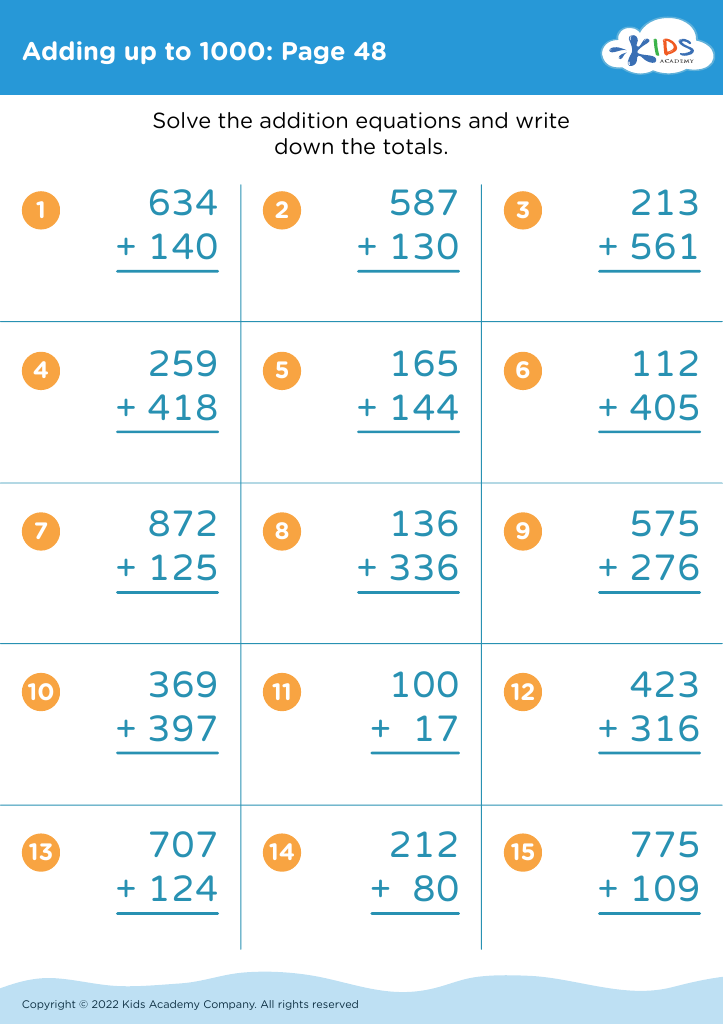



Fine motor skills are critical for young children, ages 5-9, and integrating math activities like adding up to 1000 can significantly benefit their development. These skills involve the coordination of small muscles, particularly in the hands and fingers, and are foundational for tasks like writing, cutting, and manipulating small objects. Here’s why parents and teachers should prioritize them:
-
Academic Readiness: Fine motor skills are essential for handwriting, a crucial element of early literacy. Practicing addition problems enhances hand-eye coordination and control, promoting neat and legible writing.
-
Focus and Attention: Tracking numbers and managing calculations up to 1000 require sustained attention and focus, attributes that transfer over to other academic subjects and daily activities.
-
Confidence and Independence: Mastering tasks tied to fine motor development fosters a sense of achievement in children. This builds their confidence and encourages a positive attitude towards learning challenges.
-
Problem-Solving Skills: Complex tasks like adding large numbers strengthen cognitive abilities. Children learn to follow steps, correct errors, and develop logical thinking.
-
Life Skills: Beyond the classroom, fine motor skills are essential for everyday tasks such as tying shoelaces, buttoning clothes, and using utensils, leading to greater independence.
By integrating activities that promote fine motor skills and fundamental arithmetic, parents and teachers lay a robust foundation for a child’s comprehensive development, both academically and personally.








