
Fine motor skills (writing) Adding up to 1000 Worksheets for Ages 5-9
5 filtered results
Difficulty Level
Grade
Age
-
From - To
Subject
Activity
Standards
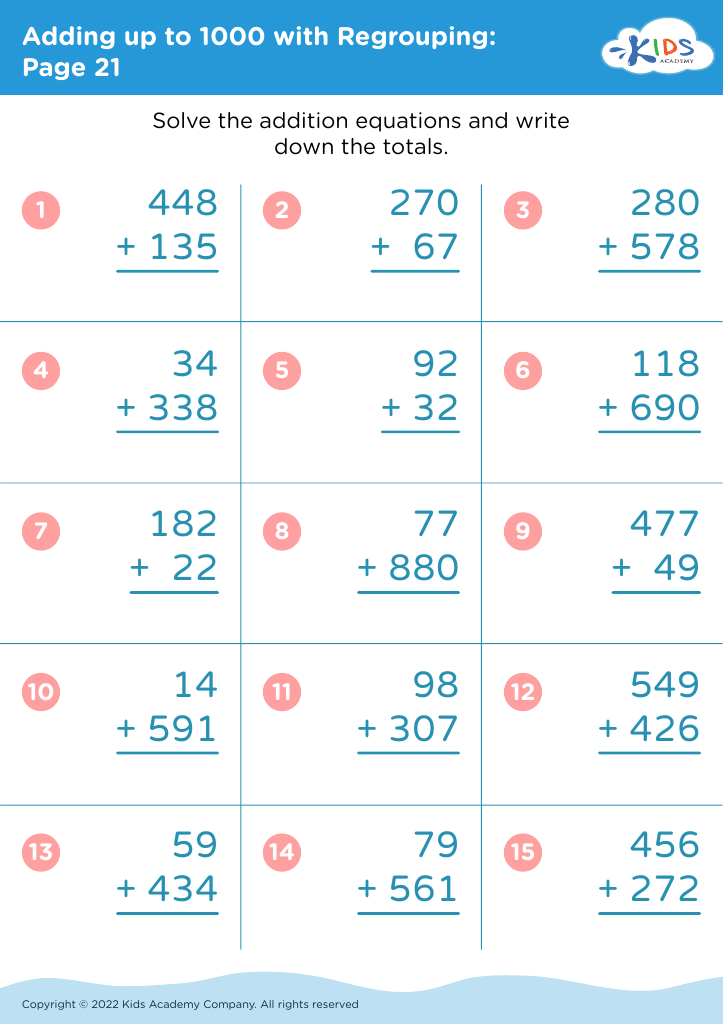
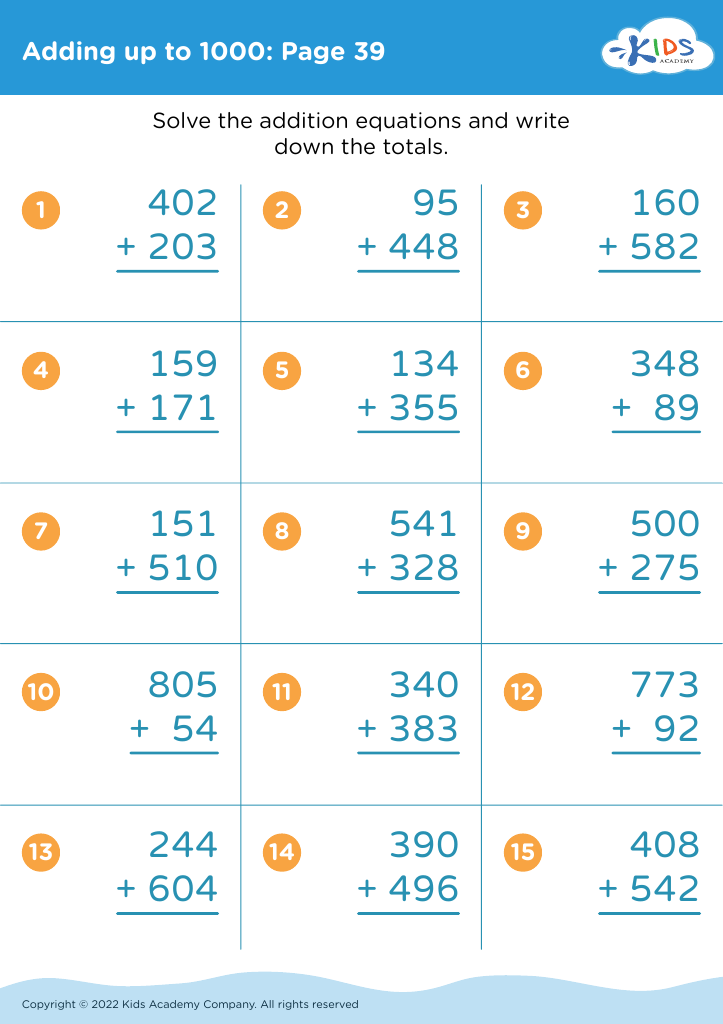
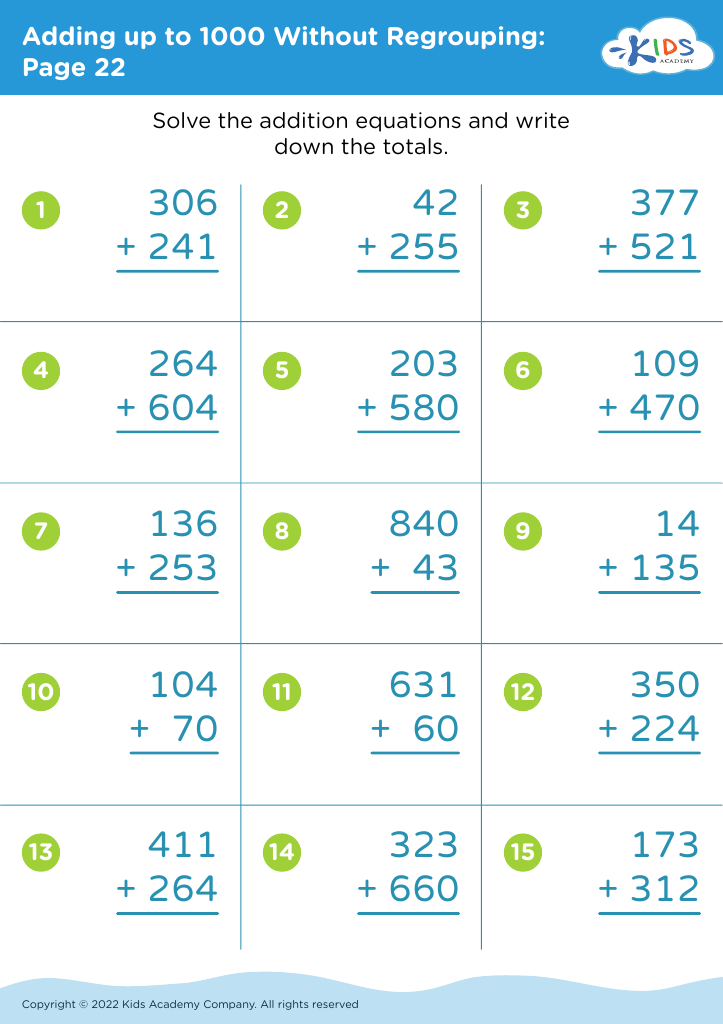
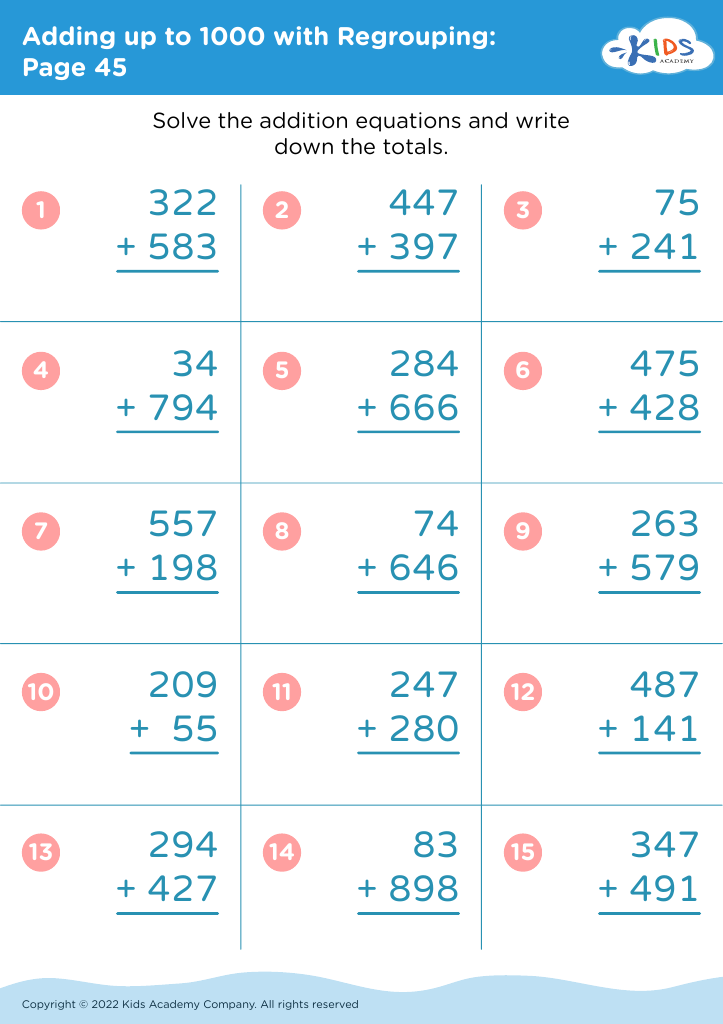
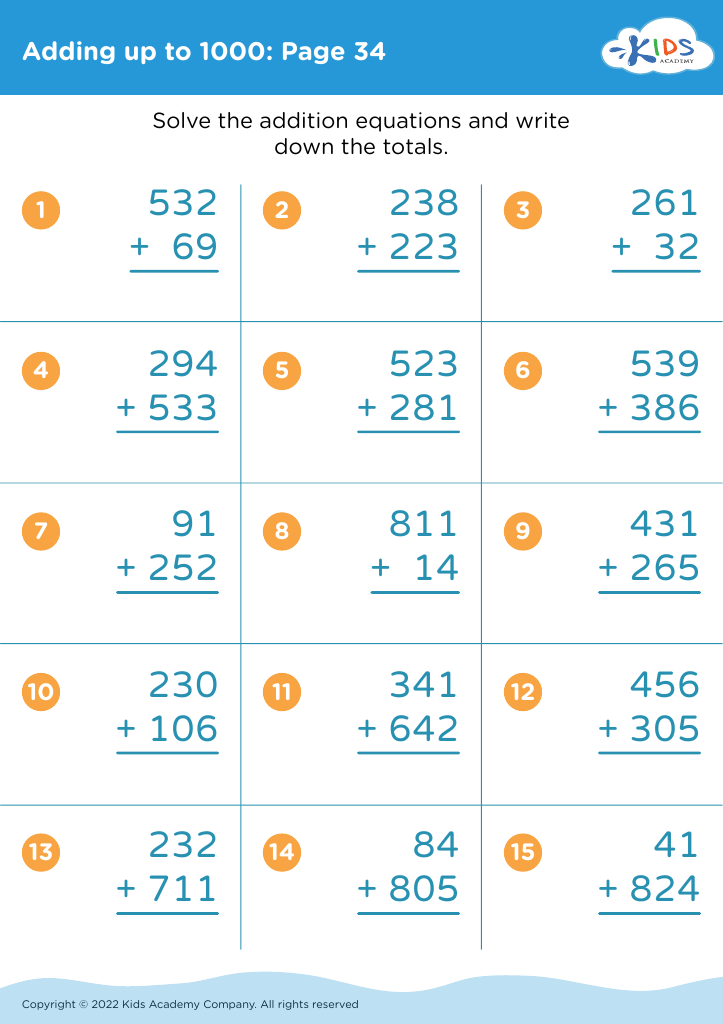
Boost your child's fine motor skills and mathematical abilities with our engaging "Adding up to 1000 Worksheets" designed for ages 5-9. These carefully crafted practice sheets aim to improve pencil control and handwriting while making learning math fun and interactive. Tailored to enhance precision in writing and calculation, our worksheets offer varied activities, from simple sums to more complex additions up to 1000. Ideal for building foundational math skills, they support classroom learning and provide valuable at-home practice. With colorful illustrations and step-by-step guidance, these worksheets make mastering math and fine motor skills an enjoyable adventure for young learners.
Favorites
With answer key
Interactive
Join Kids Academy for Free
Who is primarily going to use this learning content?



Parents and teachers should place significant emphasis on the development of fine motor skills, including writing and basic arithmetic abilities (such as adding up to 1000), for children aged 5-9. Fine motor skills are essential for executing precise movements involving the small muscles in the hands and fingers, which are crucial for tasks like writing, buttoning clothes, and using utensils. Mastery of these skills directly influences a child's independence and confidence in performing daily activities.
Developing strong fine motor skills also lays a foundation for academic success. Writing, in particular, is a fundamental skill that plays a vital role in communication and learning processes. When children develop proficient writing abilities, they are better prepared to express their thoughts, complete assignments, and engage more fully in the educational environment. Additionally, writing enhances cognitive functions such as memory, attention, and critical thinking.
Furthermore, skills in basic arithmetic, like adding up to 1000, are crucial at this stage as they foster mathematical understanding and encourage logical problem-solving abilities. Mastery of these skills can boost a child's self-esteem and promote a positive attitude towards learning. Therefore, investing time and effort in the development of fine motor skills and arithmetic expertise during these formative years results in a multitude of benefits that support a child’s overall growth and lifelong learning potential.








