Following instructions Adding up to 1000 Worksheets for Ages 5-9
5 filtered results
-
From - To
Enhance your child’s math and follow-through abilities with “Following Instructions Adding up to 1000 Worksheets for Ages 5-9.” These engaging resources are specifically designed to bolster their addition skills while emphasizing the importance of carefully following instructions. Perfect for young learners in elementary grades, these worksheets offer a variety of fun and educational activities. They not only help kids practice adding large numbers but also improve their attention to detail and ability to comprehend and execute directions. Ensure a well-rounded learning experience that integrates math proficiency with essential cognitive skills. Try our worksheets to build your child's confidence and competence in math!
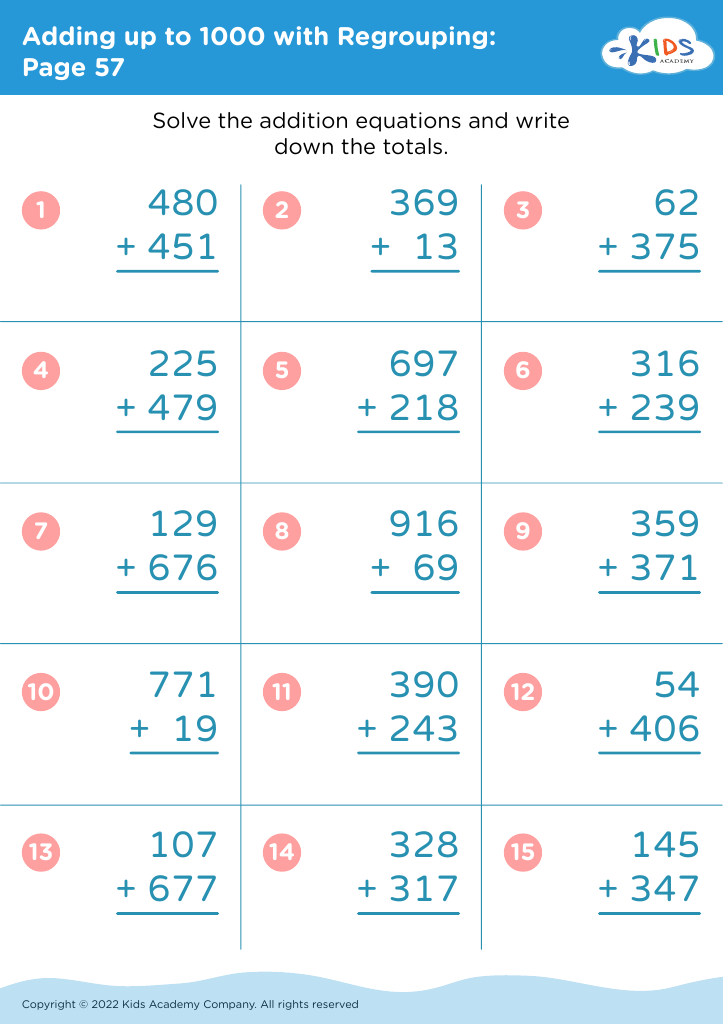
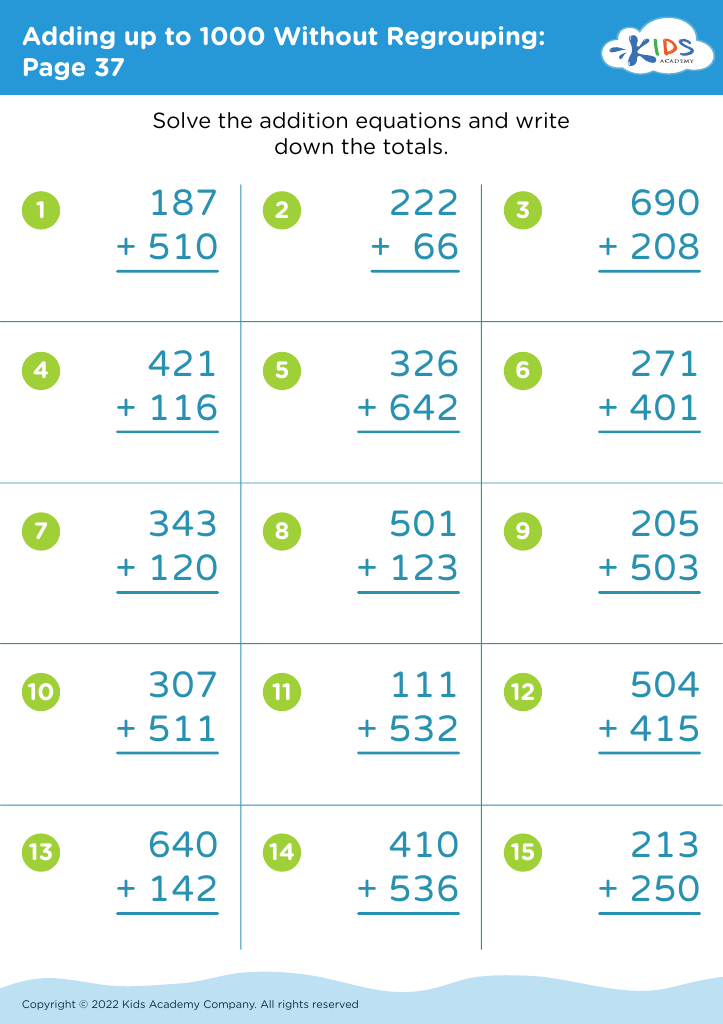
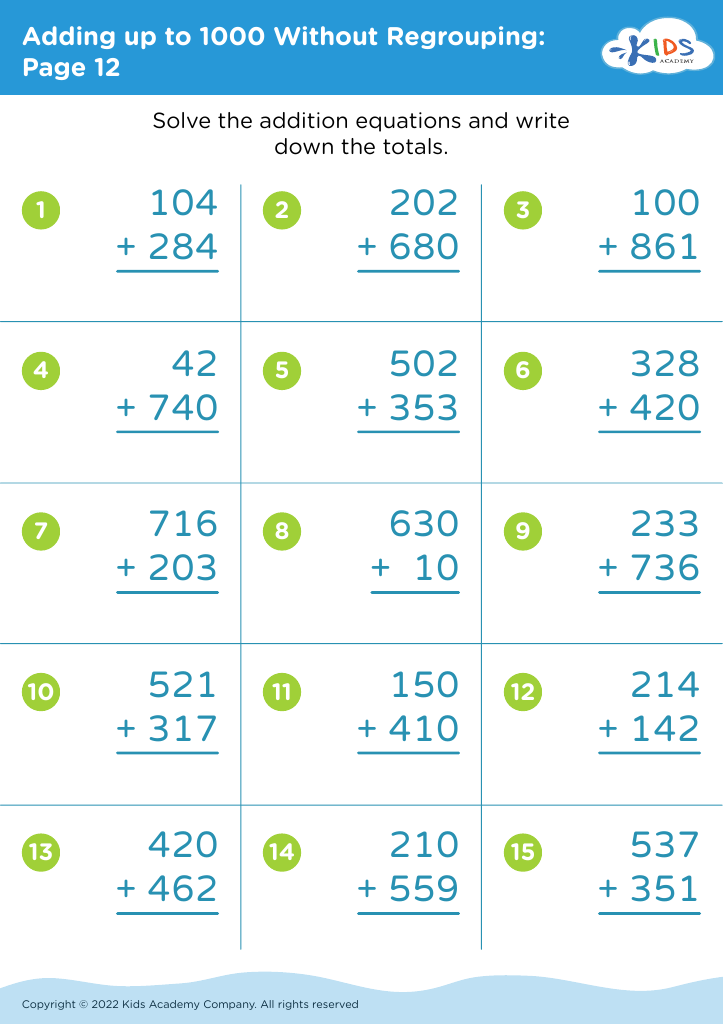
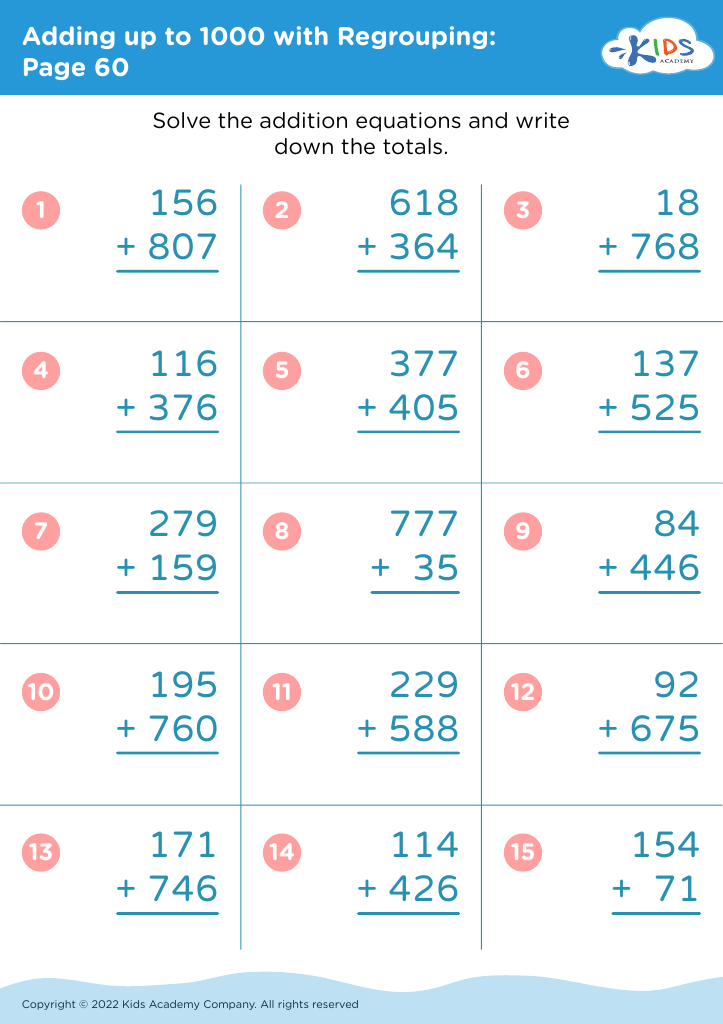
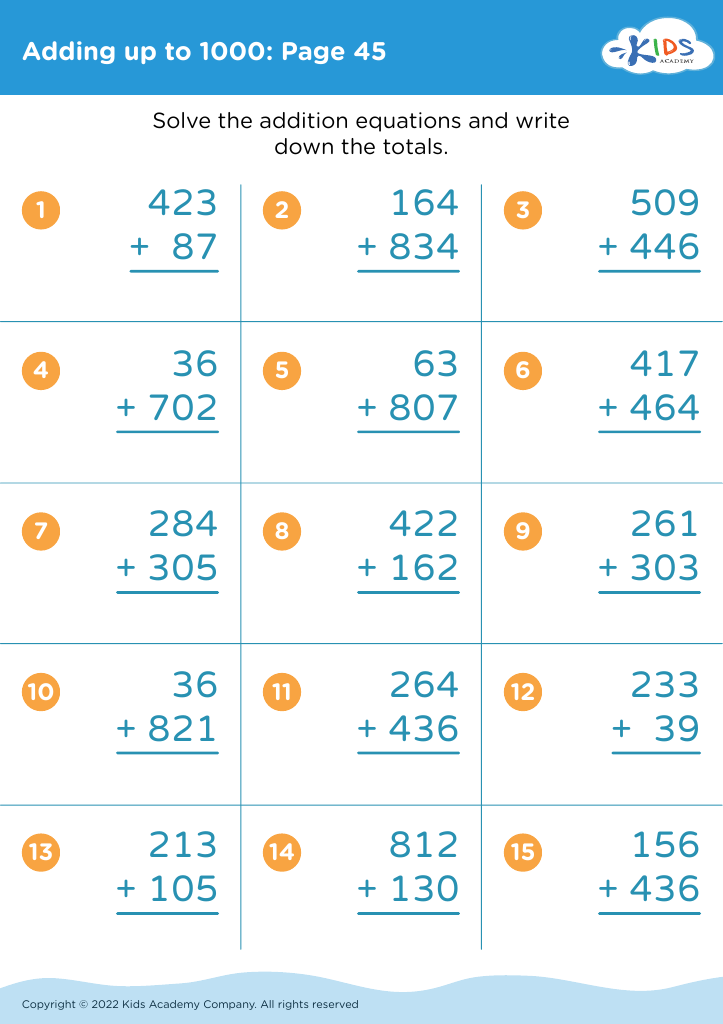



Parents and teachers should prioritize teaching children to follow instructions and understand addition up to 1000 between ages 5-9, because foundational skills developed during this period significantly shape future learning and decision-making abilities. Following instructions is crucial for young learners as it cultivates discipline, listening skills, and the ability to work independently—prerequisites for academic success and cooperation in a structured environment. When children master the art of following instructions, they experience improved classroom behavior and increased comprehension, setting a solid foundation for tackling complex tasks as they grow.
Furthermore, learning to add numbers up to 1000 at this age strengthens cognitive development and lays the groundwork for more advanced mathematical concepts. It enhances numerical literacy and promotes critical thinking by engaging children in problem-solving activities that build resilience and persistence. Understanding and manipulating numbers within this range gives children confidence, and gradually simplifies day-to-day tasks, such as counting, measuring, and even managing money in simple contexts. Prioritizing these early arithmetic skills ensures that children do not fall behind in math, a subject integral to varied academic disciplines. Ultimately, by embedding these skills early on, parents and teachers pave the way for more profound educational achievements and well-rounded individual growth.








