Improving math skills Adding up to 1000 Worksheets for Ages 5-9
6 filtered results
-
From - To
Welcome to our "Improving Math Skills: Adding Up to 1000 Worksheets" page designed for ages 5-9. These engaging worksheets are perfect for young learners, helping them grasp addition concepts and build a solid math foundation. Each worksheet features fun, age-appropriate activities that encourage critical thinking and problem-solving skills while promoting number sense. Students will enjoy learning how to add numbers up to 1000, enhancing their confidence and proficiency in mathematics. Whether in the classroom or at home, our resources make math enjoyable and interactive. Start your child’s math journey today and watch them thrive in their mathematical endeavors!
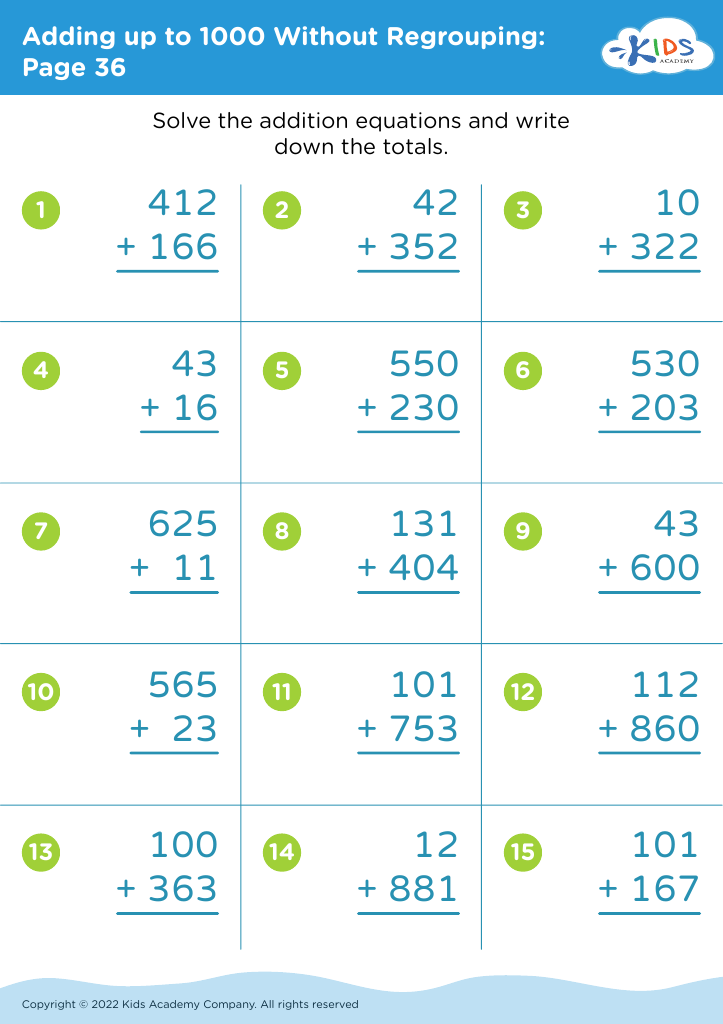
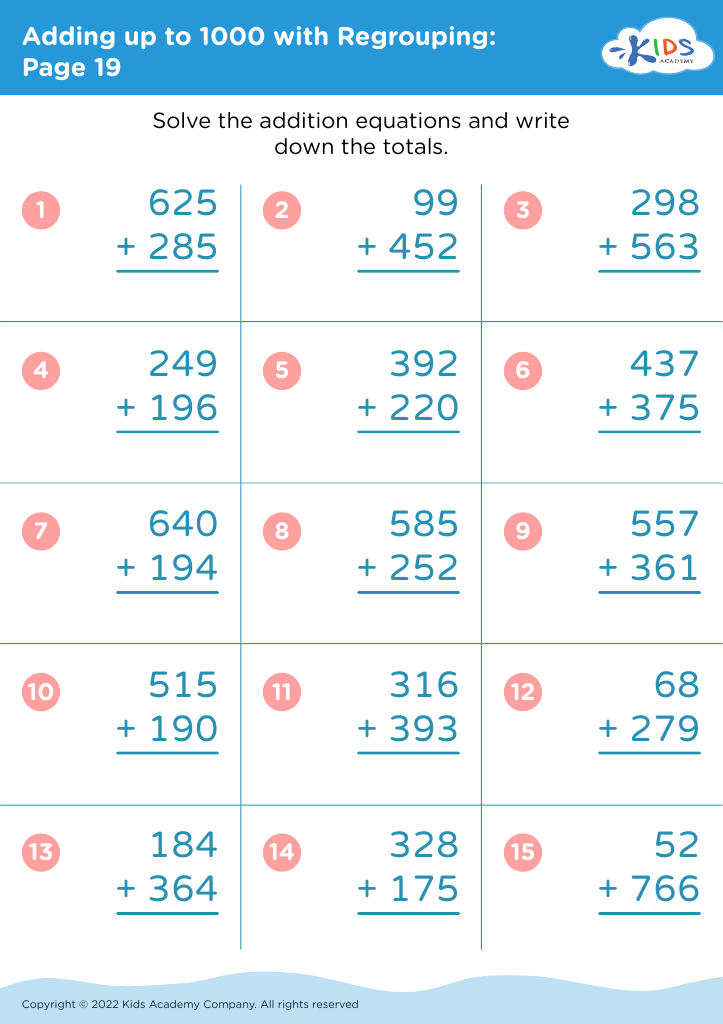
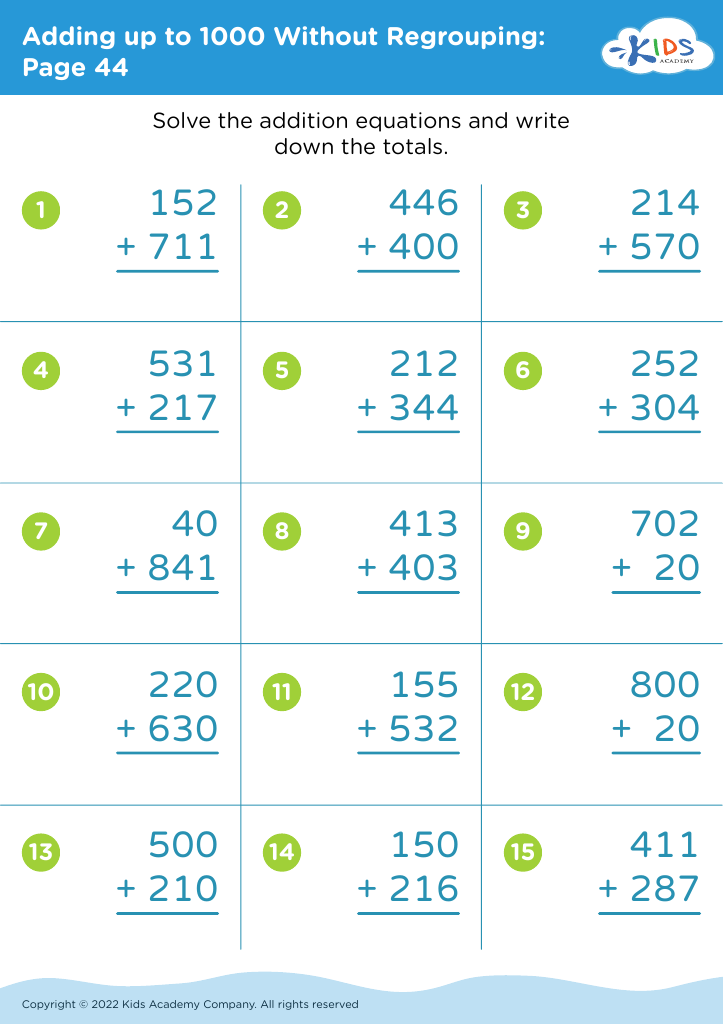
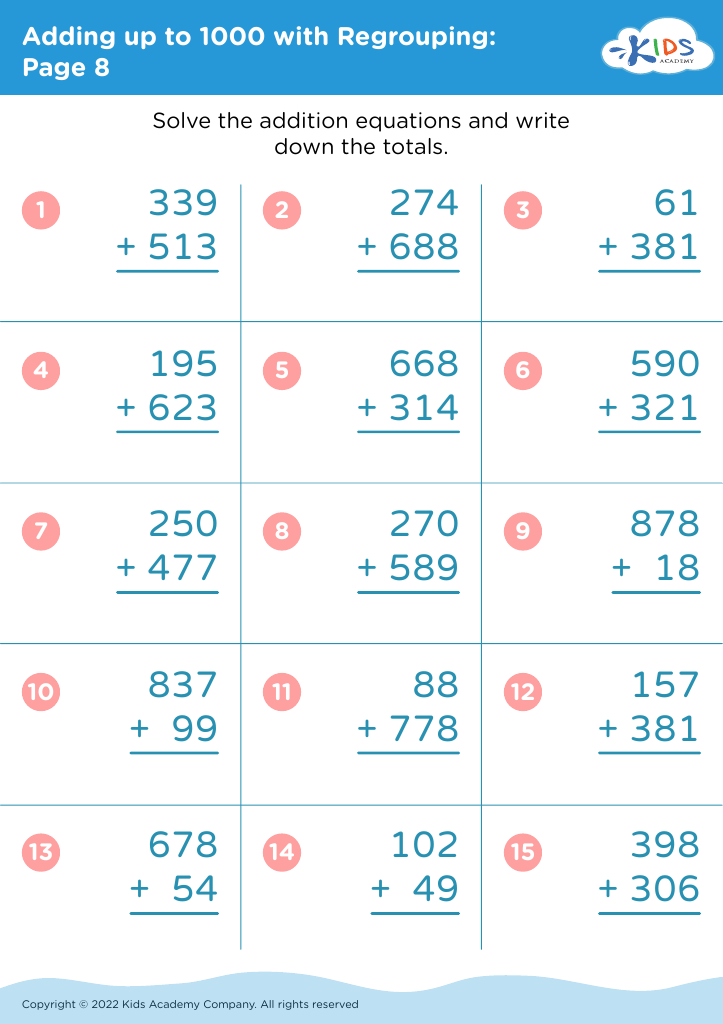
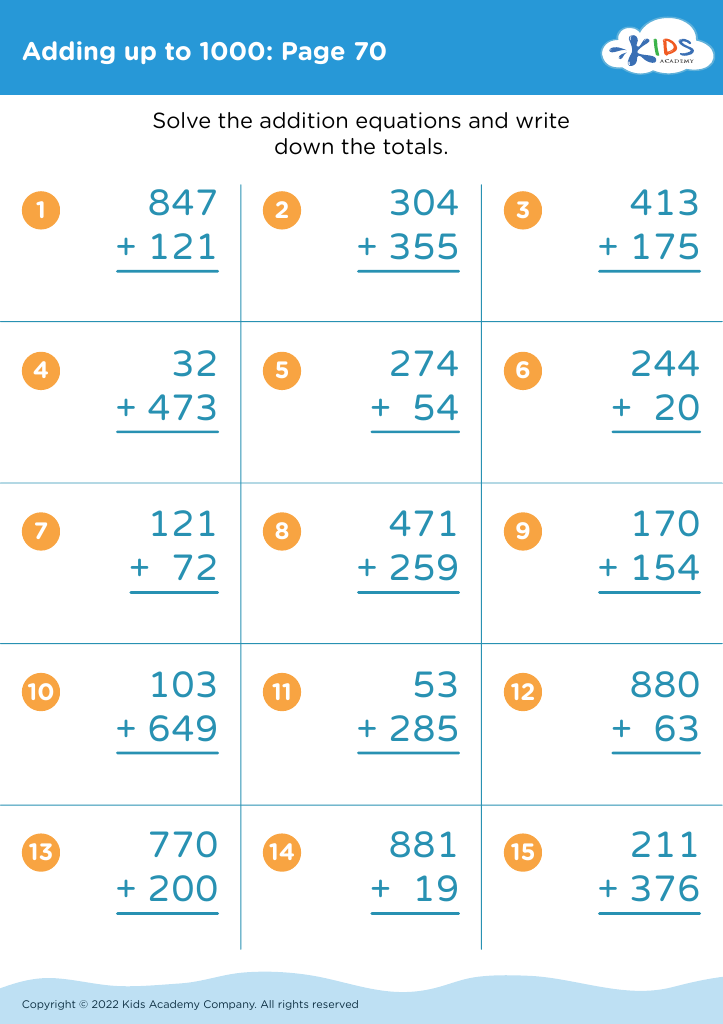
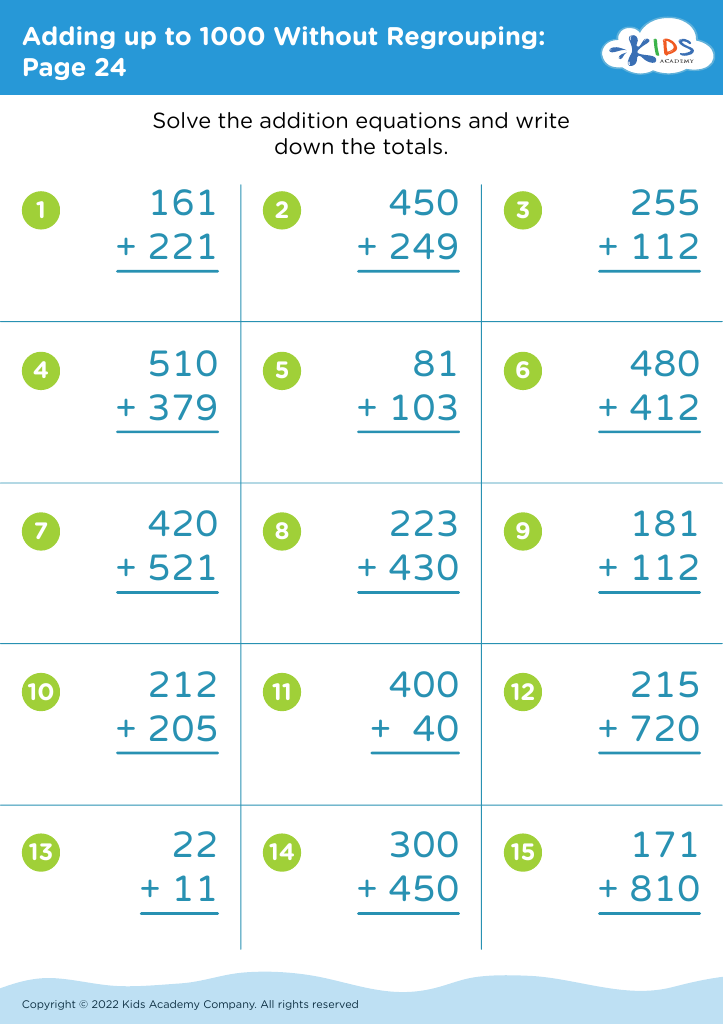



Improving math skills, especially the ability to add up to 1000, is crucial for children aged 5-9 for several reasons. First, mathematical literacy is foundational for everyday life; it aids in understanding concepts like currency, time, and measurements, enhancing children’s practical skills. By grasping addition to 1000, students build a solid base for future mathematical concepts, such as subtraction, multiplication, and problem-solving strategies.
Additionally, developing strong math skills fosters critical thinking and analytical abilities. These skills are not just relevant in mathematics, but are also valuable in other subjects, enhancing overall academic performance. Engaging in fun and effective math activities encourages a positive attitude towards numeracy, reducing math anxiety and increasing confidence levels.
Moreover, early engagement and support from parents and teachers create a conducive learning environment. When caregivers show interest in math, children feel encouraged to explore and practice their skills without fear of making mistakes. Ultimately, nurturing these abilities during formative years plays a vital role in setting children up for long-term success, both academically and socially, enabling them to tackle more complex challenges as they grow. Therefore, investing time and resources in improving math skills is essential for parents and educators alike.








