Number Recognition Adding up to 1000 Worksheets for Ages 5-9 - Page 2
31 filtered results
-
From - To
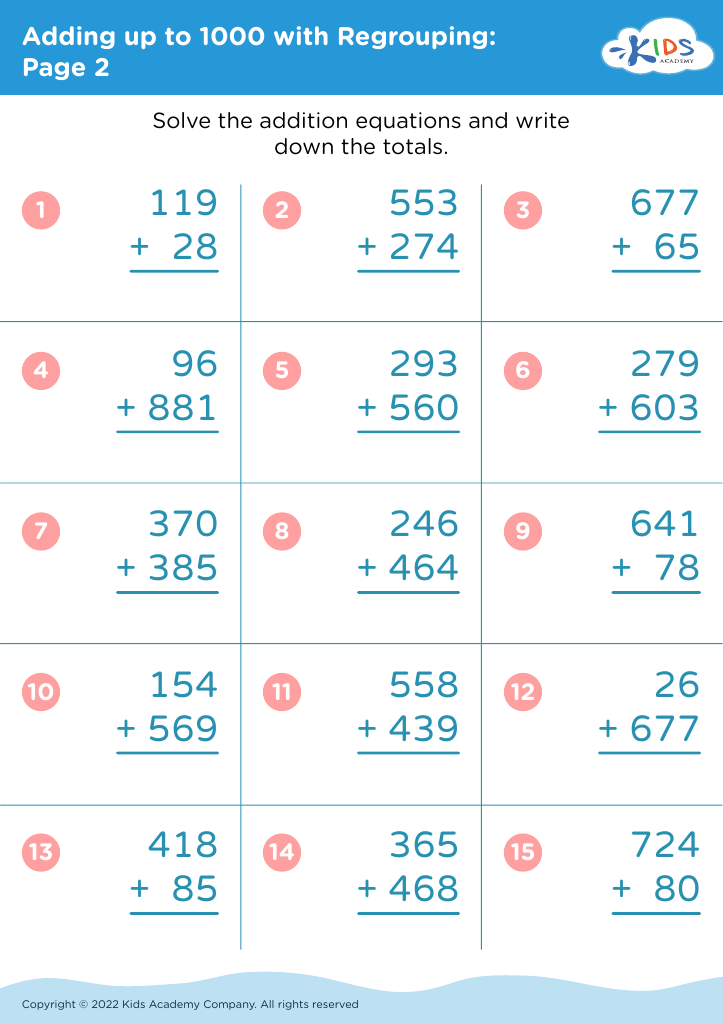
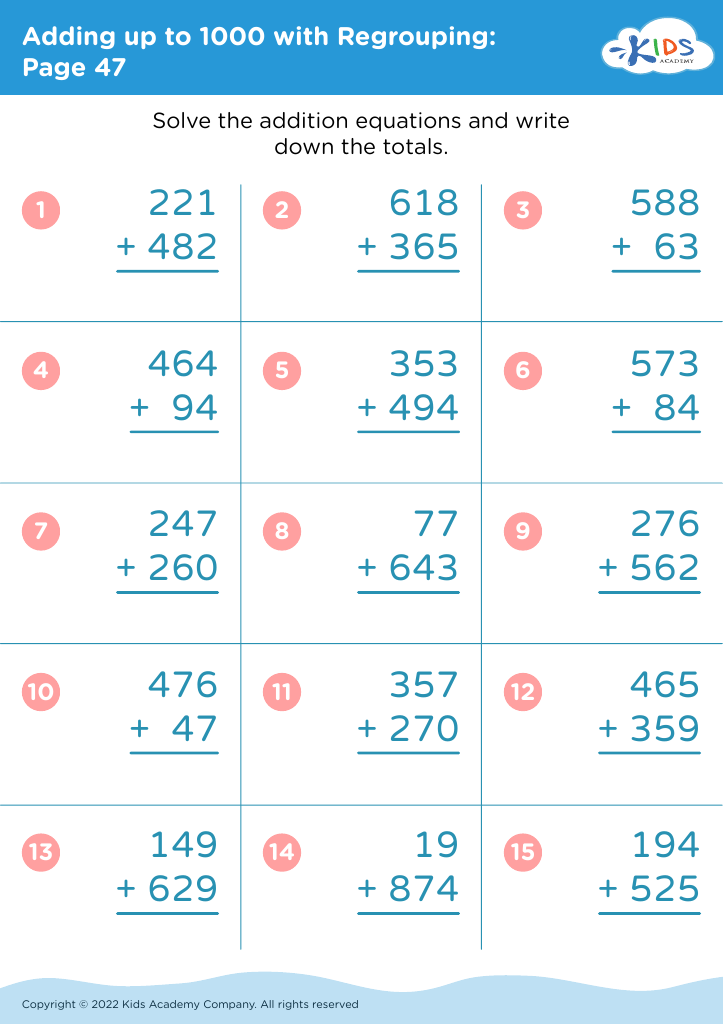
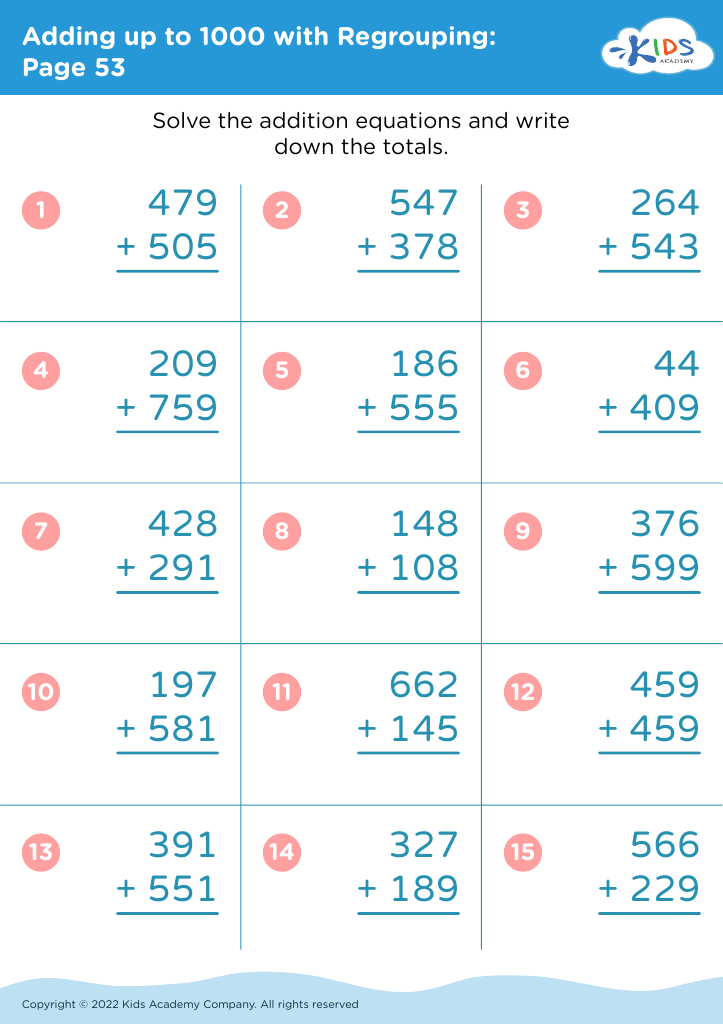
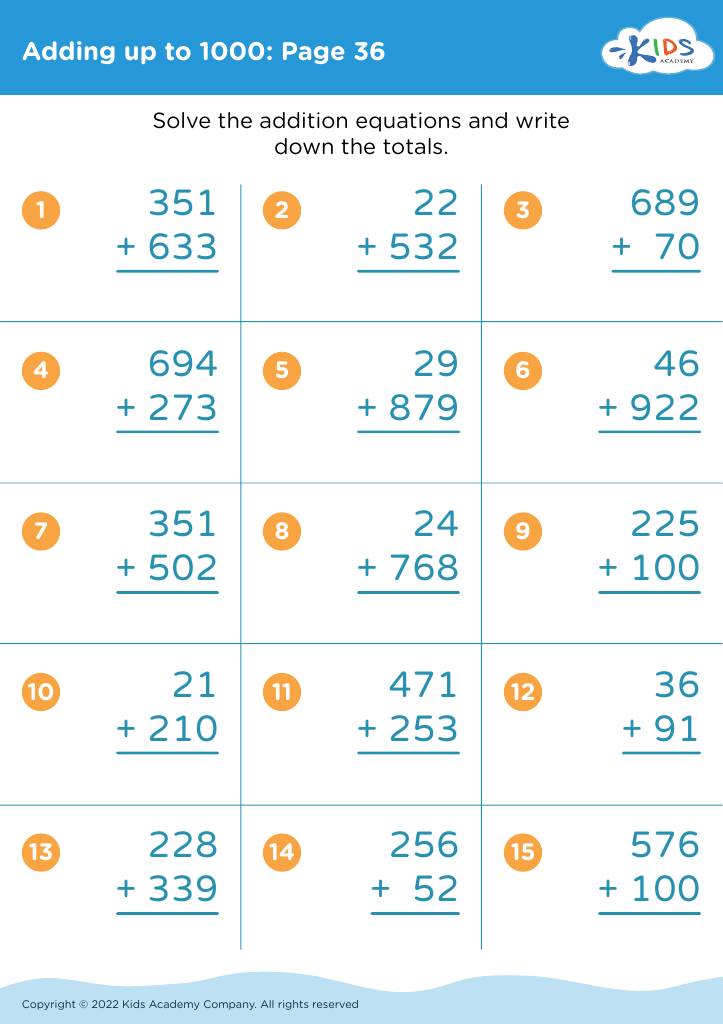
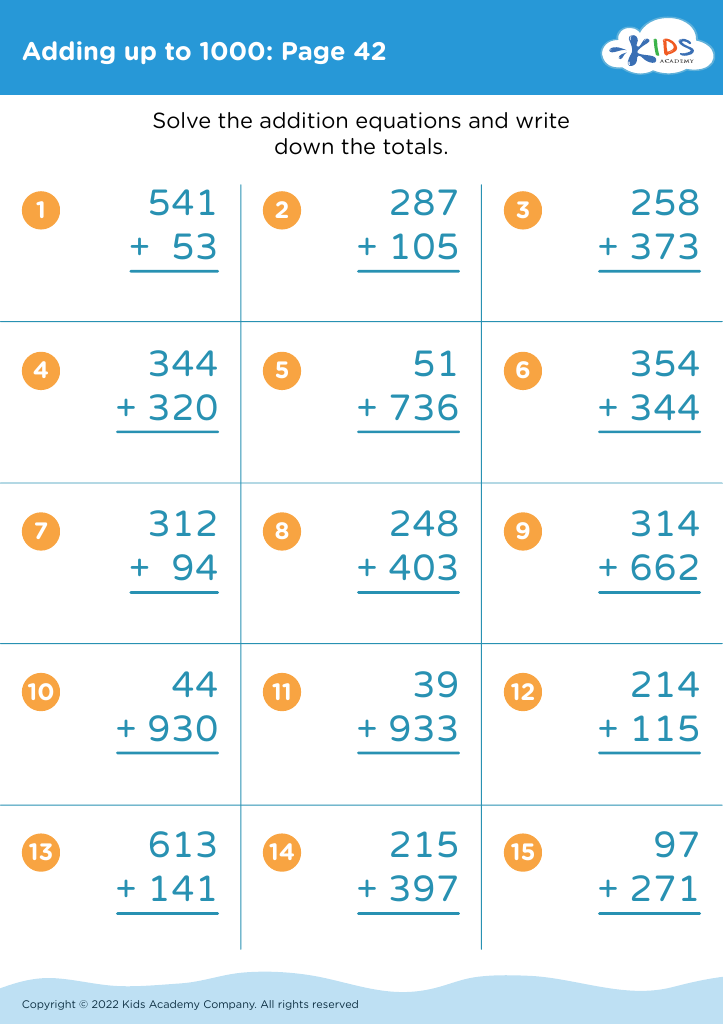
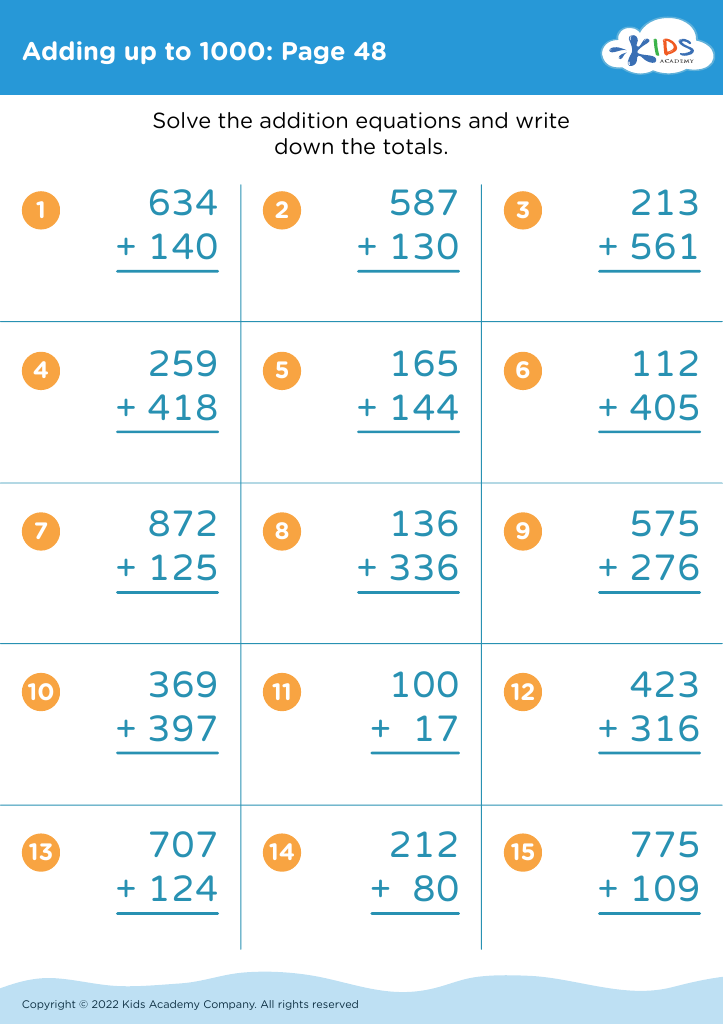
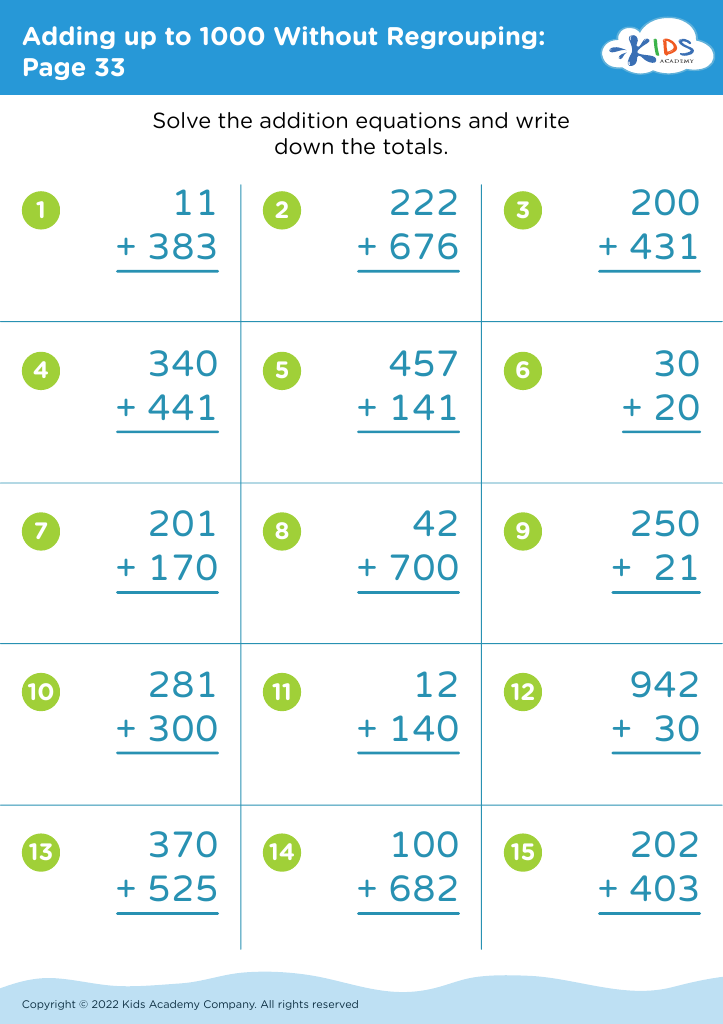




Number recognition is a foundational skill for children aged 5-9, impacting their confidence and proficiency in mathematics. Understanding numbers up to 1000 not only enhances basic counting skills but also lays the groundwork for more complex arithmetic operations that they will encounter in later grades.
When children can recognize and work with larger numbers, they develop a better sense of number magnitude, which is critical for everyday applications, such as money management and measurement. This cognitive development also supports problem-solving abilities, critical thinking, and logical reasoning.
For parents and teachers, fostering number recognition means engaging children with interactive and enjoyable activities. Using games, visual aids, and real-world scenarios can make learning about numbers both motivating and relatable. Parents can reinforce these skills at home, while teachers can integrate them into their classroom curricula, ensuring consistent practice and support.
Ultimately, prioritizing number recognition can lead to improved mathematical skills, greater academic success, and increased self-esteem in young learners, making it an essential focus for educators and parents alike. Investing time and resources in these early numeracy skills will create more confident and capable mathematicians.








