Number Sequencing Adding up to 1000 Worksheets for Ages 5-9
5 filtered results
-
From - To
Welcome to our "Number Sequencing Adding Up to 1000 Worksheets" designed for children ages 5-9! These engaging worksheets help young learners enhance their number sequencing skills while practicing addition up to 1000. Through fun, interactive exercises, children will master essential math concepts, including ordering numbers, recognizing patterns, and reinforcing their understanding of numerical relationships. Each worksheet is thoughtfully crafted to make learning enjoyable and accessible, ensuring kids build a solid foundation in mathematics. Perfect for use at home or in the classroom, these worksheets are a valuable resource for educators and parents alike. Start your child's math journey here!
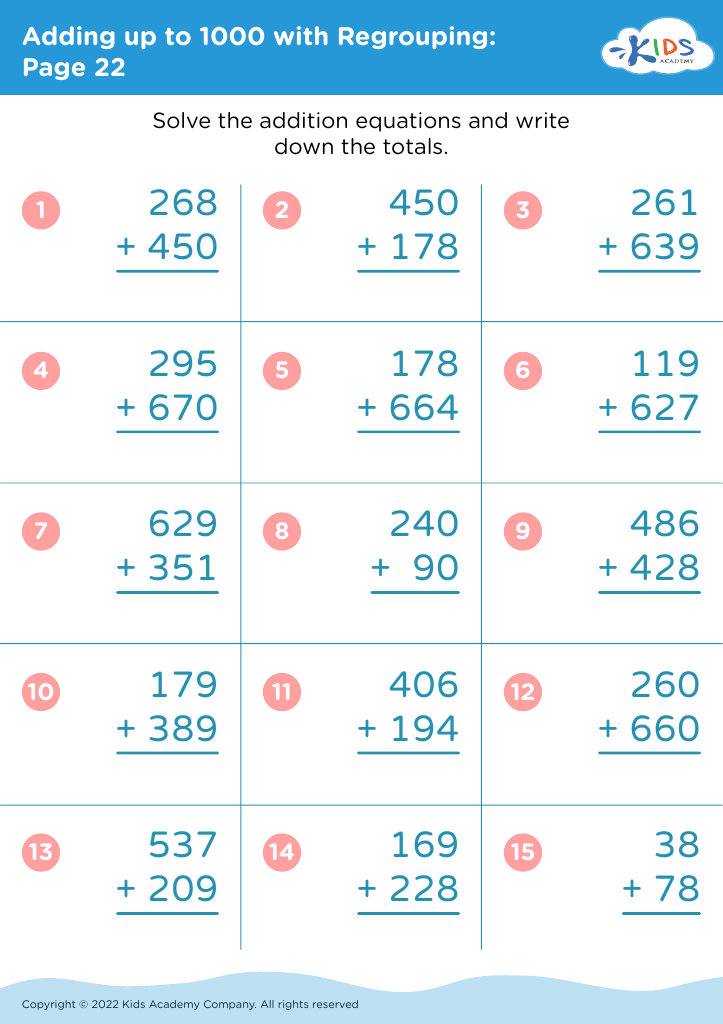
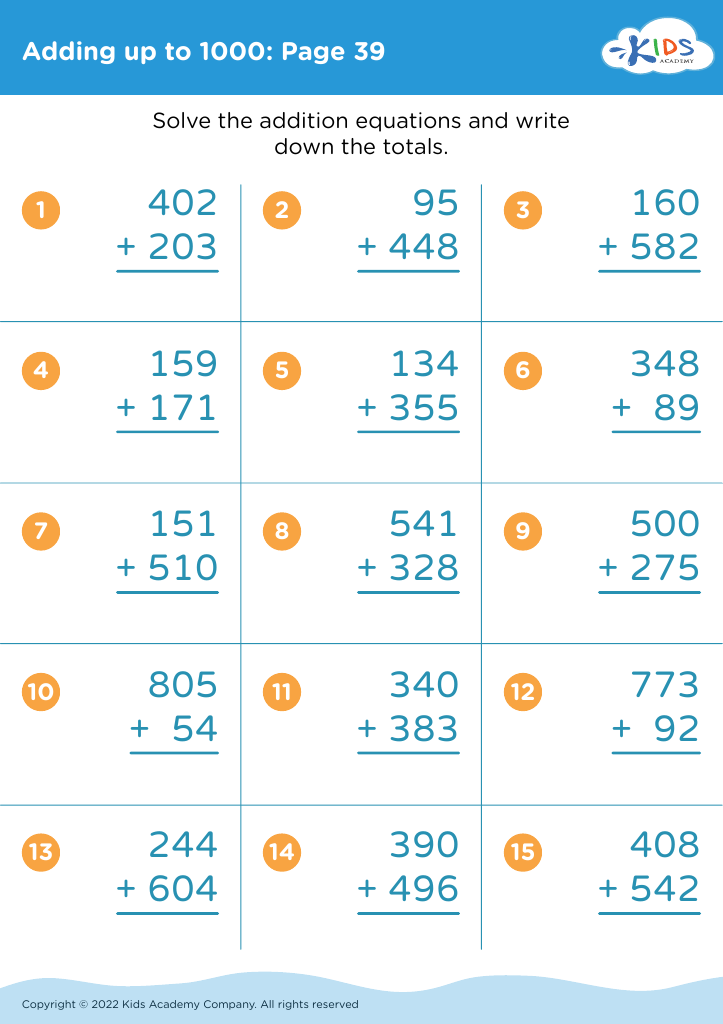
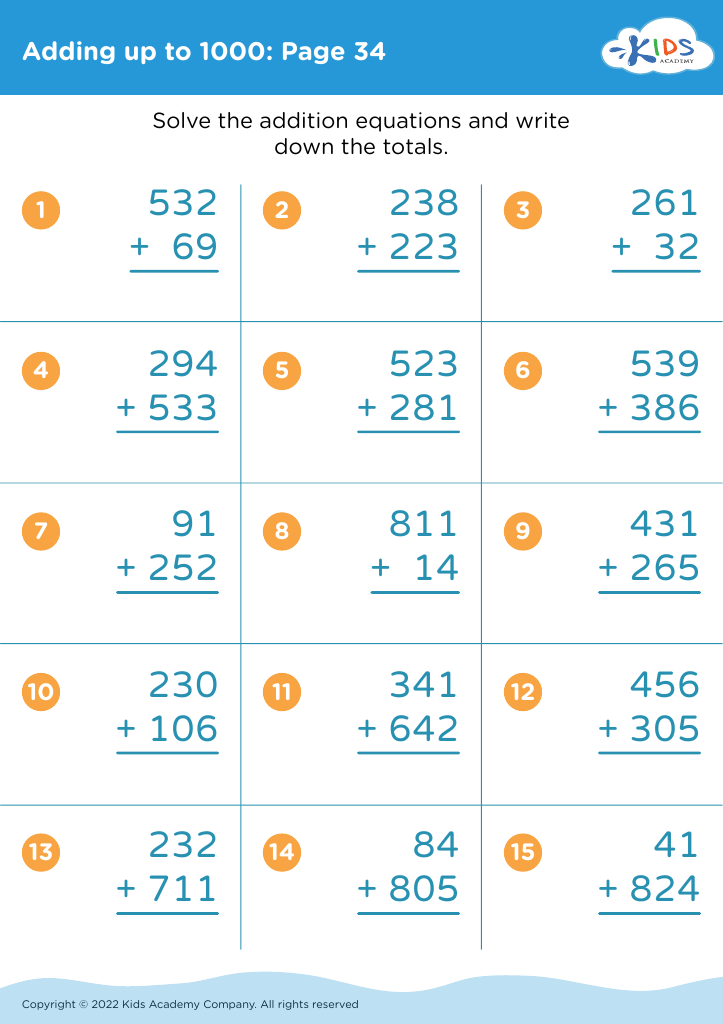
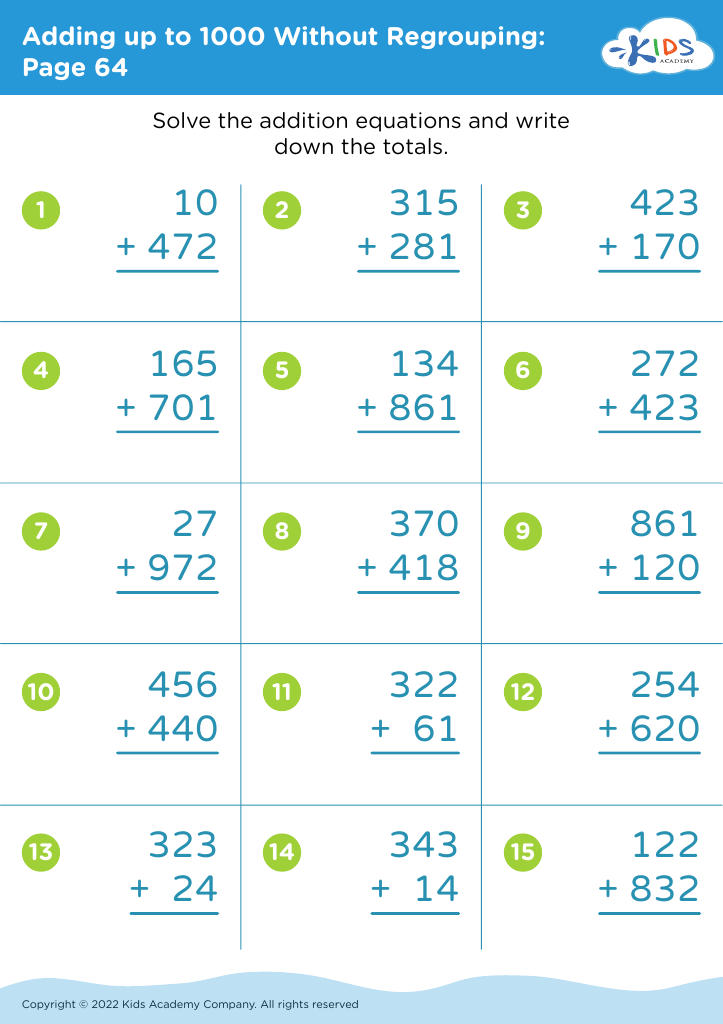
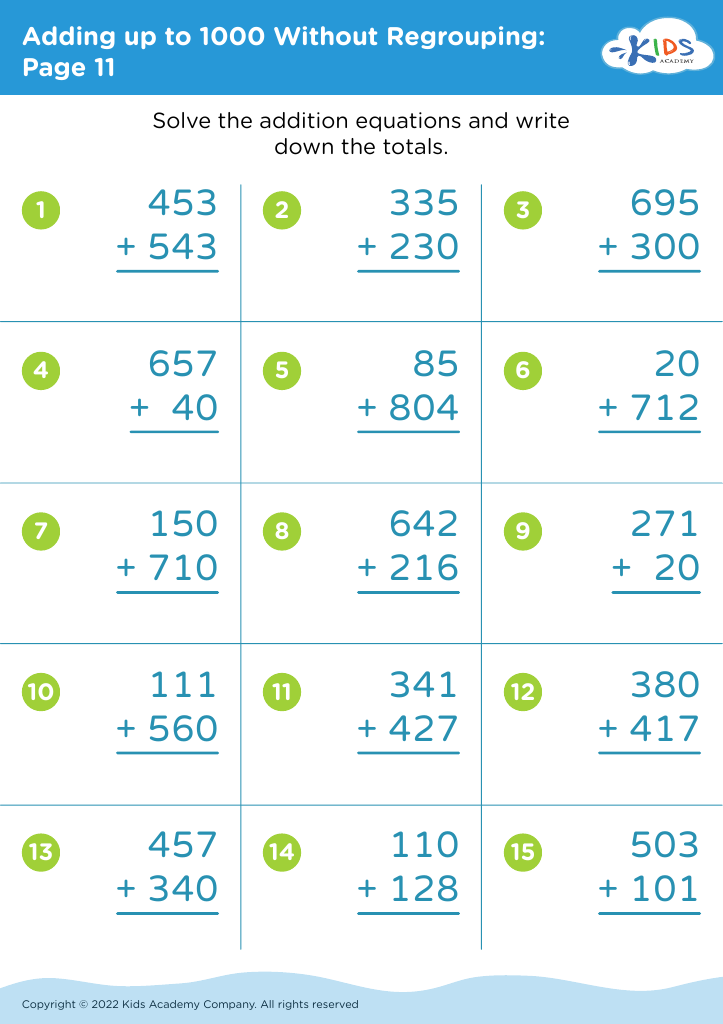



Number sequencing and addition skills are foundational components of mathematics for children aged 5-9, serving as critical building blocks for more complex mathematical concepts. Understanding how to sequence numbers and perform addition up to 1000 enhances a child’s ability to recognize patterns, understand the order of numbers, and resuscitate their problem-solving skills.
For parents and teachers, fostering these skills helps promote self-confidence in young learners. Mastery of number sequencing allows children to better grasp concepts such as skip counting and place value, mechanisms that are essential for performing operations like addition more seamlessly. These abilities also translate to improved performance in everyday tasks, such as telling time and handling money, reinforcing their practical applications.
Moreover, as foundational skills, number sequence and addition impact future academic success. A solid understanding at an early age can lead to increased readiness for complex math topics in later grades. Engaging children in fun and educational activities that incorporate these numerical skills cultivates a love for math and promotes critical thinking. This vested interest in mathematics not only prepares students for academic challenges ahead but also ensures they develop strong analytical skills beneficial for various aspects of life.








