Practice writing numbers Adding up to 1000 Worksheets for Ages 5-9
3 filtered results
-
From - To
Explore our engaging "Practice Writing Numbers Adding Up to 1000 Worksheets" designed specifically for children aged 5-9. These worksheets provide a fun and interactive way to help young learners practice writing numbers while mastering addition concepts. Each page is carefully crafted to guide students through progressively challenging exercises that enhance their number formation skills, boost their confidence, and reinforce foundational math knowledge. Perfect for homeschooling or classroom activities, these worksheets support early math development while maintaining an enjoyable and approachable learning experience. Download now and watch your child's number-writing abilities soar as they work towards adding expertise up to 1000!
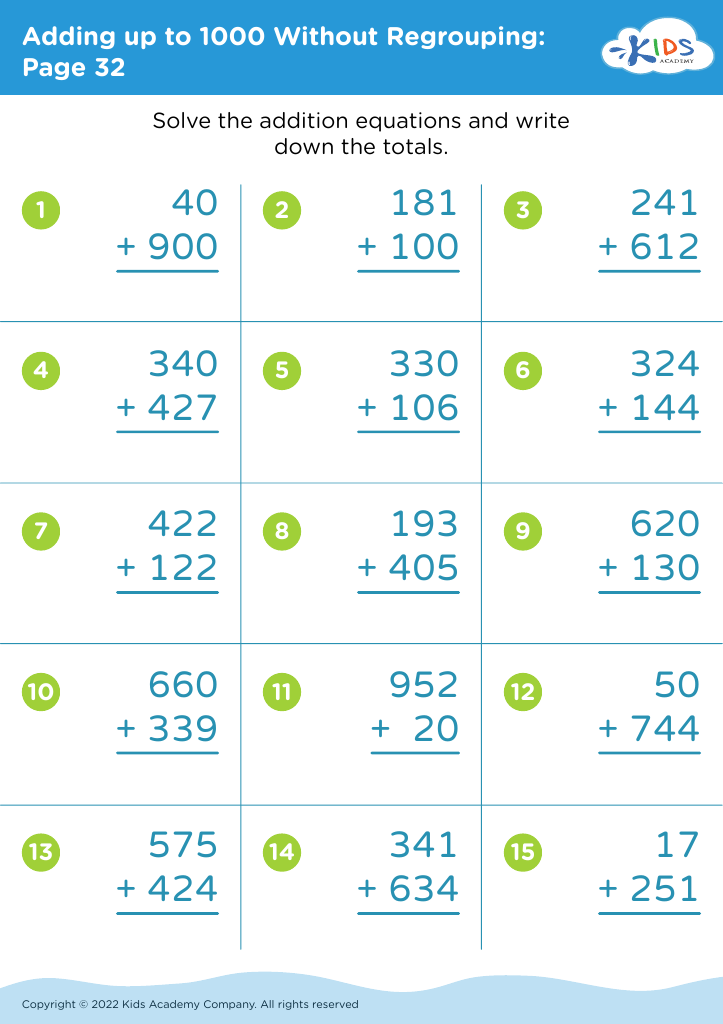
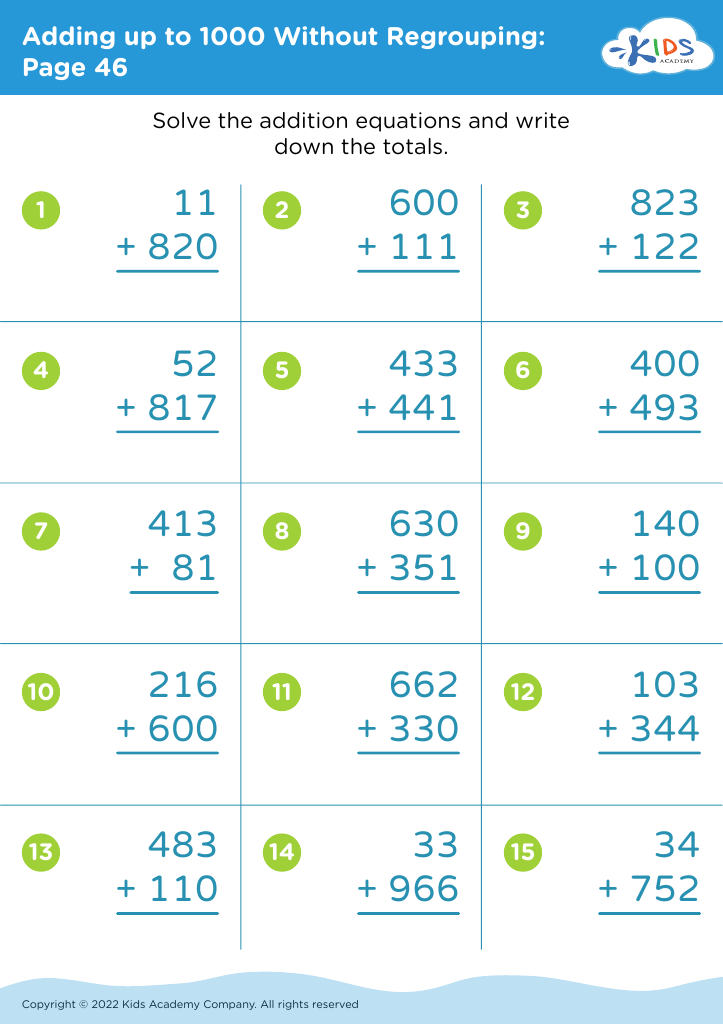
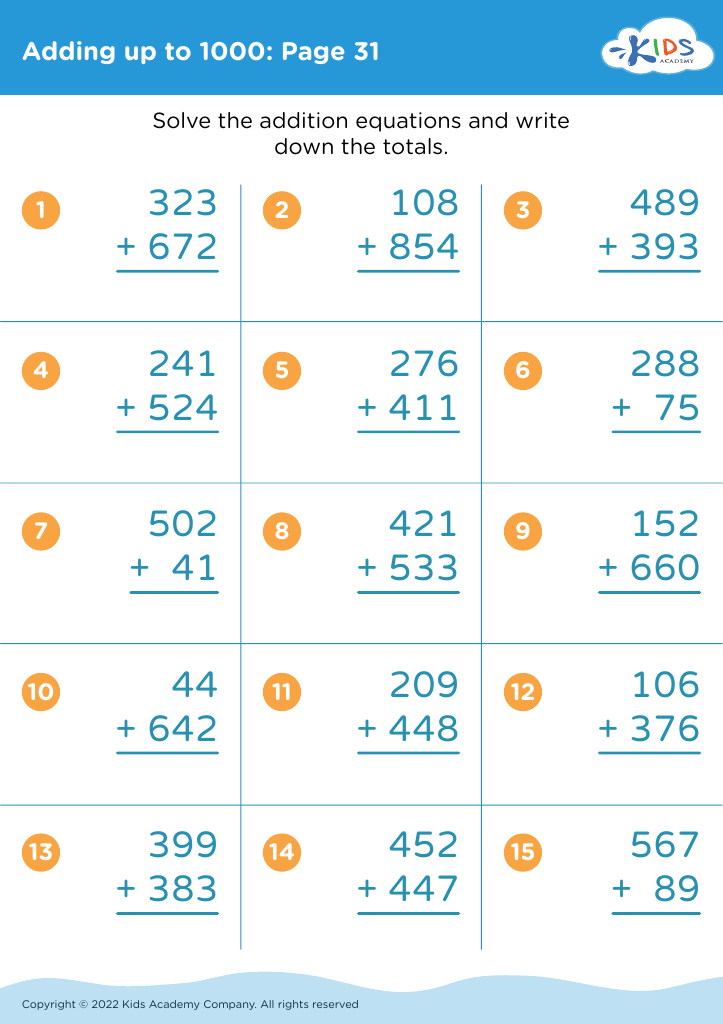



Practicing writing numbers and basic addition up to 1000 is crucial for children aged 5-9 as it lays the foundation for their mathematical understanding and problem-solving skills. Early mathematics skills, including number writing, enhance children's ability to recognize patterns and relationships, which are key concepts in later math learning.
Engaging in these practices helps build fine motor skills necessary for good handwriting and enhances cognitive development. Moreover, writing and adding numbers reinforces number sense, enabling children to understand quantity, size, and the concept of place value. This knowledge is essential for tackling more complex math operations in the future.
Parents and teachers should also recognize the importance of fostering a positive attitude toward mathematics. Regular practice can reduce math anxiety and create a robust foundation of confidence in dealing with numbers. Additionally, incorporating practical applications, such as counting objects at home or in the classroom context, brings math to life, making it more enjoyable for young learners.
Ultimately, focusing on number writing and addition empowers children to navigate the world around them, improving their everyday problem-solving capabilities while developing essential skills for academic success.








