Problem-solving abilities Adding up to 1000 Worksheets for Ages 5-9
5 filtered results
-
From - To
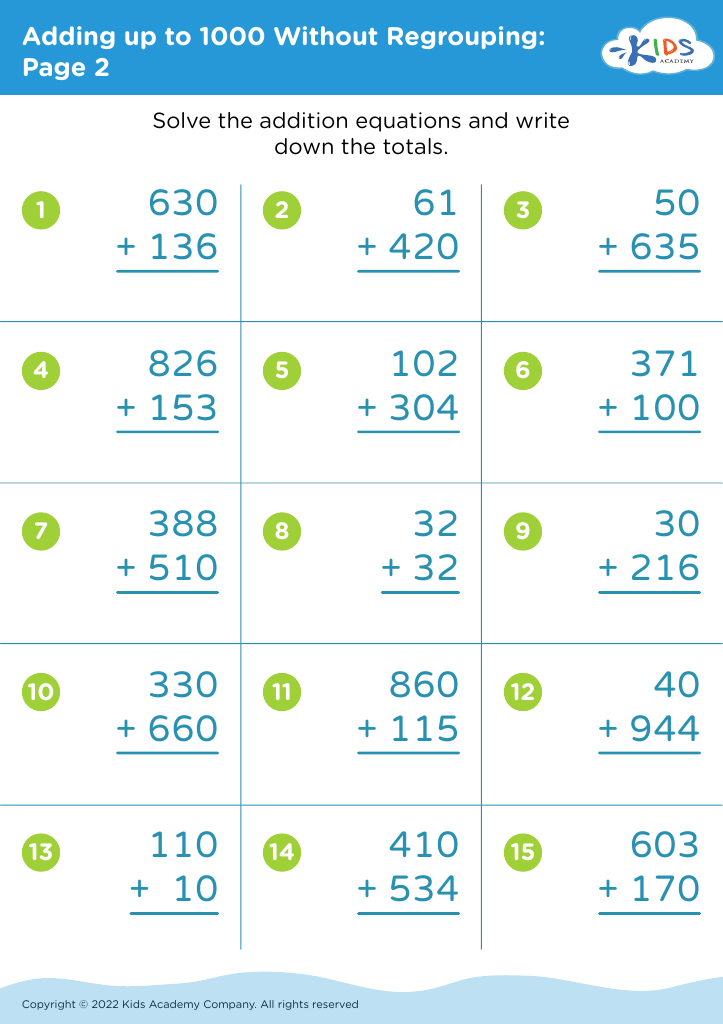
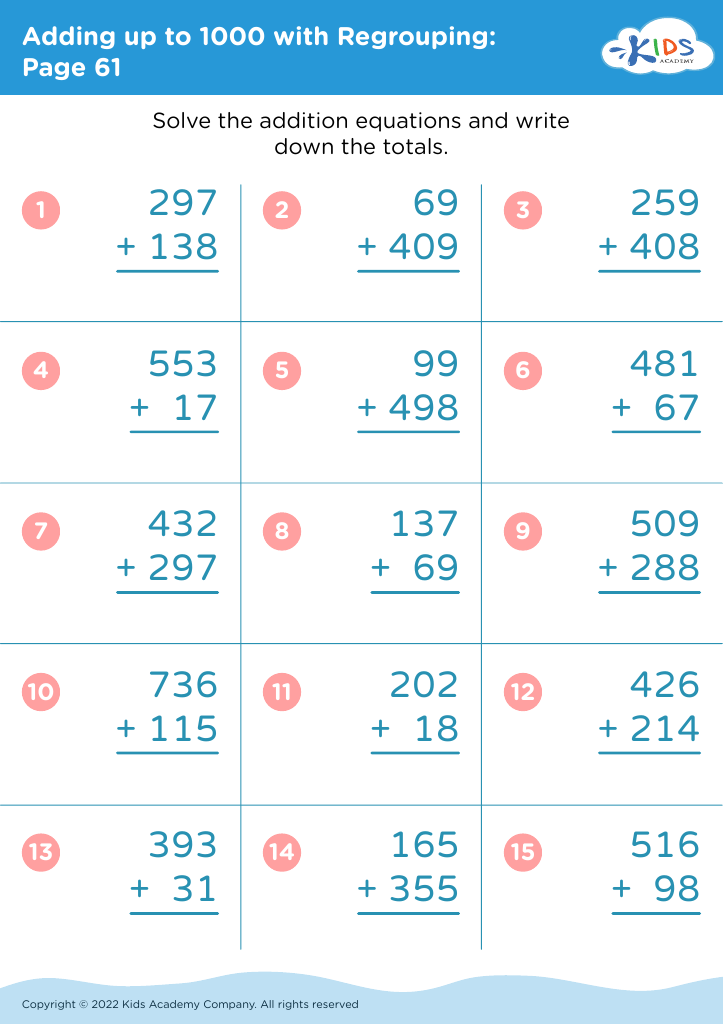
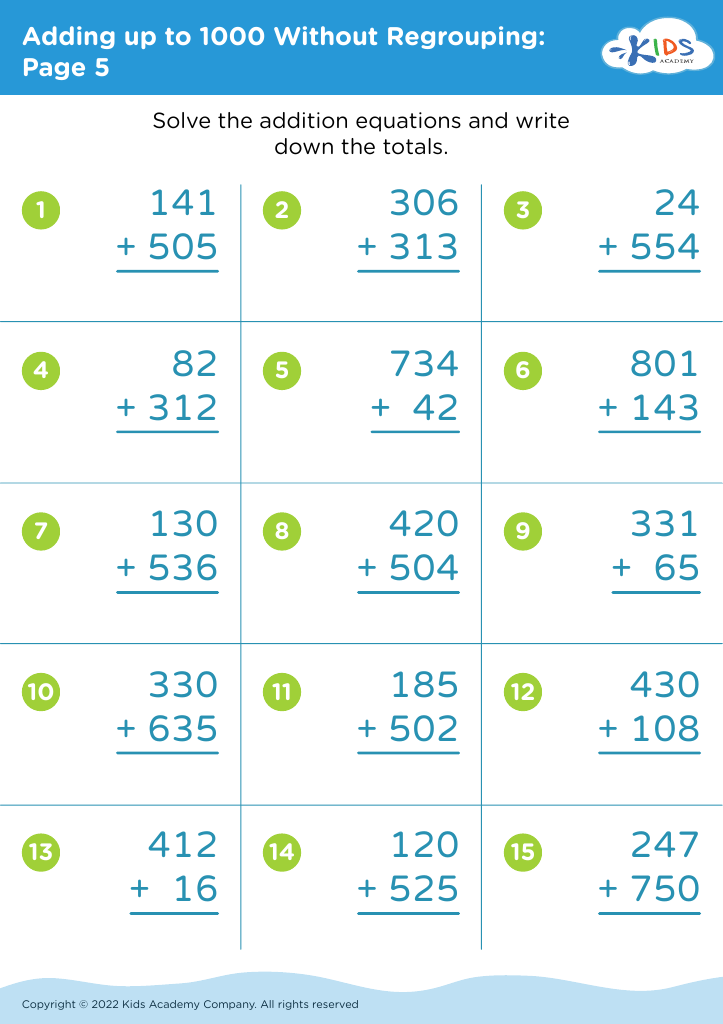
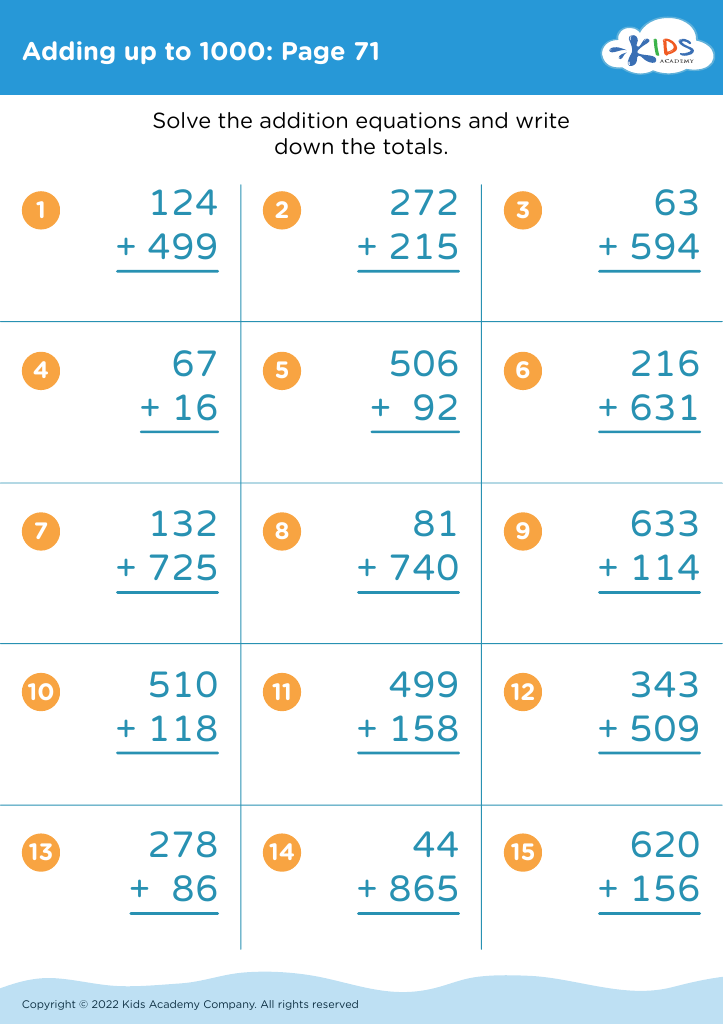
Enhance your child's problem-solving skills with our engaging "Adding Up to 1000" worksheets designed for ages 5-9. These carefully crafted activities encourage young learners to strengthen their mathematical understanding while developing critical thinking and analytical skills. Each worksheet features a variety of exercises that challenge kids to apply addition techniques within 1000, fostering a hands-on approach to learning. The interactive format not only makes math enjoyable but also builds confidence in their abilities. Ideal for classroom use or home education, our worksheets are perfect for supporting and nurturing the problem-solving talents of your budding mathematicians. Start the learning journey today!
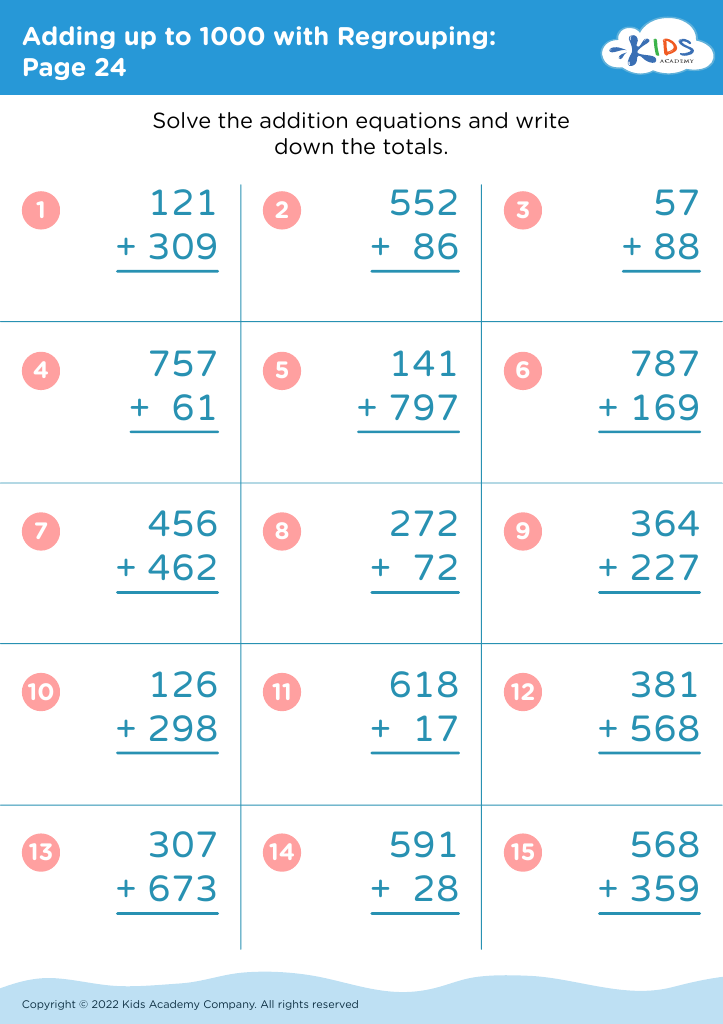



Problem-solving abilities are essential skills for children aged 5-9, and they should be a focus for parents and teachers for several reasons. Firstly, developing these skills fosters critical thinking, enabling children to analyze situations, identify solutions, and make informed decisions. When children learn to approach problems systematically, they gain confidence in their abilities, which can influence other areas of academic achievement.
Secondly, problem-solving enhances creativity. Children learn to think outside the box while exploring different methods or angles to tackle challenges, encouraging innovative thinking—an invaluable skill in the modern world. Additionally, such abilities are vital for social interactions; students learn how to cooperate, negotiate, and resolve conflicts amicably, improving their relationship skills and overall emotional intelligence.
Moreover, as we guide children in honing their problem-solving capabilities, they become equipped to handle real-life situations more effectively, from simple tasks to complex challenges as they age. This foundation aids them in navigating academic subjects and life itself. Teaching problem-solving can be achieved through engaging activities, games, and collaborative exercises, making learning fun and interactive. Ultimately, prioritizing the development of problem-solving abilities sets children up for a lifetime of success and adaptability.








