Problem-solving practice Adding up to 1000 Worksheets for Ages 5-9
3 filtered results
-
From - To
Welcome to our engaging "Problem-Solving Practice Adding Up to 1000 Worksheets" designed for children ages 5-9! These interactive worksheets encourage young learners to develop critical thinking and problem-solving skills while mastering addition. Each activity is carefully crafted to stimulate creativity and promote mathematical reasoning, ensuring kids not only learn to add numbers up to 1000, but also gain confidence in tackling challenging problems. Aligned with educational standards, these worksheets provide an excellent resource for both home and classroom settings. Inspire your child's love for math today with our fun and effective problem-solving worksheets!
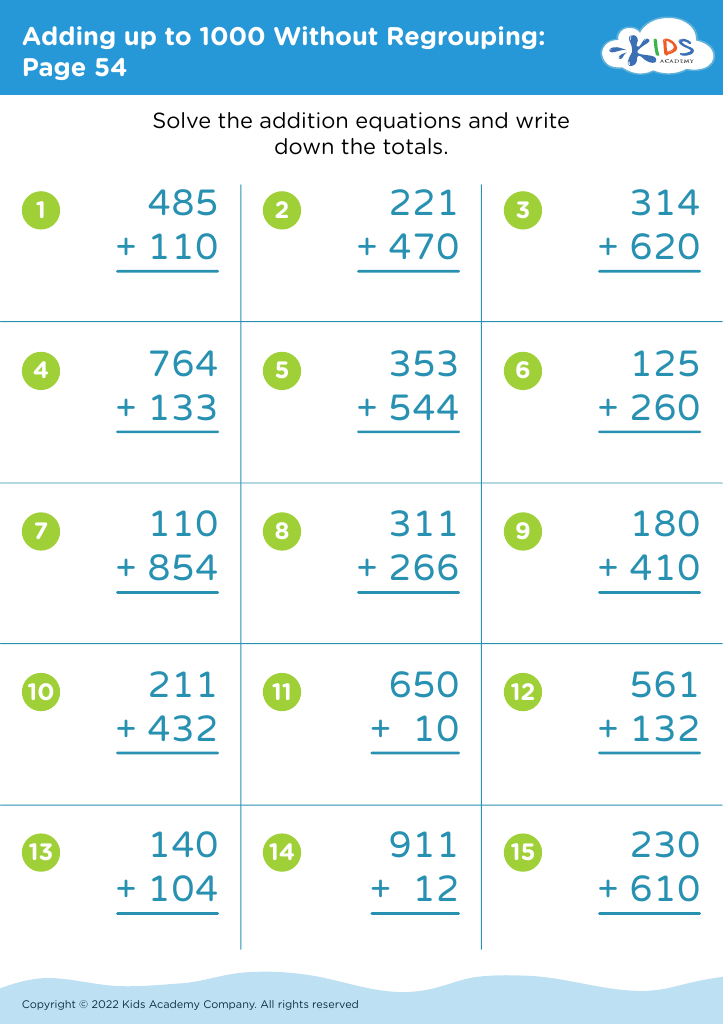
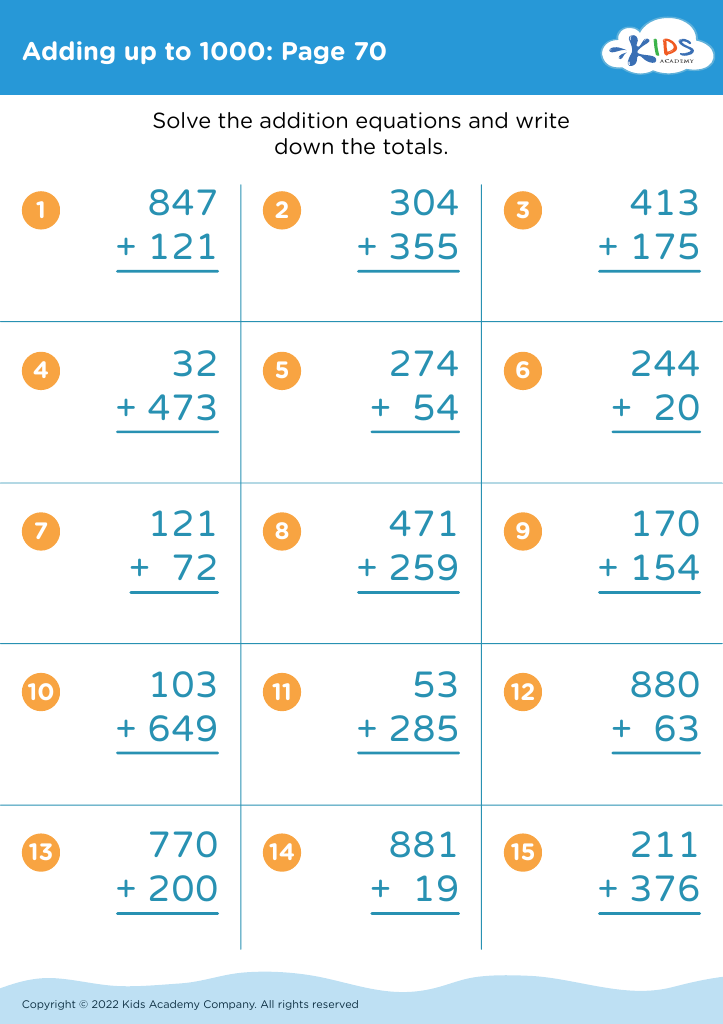
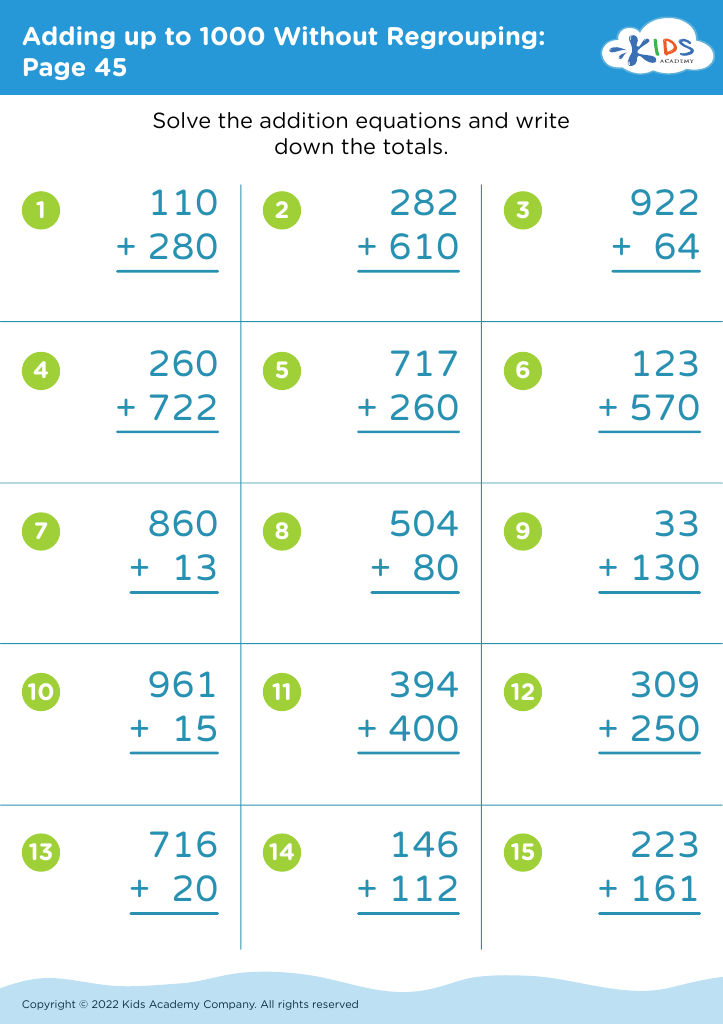



Problem-solving practice, particularly activities like "adding up to 1000," is crucial for children aged 5-9 for several reasons. Firstly, this age group is at a pivotal point in their cognitive development where foundational math skills are being formed. Engaging them in practical problem-solving encourages critical thinking, enhances numeracy skills, and promotes logical reasoning—even in young learners.
Moreover, practicing addition up to 1000 helps children understand the concept of place value, number sense, and mental math strategies, which are all key components in more advanced mathematical learning. It builds their confidence and resilience in tackling challenges, which is essential not only in academics but also in everyday life situations.
For parents and teachers, this practice is also an opportunity to bond with children. Collaborative problem-solving fosters communication, allowing adults to reinforce concepts while addressing questions. Furthermore, fostering a joy for math through fun activities empowers children to view challenges positively, making them more likely to engage willingly in future learning.
Lastly, these foundational activities promote perseverance, teaching young learners to work until they achieve the solution—a skill that will serve them well throughout their education and beyond. All this emphasizes the importance of incorporating engaging problem-solving exercises into their routine.








