Shape identification Adding up to 1000 Worksheets for Ages 5-9
6 filtered results
-
From - To
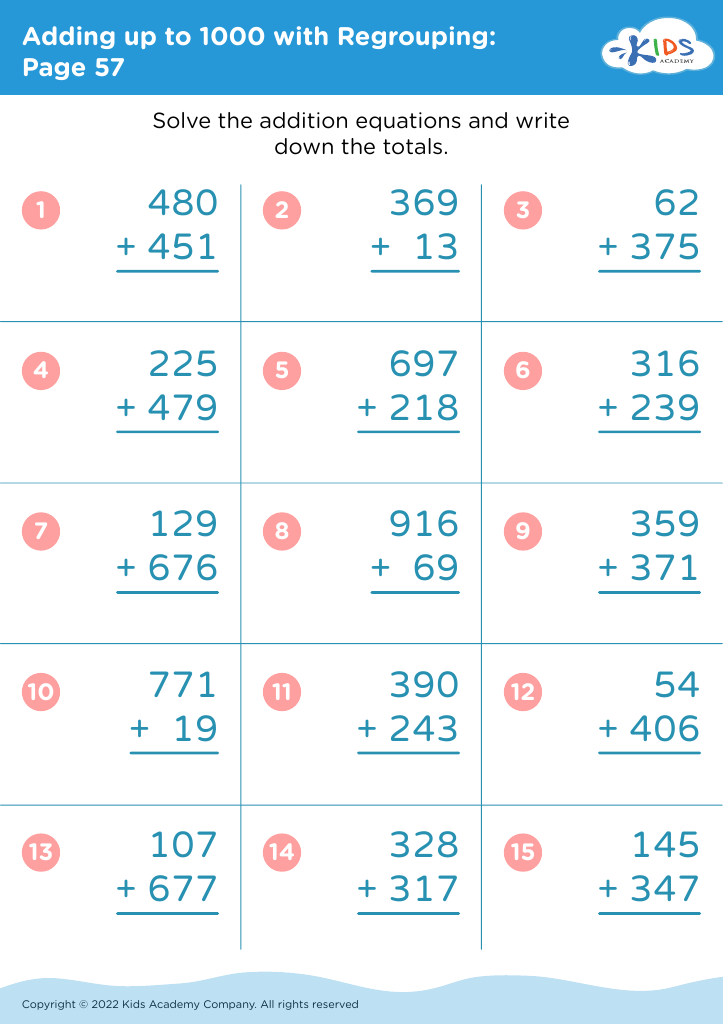
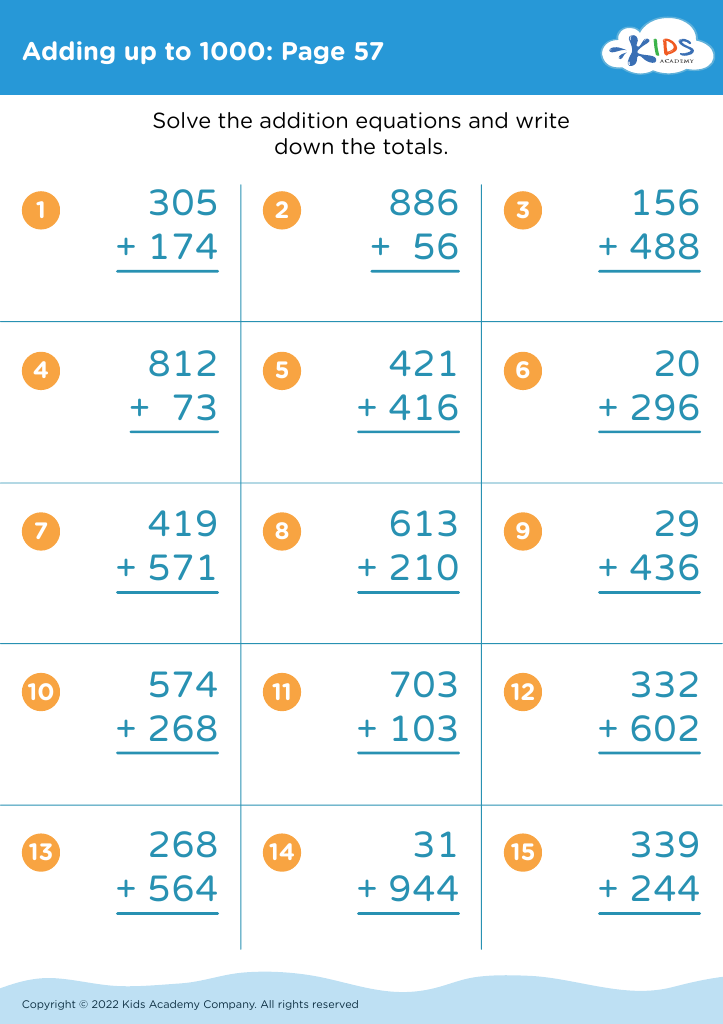
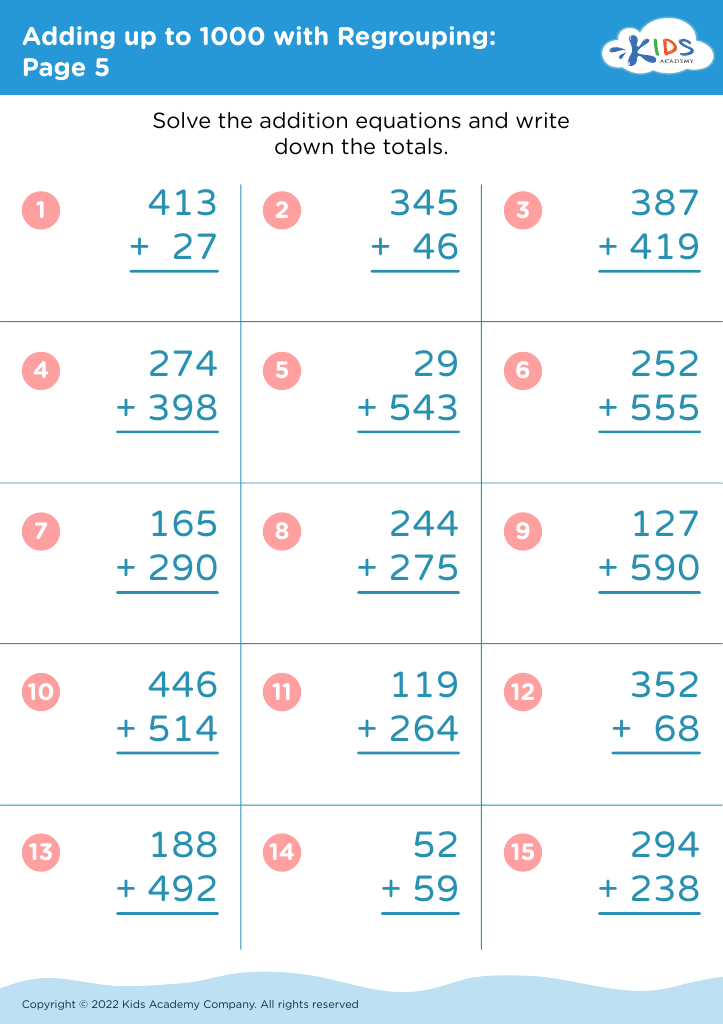
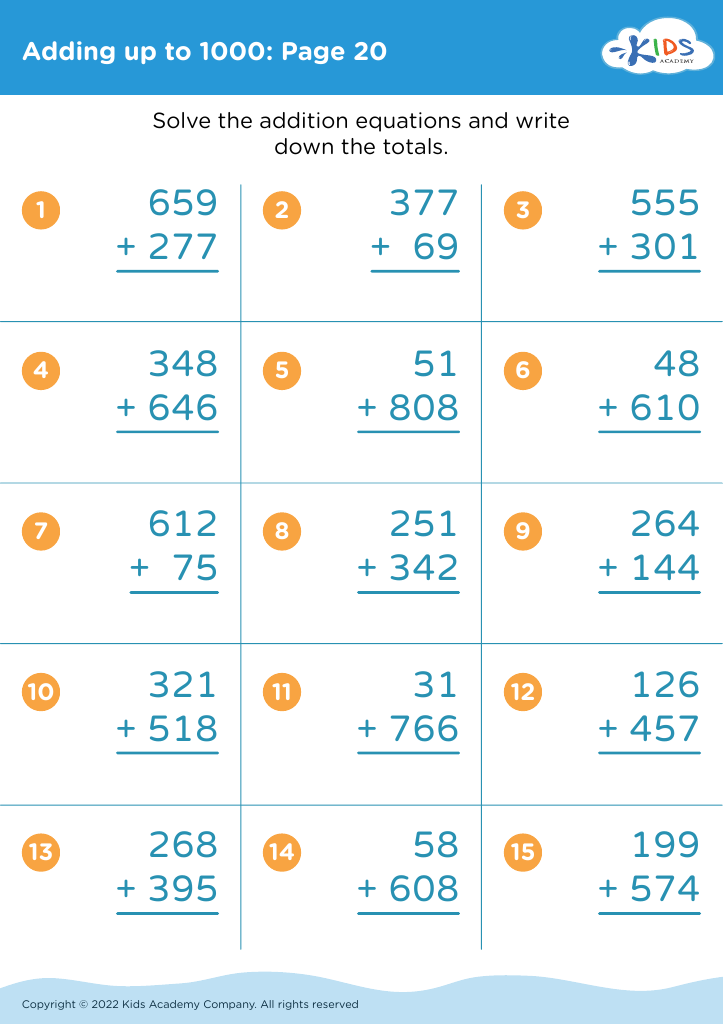
Our "Shape Identification Adding up to 1000 Worksheets for Ages 5-9" offer a fun and engaging way for children to combine their math and geometry skills. These printable worksheets are designed to capture young learners' interest with a variety of colorful shapes and addition problems that challenge their ability to sum numbers up to 1000. Ideal for children aged 5 to 9, these activities enhance shape recognition and arithmetic fluency through playful exercises. Perfect for classroom use or home practice, these worksheets aim to build a strong foundation in early math concepts while keeping learning enjoyable and interactive.
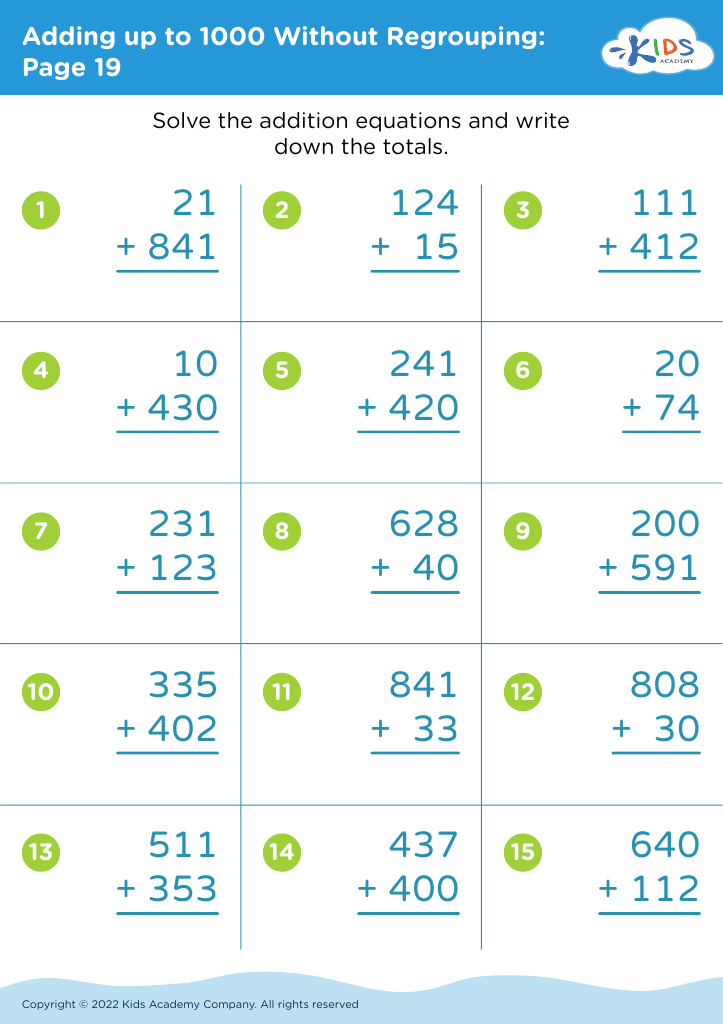
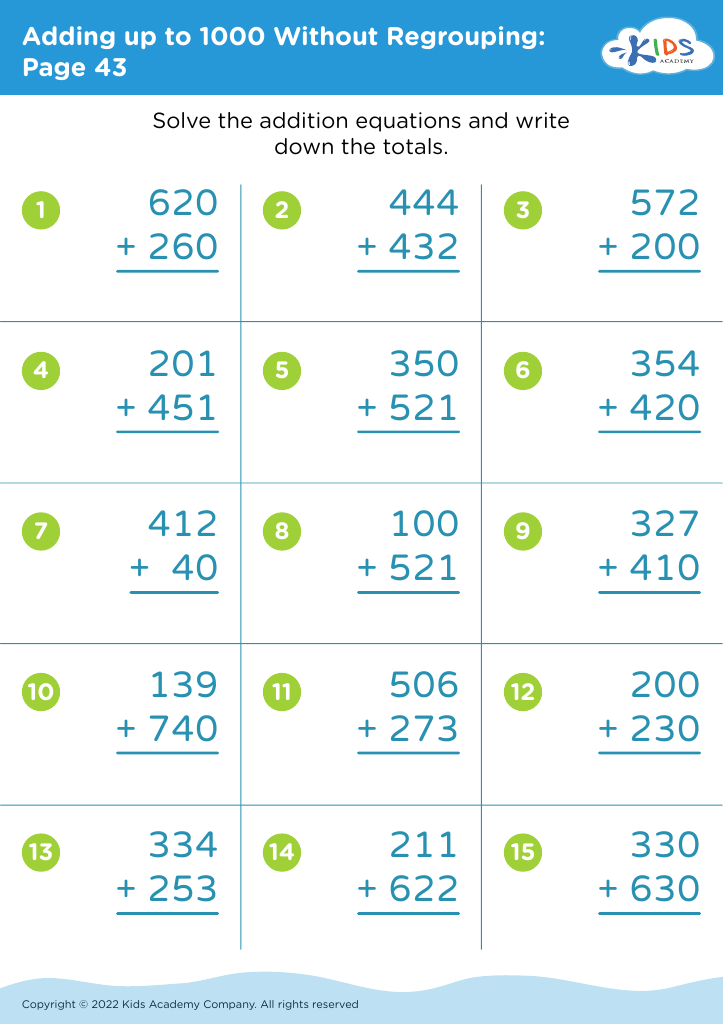



Understanding shape identification and adding up to 1000 are crucial building blocks in a child's cognitive and mathematical development during the ages of 5-9. These skills form the foundation for more advanced concepts in geometry and arithmetic, which are essential parts of the educational curriculum.
Shape identification helps children recognize patterns, understand spatial relationships, and develop their visual-spatial intelligence. This skill not only aids in learning mathematics but also improves problem-solving abilities and reasoning skills that are applicable in daily life. For instance, recognizing different shapes can help kids make sense of the world around them, from noting the differences between various objects to understanding more complex geometric concepts later.
Learning to add up to 1000 at an early age develops a child's number sense and arithmetic skills, essential for future math success. This practice builds their ability to perform operations, comprehend large numbers, and apply these concepts in real-life scenarios, like understanding money and measurements. Furthermore, mastering these skills boosts a child's confidence and fosters a positive attitude toward learning.
Parents and teachers need to invest time in these areas because early success in shape identification and arithmetic creates a strong educational foundation. Providing engaging and supportive experiences in these subjects helps instill a love for learning, setting the stage for academic achievement and lifelong skills.








