Shape Recognition Adding up to 1000 Worksheets for Ages 5-9
11 filtered results
-
From - To
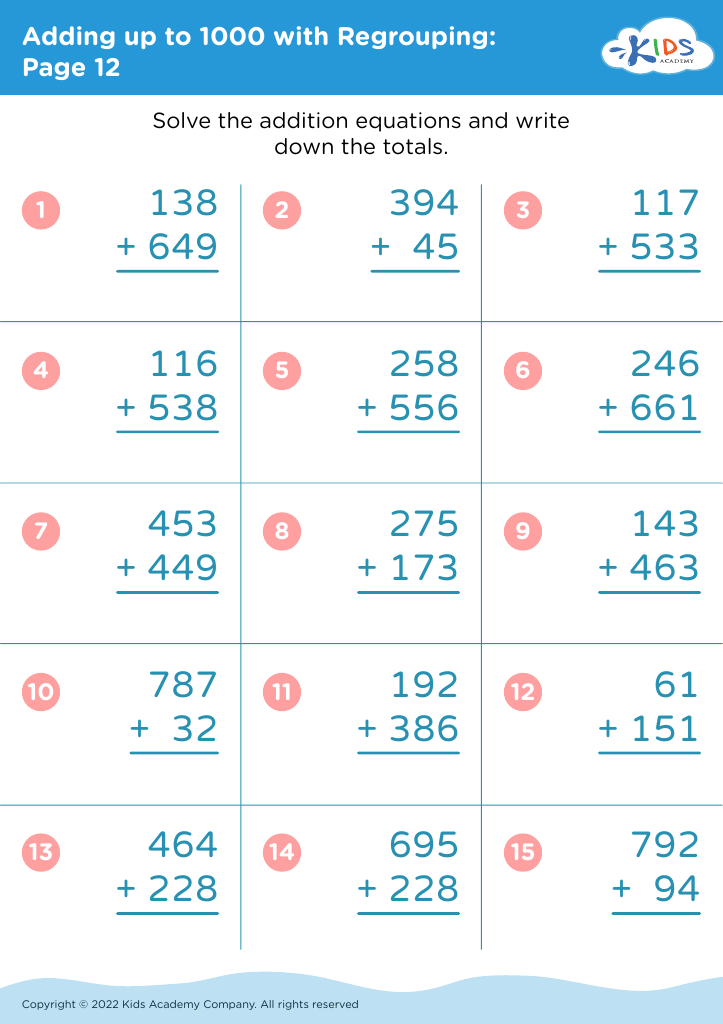
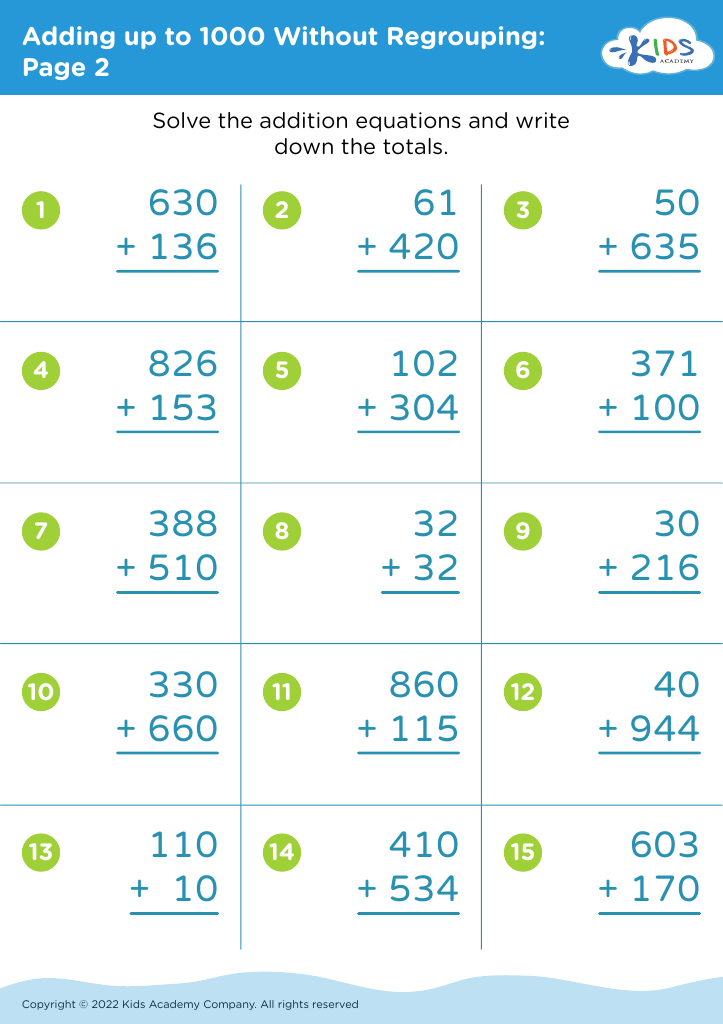
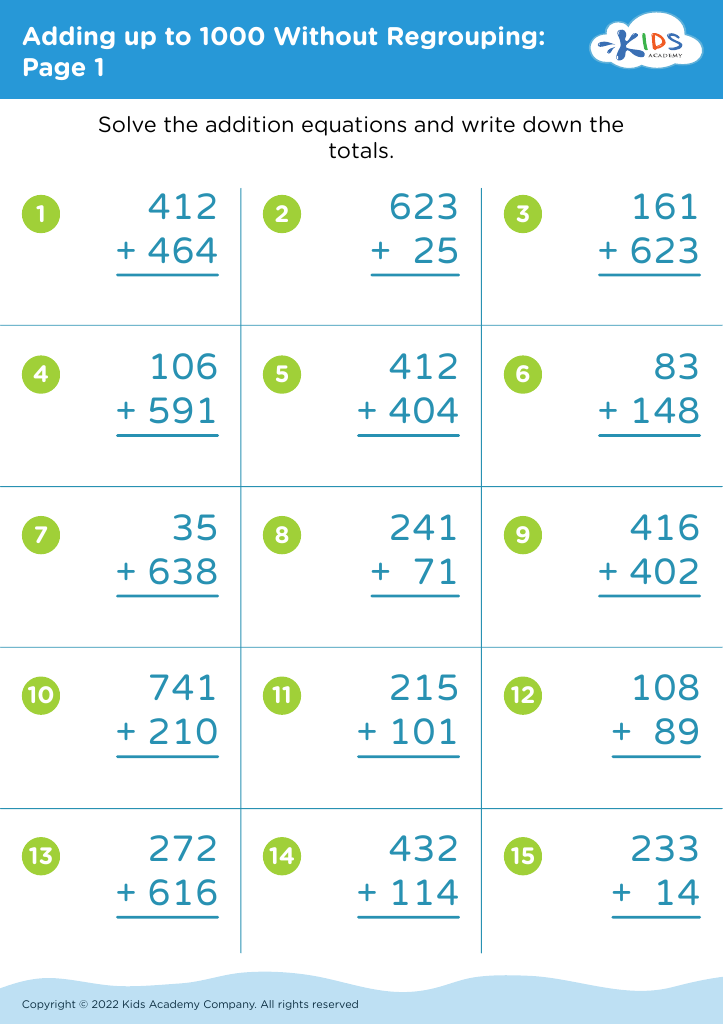
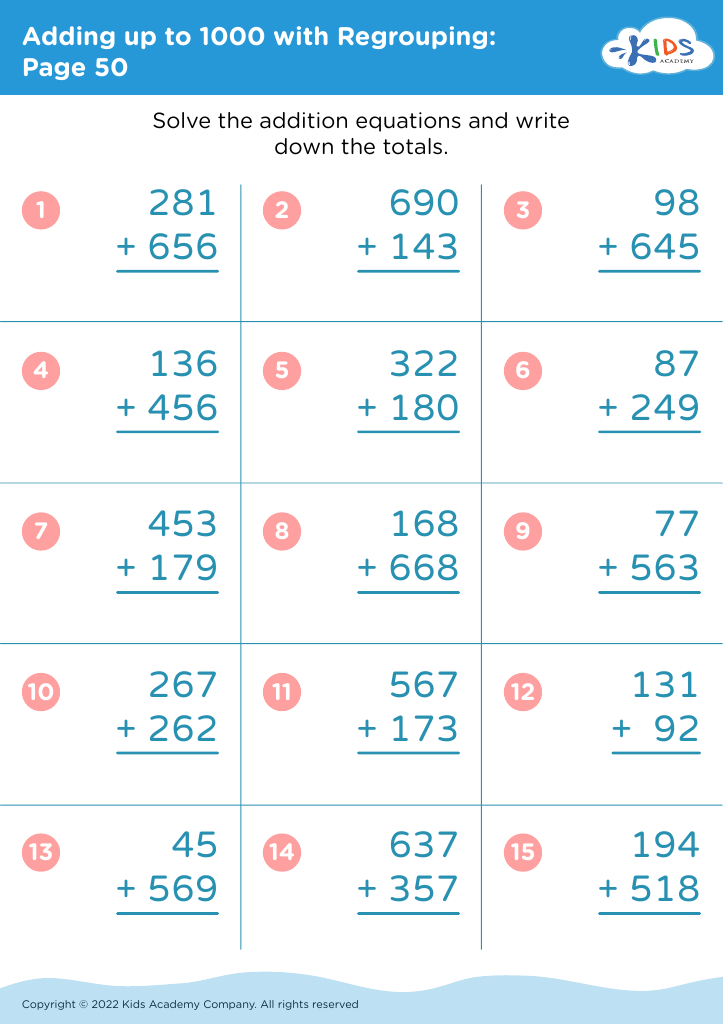
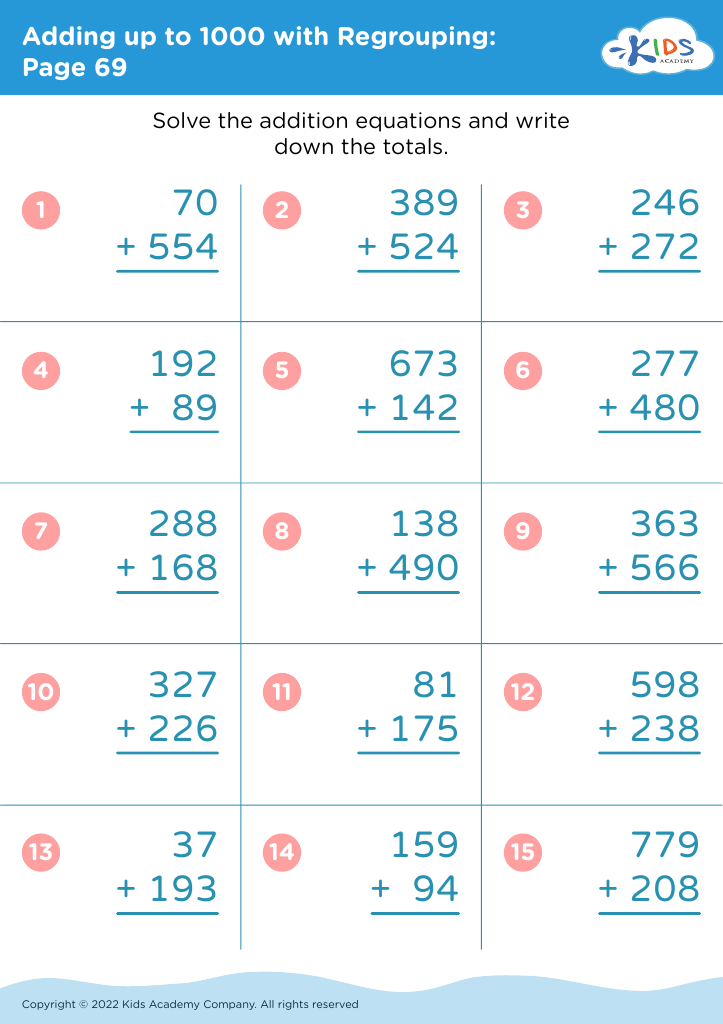
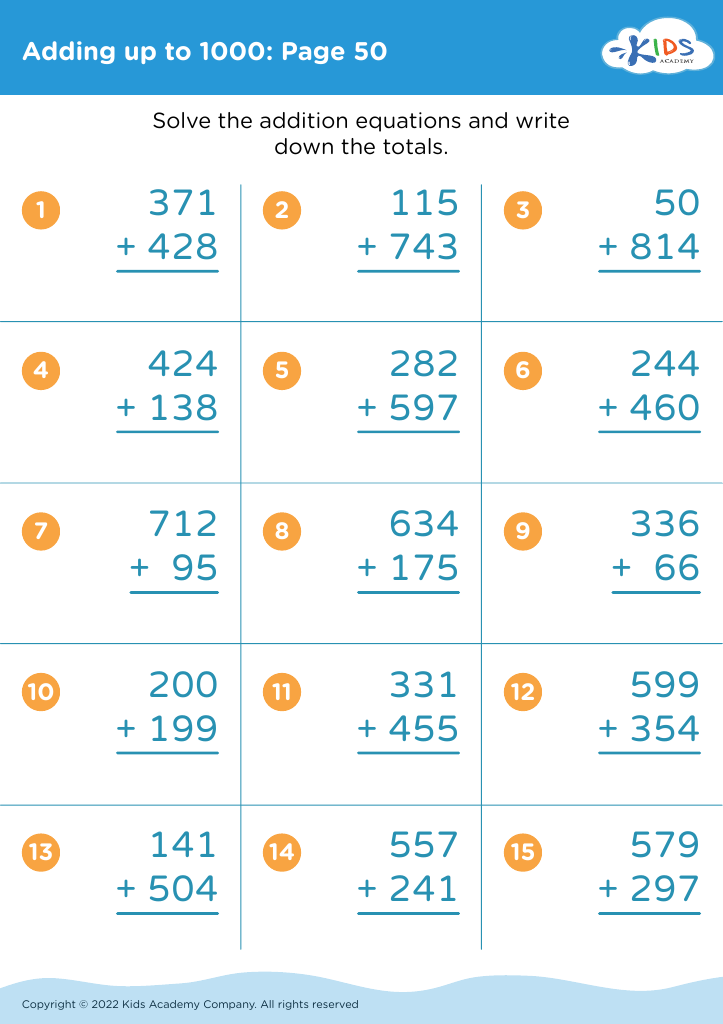
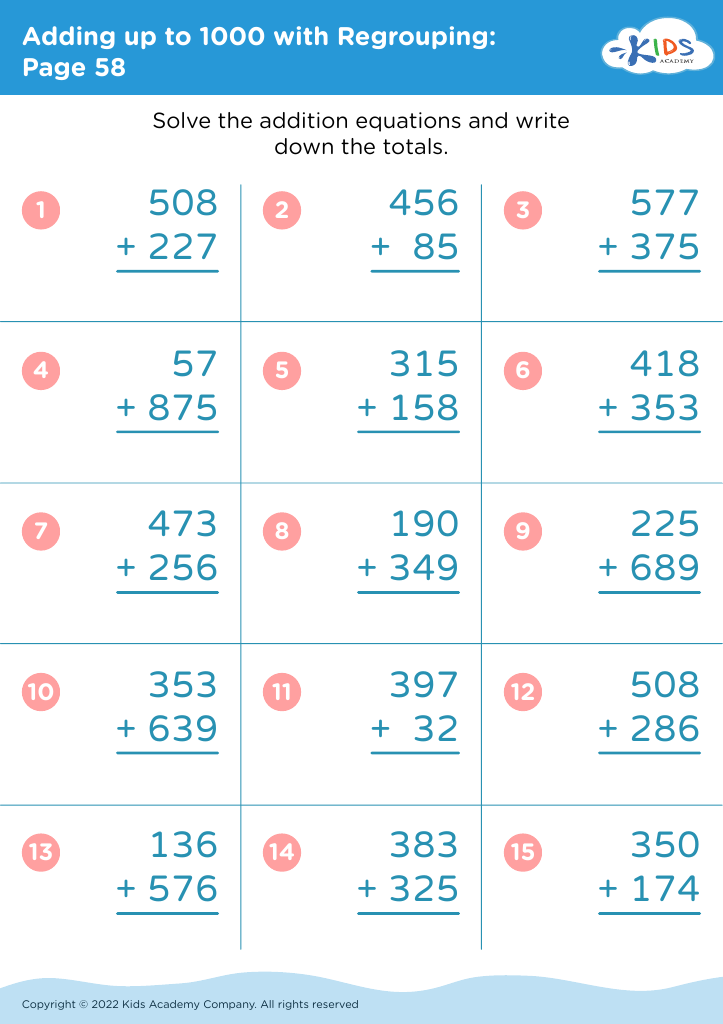
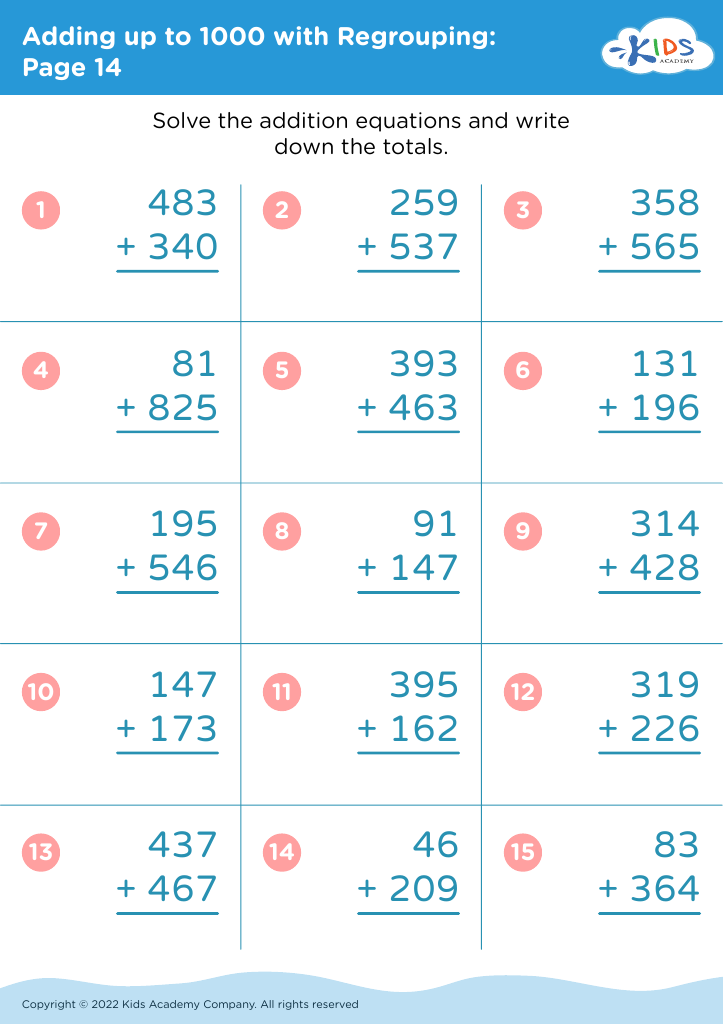
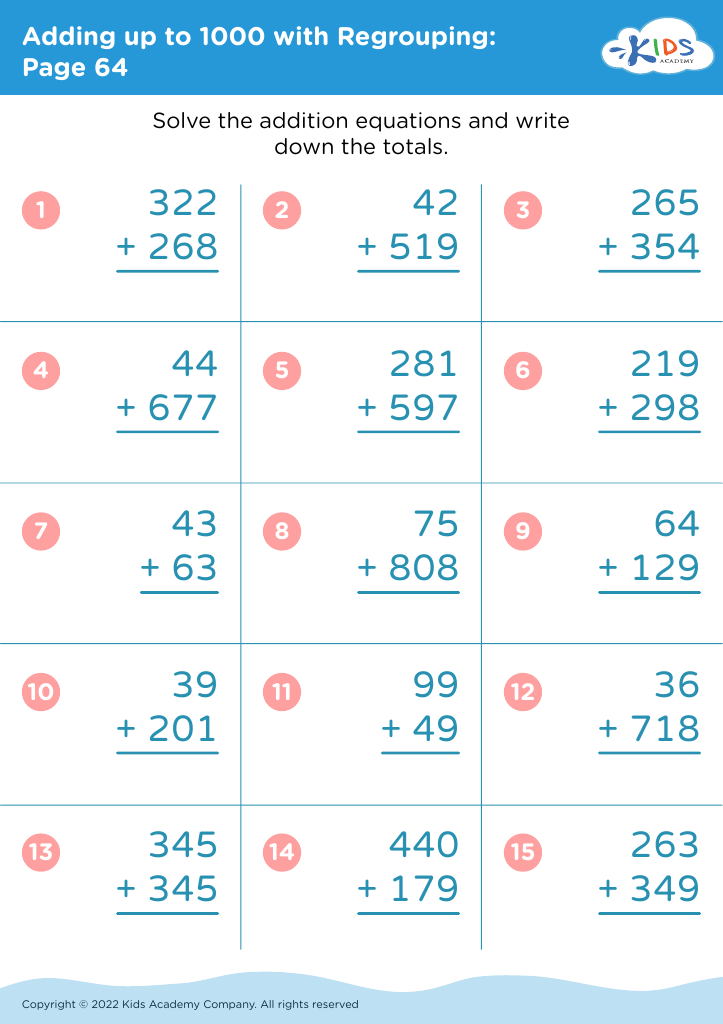
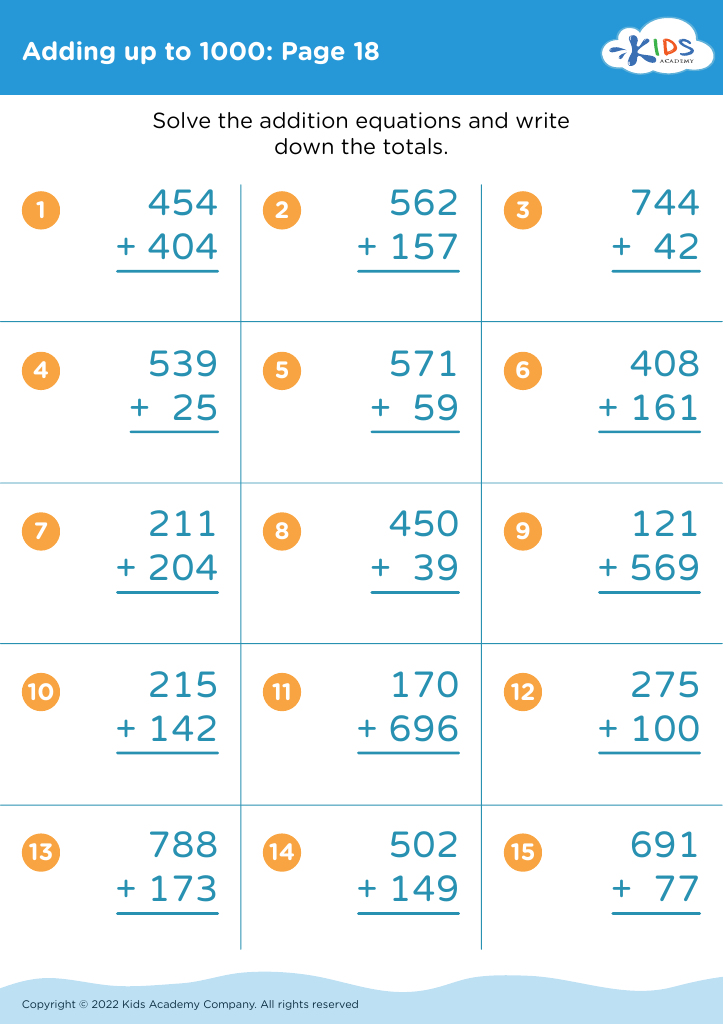
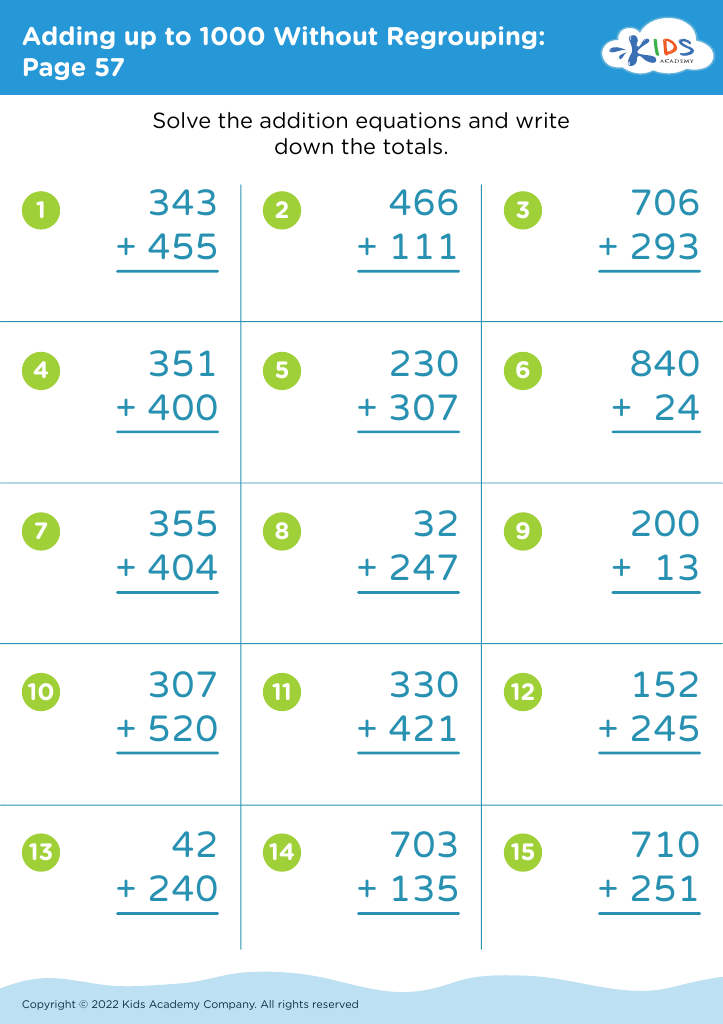
Discover the engaging world of shape recognition with our exciting collection of "Adding Up to 1000" worksheets designed for children aged 5-9. These worksheets seamlessly blend essential math skills with fun shape activities, helping young learners identify and categorize various shapes while enhancing their addition abilities. Perfect for both classroom activities and home learning, our 1000+ worksheets provide a variety of challenges suited to different skill levels. As children practice, they'll develop their critical thinking and problem-solving skills. Make learning shapes and math enjoyable with our interactive and visually appealing worksheets that ignite curiosity and foster a love for learning!



Shape recognition is a fundamental skill for children aged 5 to 9, and it plays a pivotal role in their cognitive development. Understanding shapes helps children categorize objects, comprehend spatial relationships, and enhance their problem-solving skills. By recognizing different shapes, children begin to understand geometric concepts that form the basis for more complex mathematics later on.
For parents and teachers, focusing on shape recognition can foster creativity and critical thinking. Engaging activities, such as drawing, sorting, and building with shapes, encourage a hands-on approach to learning. This not only makes the process enjoyable but also reinforces retention of knowledge.
Additionally, shape recognition integrates seamlessly with other cognitive areas including language development. Children learn to categorize shapes by their properties, which enhances their vocabulary as they describe and discuss their findings.
Moreover, competency in shape recognition often correlates with academic success, particularly in math, helping to build a strong foundation for later numeracy skills such as addition, subtraction, and even more advanced math functions. Ultimately, nurturing shape recognition in early education empowers children with the essential skills they need for lifelong learning, ensuring they are prepared for future academic challenges.








