Understand multiplication Adding up to 1000 Worksheets for Ages 5-9
3 filtered results
-
From - To
Welcome to our “Understand Multiplication Adding up to 1000 Worksheets” designed for children ages 5-9! These engaging and interactive worksheets help young learners grasp multiplication concepts through fun exercises and visual aids. By exploring multiplication in a tangible way, children will build a solid foundation for future math skills. Our resources cater to different learning styles, making it easy for kids to understand how multiplication relates to addition and large numbers. Whether at home or in the classroom, these worksheets will support your child's mathematical growth and confidence. Download now and watch them excel in their multiplication journey!
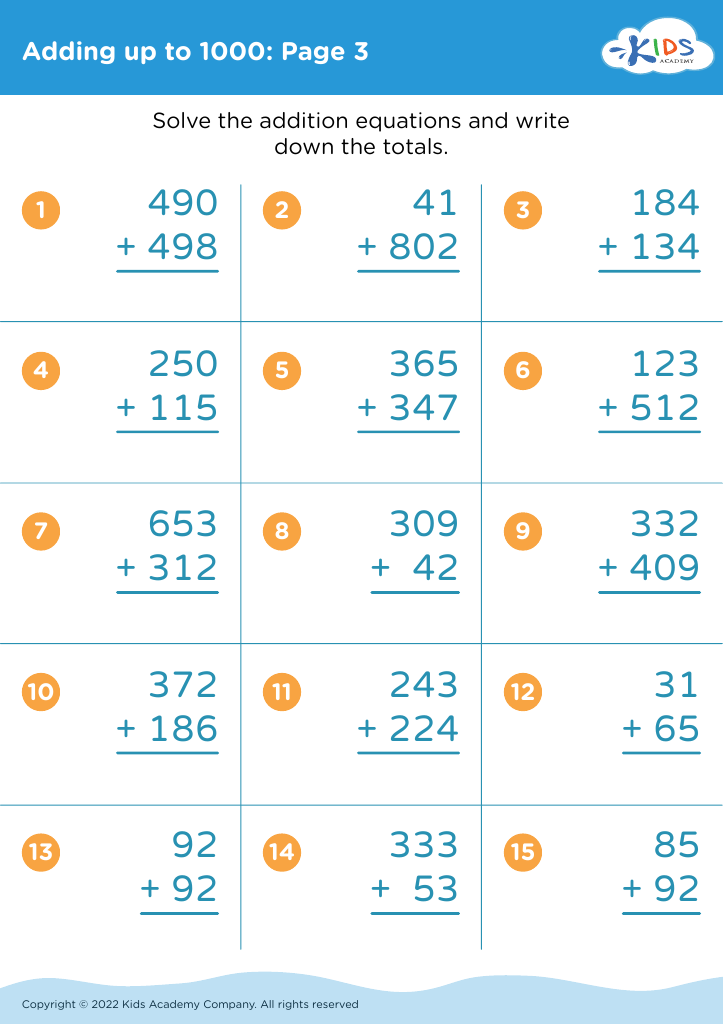
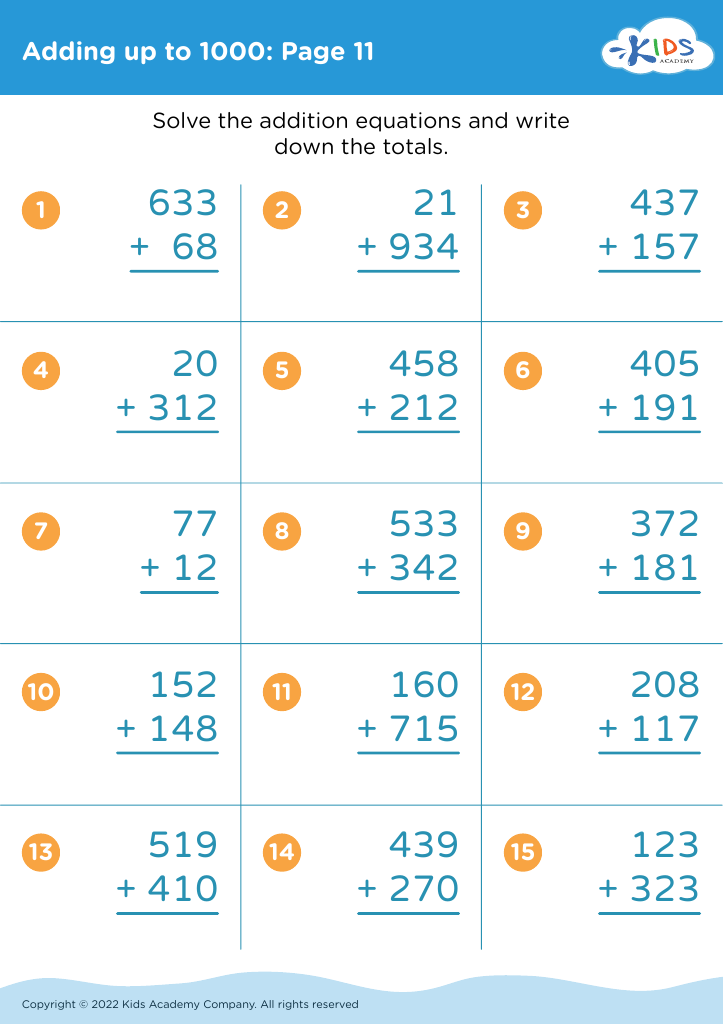
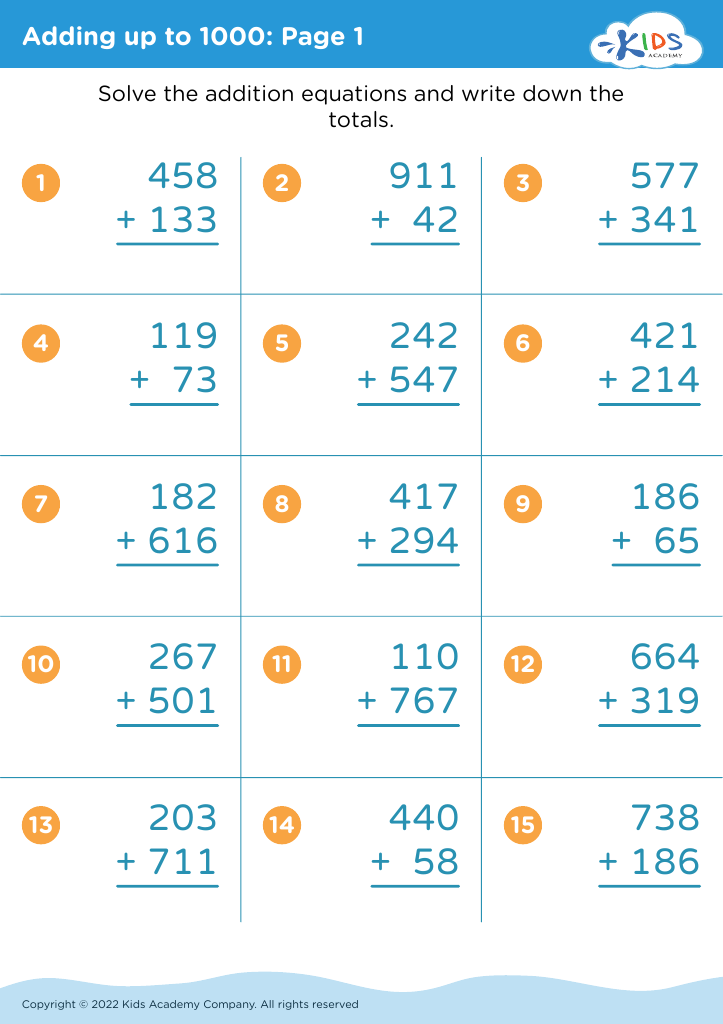



Understanding multiplication and addition, particularly when focusing on reaching sums up to 1000, is crucial for children aged 5-9, as it builds a strong foundation in mathematical skills. At this age, children are developing critical thinking and problem-solving abilities; grasping multiplication allows them to recognize patterns and learn efficient strategies for calculating larger numbers. This understanding enhances their confidence in math, setting a positive attitude towards the subject as they progress in their education.
Moreover, mastering these skills contributes to their overall academic success. As math becomes increasingly complex in higher grades, a solid grasp of multiplication and addition enables students to tackle advanced concepts such as division, fractions, and even algebra with greater ease. Furthermore, the ability to quickly add up to 1000 helps students deal with real-world scenarios, such as budgeting and managing resources, fostering practical life skills.
Parents and teachers should prioritize these concepts because fostering mathematical proficiency early on not only improves grades but also encourages a love for learning. Engaging young learners with hands-on activities, games, and relatable examples can make math enjoyable, inspiring curiosity and a lifelong appreciation for numbers.








