Understand patterns Adding up to 1000 Worksheets for Ages 5-9
3 filtered results
-
From - To
Explore our "Understand Patterns Adding Up to 1000" worksheets, designed specifically for children aged 5-9! These engaging resources help young learners grasp the concept of patterns in addition, enhancing their mathematical skills while making learning enjoyable. Through a variety of interactive exercises and visually appealing activities, children will practice identifying, creating, and utilizing patterns that add up to 1000. These worksheets encourage problem-solving and critical thinking, while also supporting foundational math skills. Perfect for home or classroom use, our worksheets provide a fun, effective way to reinforce essential math concepts and foster a love of learning in young minds!
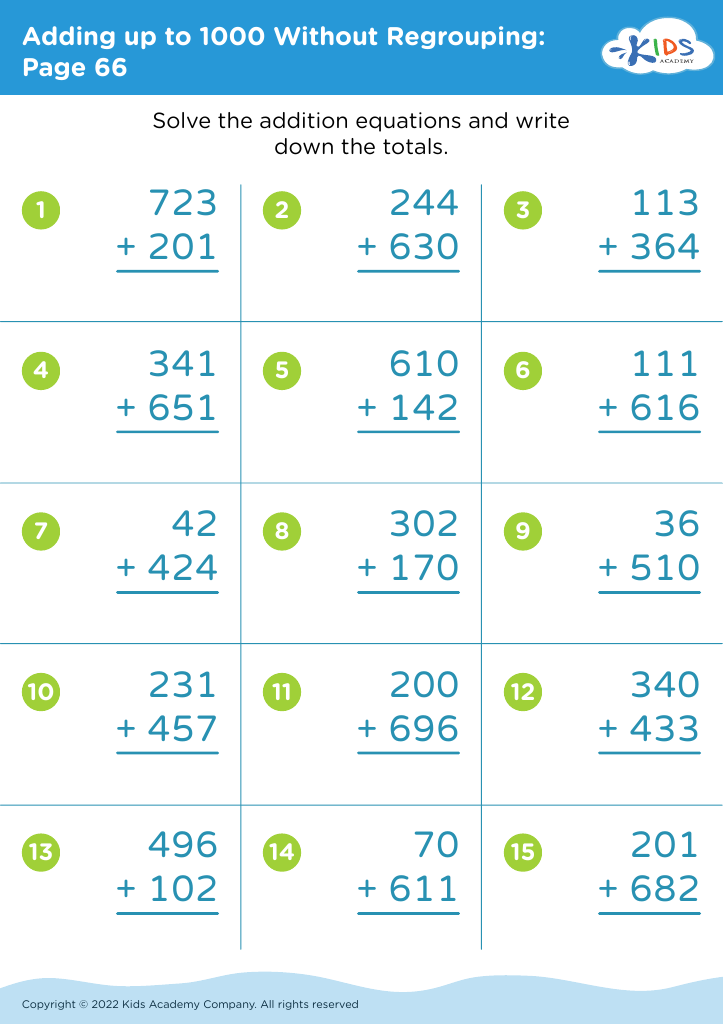
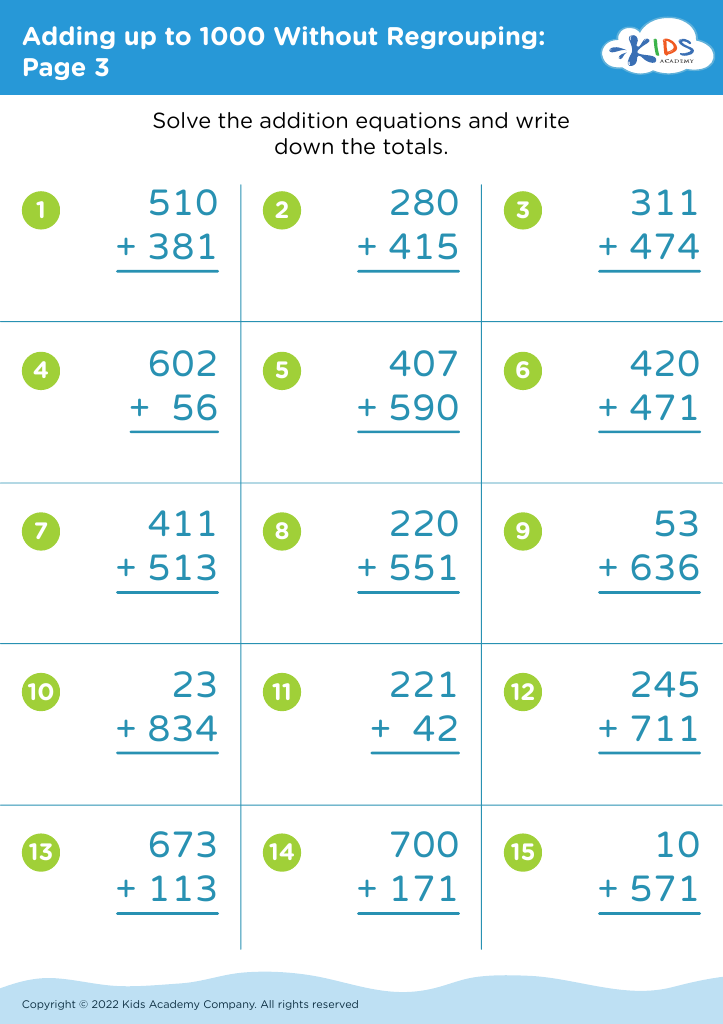
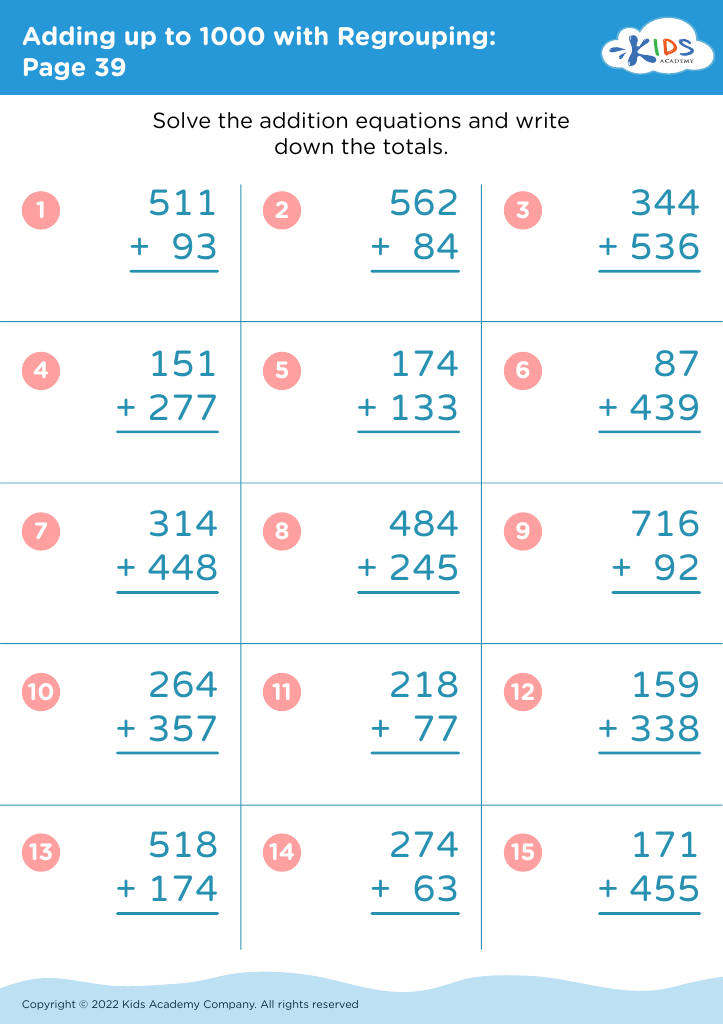



Understanding patterns and mastering addition within 1000 is crucial for children aged 5-9 as it lays a solid foundation for their mathematical skills and overall cognitive development. Mathematical patterns enhance children's ability to recognize relationships in numbers, encouraging logical thinking and problem-solving abilities. By engaging with patterns, children learn to predict outcomes, which fosters their analytical skills vital for future disciplines beyond mathematics.
Moreover, comprehending addition up to 1000 cultivates numerical fluency, a skill that translates into everyday life scenarios, from budgeting pocket money to measuring ingredients in cooking. This foundational knowledge empowers children to approach more complex mathematical concepts with confidence, ensuring they are well-prepared for academic challenges ahead.
Furthermore, when parents and teachers emphasize these skills, they support children's learning in a structured yet adaptive manner. This reinforcement helps build a positive attitude towards mathematics, allowing students to see it not simply as a subject but as a tool for understanding the world around them. Ultimately, instilling these skills early fosters a lifelong appreciation for problem-solving and quantitative reasoning essential for success in an increasingly data-driven world. Supporting children in understanding patterns and addition equips them with critical skills for both academic achievement and everyday functionality.








