Understanding division Adding up to 1000 Worksheets for Ages 5-9
3 filtered results
-
From - To
Discover our "Understanding Division Adding Up to 1000" worksheets tailored for kids ages 5-9! These engaging and interactive worksheets are designed to help young learners grasp the fundamental concepts of division and its relationship with addition. Through fun exercises, children will explore how division works, enhancing their problem-solving skills while gaining confidence in math. The worksheets align with educational standards to ensure comprehensive learning, making them ideal for home practice or classroom activities. Our resources create a supportive environment where children can master division concepts in a playful and age-appropriate manner. Unlock your child's mathematical potential today!
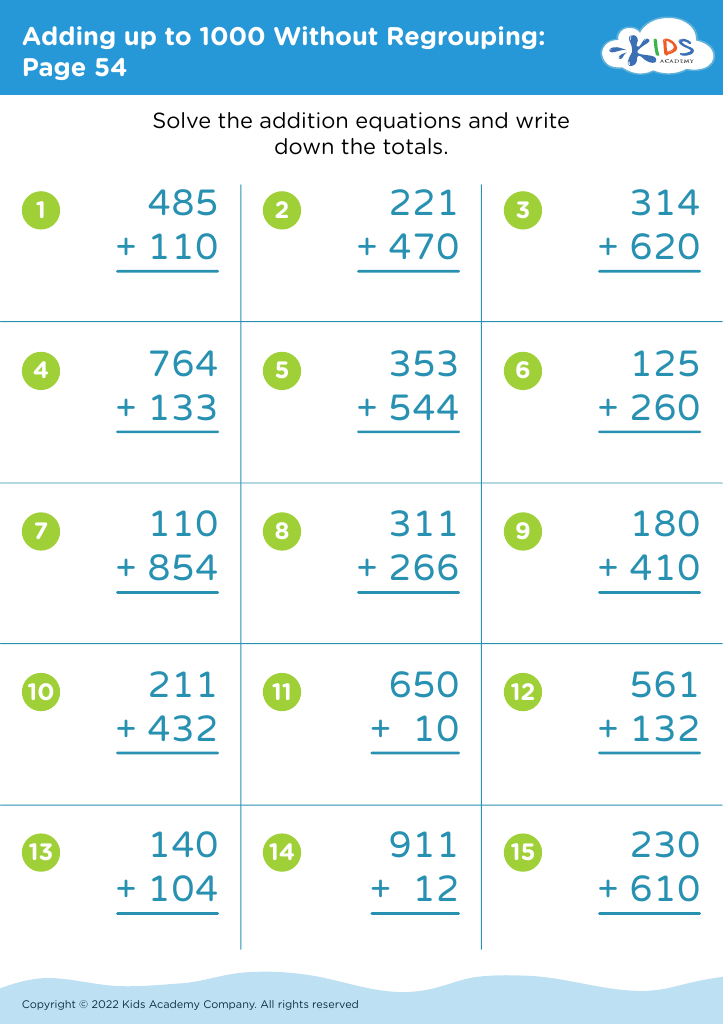
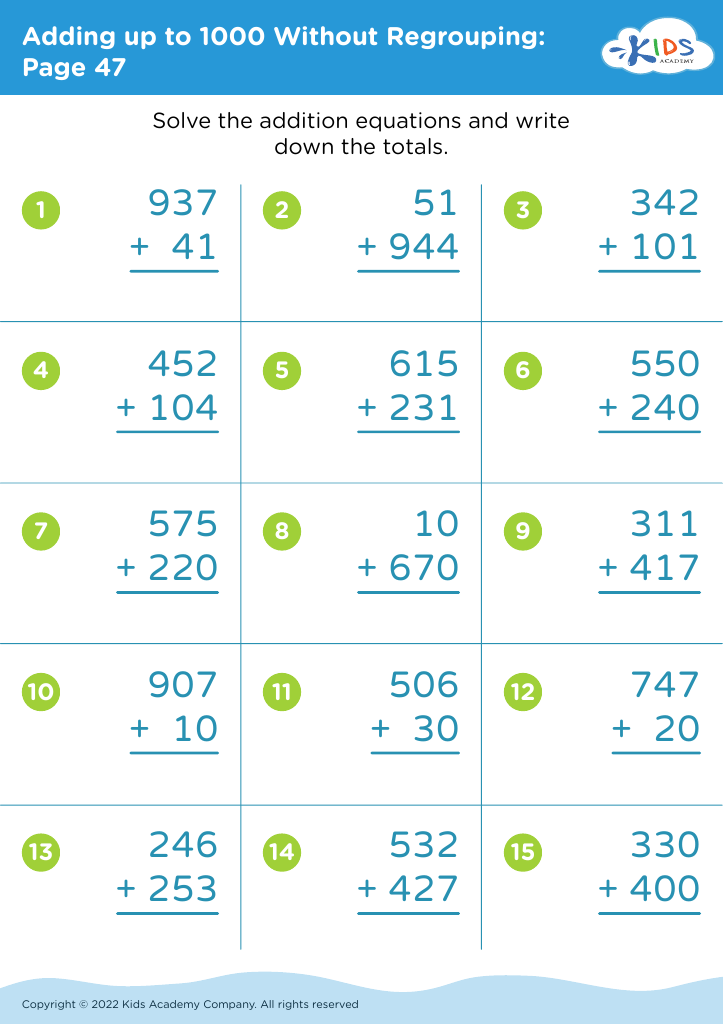
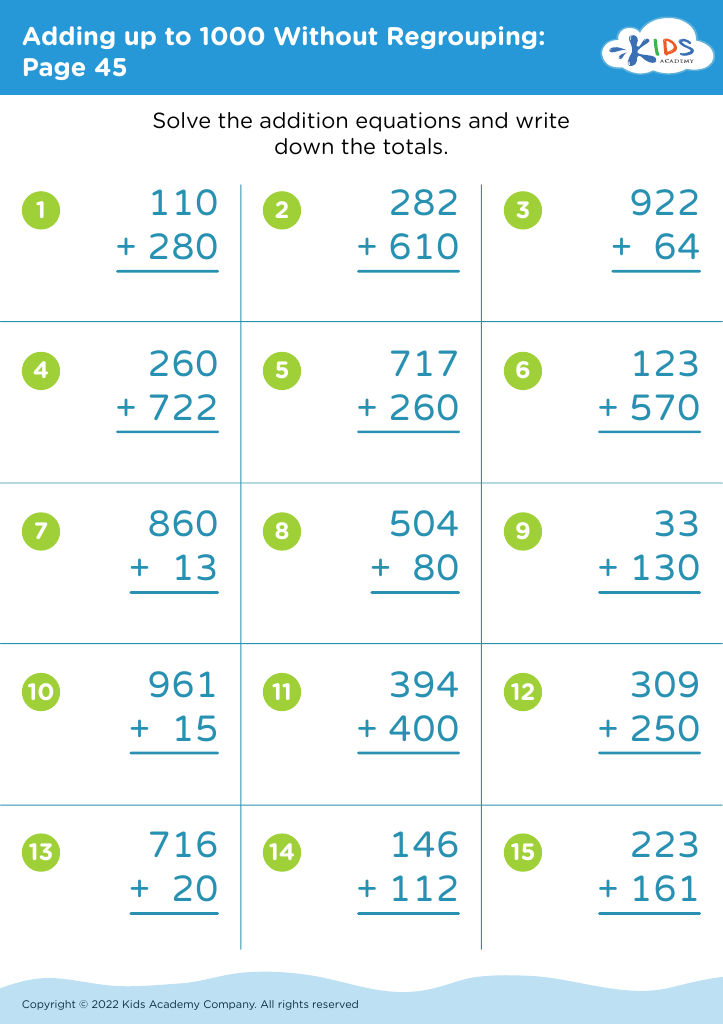



Understanding division is crucial for children aged 5-9, especially when adding up to 1000, as it lays a foundational skill for mathematical literacy. At this stage, kids are developing their critical thinking and problem-solving abilities, and grasping division helps them understand how numbers relate to each other. Division teaches children to break down larger quantities into manageable parts, fostering skills like sharing and grouping, which are essential in daily life.
Moreover, when children learn division in conjunction with addition (up to 1000), they develop a stronger grasp of inverse operations. This is essential for developing mathematical concepts they will encounter later, such as fractions and ratios. Understanding division allows students not only to see how numbers can be organized and distributed but also enhances their confidence in tackling larger mathematical challenges.
Parents and teachers play a pivotal role in this learning process by creating engaging and relatable activities that incorporate division. Encouraging children to explore division through real-world situations fosters a genuine interest in mathematics. These skills contribute significantly to a child’s overall cognitive development, equipping them with tools to succeed in their future academic endeavors. Ultimately, a strong foundation in division prepares kids for more complex mathematical concepts ahead.








