Understanding Sequences Adding up to 1000 Worksheets for Ages 5-9
6 filtered results
-
From - To
Unlock your child's potential with our "Understanding Sequences Adding up to 1000 Worksheets for Ages 5-9." These engaging and educational worksheets are designed to enhance your child’s mathematical skills by gradually guiding them to understand sequences and number patterns up to 1000. Ideal for ages 5-9, each activity promotes critical thinking and problem-solving, paving the way towards advanced math comprehension. Our printable resources cater to different learning styles, making learning fun and effective. Foster a love for math in your young learner and watch their confidence grow with every completed worksheet. Perfect for home or classroom use!
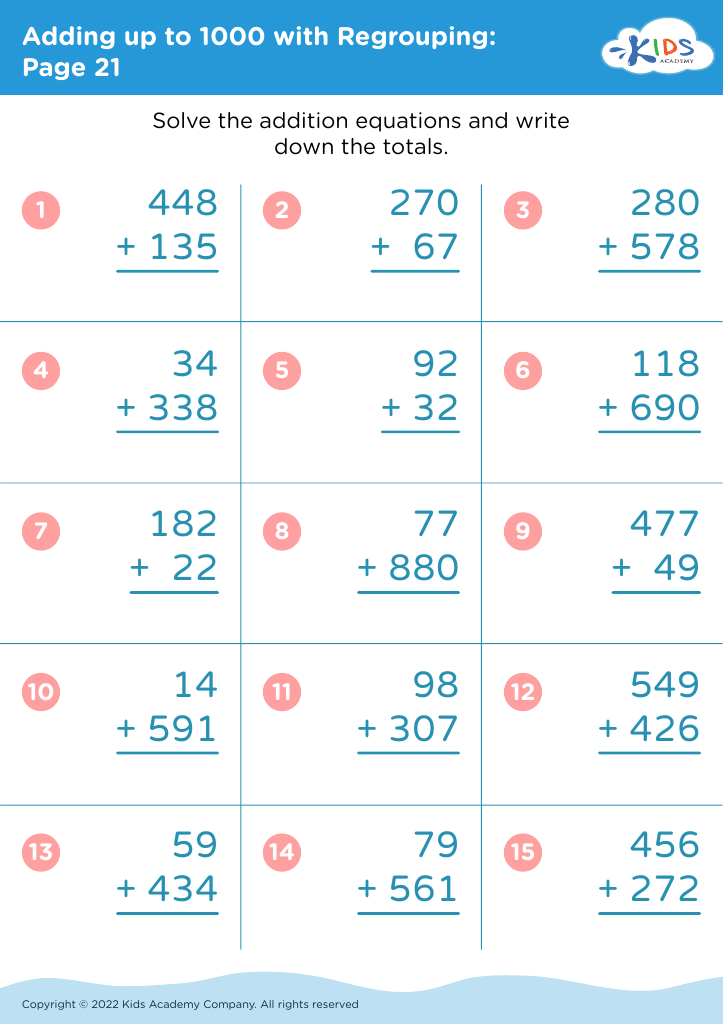
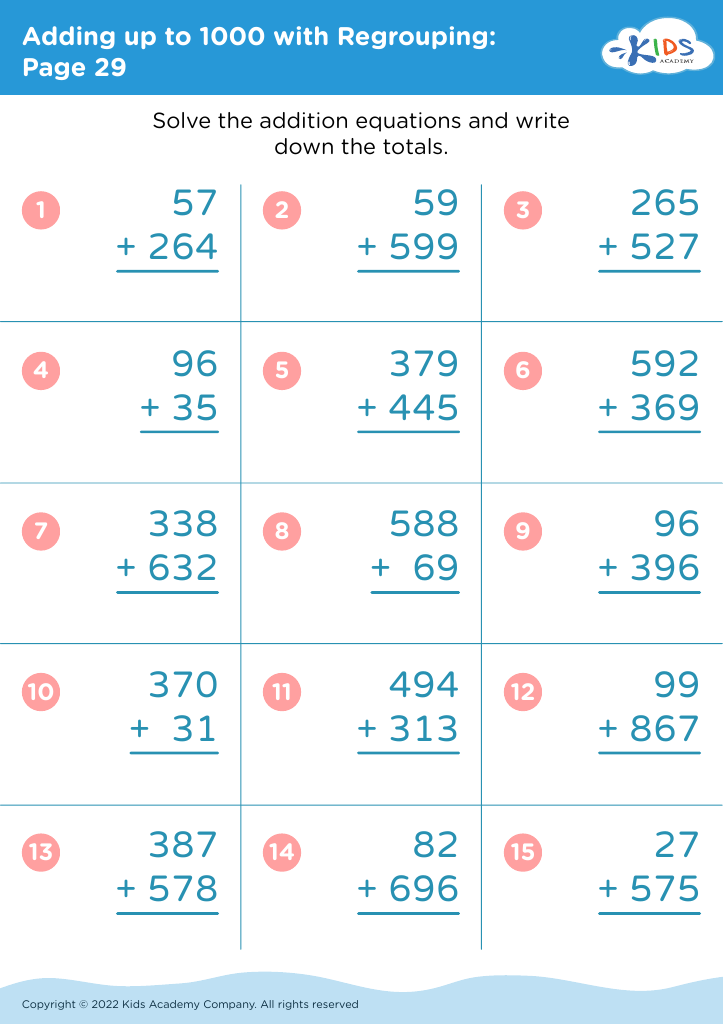
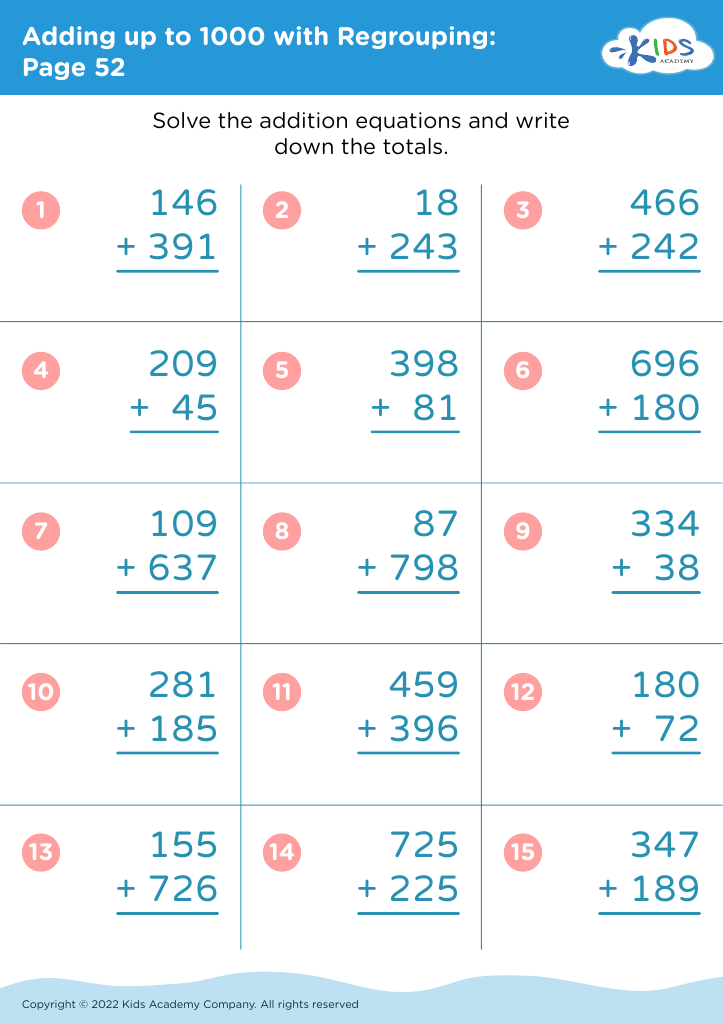
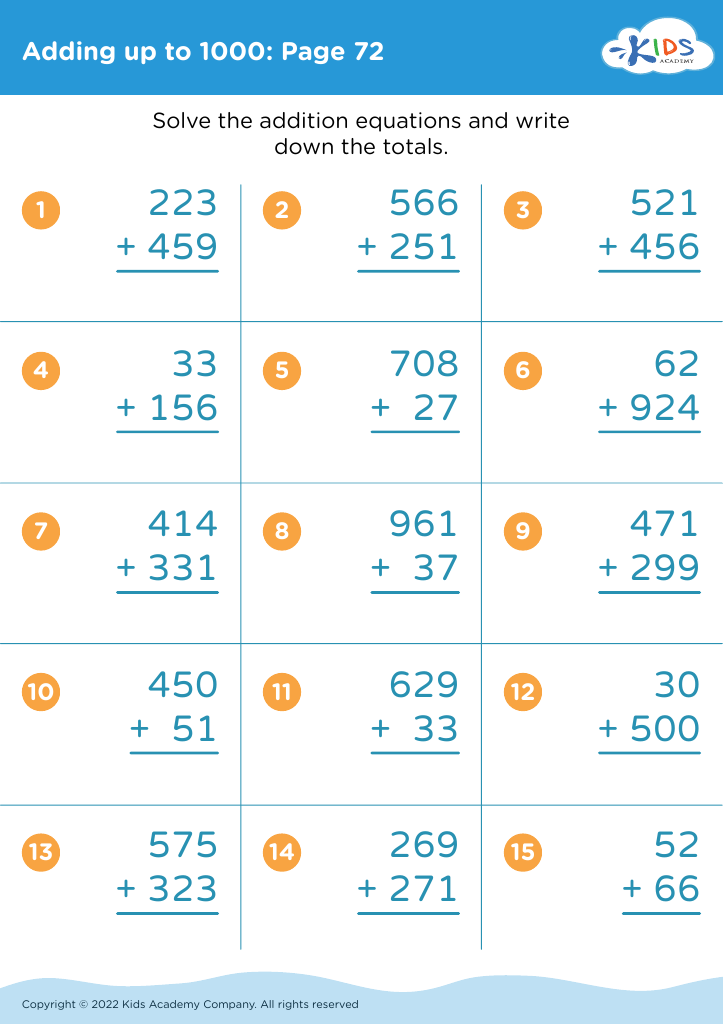
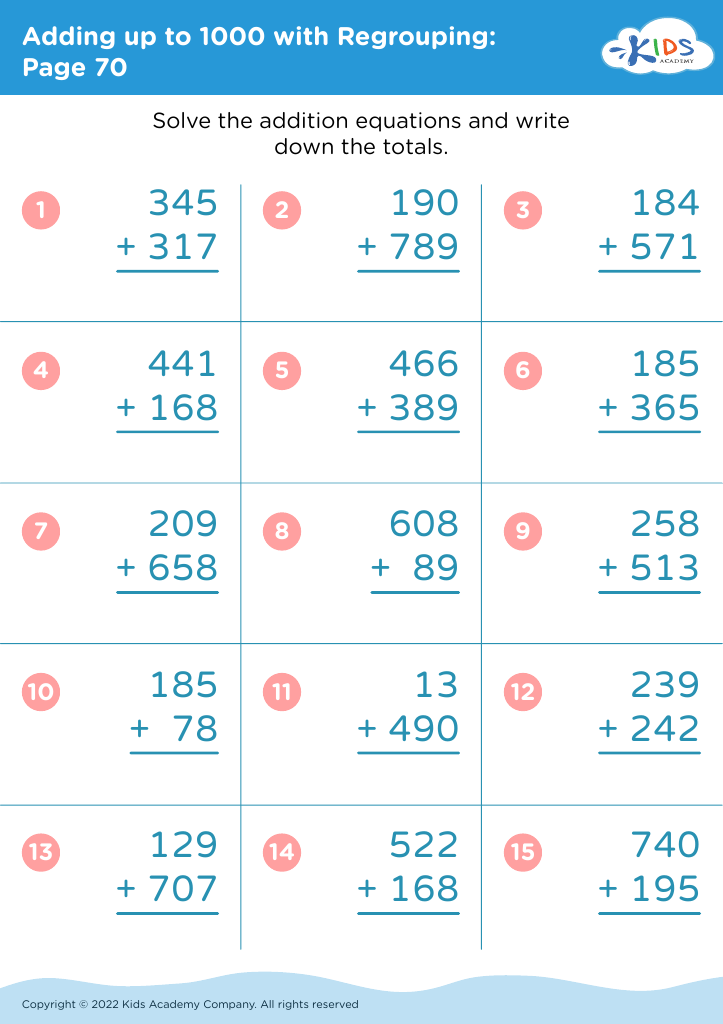
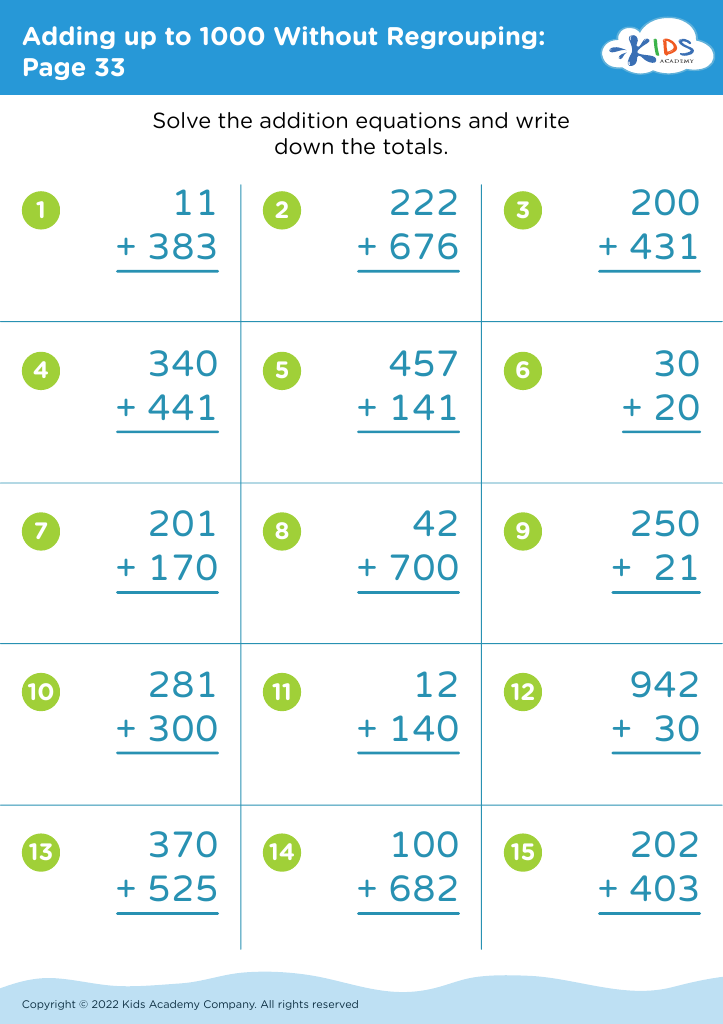



Understanding sequences adding up to 1000 can significantly benefit young children, ages 5-9, in developing their mathematical and cognitive skills. Developing a solid grasp of sequences helps kids recognize patterns, a fundamental skill in both mathematics and logical thinking. When children learn to identify, extend, and summarize sequences, they build strong foundational skills for more advanced mathematical concepts they will encounter later, such as algebra and geometry.
Furthermore, practicing sequences leading to larger sums like 1000 can boost number sense and improve mental arithmetic. By engaging with numbers frequently, kids become more comfortable with numerical operations, establishing early confidence in handling mathematical problems. This activity also supports the development of their concentration and perseverance.
For teachers and parents, focusing on math skills such as sequences highlights important aspects like attention to detail, patience, and a methodical approach to problem-solving. Such early emphasis facilitates better academic performance in the future by preparing children to tackle more complex challenges with ease. This foundational knowledge fosters a positive attitude towards math, something particularly valuable given the subject's significance in various aspects of everyday life and many professional fields.
Overall, making sequences part of early learning paves the way for children's long-term success, not only academically but in practical life skills as well.








