Understanding sequencing Adding up to 1000 Worksheets for Ages 5-9
3 filtered results
-
From - To
Discover our engaging "Understanding Sequencing Adding Up to 1000 Worksheets" designed specifically for children ages 5-9. These worksheets help young learners grasp the concept of sequencing through fun and interactive math exercises. By building their numerical skills, kids will learn how to add numbers up to 1000, fostering a solid foundation in mathematics. With clearly structured activities, children develop critical thinking and problem-solving abilities while enjoying themselves. Perfect for classroom use or at-home learning, these worksheets empower kids to master sequencing in a playful manner, ensuring they gain confidence in their math skills. Start your journey to learning today!
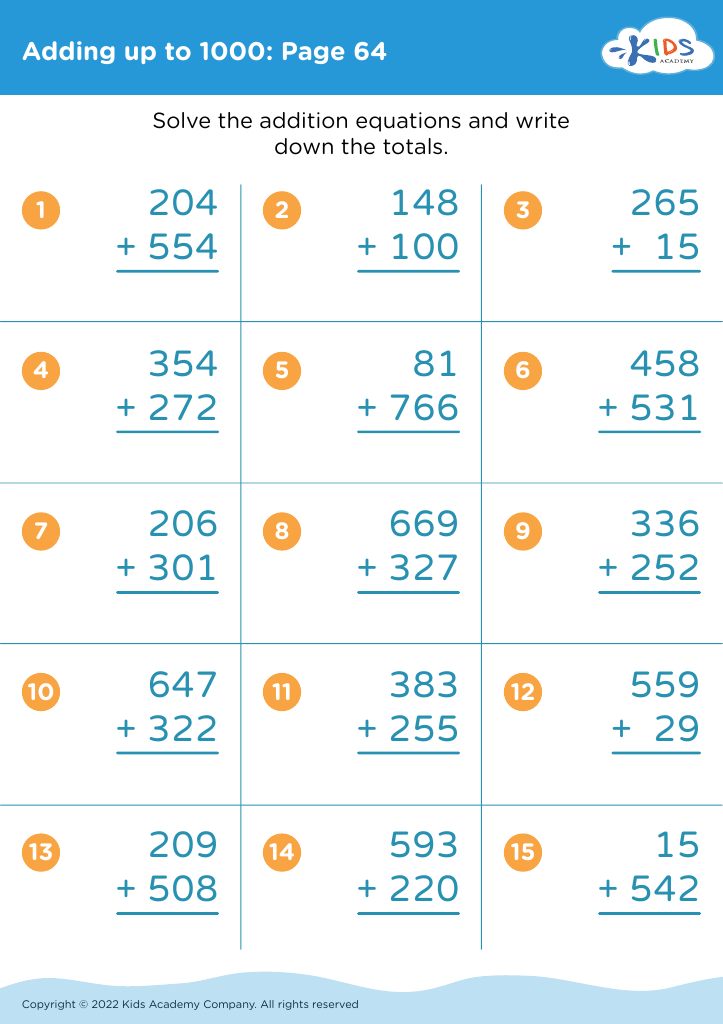
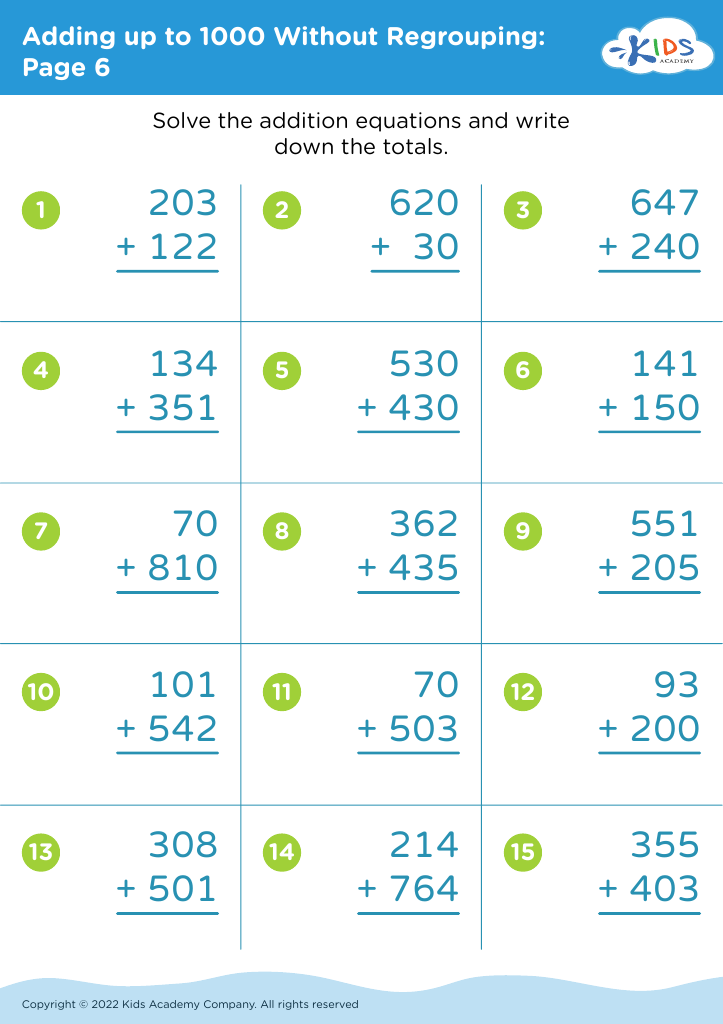
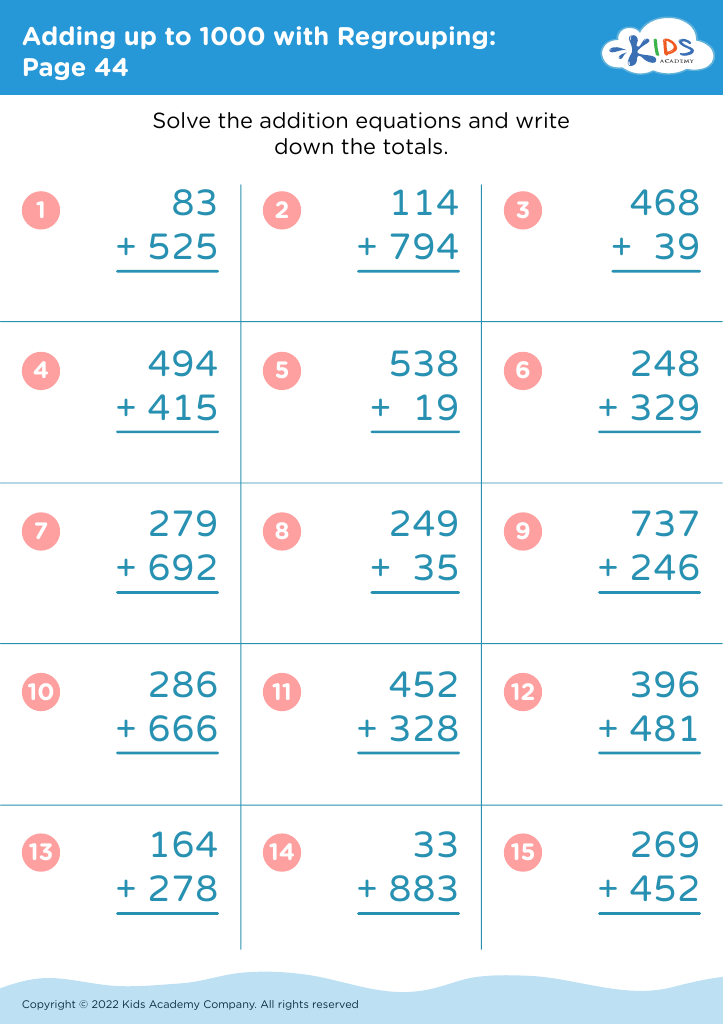



Understanding sequencing, especially in the context of adding up to 1000, is crucial for children aged 5-9 as it lays the foundation for their mathematical development. Firstly, sequencing helps children grasp the concept of order in numbers, which is essential for understanding addition and subtraction. When students learn to sequentially solve problems that lead to a total of 1000, they build critical thinking and organizational skills.
Moreover, this type of mathematical reasoning encourages children to break down larger problems into manageable parts. When kids learn to see how numbers relate to each other and how they can be added step-by-step, they gain confidence in their problem-solving abilities. For instance, they might first add numbers that reach 500 in two steps and then bridge those sums to reach 1000.
Furthermore, understanding and practicing sequencing allows for greater fluency in math, which is vital in today’s world where math is integrated across various subjects. Helping children develop these skills fosters resilience and persistence in facing complex tasks. Thus, parents and teachers should prioritize teaching about sequencing and addition up to 1000, ensuring children build a solid mathematical foundation to support their future learning.








