Animal identification Adding Up to 5 Worksheets for Ages 5-9 - Page 2
27 filtered results
-
From - To







.jpg)
Animal identification and simple arithmetic geared towards ages 5–9 are critical tools for cognitive and developmental growth. For children this age, the process of recognizing different animals enhances their understanding of the natural world, cultivating curiosity and empathy towards living beings. This familiarity not only serves as a foundation for biology education but also enriches their social and communication skills through engaging in conversations about animals.
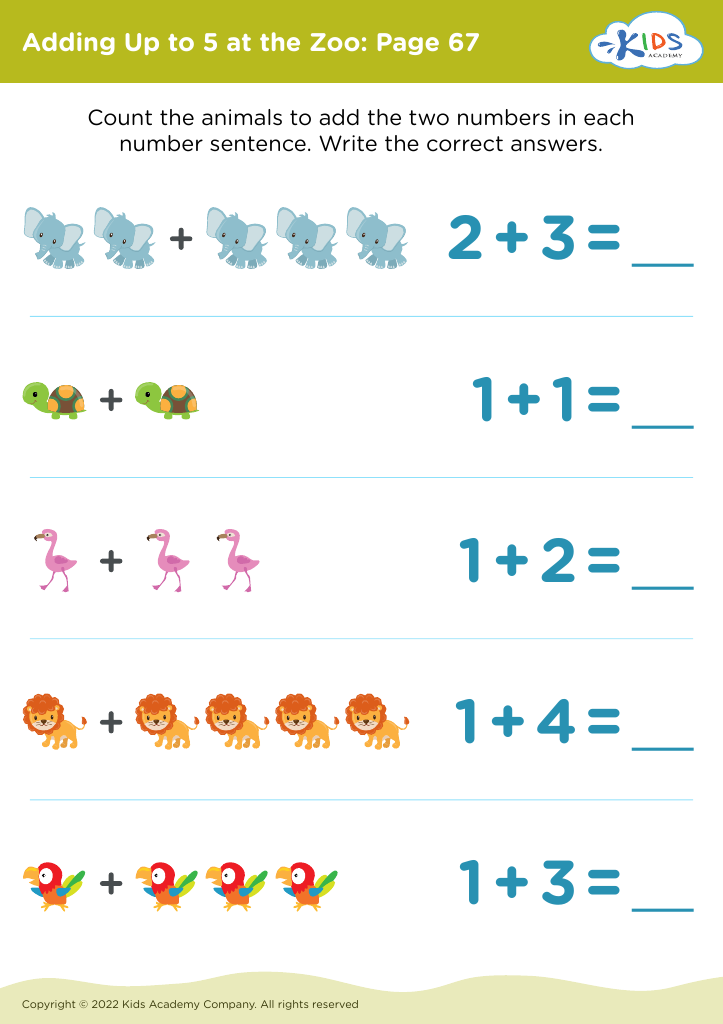
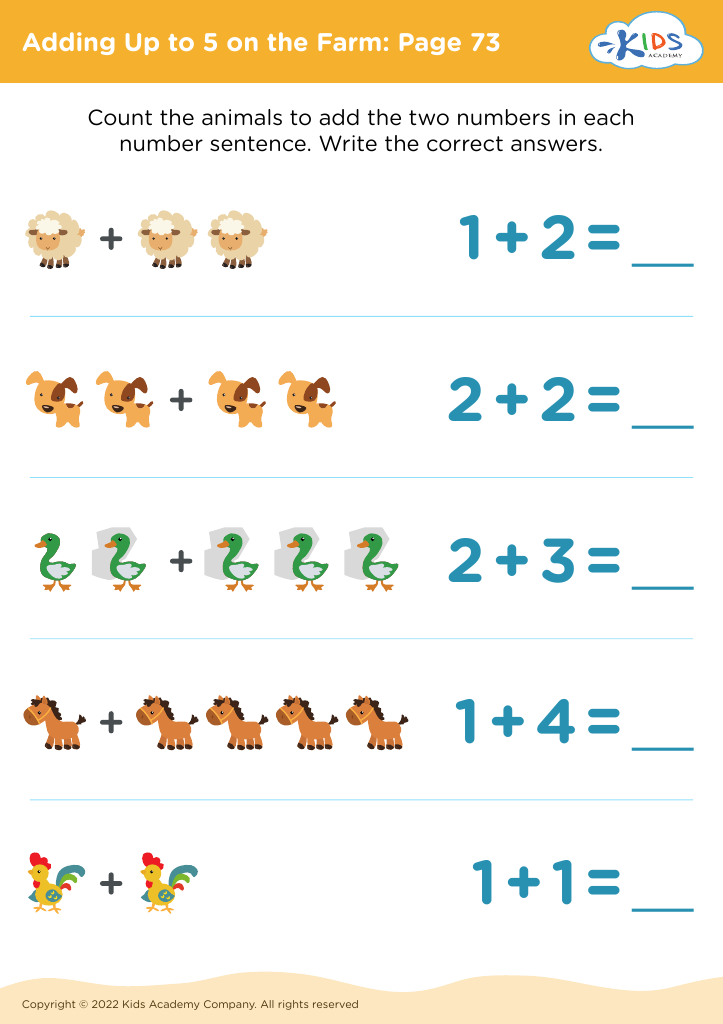
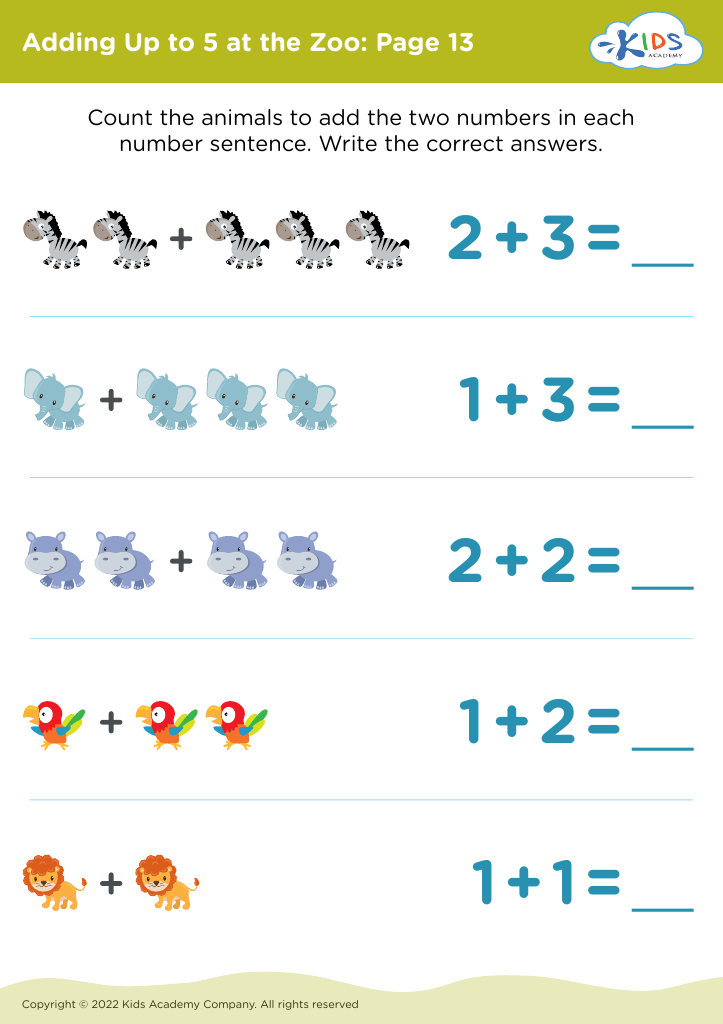
Simultaneously, learning to add up to 5 introduces fundamental math concepts in a tangible and comprehensible manner. At ages 5–9, children are at a stage where they benefit most from concrete examples and visual aids. Animal identification combined with counting activities naturally embeds mathematical learning into a real-world context. For instance, counting the legs of various animals or the number of animal pictures helps children practice basic addition intuitively.
Moreover, this integrated approach supports different learning styles. It engages visual learners through colorful animal imagery, auditory learners through discussions, and kinesthetic learners through handling manipulatives or interactive games. Consequently, this method fosters a well-rounded educational experience, promoting both numeracy and literacy in a memorable, enjoyable way. Thus, parents and teachers should prioritize these interdisciplinary activities to lay a robust foundation for future academic success.








