Basic Math understanding Adding Up to 5 Worksheets for Ages 5-9
7 filtered results
-
From - To
Introduce your child to the world of math with our "Basic Math Understanding: Adding Up to 5 Worksheets for Ages 5-9." Designed for early learners, these engaging worksheets help children grasp fundamental addition concepts in a fun and interactive way. With colorful illustrations and simple exercises, kids will develop essential math skills while boosting their confidence. Perfect for use in the classroom or at home, our worksheets encourage independent learning and hands-on practice. Ideal for students aged 5 to 9, this resource provides a strong foundation in math. Start your child's math journey today and watch them excel with ease!
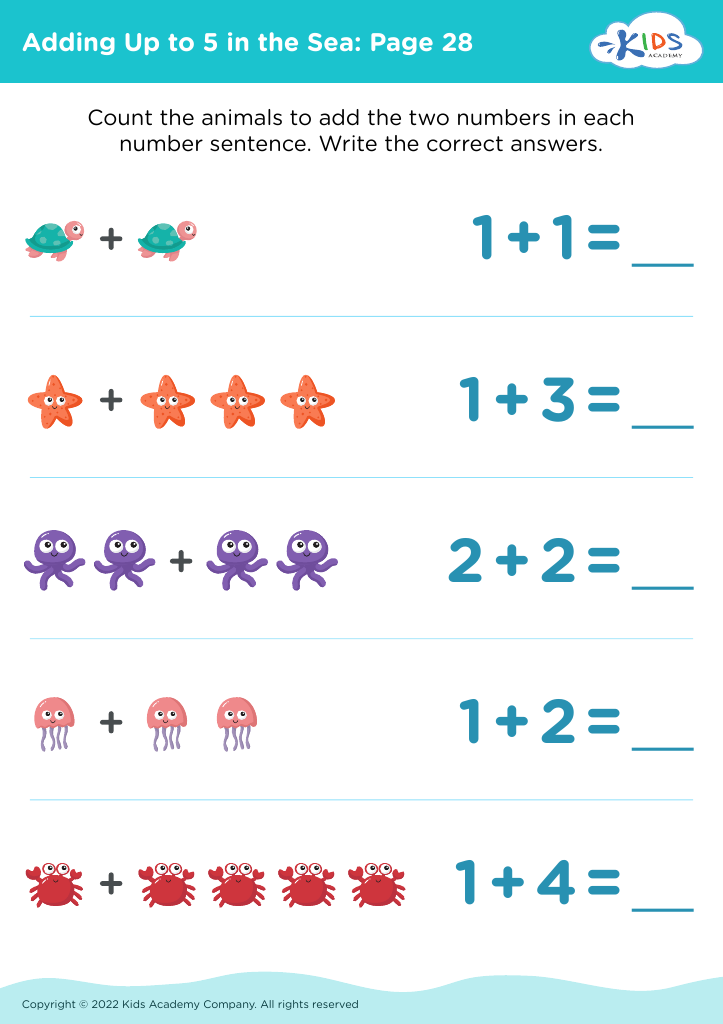
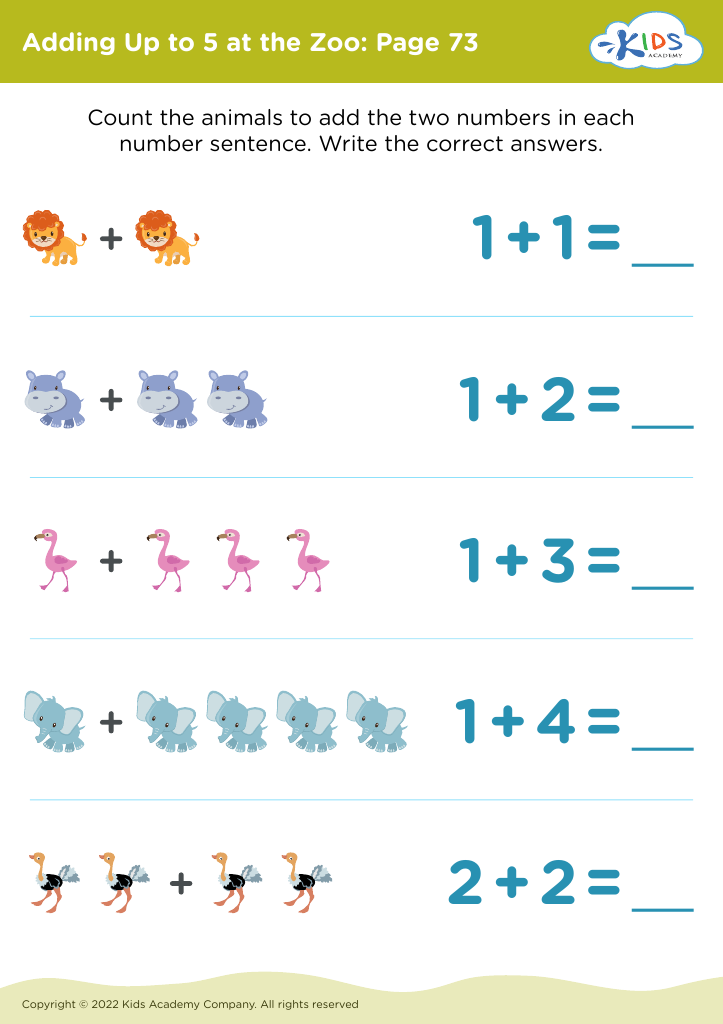
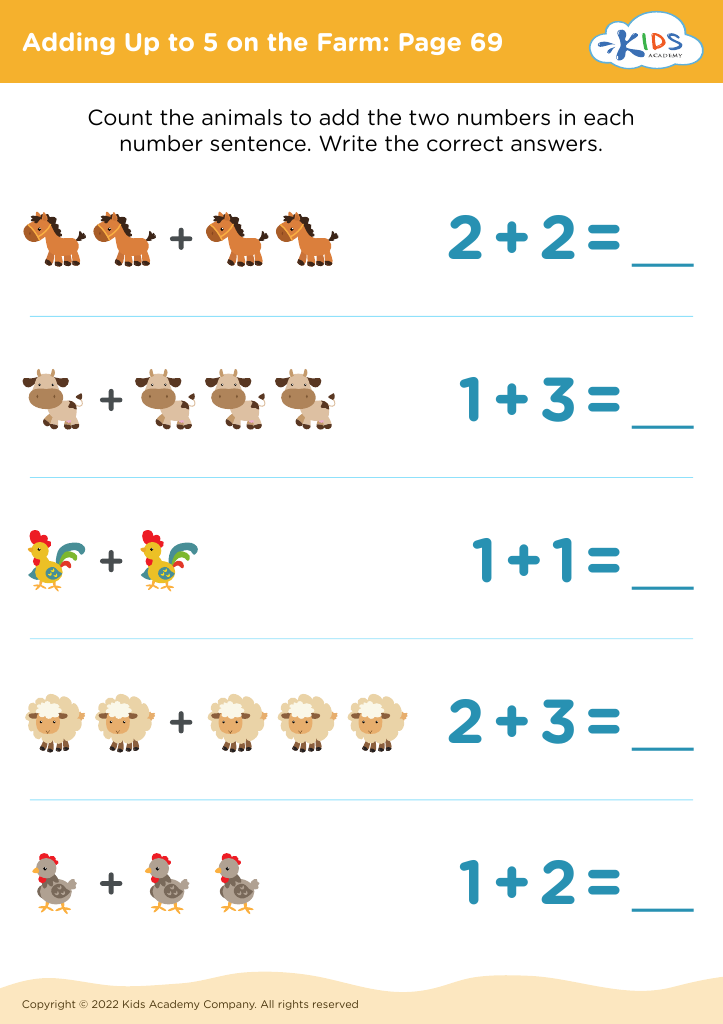
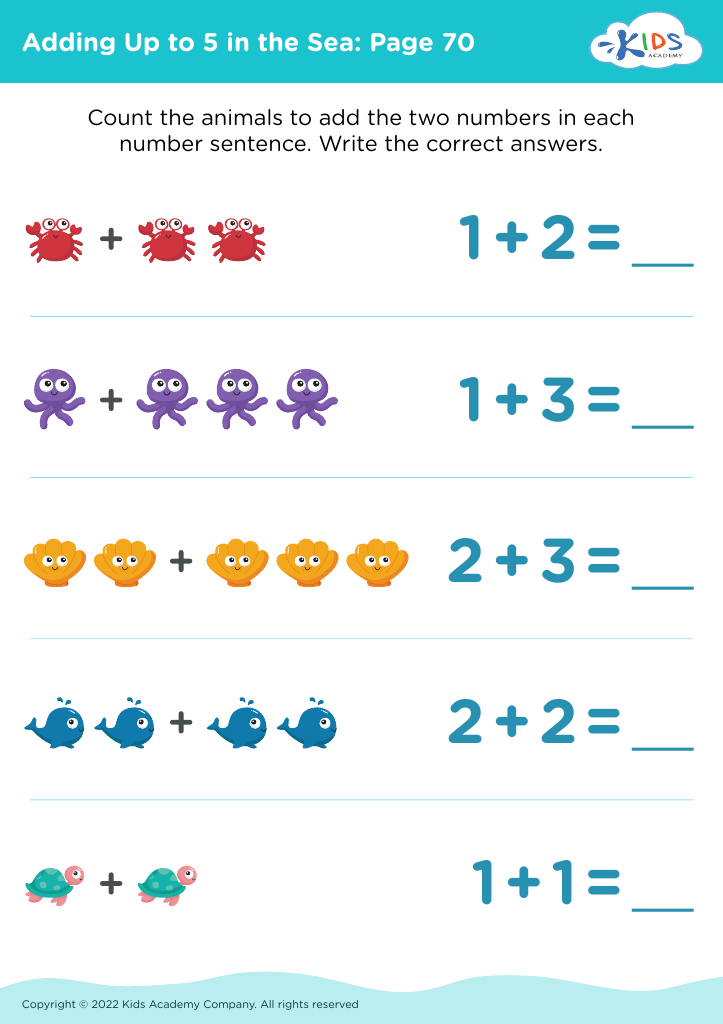
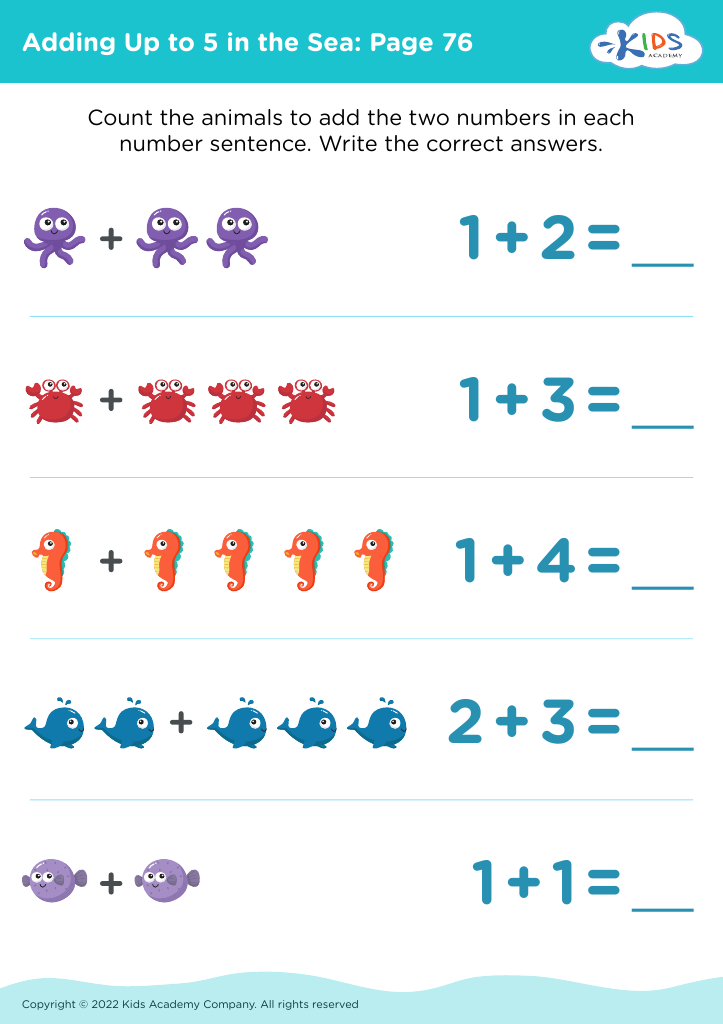
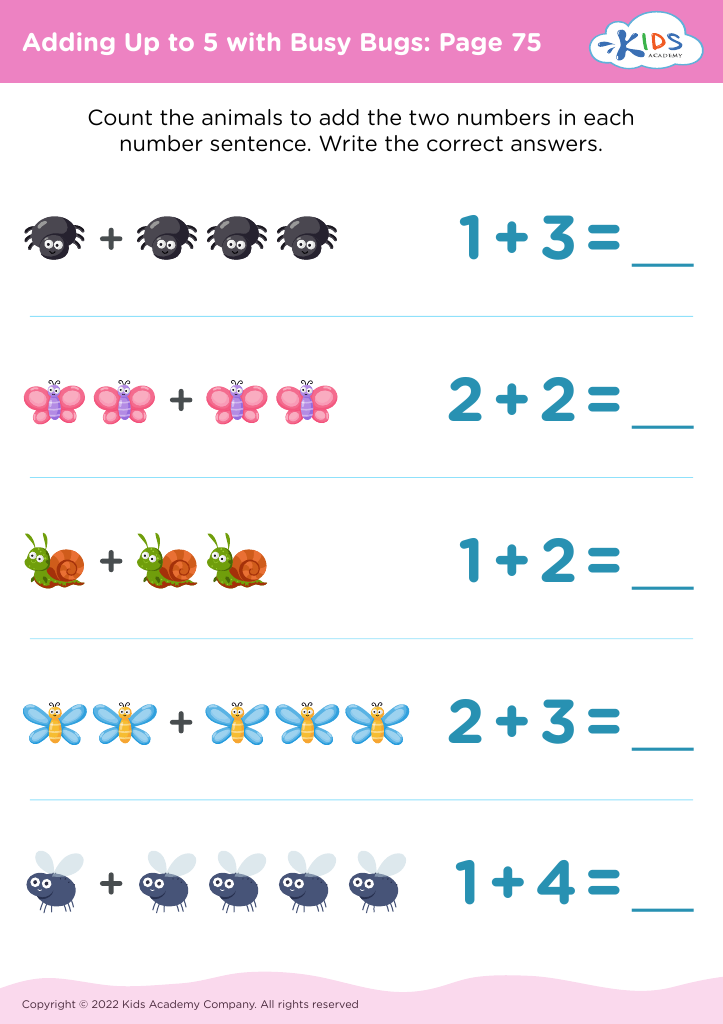
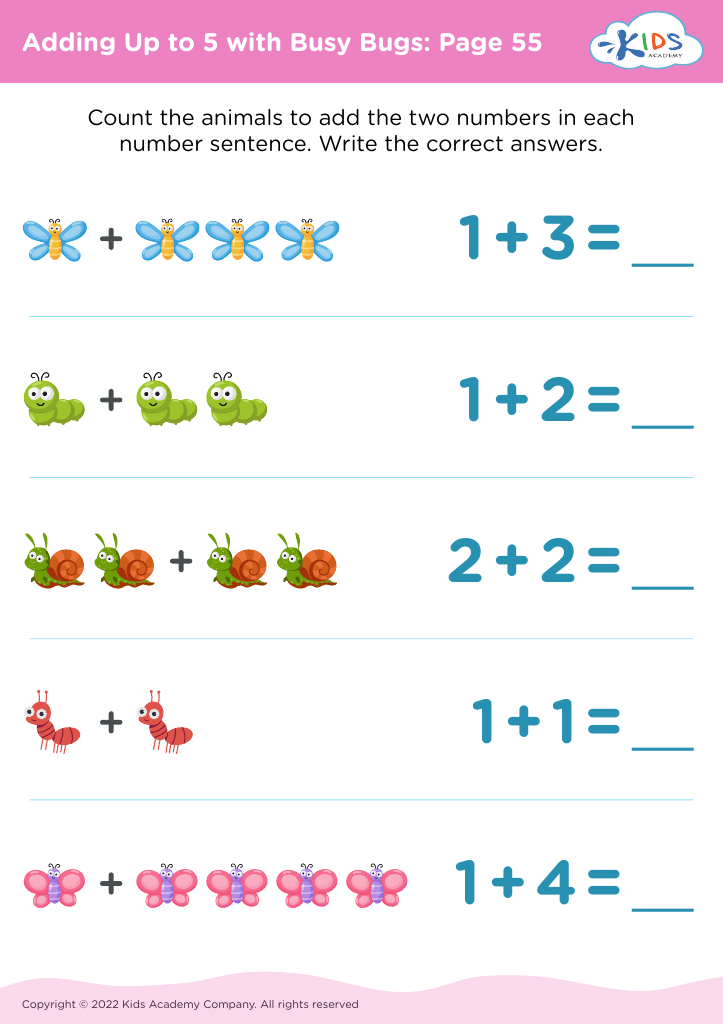







.jpg)
Understanding basic math, specifically the concept of adding up to 5, is crucial for children aged 5-9. This foundational skill sets the stage for future mathematical learning and enhances problem-solving abilities. By mastering addition up to 5, children develop number sense, which helps them recognize quantities and understand how numbers interact in everyday situations.
For parents and teachers, fostering a solid grasp of basic addition promotes confidence in young learners. It enables them to tackle more complex arithmetic later. When children understand simple operations, they learn the importance of mathematics in real-life contexts, such as counting items in a store or sharing snacks with friends.
Additionally, mastering addition promotes cognitive development, as it encourages critical thinking and logical reasoning. It also aids language development through the use of math terminology and concepts, helping children articulate their understanding and share ideas with peers.
Moreover, a strong foundation in early math positively influences children’s academic performance. Engaging activities, such as games or hands-on exercises involving adding up to 5, enrich learning experiences, making math fun and enjoyable. Overall, prioritizing early math comprehension fosters lifelong skills, ensuring children are equipped for future academic endeavors and everyday challenges.








