Math problem-solving Adding Up to 5 Worksheets for Ages 5-9
3 filtered results
-
From - To
Explore our engaging "Math Problem-Solving Adding Up to 5 Worksheets" designed specifically for children aged 5-9. These worksheets promote fundamental math skills while making learning enjoyable! Your child will tackle a variety of fun problems that enhance their understanding of numbers and addition concepts up to 5. With colorful illustrations and interactive activities, these worksheets help children build confidence in their problem-solving abilities. Perfect for at-home practice or classroom use, our resources support early numeracy development in a playful manner. Encourage your little learners to embark on an exciting math journey today! Download your worksheets and watch them thrive!
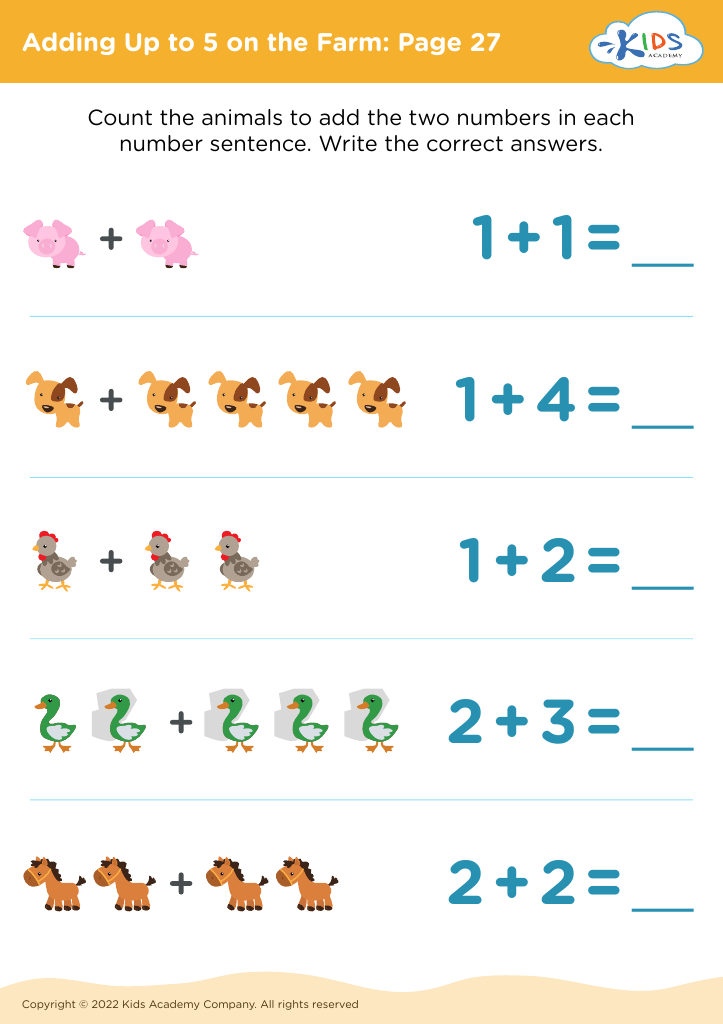
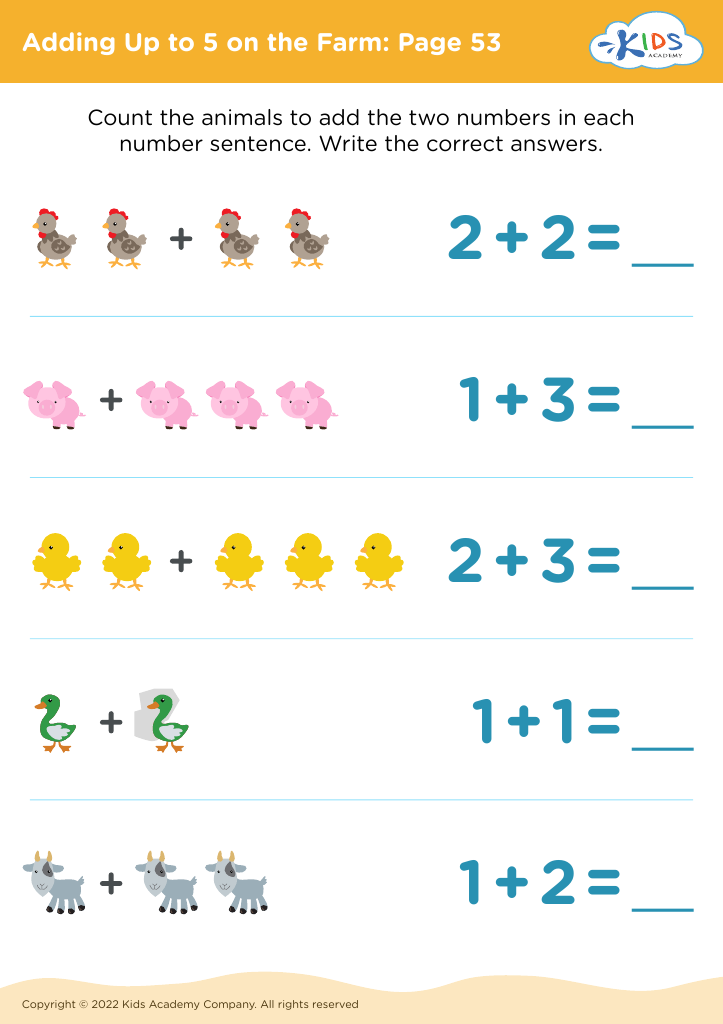
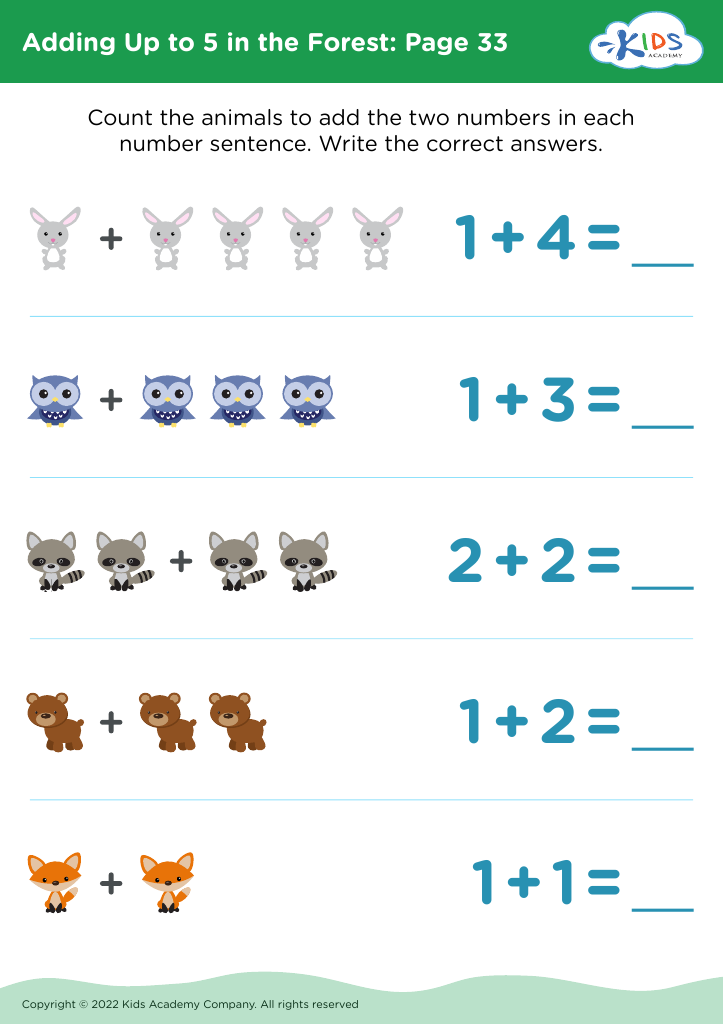








Parents and teachers should prioritize math problem-solving activities like "Adding Up to 5" for children aged 5-9 as it lays a foundational understanding of basic arithmetic, which is crucial for their academic success. At this age, children are naturally curious and eager to explore numbers. Engaging them in simple addition problems helps cultivate essential problem-solving skills while fostering critical thinking and reasoning.
The activity encourages children to visualize numbers and develop an awareness of quantities, which enhances their cognitive development. Furthermore, learning to add and solve problems boosts their confidence and prepares them for more complex mathematical concepts in the future.
Additionally, incorporating such interactive math exercises promotes communication skills as children often share strategies and solutions with peers or parents, fostering a supportive learning environment. This collaboration builds social skills and reinforces positive relationships around learning.
Moreover, early exposure to math in fun and engaging ways can combat math anxiety later in life. By recognizing and supporting these foundational skills, adults play a crucial role in nurturing math literacy, ensuring that children are equipped not only for academic challenges but also for future problem-solving in everyday situations. Thus, emphasizing "Adding Up to 5" is essential for holistic child development.








