Understanding numeracy Adding Up to 5 Worksheets for Ages 5-9
4 filtered results
-
From - To
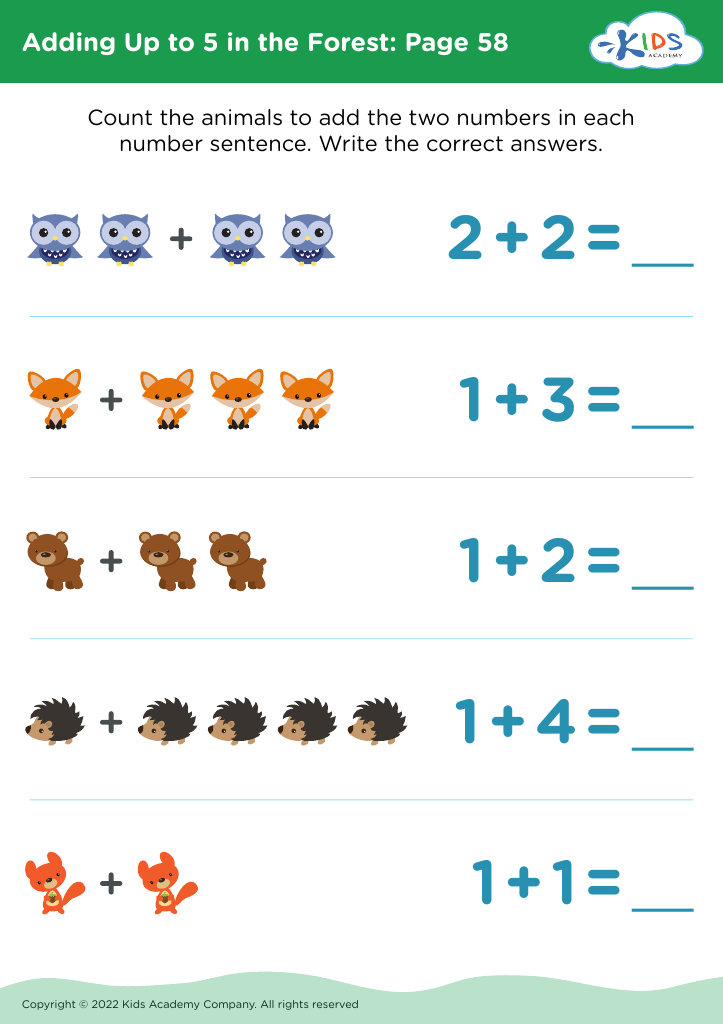
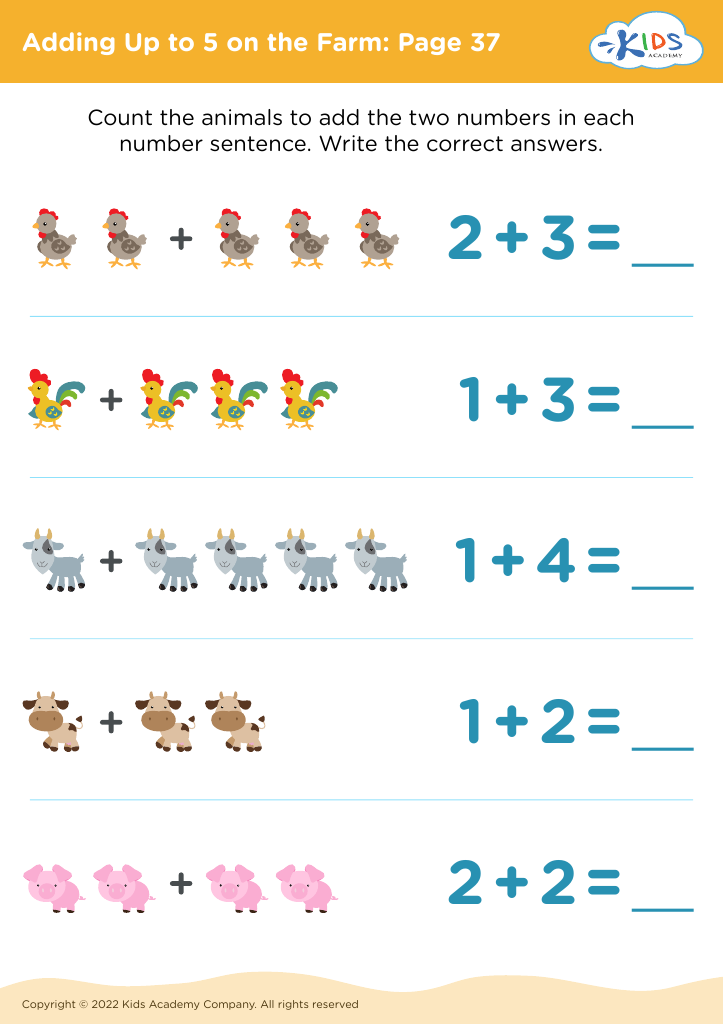
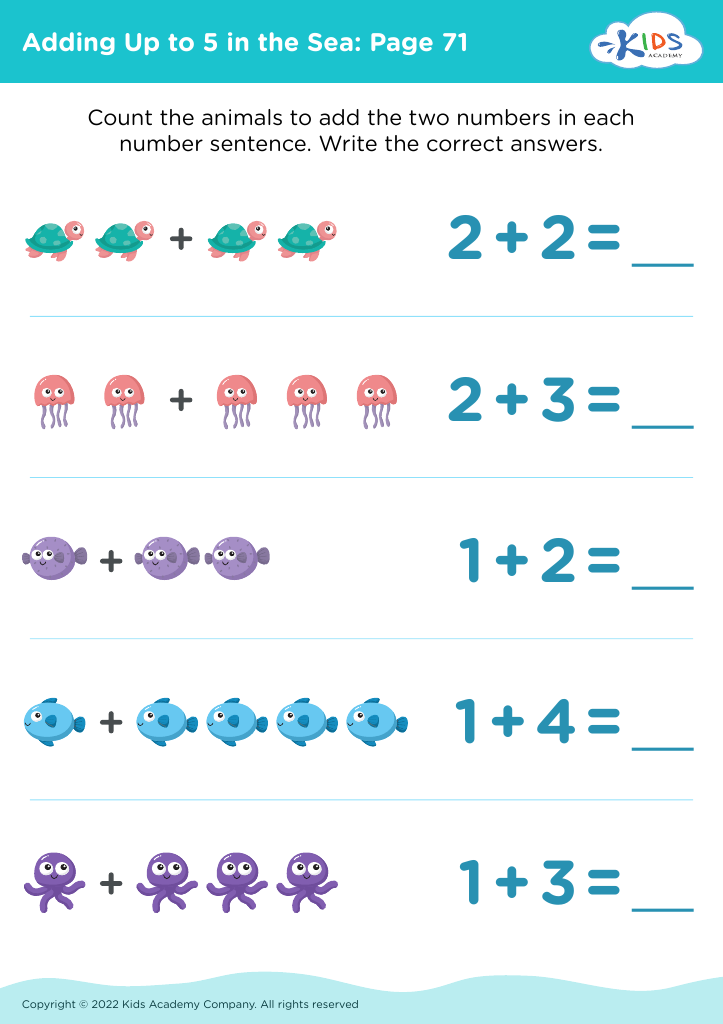
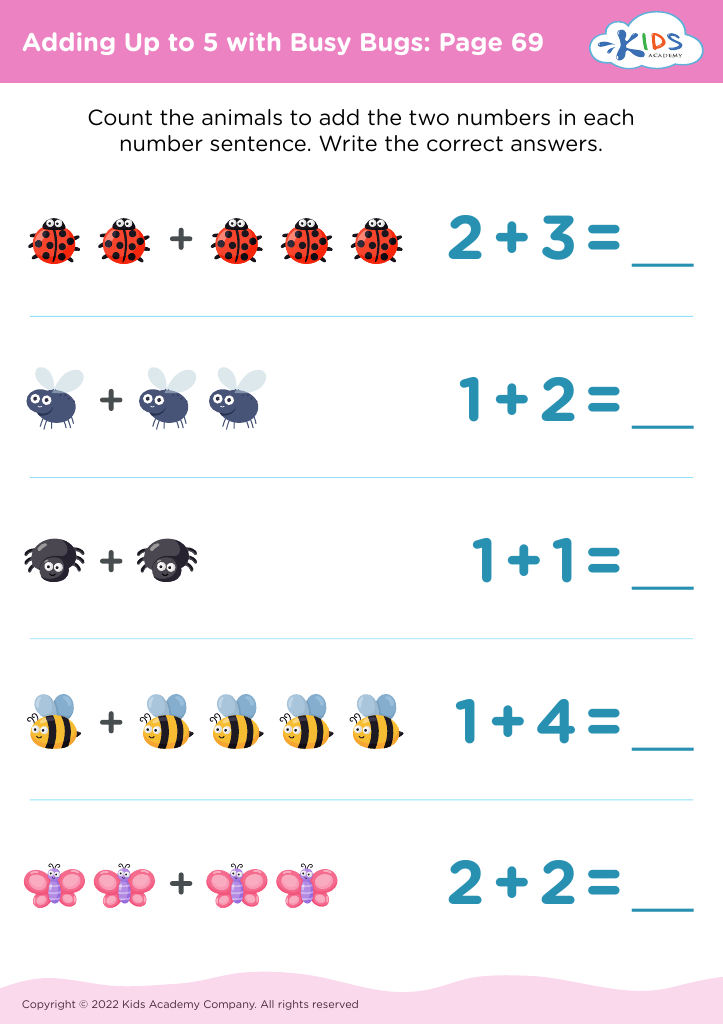
Welcome to our "Understanding Numeracy: Adding Up to 5 Worksheets" for ages 5-9! These engaging and interactive worksheets are designed to help young learners grasp the fundamentals of addition and develop essential numeracy skills. Featuring a variety of exercises, our resources encourage children to confidently explore basic addition concepts, recognize number relationships, and improve their problem-solving abilities. Perfect for home or classroom use, these worksheets make learning fun while providing valuable practice in adding numbers up to 5. Start building a strong mathematical foundation today and watch your child excel in their numerical understanding!


.jpg)




%20(1).jpg)
Understanding numeracy, particularly in the context of adding up to 5, is essential for children aged 5-9, as it lays the foundation for all future mathematical learning. This age group is critical for cognitive development, and early mastery of basic addition promotes number sense and leads to increased confidence in math skills.
Parents and teachers should prioritize this foundational concept because it goes beyond simple arithmetic; it helps children develop problem-solving skills, logical reasoning, and critical thinking. When children grasp the idea of addition within 5, they begin to understand relationships between numbers, patterns, and concepts such as zero, which are crucial for their cognitive development.
Furthermore, support in this area encourages children to engage with math playfully, fostering a positive attitude towards learning. When children feel assured in their abilities, they're more likely to tackle more complex mathematical concepts in the future, reducing math anxiety.
Finally, as many standardized assessments begin as early as grade 2, a solid understanding of basic addition will significantly aid long-term academic success. By emphasizing these early numeracy skills, parents and teachers can equip kids with the essential tools needed for effective learning and everyday decision-making in the realms of mathematics and beyond.








