
Cognitive Development Addition Facts Worksheets for Ages 5-9
3 filtered results
Difficulty Level
Grade
Age
-
From - To
Subject
Activity
Standards
Discover our engaging "Cognitive Development Addition Facts Worksheets" designed specifically for children ages 5-9. These worksheets not only help young learners master addition facts but also stimulate crucial cognitive skills such as problem-solving, critical thinking, and memory retention. Tailored to keep children mentally active and motivated, our worksheets feature colorful graphics and interactive exercises that make learning fun. As kids practice addition in varied contexts, they build confidence and familiarity with numbers. Perfect for home or school use, these resources will empower your child’s learning journey while enhancing their cognitive development. Start fostering a love for math today!
Favorites
With answer key
Interactive
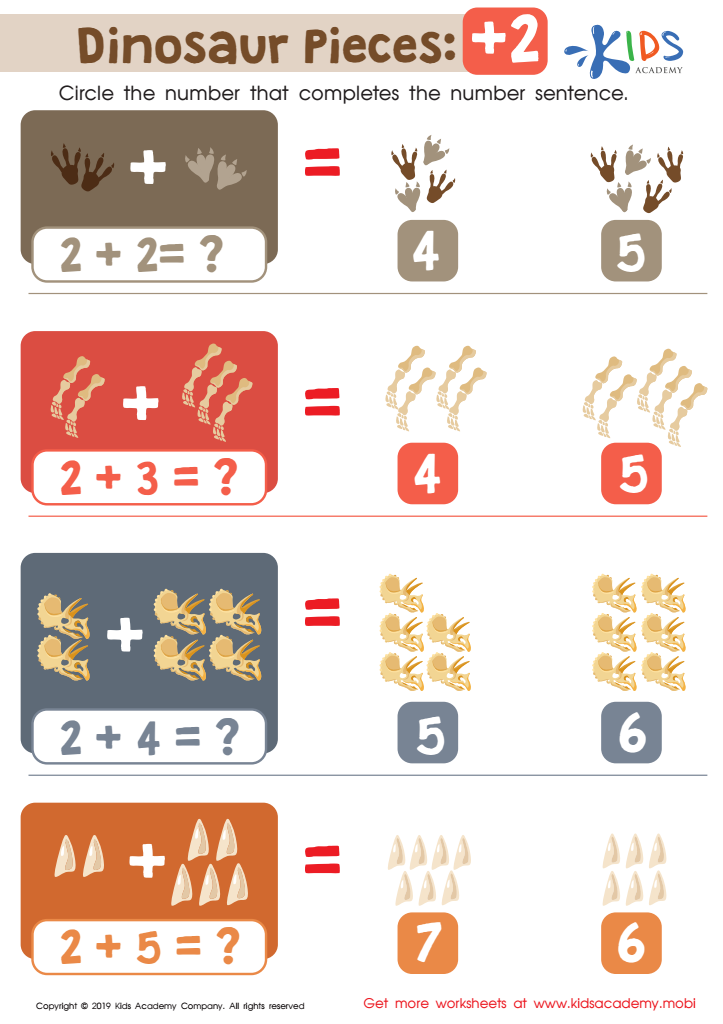
Dinosaur Pieces: +2 Worksheet
Kids love dinosaurs! See if your kids can solve these three equations featuring the mysterious creatures. Download the PDF and have them circle the number that completes each equation. Dinosaurs are extinct, not seen for thousands of years, but they can still help kids work on their math skills!
 Assign to My Students
Dinosaur Pieces: +2 Worksheet
Worksheet



Community Helpers: 1 less Worksheet
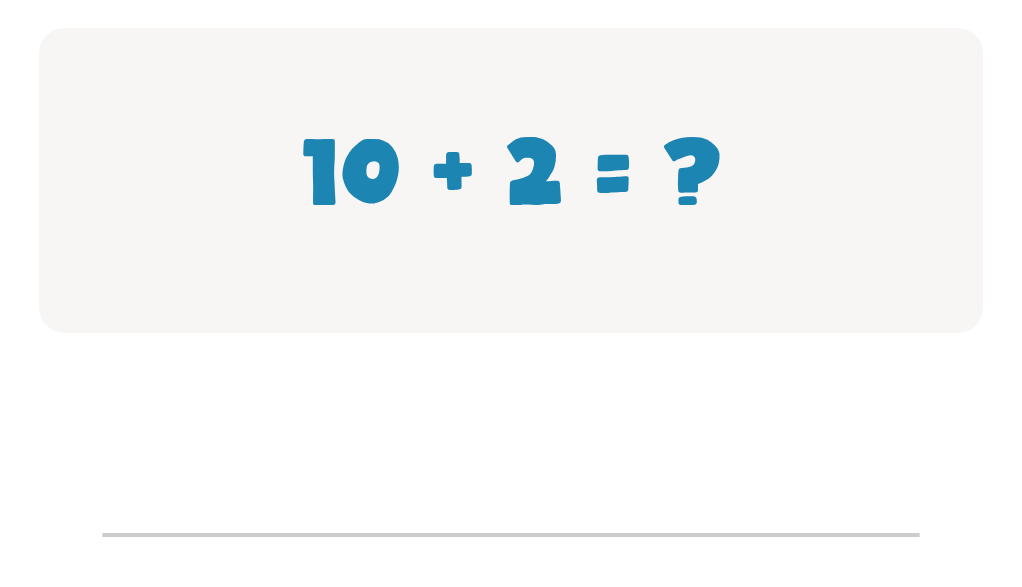
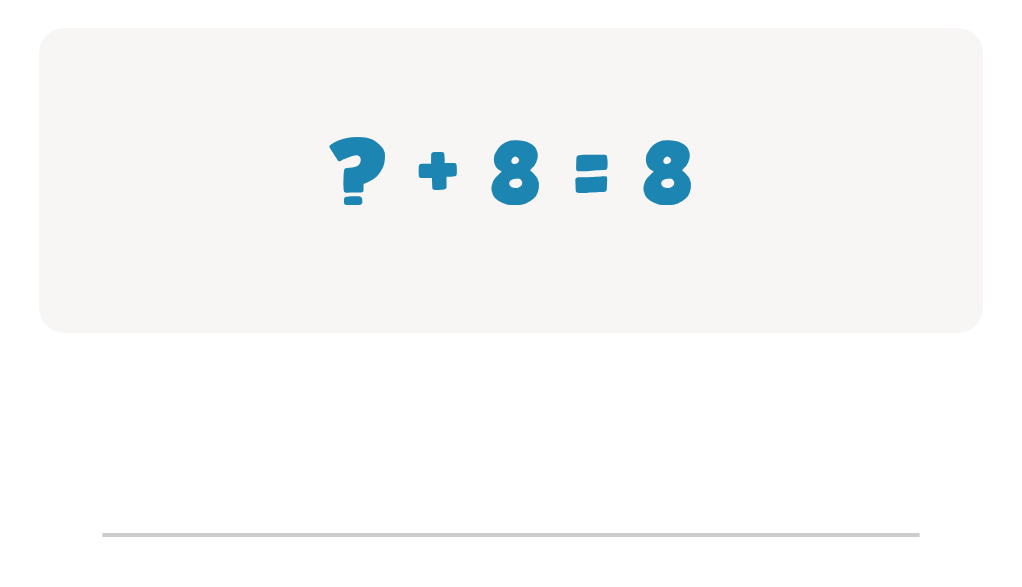
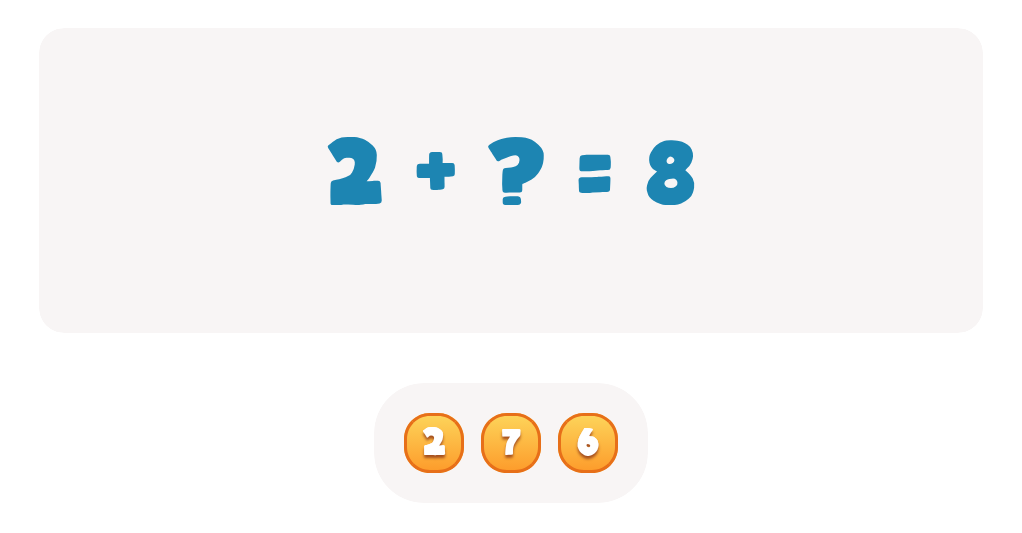
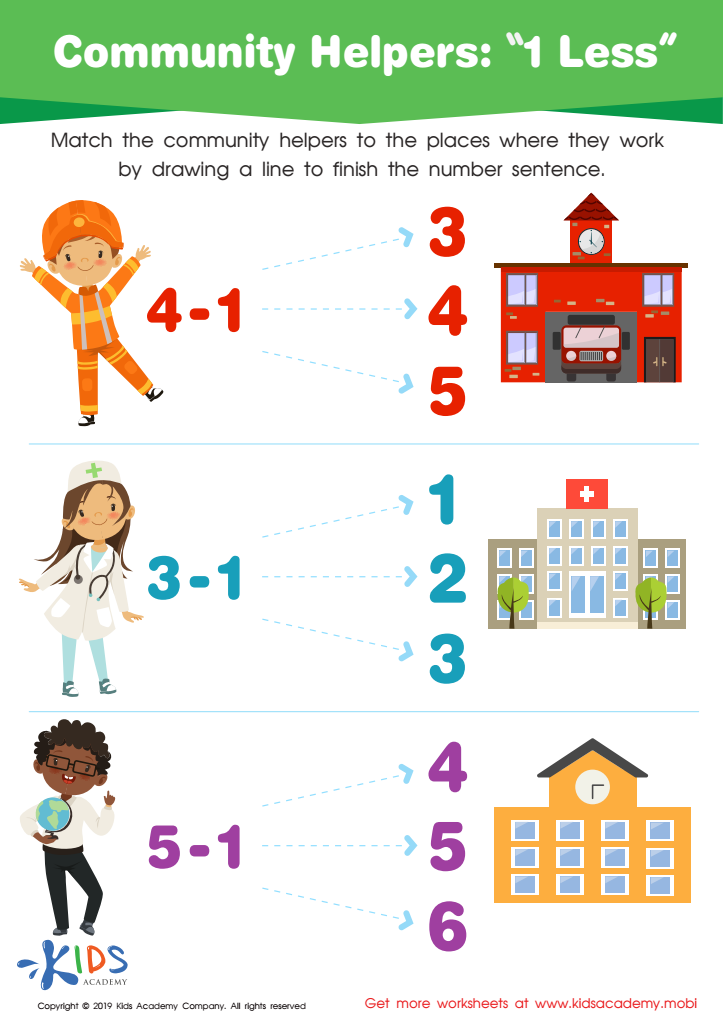
Look at this worksheet with your child and ask them to identify the different community helpers. Match them to the places where they work by drawing a line to finish the number sentence. This helps them identify the people that help keep the community organized and running smoothly. Examples of community helpers include doctors, police officers, firefighters, teachers, etc.
Community Helpers: 1 less Worksheet
Worksheet
Community Places: 1 Less Worksheet
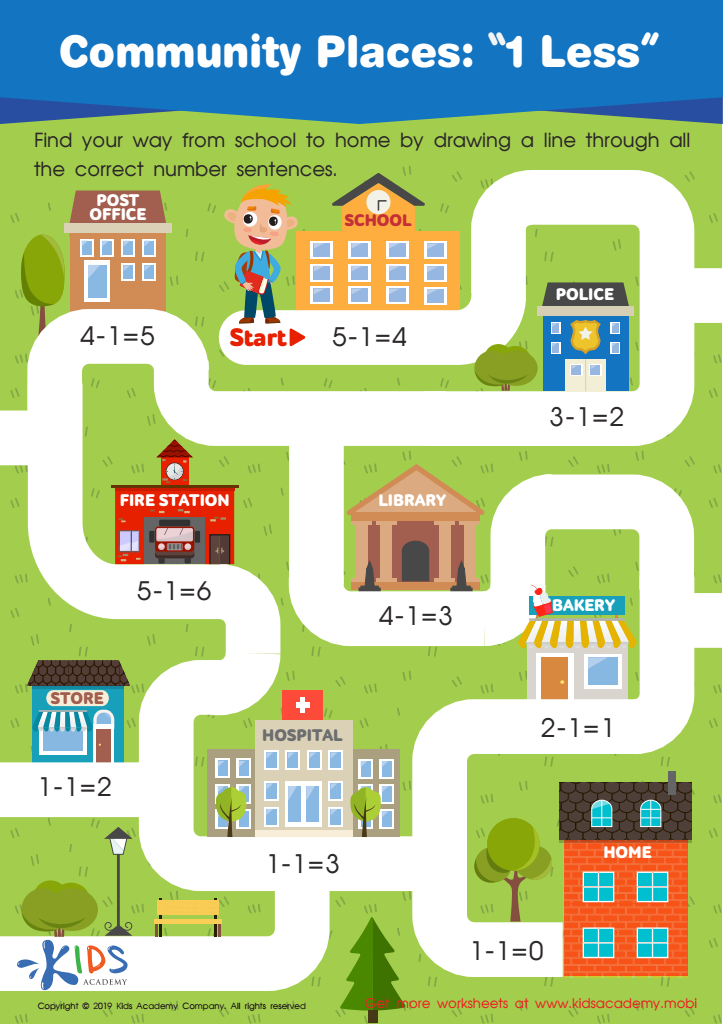
Have your kindergarteners draw a line through the correct number sentences as they find their way home from school. Ask them to identify the people, places, and buildings in their community and the jobs they do.
Community Places: 1 Less Worksheet
Worksheet
Join Kids Academy for Free
Who is primarily going to use this learning content?








Cognitive development in early childhood, particularly between the ages of 5 and 9, is crucial for building a strong foundation in mathematical skills, especially addition facts. During this critical period, children are not merely learning numbers; they are enhancing their problem-solving abilities, critical thinking, and logic through the process of calculating and grasping mathematical concepts.
When parents and teachers prioritize mastery of addition facts, they equip children with essential tools for future academic success. Familiarity with these facts not only enhances children's confidence but also encourages a positive attitude towards math—an attitude that can last a lifetime. Mastering addition facts is foundational for understanding more complex mathematical concepts, such as subtraction, multiplication, and ultimately, algebra.
Moreover, cognitive development at this age involves making connections and recognizing patterns. Practicing addition facts helps children develop these skills, aiding them in various real-life situations, from managing finances to assessing quantities. Therefore, both parents and teachers should care about fostering these skills, as their support can significantly shape a child's aptitude for mathematics, influencing educational trajectory, and contributing to overall cognitive growth. Taking an active role in reinforcing addition facts can make math more engaging and enjoyable, which benefits children well beyond the classroom.








