Animal identification Addition & Subtraction Worksheets for Ages 5-9 - Page 2
28 filtered results
-
From - To
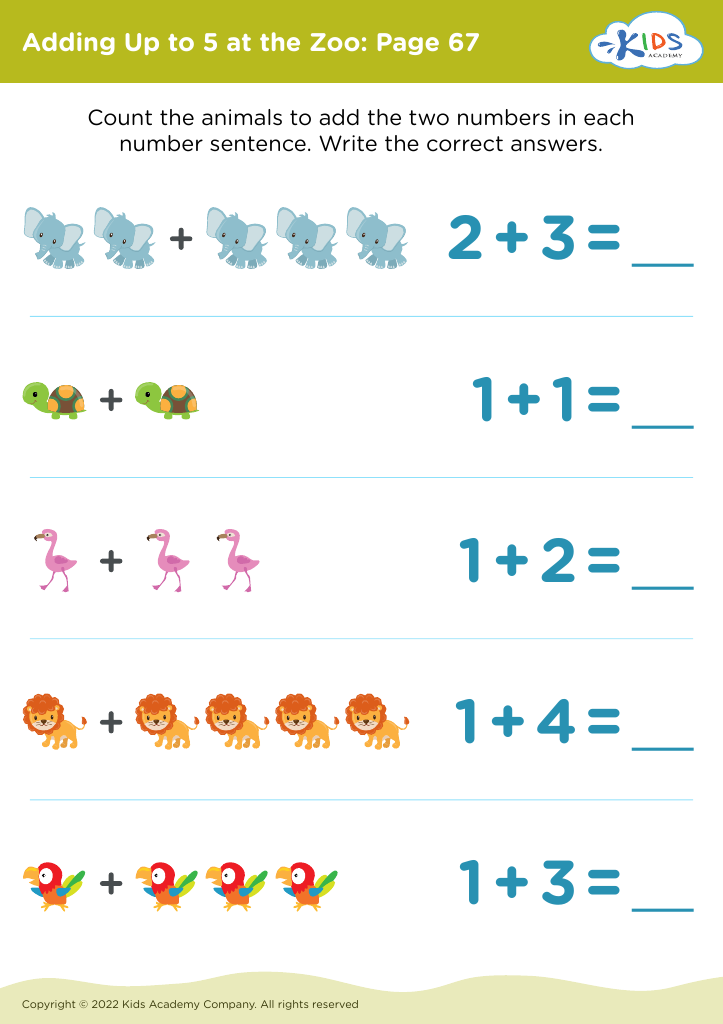
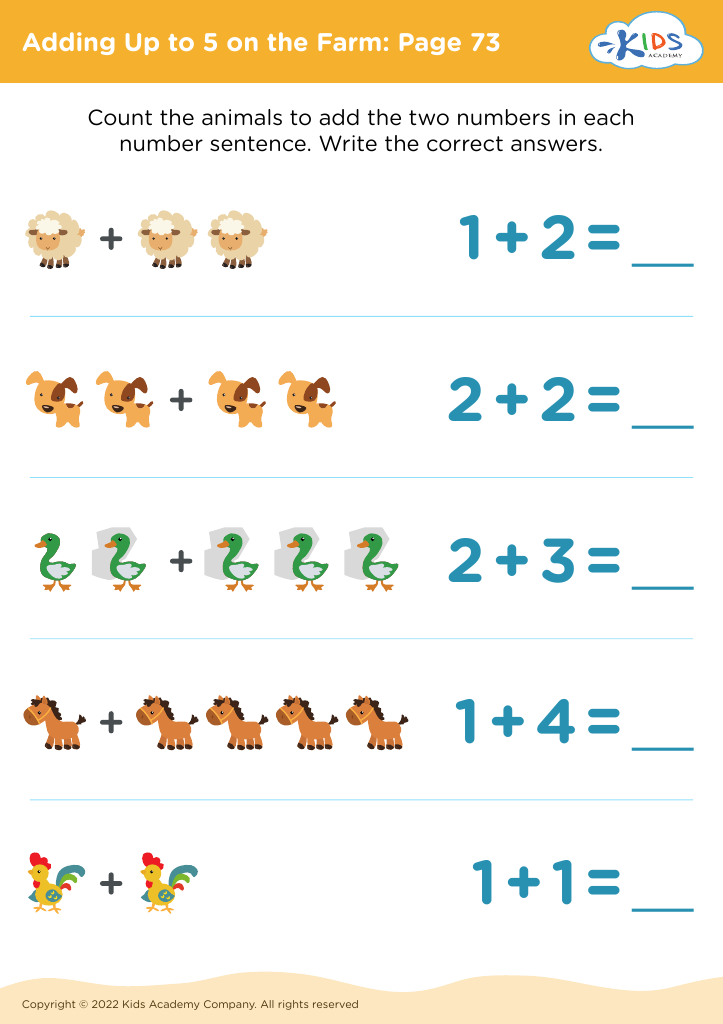
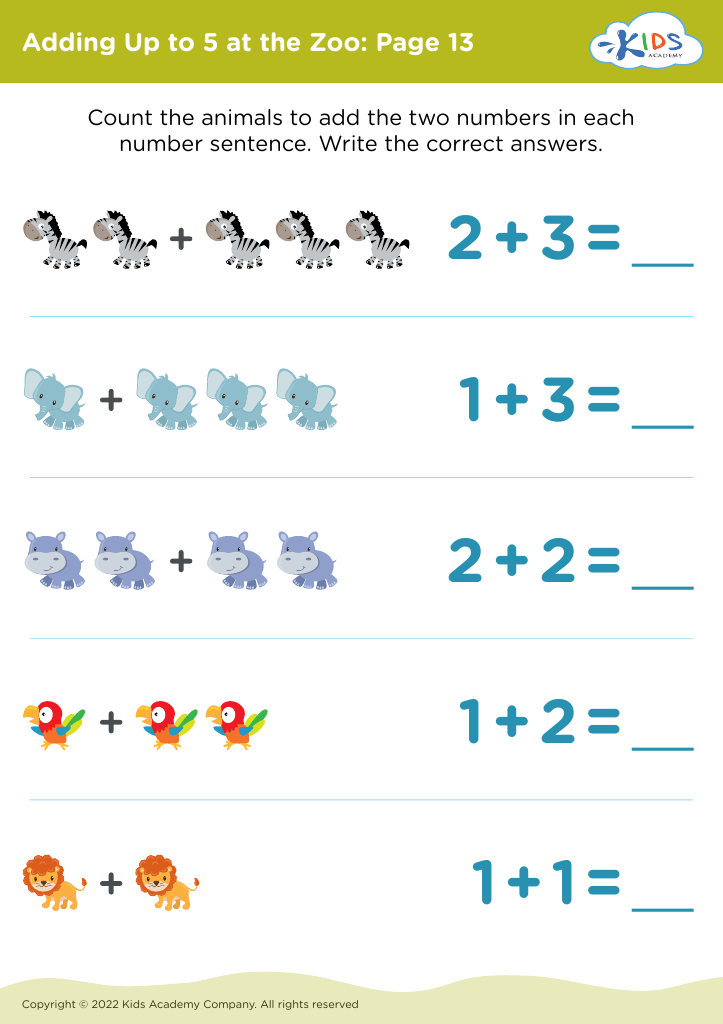
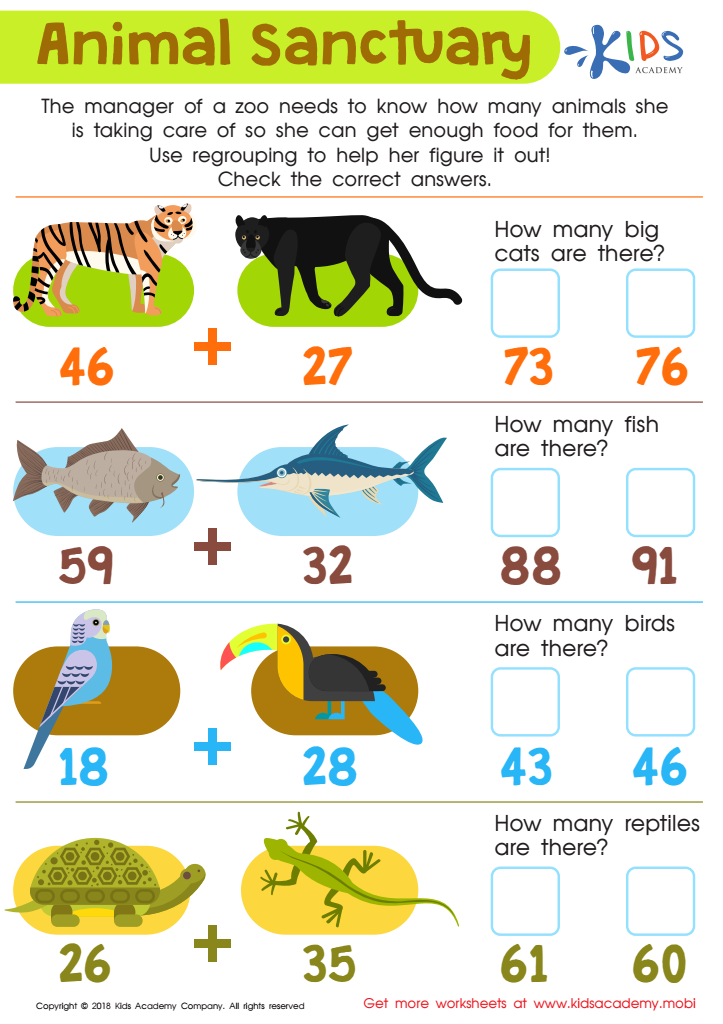
Animal Sanctuary Worksheet
 Assign to My Students








Animal identification addition and subtraction is a crucial educational activity for children aged 5-9 for several reasons. Firstly, it engages young learners by incorporating animals, a subject typically appealing to children. This approach creates a fun and interactive environment that enhances their motivation and enthusiasm for learning math concepts.
Secondly, this method helps develop foundational math skills. Understanding addition and subtraction through animal identification enables children to visualize problems, make connections between numbers and real-world scenarios, and improve their problem-solving abilities. For instance, tallying up elephants and cats not only adds to their counting skills but also introduces them to the concept of grouping and categorization.
Moreover, engaging students with animal themes can be an effective means of fostering discussion about biodiversity, empathy towards living beings, and the importance of wildlife conservation. Teachers or parents discussing animals while working on math helps children recognize the significance of living things while they learn.
Lastly, mastery of these basic math skills is essential for their academic future. Building a strong mathematical foundation during these early years prepares children for more complex concepts in later grades, ensuring they remain confident and competent in their arithmetic abilities. Thus, focusing on animal identification addition and subtraction holds multifaceted benefits for young learners.








