Color Identification Addition & Subtraction Worksheets for Ages 5-9 - Page 2
27 filtered results
-
From - To
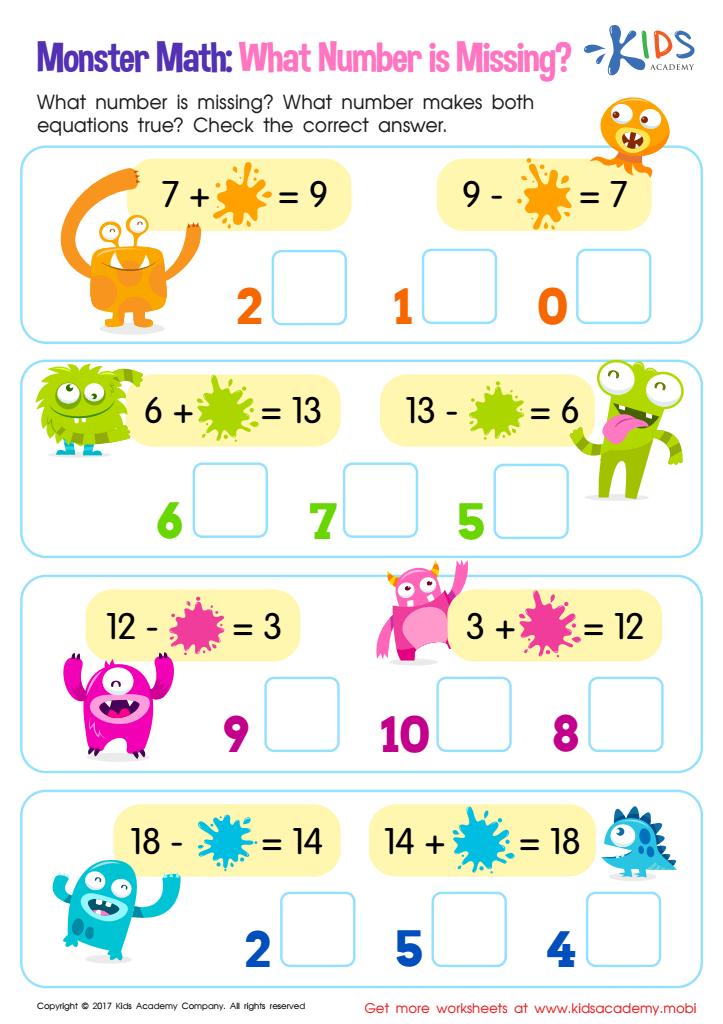
Missing Number: Monster Math Worksheet
 Assign to My Students








Color identification plays a crucial role in the early learning process for children aged 5 to 9, especially when it comes to foundational math skills such as addition and subtraction. Understanding colors enhances children's cognitive development and improves their ability to categorize and differentiate objects, which are essential skills in mathematics. By linking color to numbers, teachers and parents can create engaging and visually stimulating learning experiences that make math concepts more relatable and enjoyable for young learners.
When addition and subtraction are taught using colors, children can easily visualize grouping and separating quantities. For example, using colored blocks for each number helps them understand operations less abstractly, making concepts like 'more' and 'less' more tangible. Additionally, color-coded worksheets and activities can help maintain children’s interest and focus, enhancing their learning retention.
Furthermore, engaging children with colors in math fosters inclusivity—students who may struggle with traditional teaching methods might respond better to creative approaches. This nurturing environment supports diverse learners and cultivates a positive attitude towards math early on, inspiring confidence as they progress through their education. Overall, by emphasizing color identification in mathematics, parents and teachers can lay a strong foundational framework for a child's academic success and encourage a lifelong love for learning.








