Money management skills Addition & Subtraction Worksheets for Ages 5-9
3 filtered results
-
From - To
Enhance your child's understanding of money management with our engaging Addition and Subtraction Worksheets designed for ages 5-9. These comprehensive resources introduce fundamental concepts of money while practicing essential math skills. Through fun visuals and relatable scenarios, children will learn to identify coins, count currency, and solve real-life problems involving addition and subtraction. Our worksheets not only support mathematical proficiency but also promote financial literacy from an early age. Perfect for home or classroom use, these printable activities will help your child build confidence, refine their skills, and prepare them for managing money in the future. Download our worksheets today and start learning!
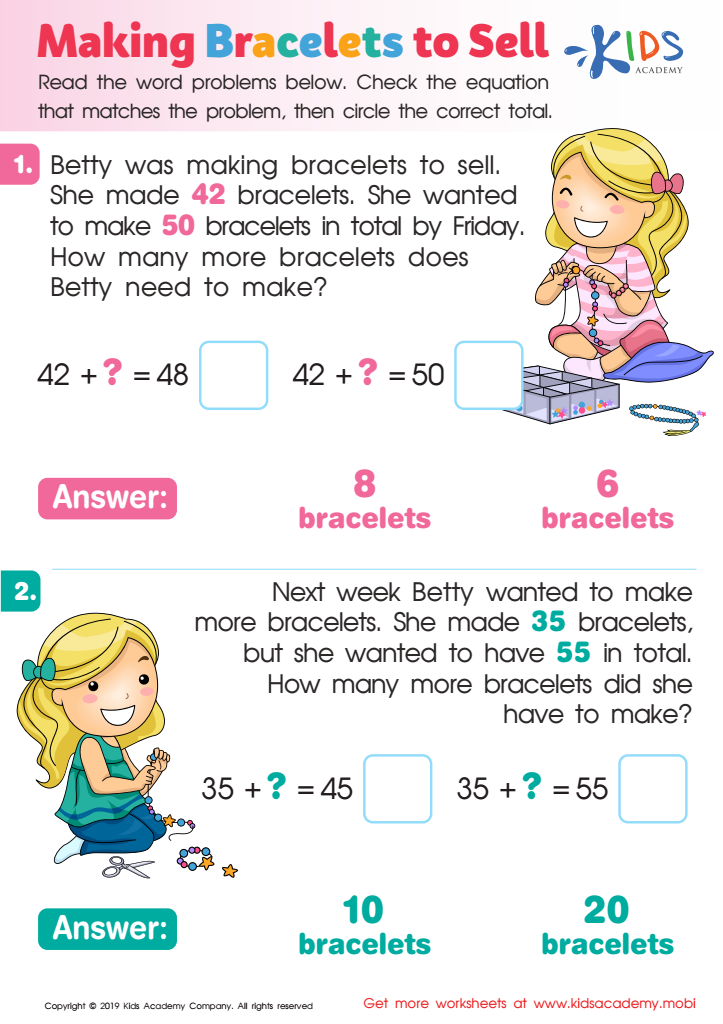
Making Bracelets to Sell Worksheet
 Assign to My Students
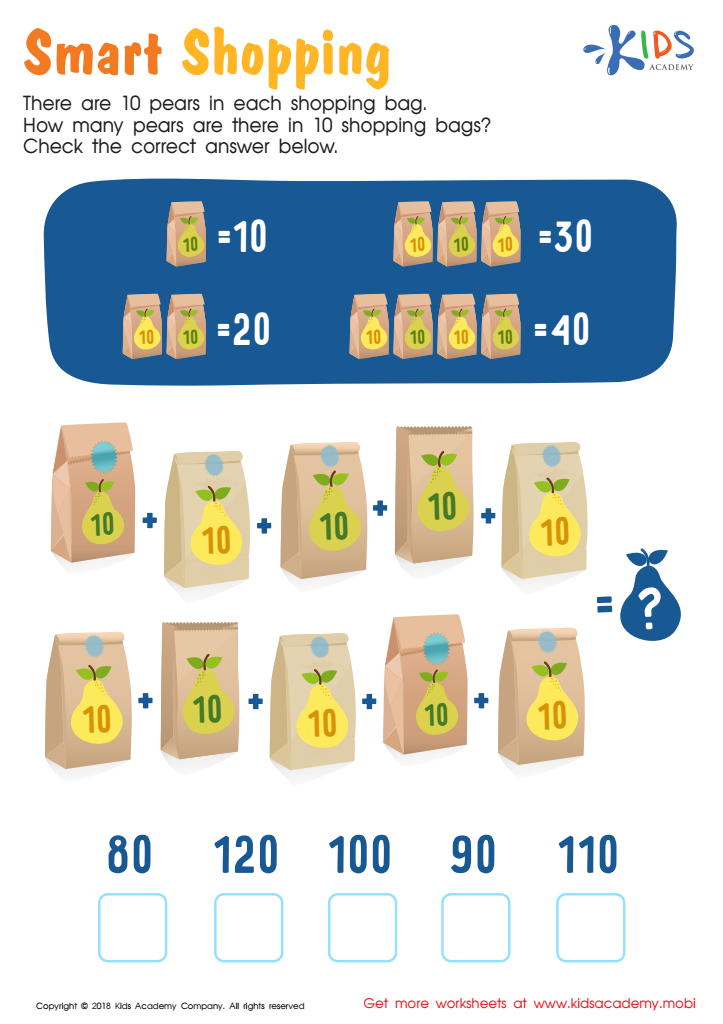
Smart Shopping: Trade Tens for a Hundred Worksheet
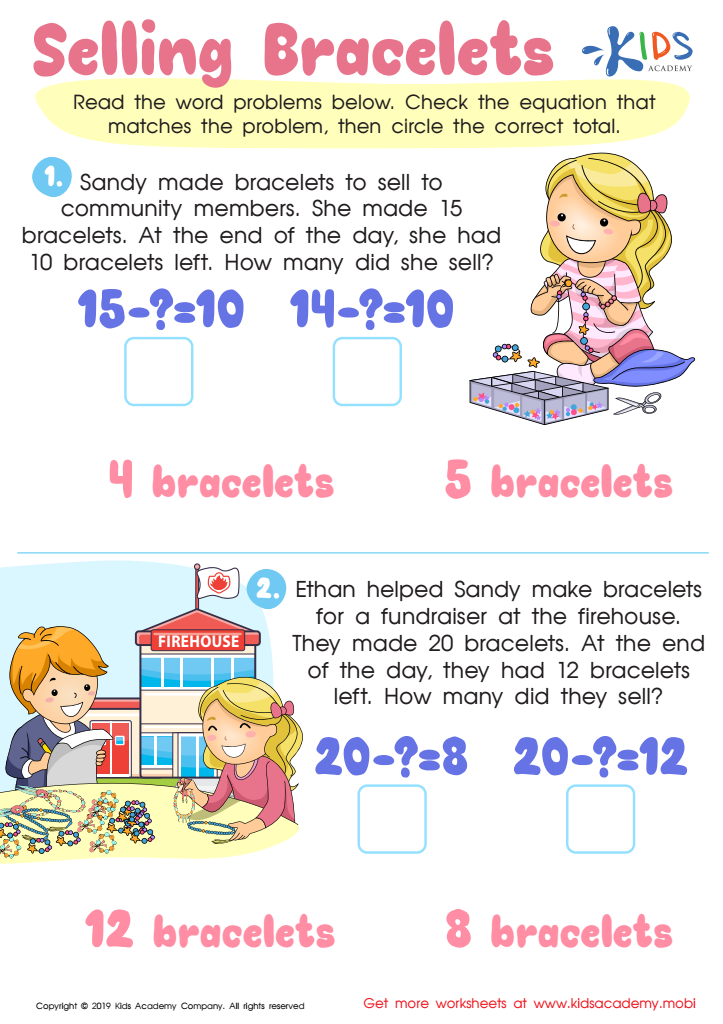
Selling the Bracelets Worksheet








Parents and teachers should care about money management skills, including addition and subtraction, for children ages 5-9 because these foundational skills serve as the building blocks for lifelong financial literacy. Introducing children to basic money concepts at an early age helps them understand the value of money, budgeting, and spending wisely. As they learn to add and subtract money, they develop essential mathematical skills that reinforce their overall academic growth.
Additionally, mastering these concepts allows children to grasp real-world applications, promoting critical thinking and problem-solving capabilities. Engaging with money through everyday activities, such as shopping or saving for a toy, creates relatable learning opportunities that can make math more enjoyable and relevant.
Furthermore, instilling good money management habits early can promote responsible financial behaviors as children grow older. They learn to prioritize needs versus wants, save for future goals, and make informed decisions about expenditures. Ultimately, fostering these skills encourages confidence and independence, equipping them for future financial challenges. When parents and teachers actively participate in developing these skills, they set children on a path towards becoming financially savvy adults. This can significantly impact their overall success and well-being in an increasingly complex financial landscape.








