Practicing addition Addition & Subtraction Worksheets for Ages 5-9
4 filtered results
-
From - To
Boost your child's math skills with our engaging "Practicing Addition & Subtraction Worksheets for Ages 5-9" at Kids Academy. Specially crafted for young learners, these worksheets offer a variety of fun exercises to enhance their understanding of addition and subtraction. Suitable for children aged 5 to 9, our printable resources help build a solid foundation in math through colorful illustrations and interactive problems. Perfect for both classroom use and home practice, they ensure learning remains enjoyable and effective. Visit our page to explore a wide range of tools designed to develop and excite future math whizzes!
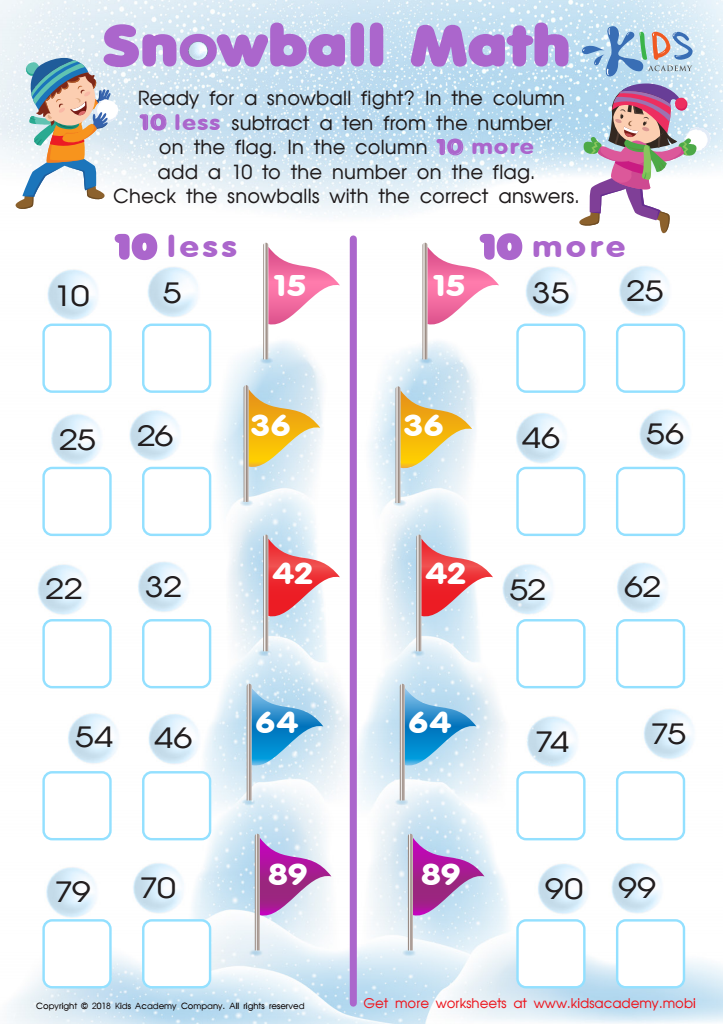
Snowball Math Worksheet
 Assign to My Students
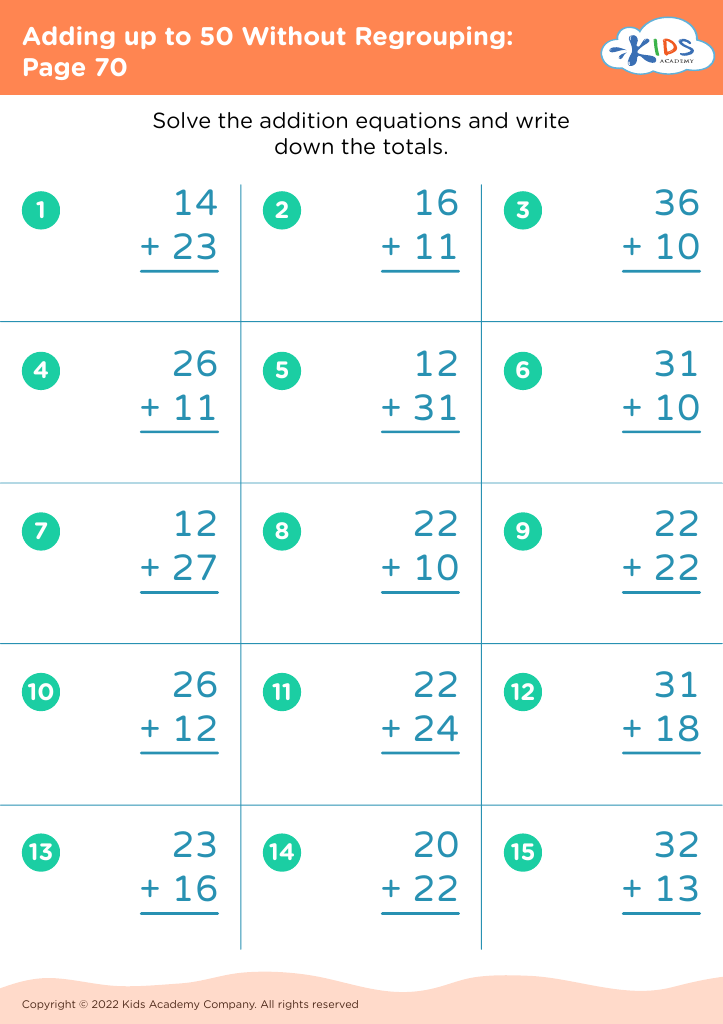
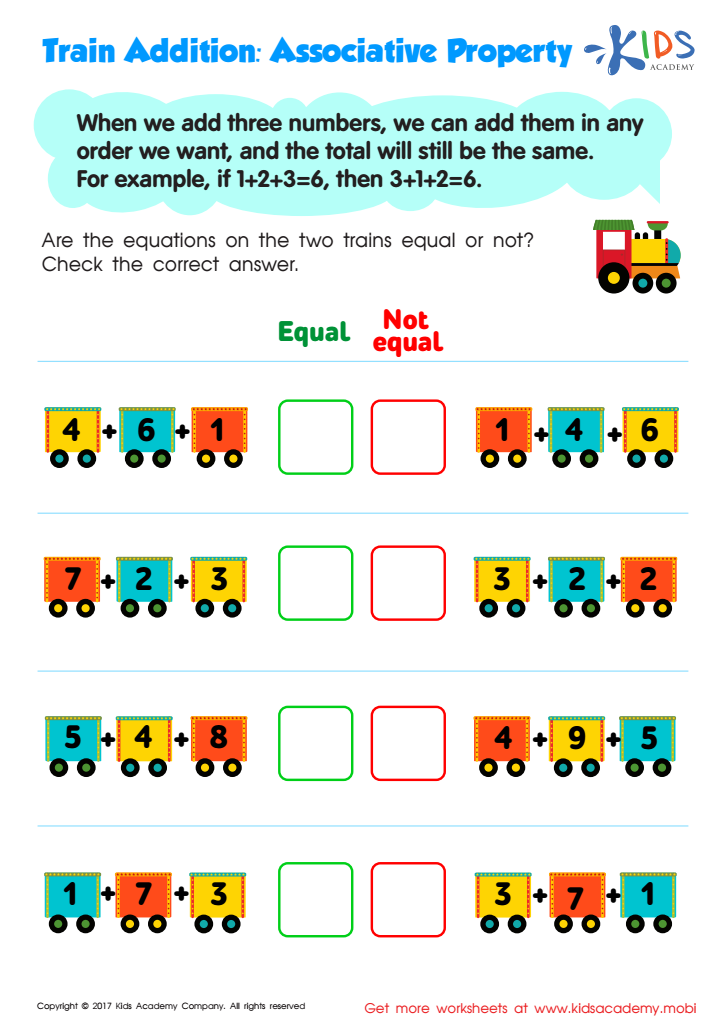
Train Addition: Associative Property Worksheet
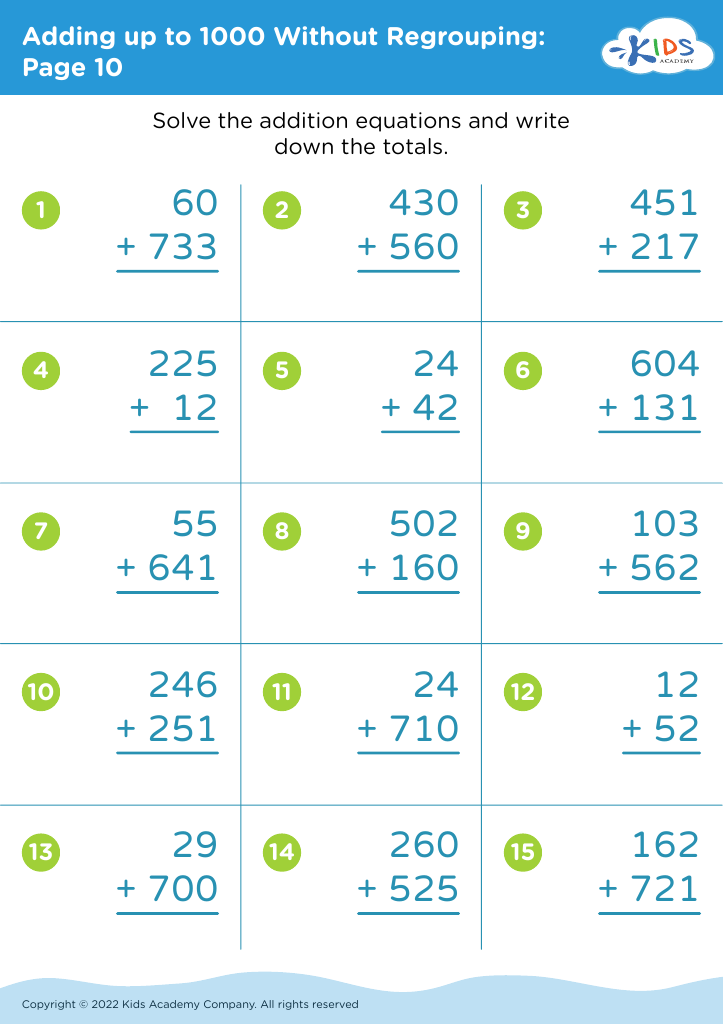








Practicing addition and subtraction for children ages 5-9 is foundational for their overall math proficiency and future academic success. At this young age, children are developing critical cognitive skills, and engaging with basic arithmetic lays the groundwork for more complex mathematical concepts they'll encounter later. By mastering these fundamental operations, students improve their number sense, which is essential for understanding relationships and patterns in numbers.
Early practice in addition and subtraction also enhances problem-solving skills. Children learn to approach tasks methodically, equipping them with strategies to tackle various challenges, both academic and real-world. These activities can boost their confidence, giving them the assurance that they can solve problems independently.
Moreover, engaging in arithmetic exercises strengthens memory and concentration, as kids work to remember particular sums or differences. This mental sharpness translates to better performance across all subjects, including reading and comprehension.
Parents and teachers play a crucial role in making these learning experiences positive and enjoyable. Through playful activities, games, and real-life applications, the joy of learning math can be fostered. Consistent practice at home and in the classroom ensures steady progress and helps identify areas where a child might need extra support, ensuring no one gets left behind in their foundational learning journey.








