Understanding number sequence Addition & Subtraction Worksheets for Ages 5-9
4 filtered results
-
From - To
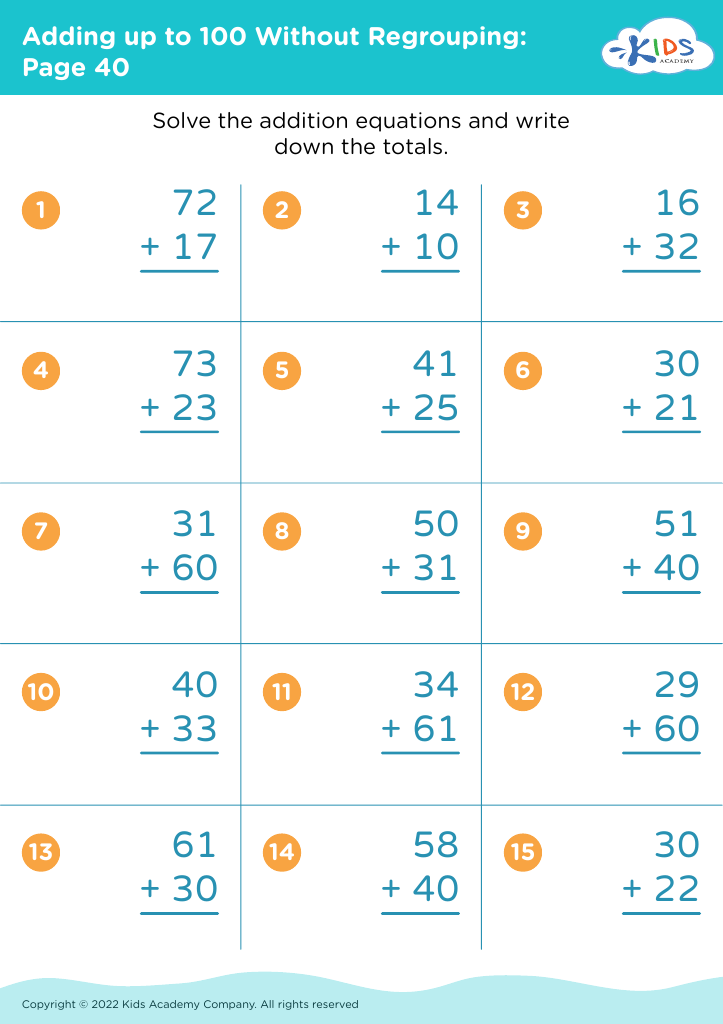
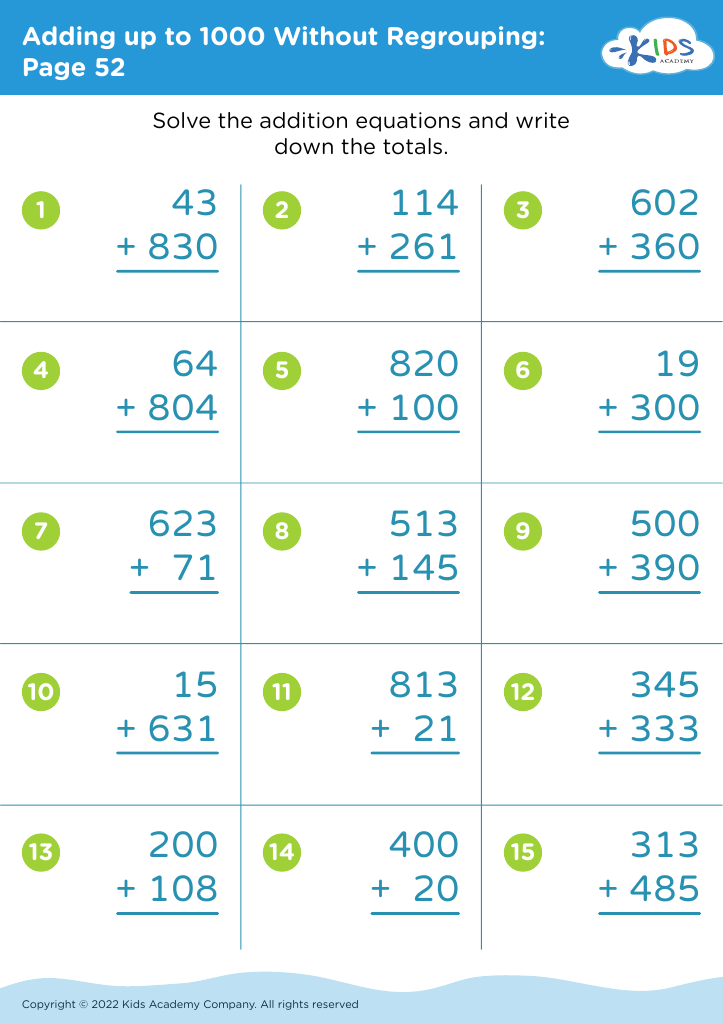
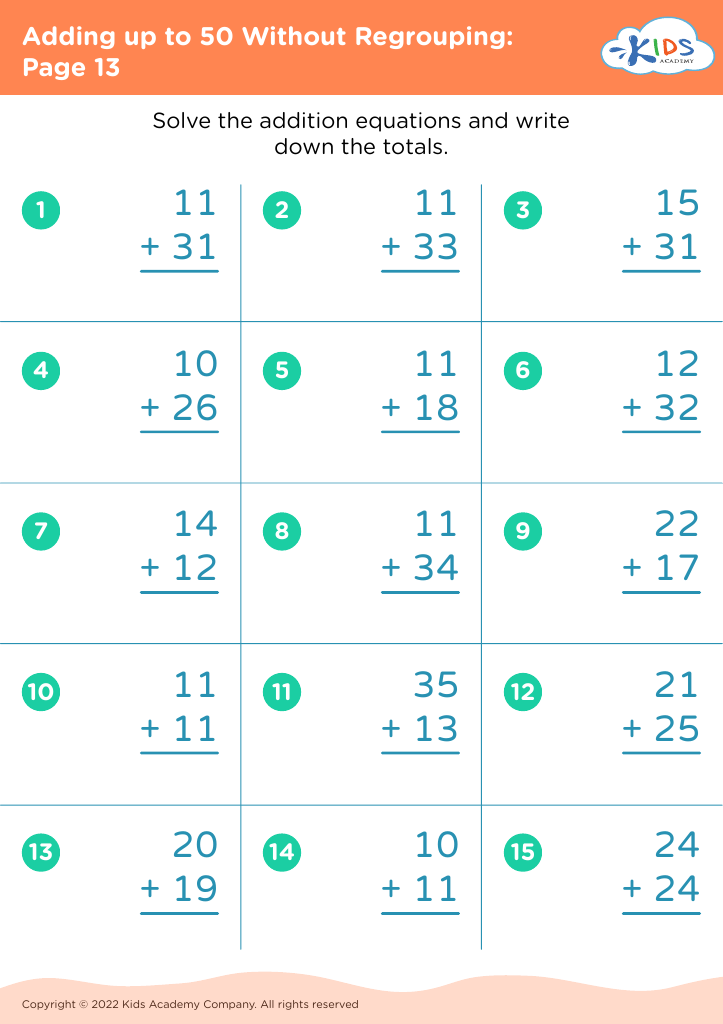
Explore our "Understanding Number Sequence: Addition & Subtraction Worksheets" designed for children ages 5-9. These engaging worksheets focus on developing essential skills in number sequence through fun and interactive exercises. Kids will learn to identify patterns and practice addition and subtraction, enhancing their mathematical understanding while boosting confidence. Each worksheet features colorful illustrations and age-appropriate challenges that cater to varying skill levels, making learning enjoyable. Perfect for classroom use or at-home practice, these resources help young learners master the critical concepts of number sequencing, setting a solid foundation for future math success. Unlock your child's potential today!
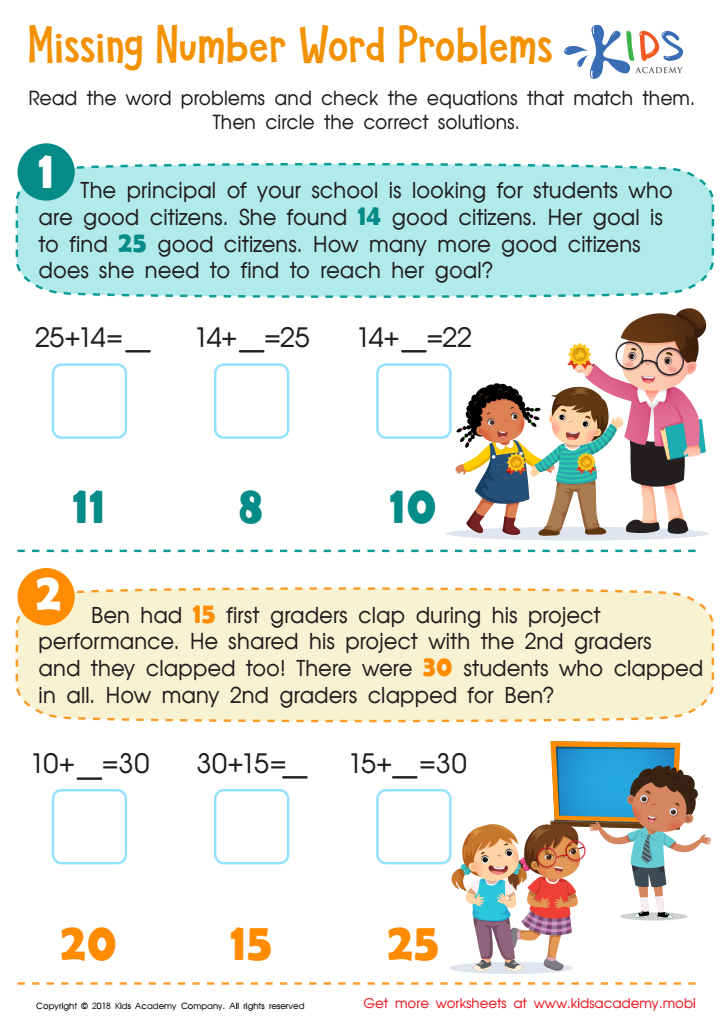
Missing Number Word Problems Worksheet
 Assign to My Students








Understanding number sequences, addition, and subtraction is crucial for children ages 5-9, as they form the foundation for advanced mathematical concepts. During these early years, children are developing their numerical fluency and problem-solving skills, which will influence their confidence and success in mathematics later in life. A grasp of number sequences helps children recognize patterns and identify relationships between numbers, facilitating the comprehension of both addition and subtraction.
When children comprehend addition and subtraction, they learn to manipulate numbers effectively, enabling them to solve everyday problems. For instance, they can better understand the concepts of 'more’ and ‘less,’ which are essential for financial literacy and practical decision-making.
Moreover, a solid understanding of these concepts promotes the development of critical thinking, perseverance, and resilience. Teachers and parents play an essential role in providing resources, encouragement, and interactive experiences, such as games and hands-on activities that make learning engaging. This collaborative approach fosters a positive attitude towards mathematics, paving the way for lifelong learning. Ultimately, by focusing on these fundamental skills, we equip children with the tools they need to tackle more complex mathematical ideas and enhance their overall cognitive development.








