Underwater animal identification Addition & Subtraction Worksheets for Ages 5-9
3 filtered results
-
From - To
Dive into learning with our Underwater Animal Identification Addition & Subtraction Worksheets designed for ages 5-9! These engaging worksheets combine essential math skills with fun, colorful underwater animal themes. Children will practice addition and subtraction while identifying various sea creatures. Our worksheets not only help strengthen math skills but also promote cognitive development and animal recognition. Perfect for early grade learners, these printable exercises make math practice enjoyable and educational. Explore the ocean's depths and boost your child's math proficiency today with Kids Academy's unique worksheets!
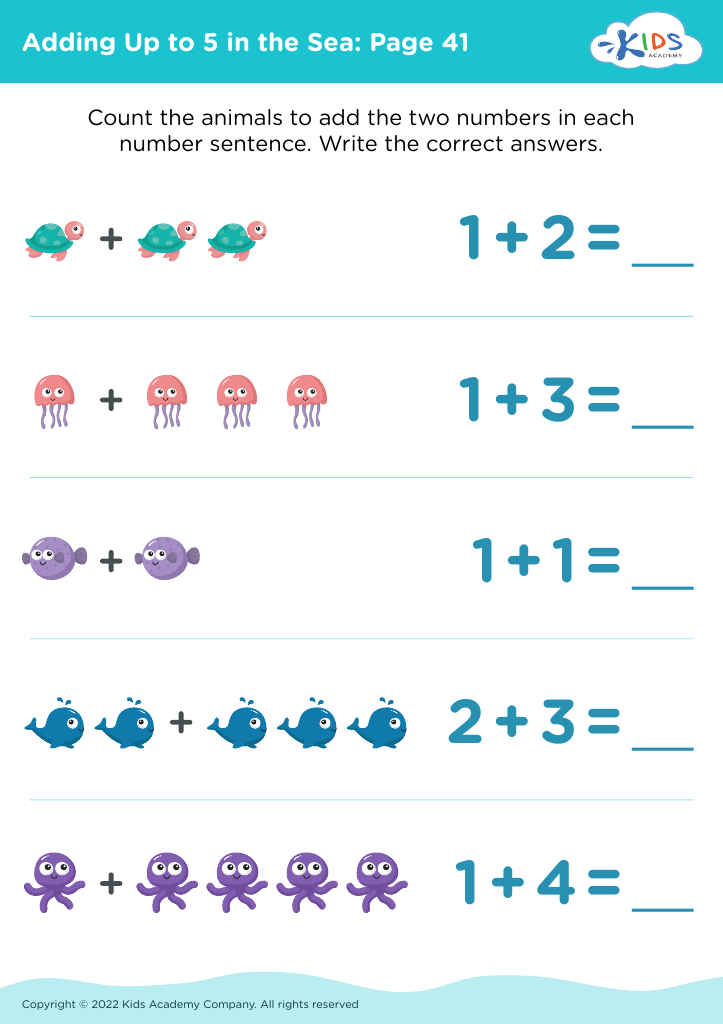
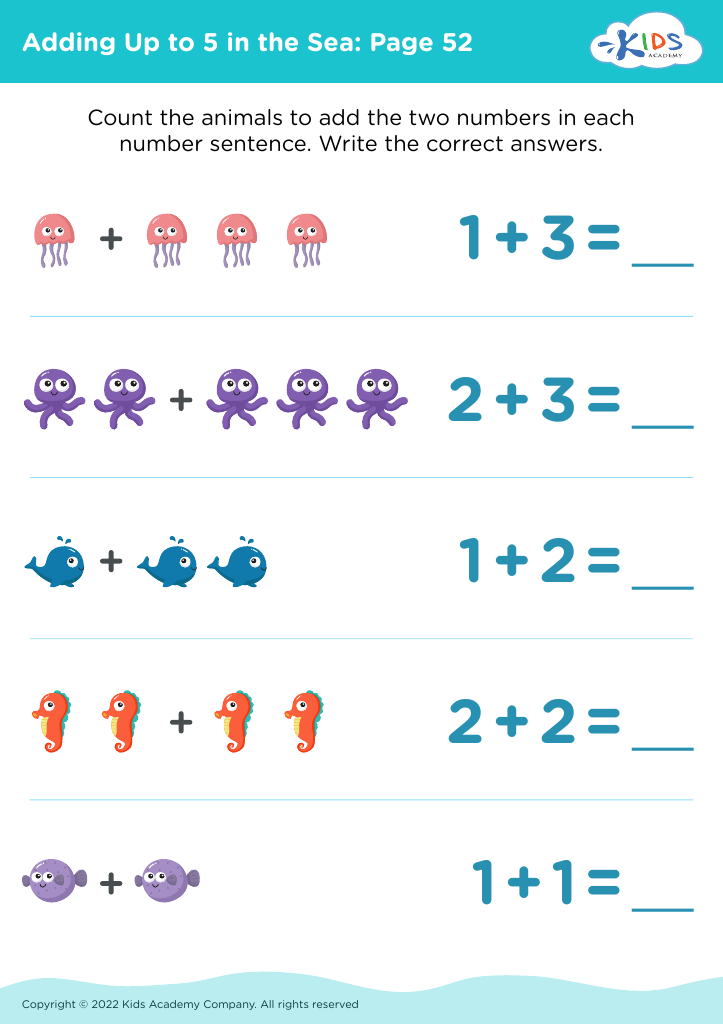
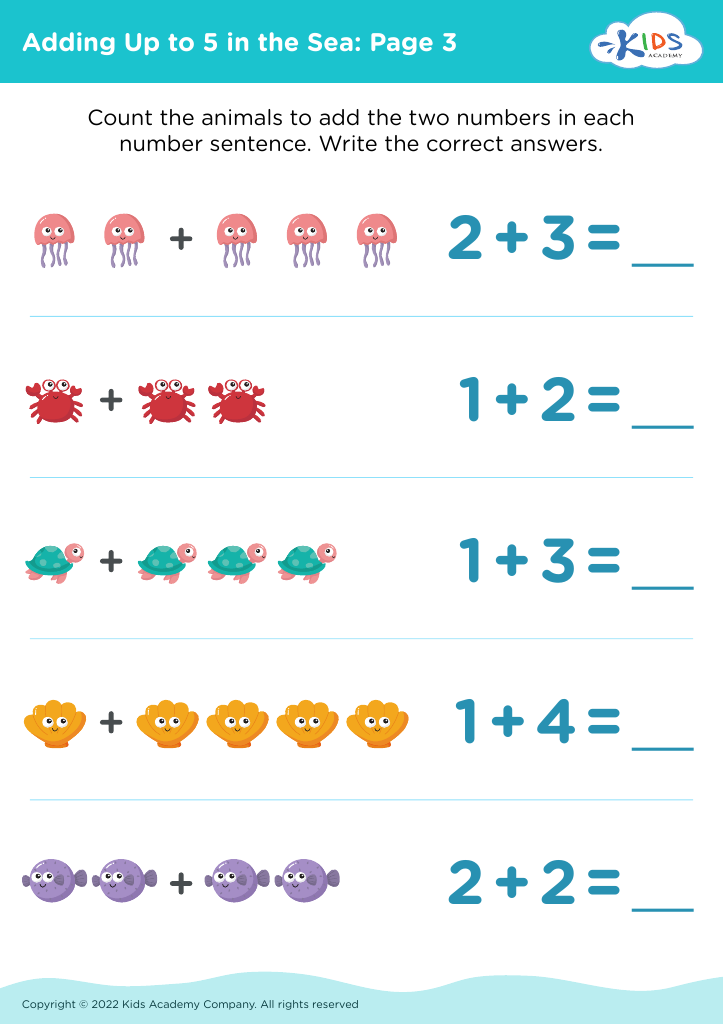








Parents and teachers should care about underwater animal identification combined with addition and subtraction for children ages 5-9 because it blends essential early education skills with engaging, hands-on learning. At this developmental stage, children are full of curiosity and a natural sense of wonder about the world. Utilizing underwater animal identification captivates their attention and nurtures their interest in marine biology and environmental science.
Simultaneously, incorporating foundational math skills—addition and subtraction—within this context provides a meaningful and memorable learning experience. By visualizing arithmetic problems using underwater animals, children can better grasp abstract concepts, as they are anchored in tangible and relatable references. This kind of integrative approach can cater to different learning styles, ensuring that both visual and kinesthetic learners remain engaged.
Furthermore, connecting these academic skills with environmental themes fosters a respectful and informed attitude towards nature from a young age. Understanding and valuing marine life early on cultivates stewardship and responsibility for ecological conservation. It's an educational outing that synergizes cognitive development, fosters curiosity, and inculcates values in children that resonate well beyond the classroom.








