Animal identification Addition Worksheets for Ages 5-9 - Page 2
27 filtered results
-
From - To
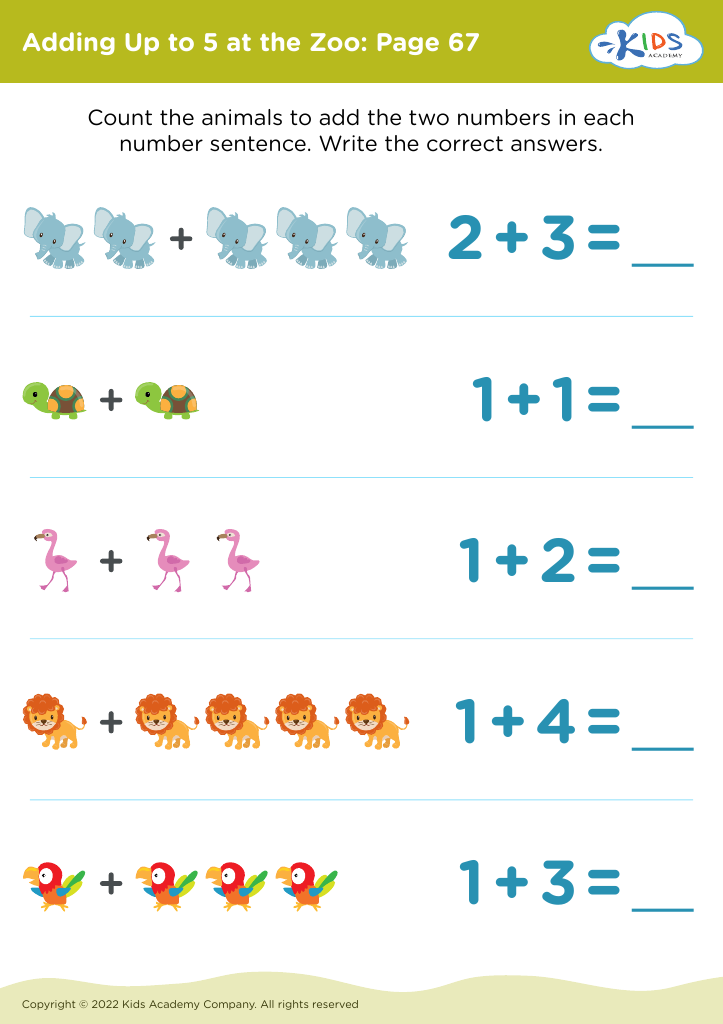
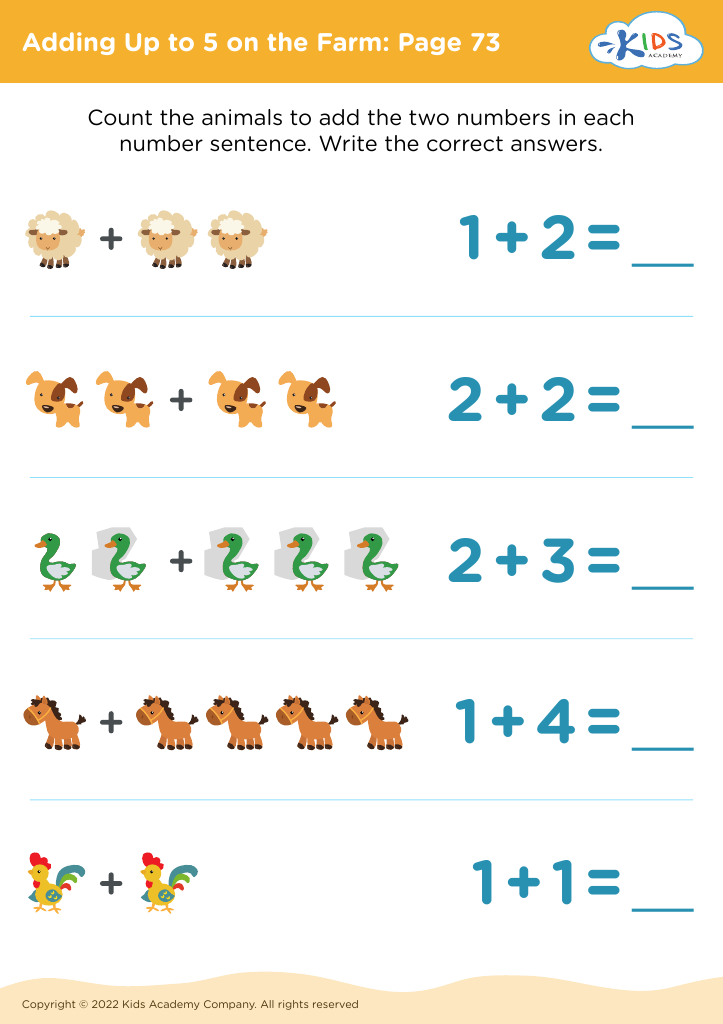
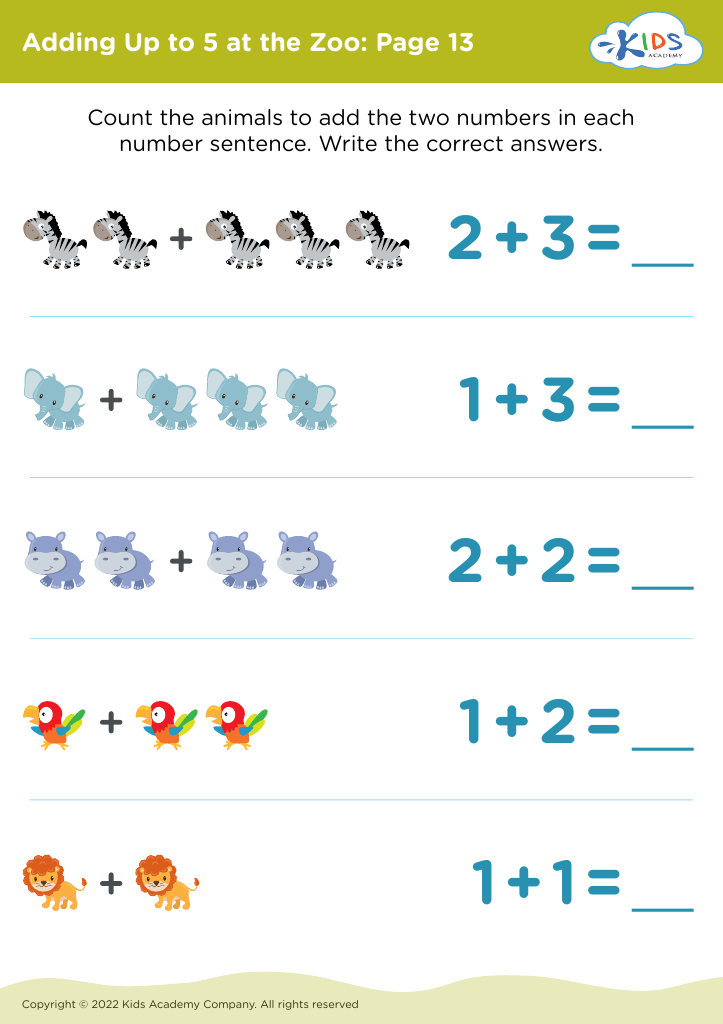








Parents and teachers should care about animal identification addition activities for children aged 5-9 because these exercises uniquely combine academic skills with essential cognitive and emotional development. Firstly, the process of identifying animals enhances a child's observation and differentiation abilities, which are fundamental for studying science and understanding biodiversity. These skills lay the groundwork for scientific inquiry and environmental awareness.
Moreover, incorporating addition exercises using animals adds a fun, relatable context that can make learning math more engaging and less intimidating. Numbers become more than abstract symbols; they turn into meaningful entities that a child can count, making arithmetic tangible and enjoyable. Studies show that when children enjoy an activity, they are more likely to retain the information and seek out further learning opportunities.
Furthermore, learning about animals builds empathy and care for other living things. As children learn to identify different species, they also absorb information about habitats, behaviors, and conservation, fostering a sense of responsibility toward the environment.
In conclusion, animal identification addition activities provide a multi-faceted approach that reinforces observation and math skills while also encouraging environmental stewardship. Engaging kids in these formative years with such integrative tasks sets a strong educational foundation and instills values that last a lifetime.








