Filters

17 filtered results

Clear all filters
Favorites
With answer key
Interactive

17 filtered results

Difficulty Level

Grade


Unlock your child's potential with our engaging Critical Thinking Addition Worksheets for ages 5-9! Designed to foster problem-solving skills and logical reasoning, these worksheets combine fun activities with essential math practice. Our interactive exercises challenge young minds to analyze patterns and strategies while enhancing their addition skills. Perfect for home or classroom use, these worksheets cater to various learning styles, ensuring that every child can thrive. Help your child build confidence in math as they tackle exciting scenarios that encourage creative thinking. Explore our comprehensive collection today and watch your little learners excel in math!
Check out this FREE Trial Lesson on Addition for age 5-9!

More Word Problems

Favorites
With answer key
Interactive
  • 5-9
  • Critical Thinking
  • Addition
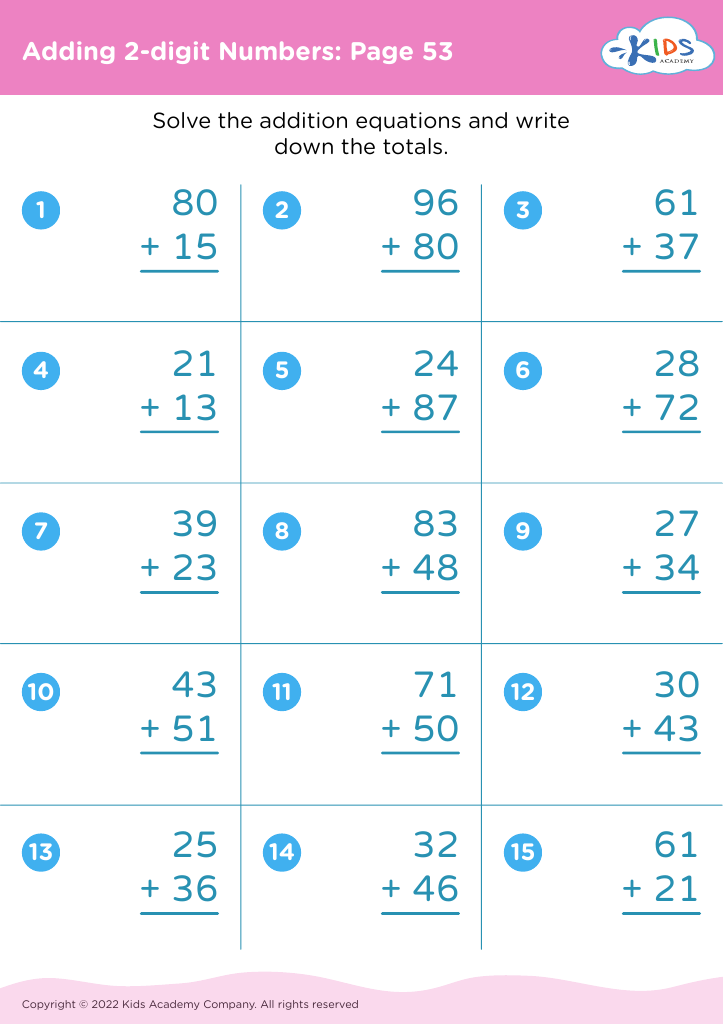
Adding 2-digit Numbers: Page 53

Adding 2-digit Numbers: Page 53

Adding 2-digit Numbers: Page 53
Worksheet
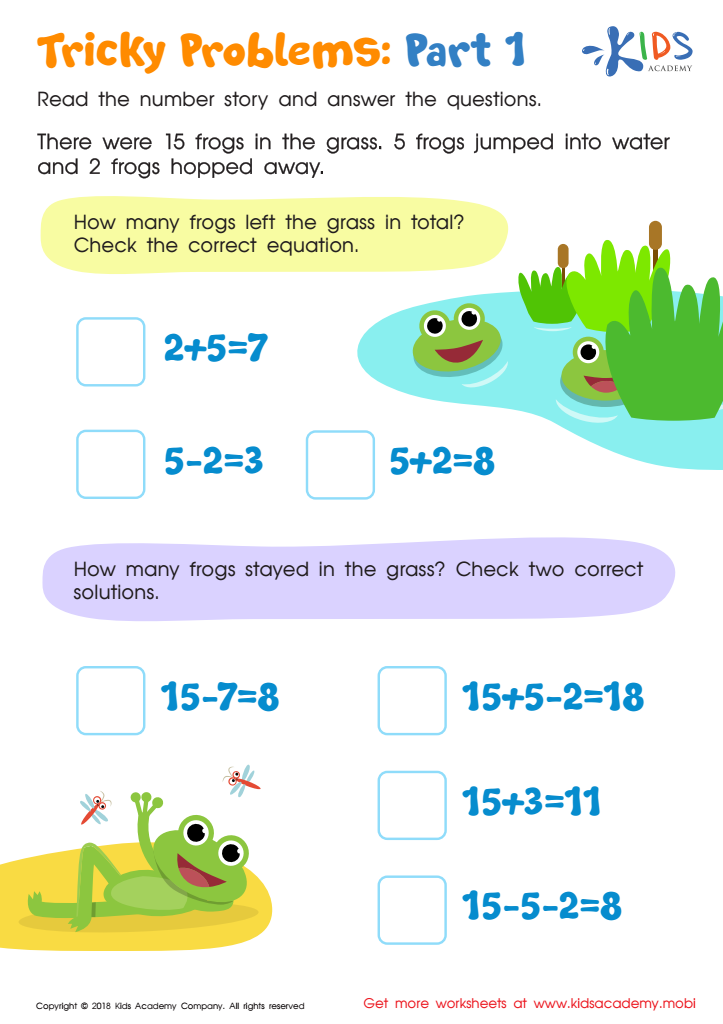
Tricky Problems Worksheet: Part 1

Tricky Problems Worksheet: Part 1

Visualizing word problems can help students solve them. This fun PDF worksheet encourages students to create mental images using math facts, then check boxes to match the equations for basic addition problems. It's a great way to build confidence in solving math.
Tricky Problems Worksheet: Part 1
Worksheet
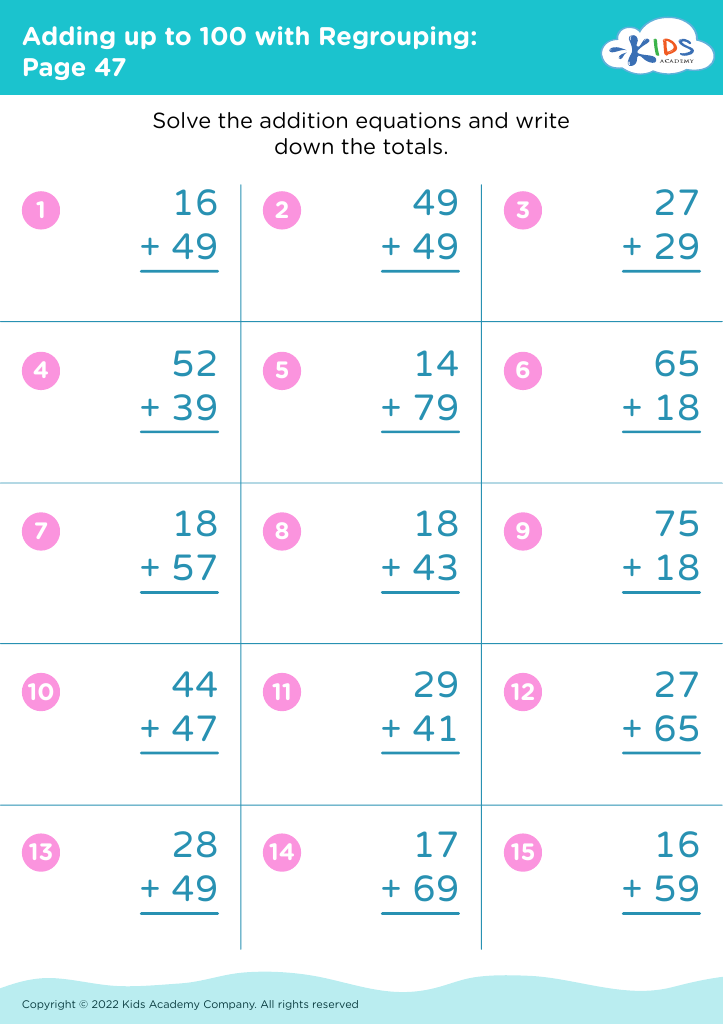
Adding up to 100 with Regrouping: Page 47
Worksheet
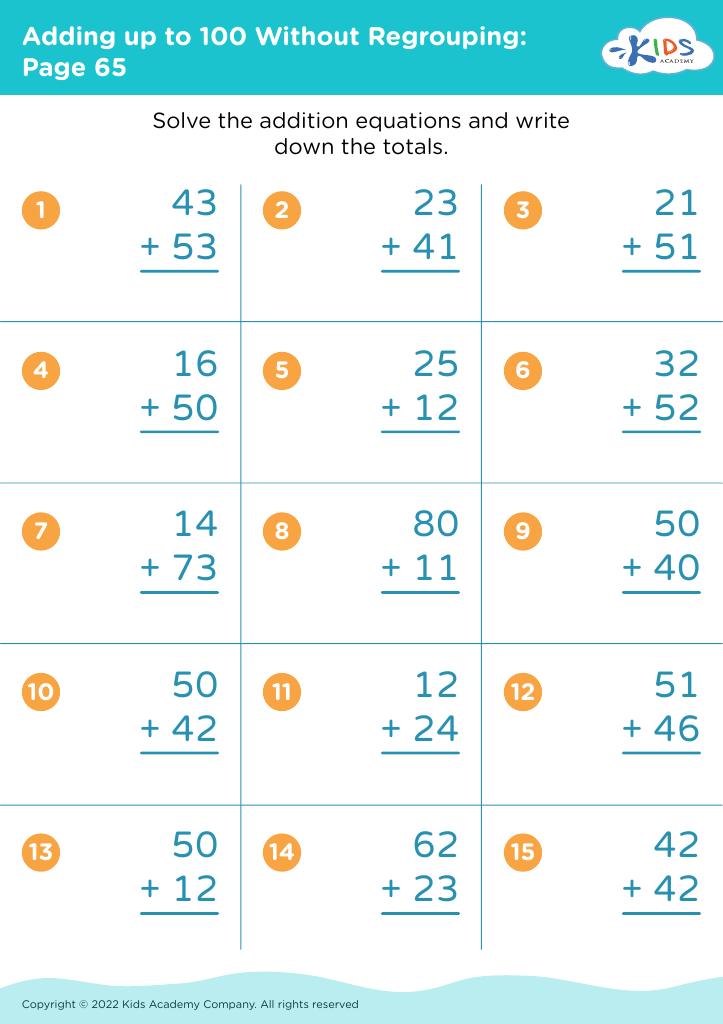
Adding up to 100 Without Regrouping: Page 65
Worksheet
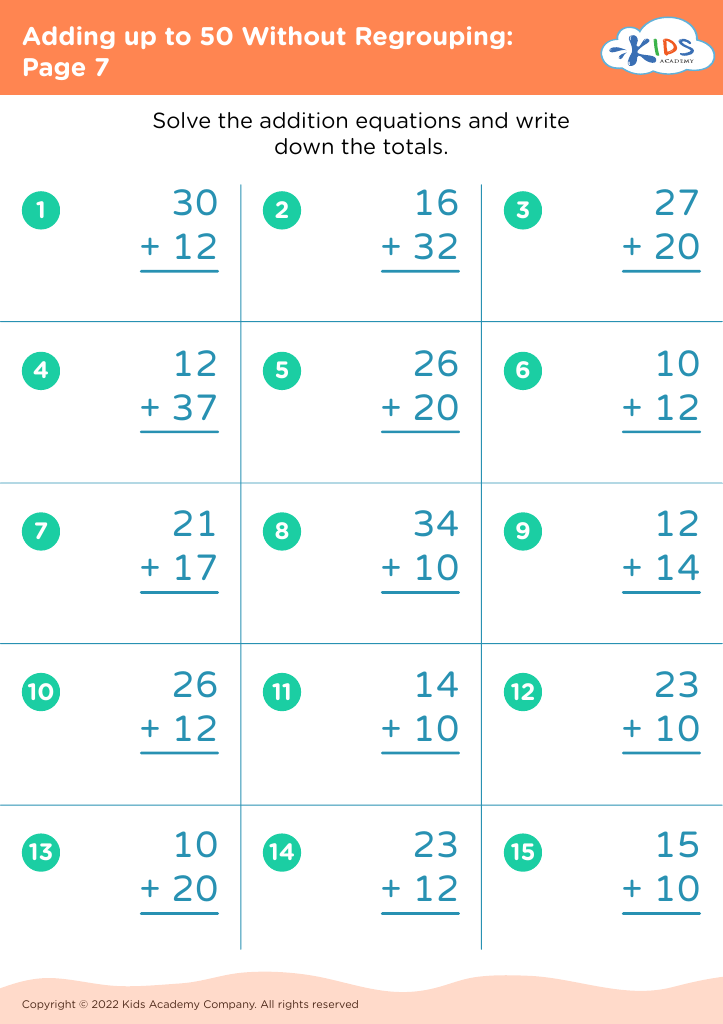
Adding up to 50 Without Regrouping: Page 7
Worksheet
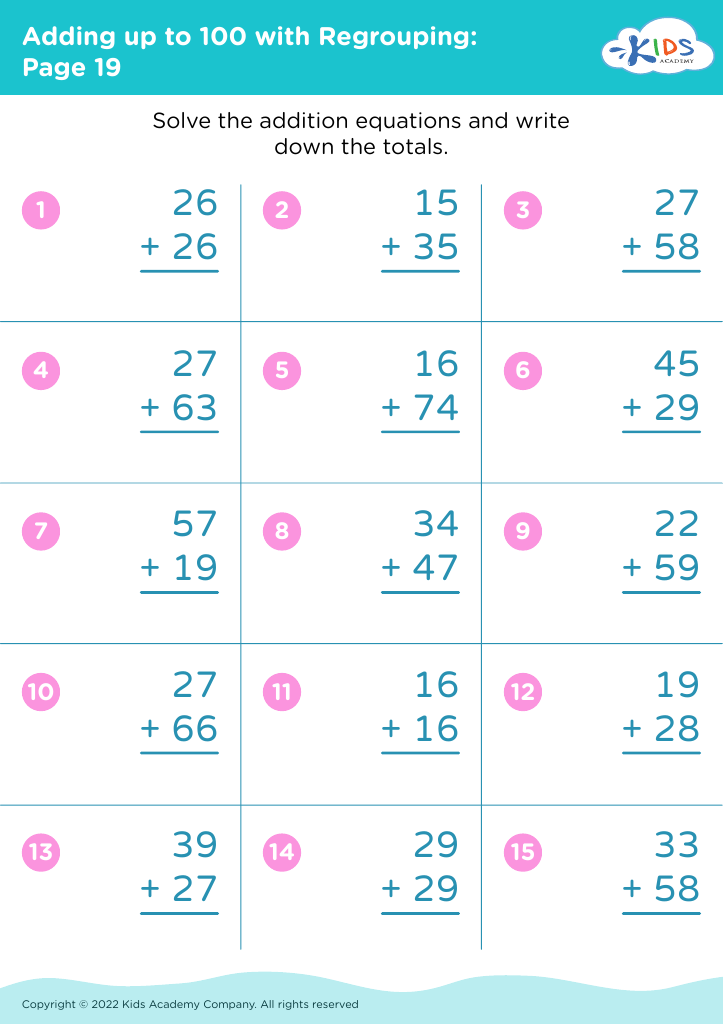
Adding up to 100 with Regrouping: Page 19
Worksheet
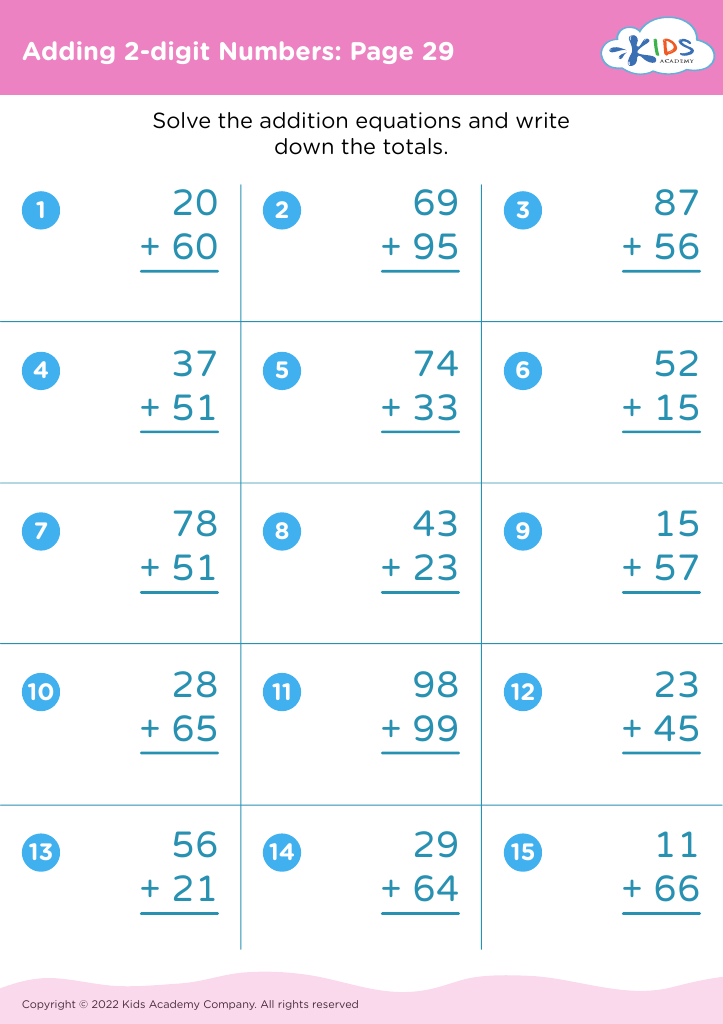
Adding 2-digit Numbers: Page 29

Adding 2-digit Numbers: Page 29

Adding 2-digit Numbers: Page 29
Worksheet
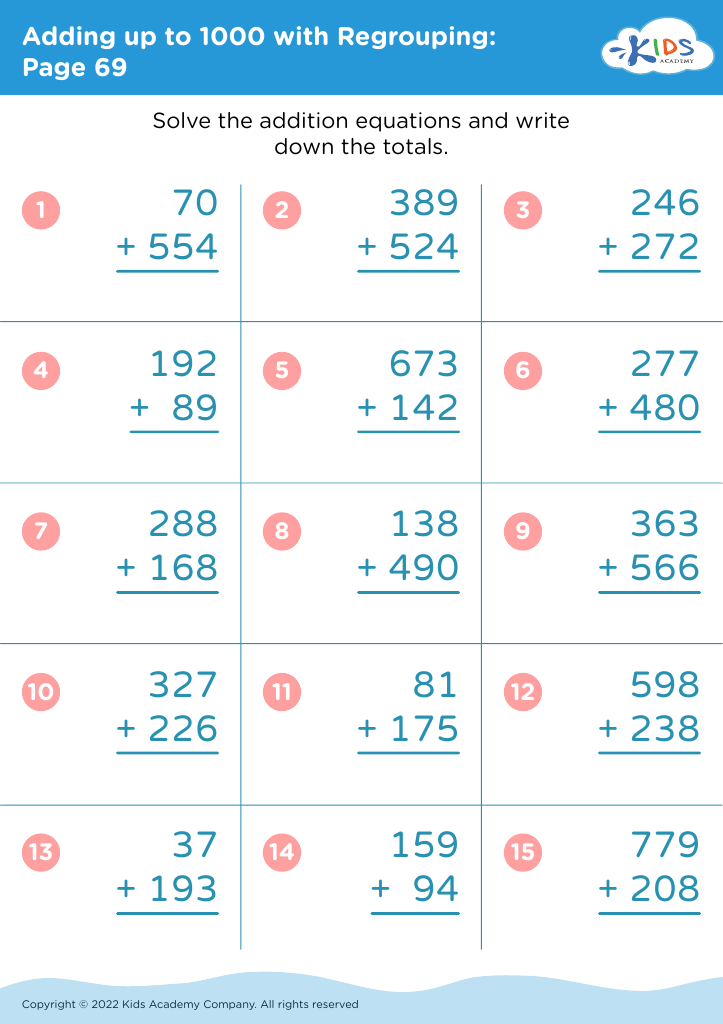
Adding up to 1000 with Regrouping: Page 69
Worksheet
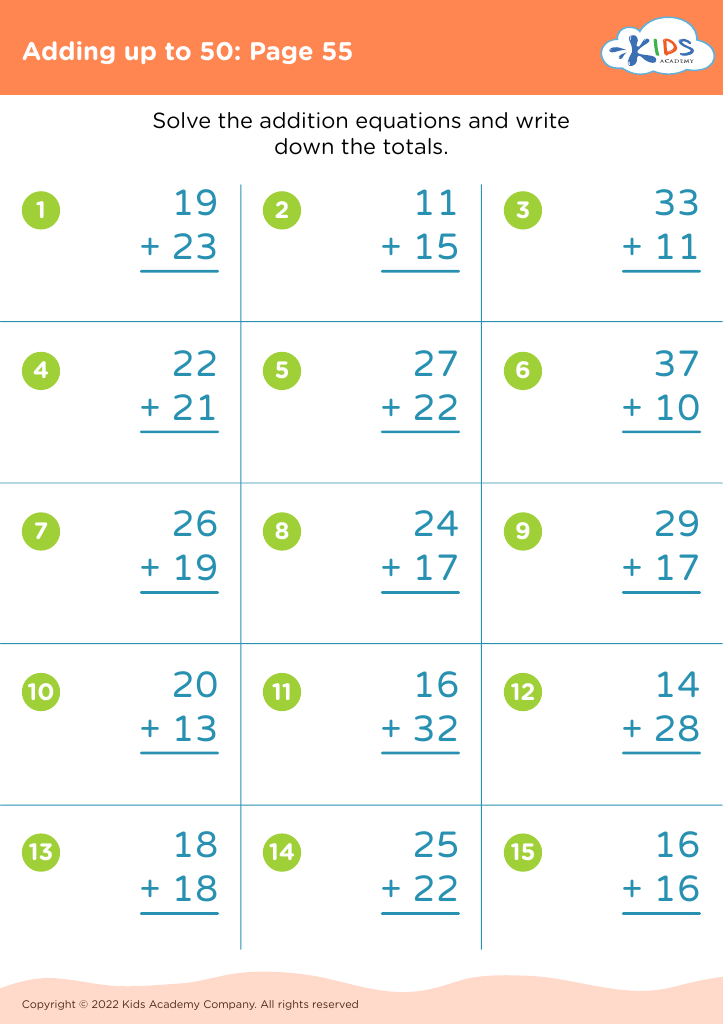
Adding up to 50: Page 55

Adding up to 50: Page 55

Adding up to 50: Page 55
Worksheet
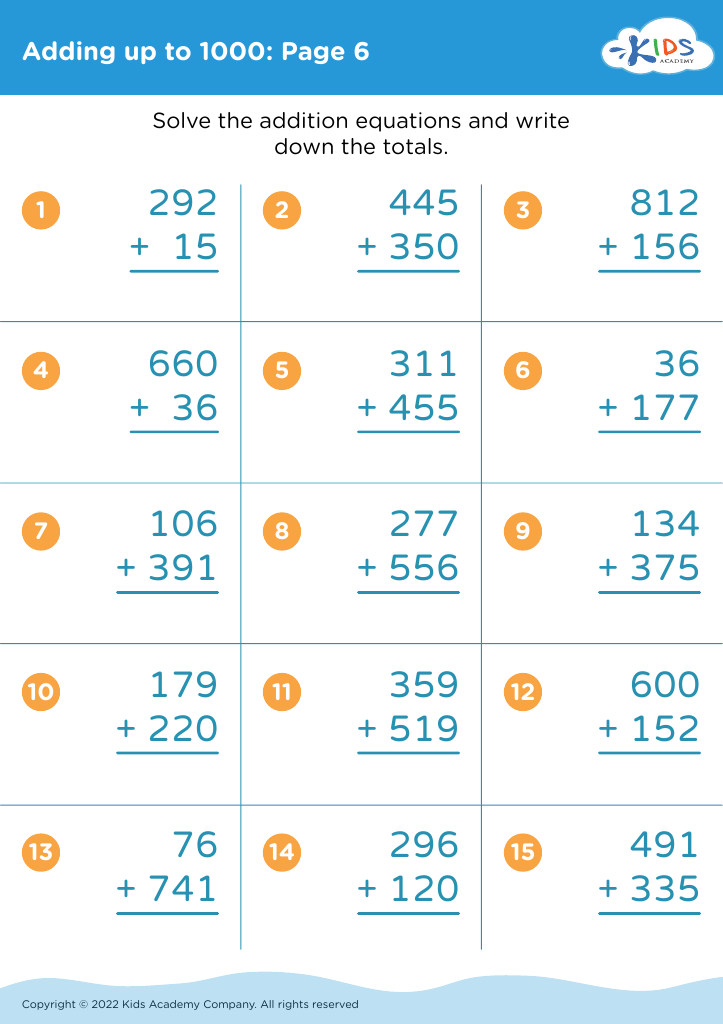
Adding up to 1000: Page 6

Adding up to 1000: Page 6

Adding up to 1000: Page 6
Worksheet
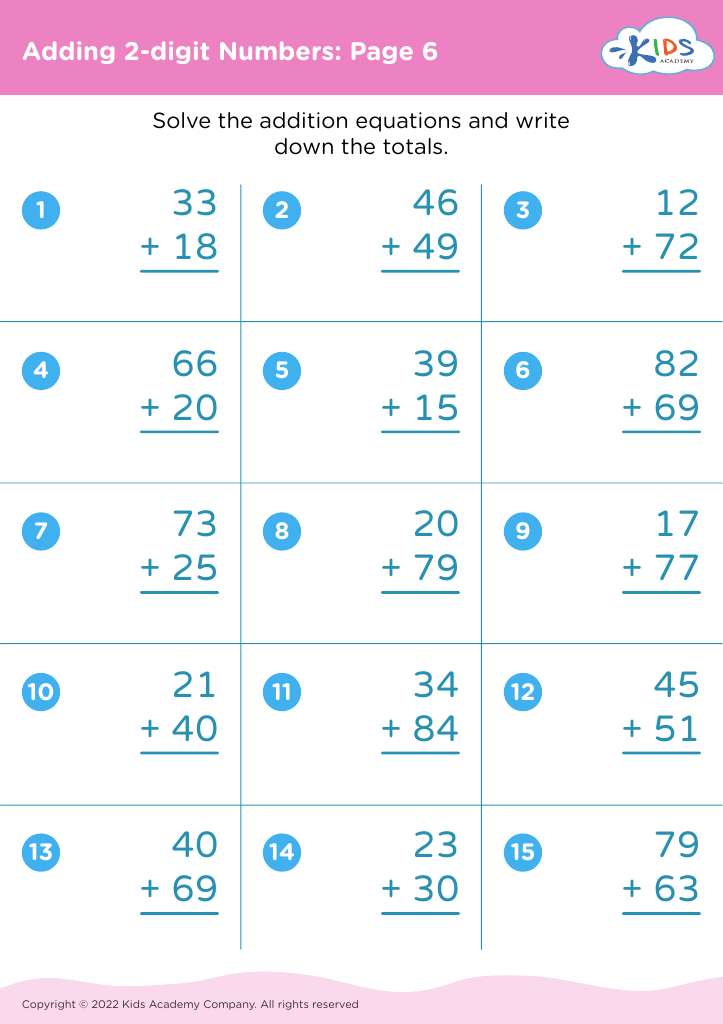
Adding 2-digit Numbers: Page 6

Adding 2-digit Numbers: Page 6

Adding 2-digit Numbers: Page 6
Worksheet
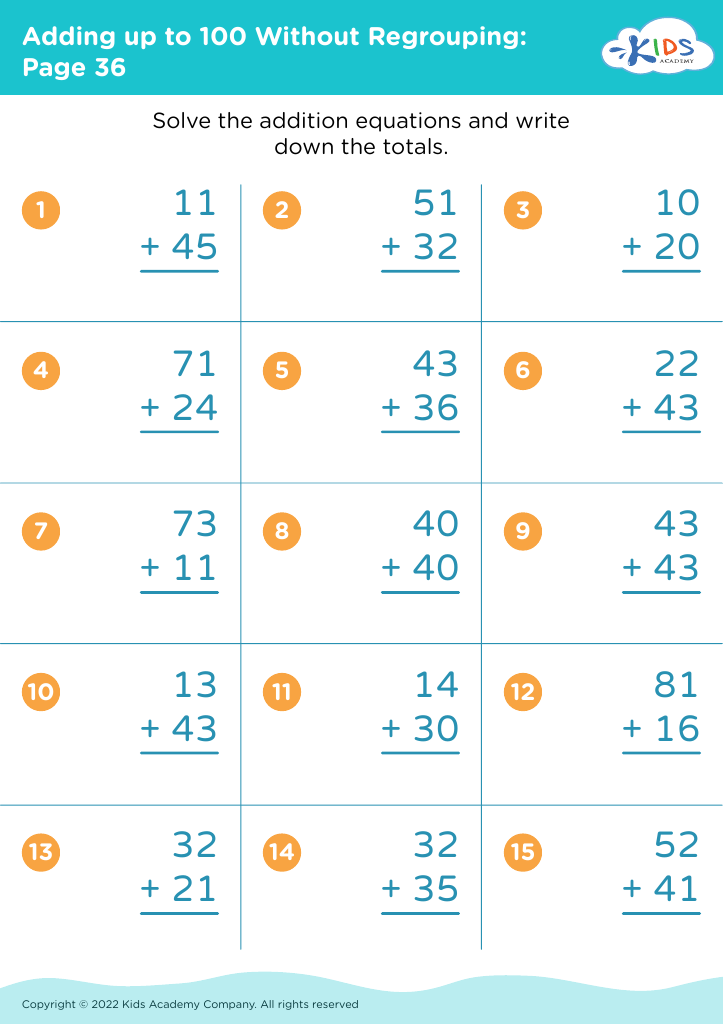
Adding up to 100 Without Regrouping: Page 36
Worksheet
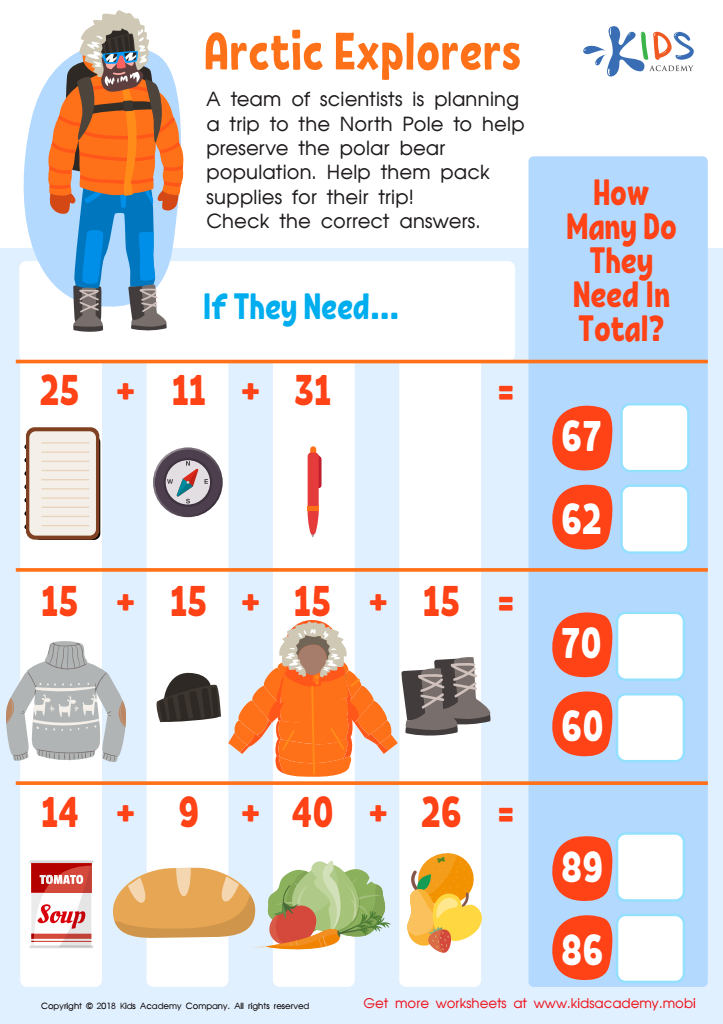
Arctic Explorers Worksheet
Arctic Explorers Worksheet
Help your child pack supplies for a team of scientists' trip to the North Pole! Before beginning, explain how efforts are needed to protect endangered animals like polar bears. Encourage them to check the correct clothing needed for the extremely cold region. For example, warm and protective clothing is essential.
Arctic Explorers Worksheet

Worksheet
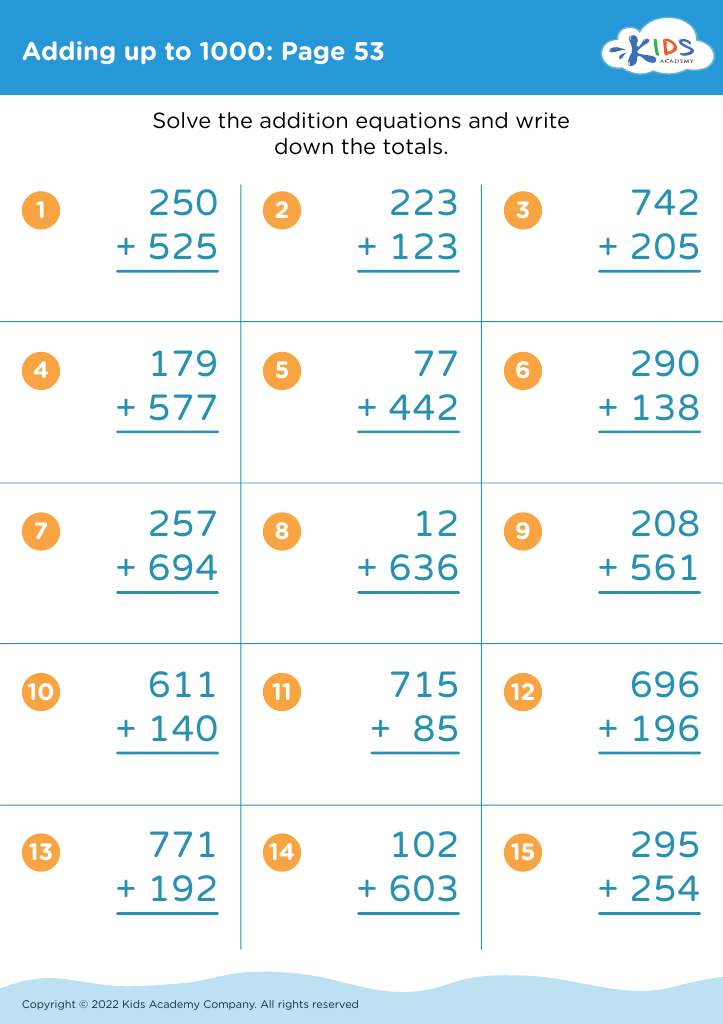
Adding up to 1000: Page 53

Adding up to 1000: Page 53

Adding up to 1000: Page 53
Worksheet
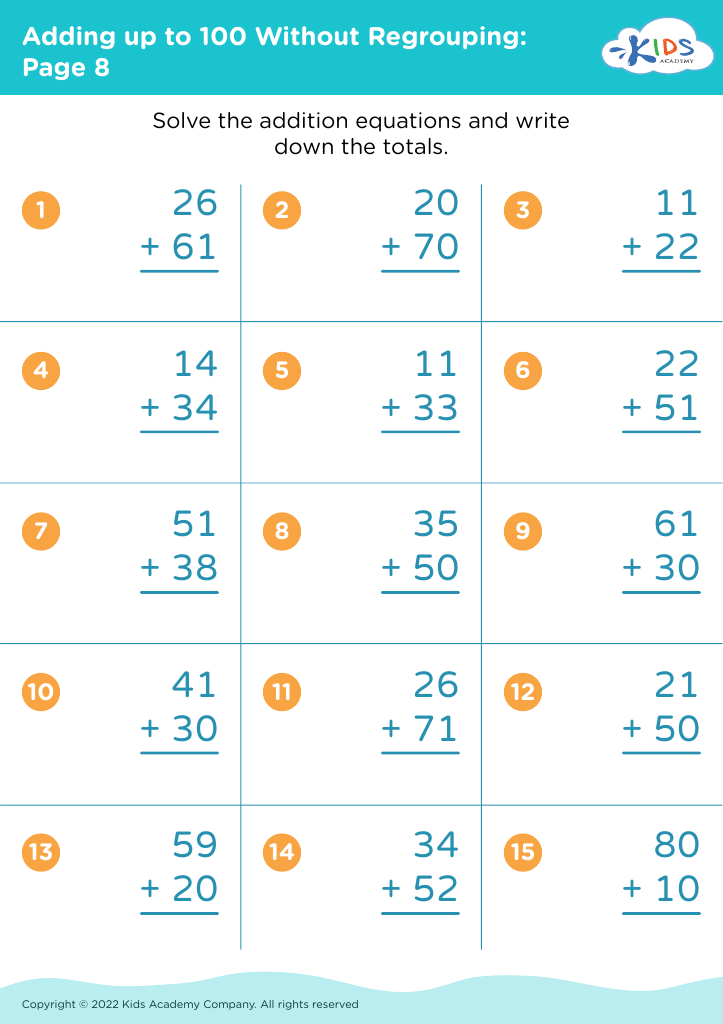
Adding up to 100 Without Regrouping: Page 8
Worksheet
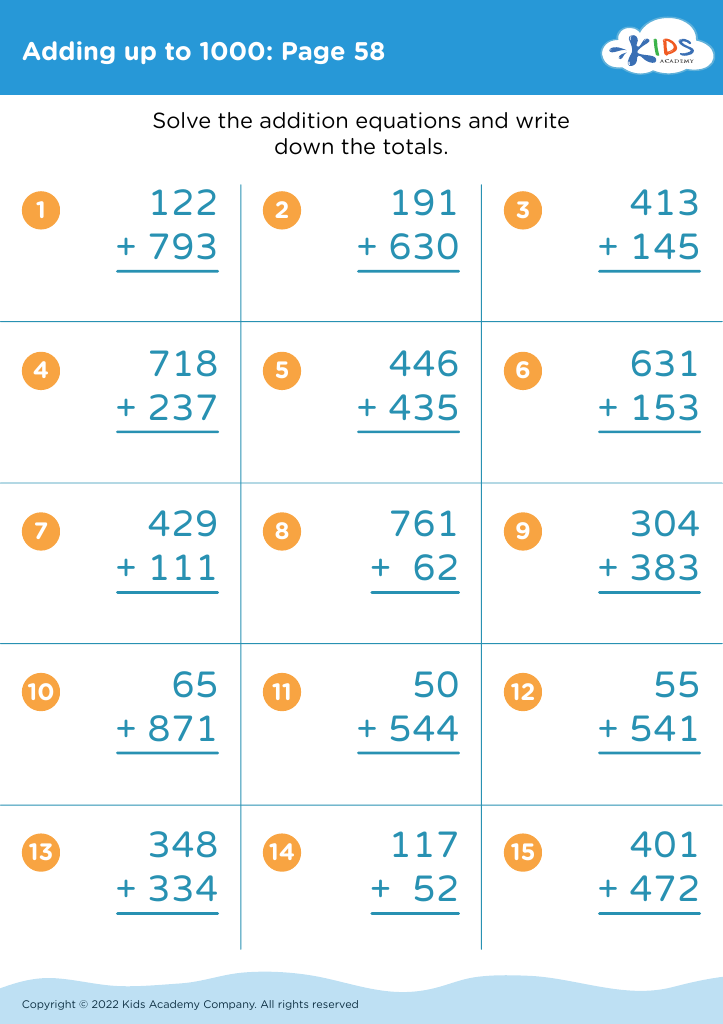
Adding up to 1000: Page 58

Adding up to 1000: Page 58

Adding up to 1000: Page 58
Worksheet
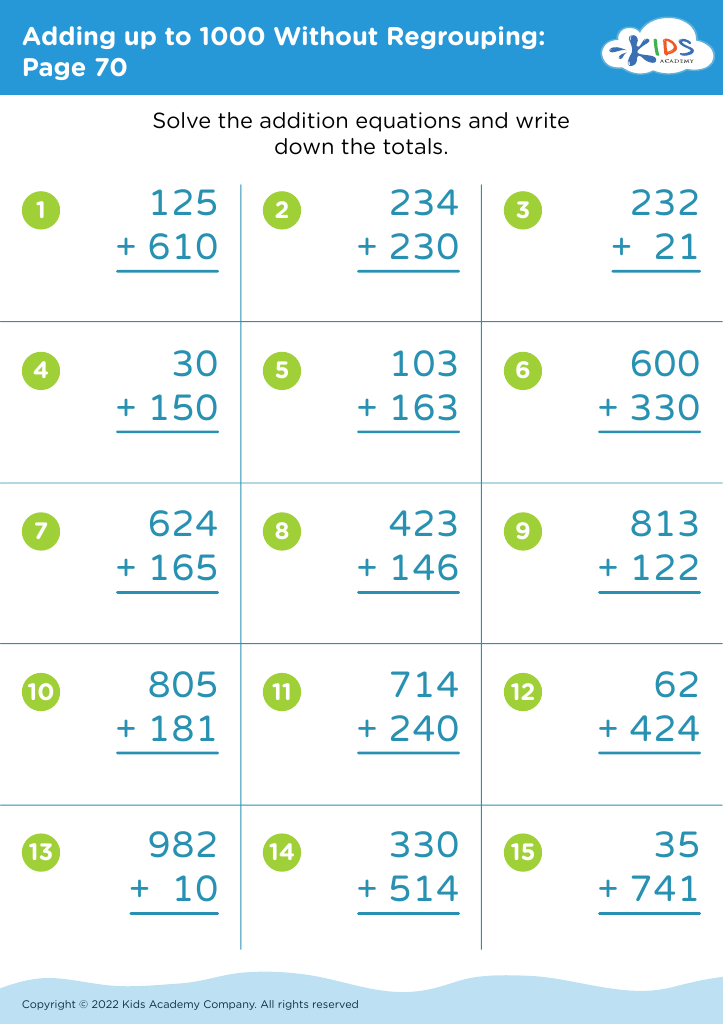
Adding up to 1000 Without Regrouping: Page 70
Worksheet


Critical thinking skills are essential for children aged 5-9, as they lay the foundation for successful problem-solving and decision-making throughout life. For parents and teachers, fostering these skills in young learners is crucial for several reasons.

First, critical thinking enhances a child's ability to analyze information, encouraging them to question assumptions and assess different viewpoints. This is particularly important in an era dominated by rapid information exchange, including digital media. By cultivating these skills, children learn to differentiate between credible sources and misinformation.

Secondly, engaging children in critical thinking exercises promotes creativity and innovation. When children learn to evaluate situations and generate multiple solutions, they develop confidence in expressing their thoughts and ideas.

Moreover, critical thinking supports academic achievement. As children progress, robust thinking skills enable them to tackle increasingly complex subjects, leading to improved performance across various disciplines.

Lastly, instilling critical thinking in early education encourages lifelong learning. Children who are comfortable approaching challenges with an open and analytical mindset become more resilient and adaptable adults.

In summary, prioritizing critical thinking in early education benefits children's cognitive and emotional development, preparing them for a future where analytical skills are paramount.