Critical thinking development Addition Worksheets for Ages 5-9
3 filtered results
-
From - To
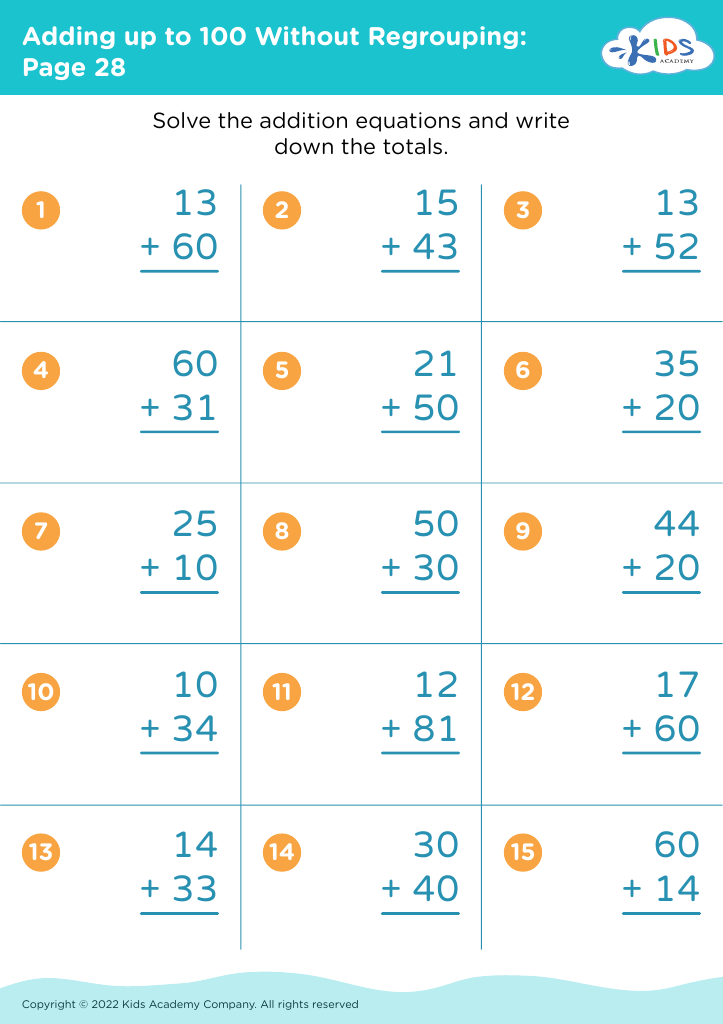
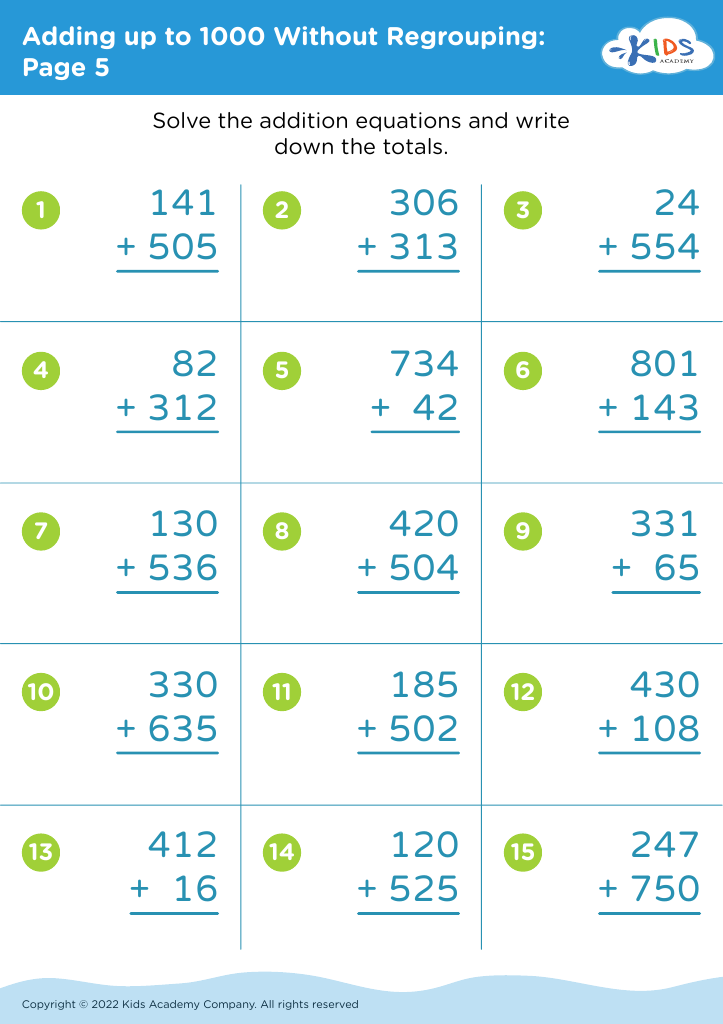
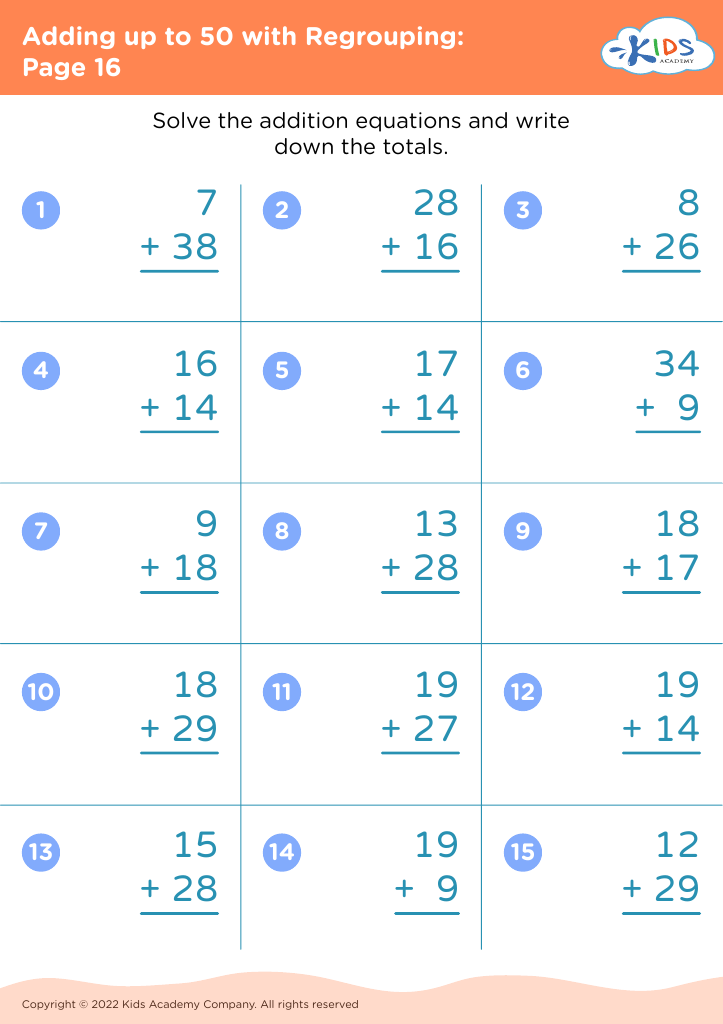
Enhance your child's critical thinking skills with our engaging Addition Worksheets tailored for ages 5-9. These worksheets are designed to foster analytical reasoning and problem-solving abilities while making math enjoyable. Each activity encourages young learners to approach addition from different perspectives, boosting their confidence and reinforcing their understanding of mathematical concepts. With a variety of exercises that incorporate real-life scenarios, visual aids, and interactive challenges, children will develop essential cognitive skills necessary for academic success. Our resources are perfect for at-home learning or classroom activities, providing a solid foundation for a lifelong love of math and critical thinking. Explore our collection today!








Critical thinking development in children aged 5-9 is essential for fostering lifelong learners. During these formative years, young minds are highly impressionable and capable of developing the foundational skills necessary for critical thinking, such as analysis, evaluation, and problem-solving.
Parents and teachers play a crucial role in nurturing these skills. Encouraging children to think critically empowers them to ask questions, make informed decisions, and navigate complex situations as they grow. In a world rich with information and diverse perspectives, children equipped with critical thinking abilities can differentiate between credible sources and misinformation, tantamount to forming their own opinions based on sound reasoning.
Moreover, critical thinking promotes creativity and innovation. When children learn to explore various solutions or viewpoints and assess their outcomes, they build resilience and adaptability—skills vital in today’s rapidly changing environment.
Integrating mental challenges and stimulating discussions into everyday learning, whether at home or in school, enhances a child's cognitive abilities while maintaining engagement. Teaching children to reflect on their thinking processes also fosters self-regulation, leading to improved behavior and emotional development. Thus, prioritizing critical thinking development is not just an academic focus; it’s a holistic approach to preparing children for future challenges and successes.








