Develop problem-solving skills Addition Worksheets for Ages 5-9
7 filtered results
-
From - To
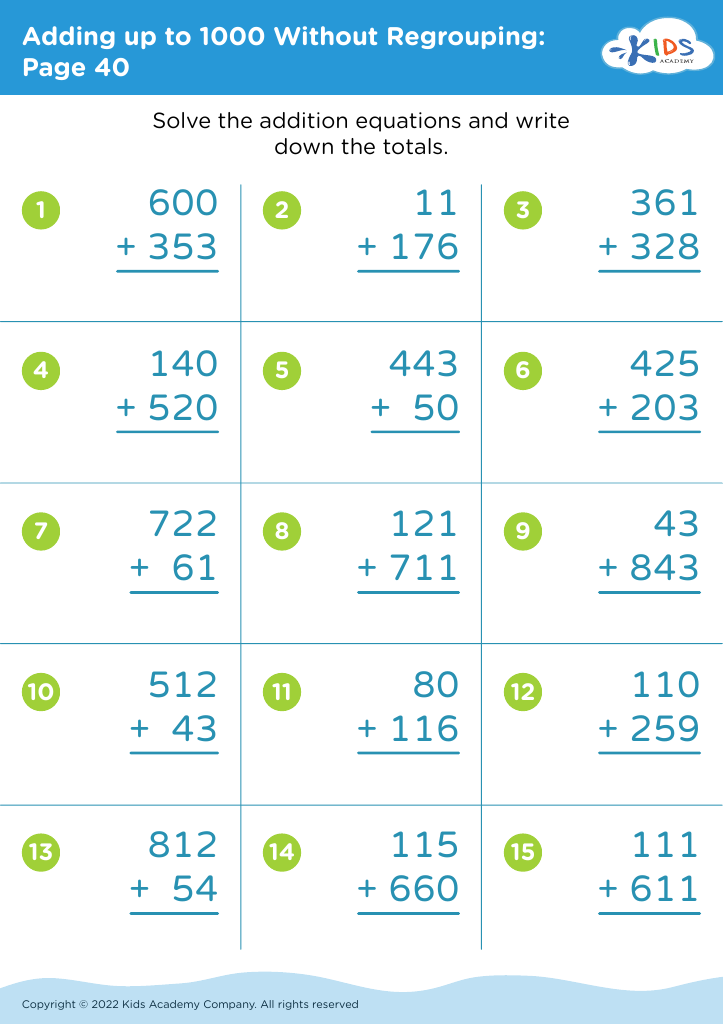
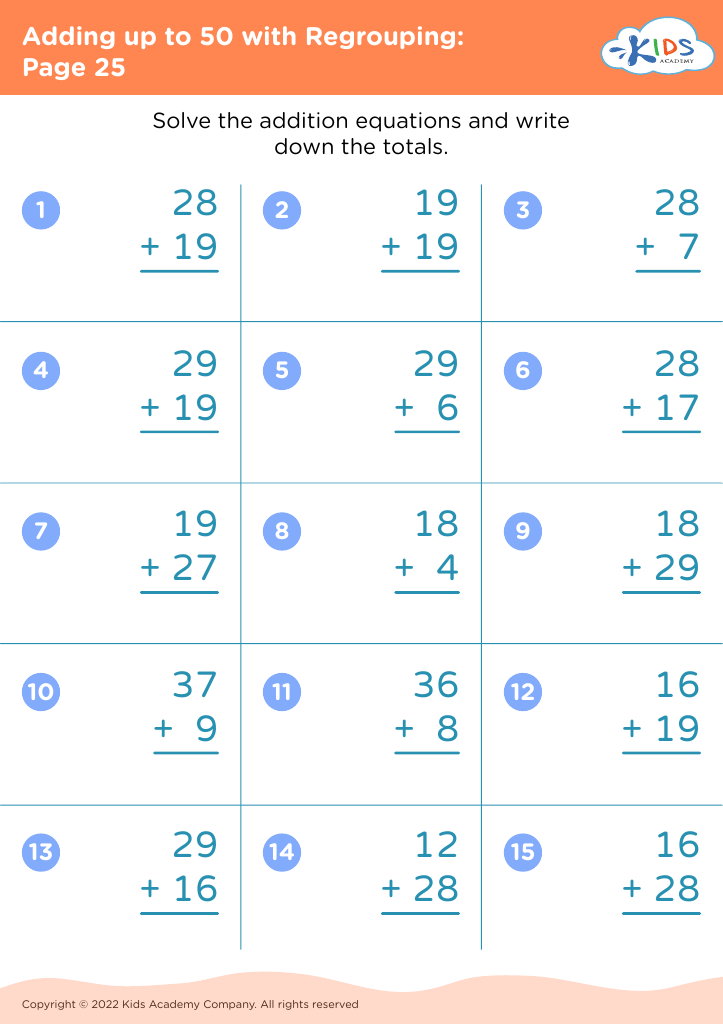
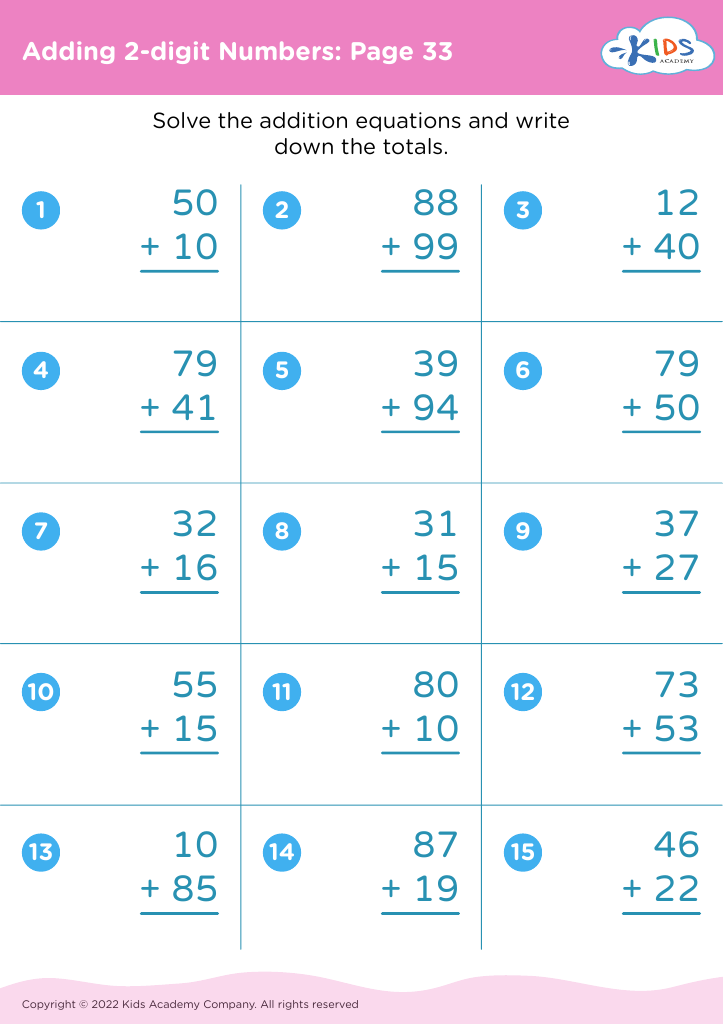
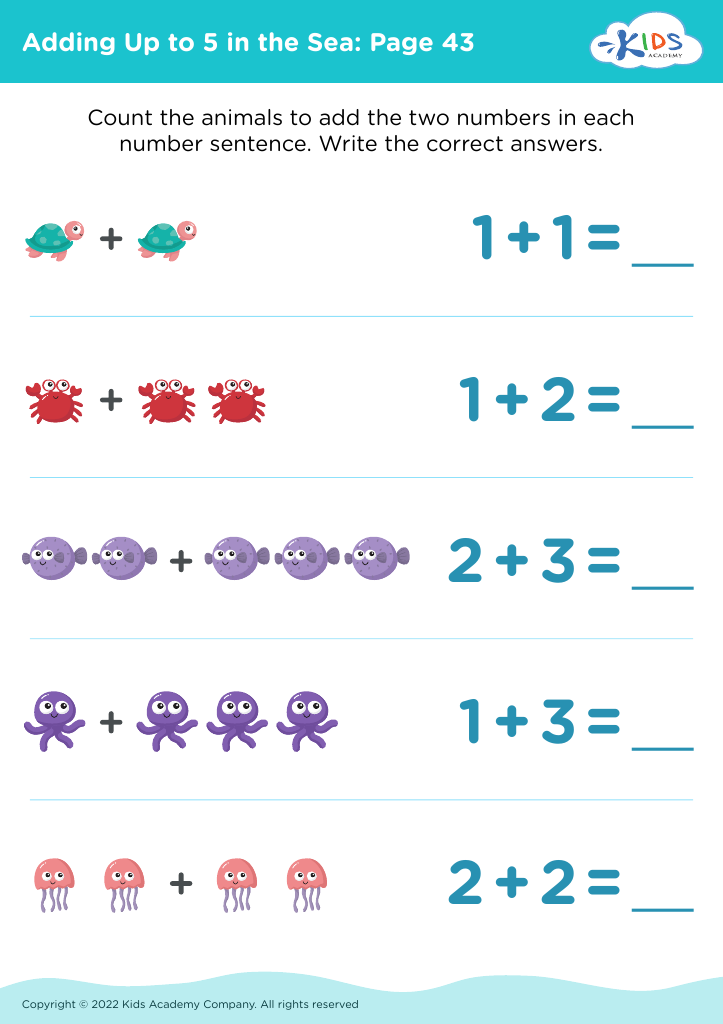
Boost your child's problem-solving abilities with our engaging Addition Worksheets for ages 5-9. Designed to cultivate critical thinking and mathematical skills, these worksheets offer a variety of fun exercises that turn learning into a playful adventure. From simple single-digit sums to more challenging word problems, each activity is carefully crafted to help young learners master the basics of addition, enhance their analytical skills, and build a strong foundation in math. Perfect for both classroom use and at-home practice, these printable worksheets make learning math exciting and accessible for every young mind. Empower your child with the gift of problem-solving today!
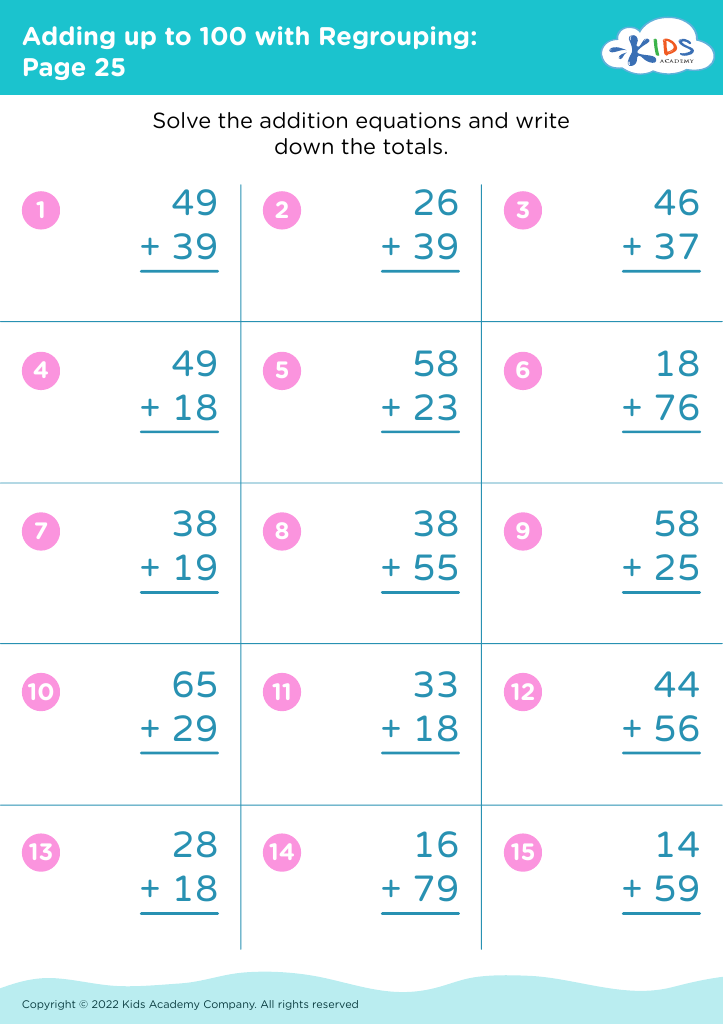
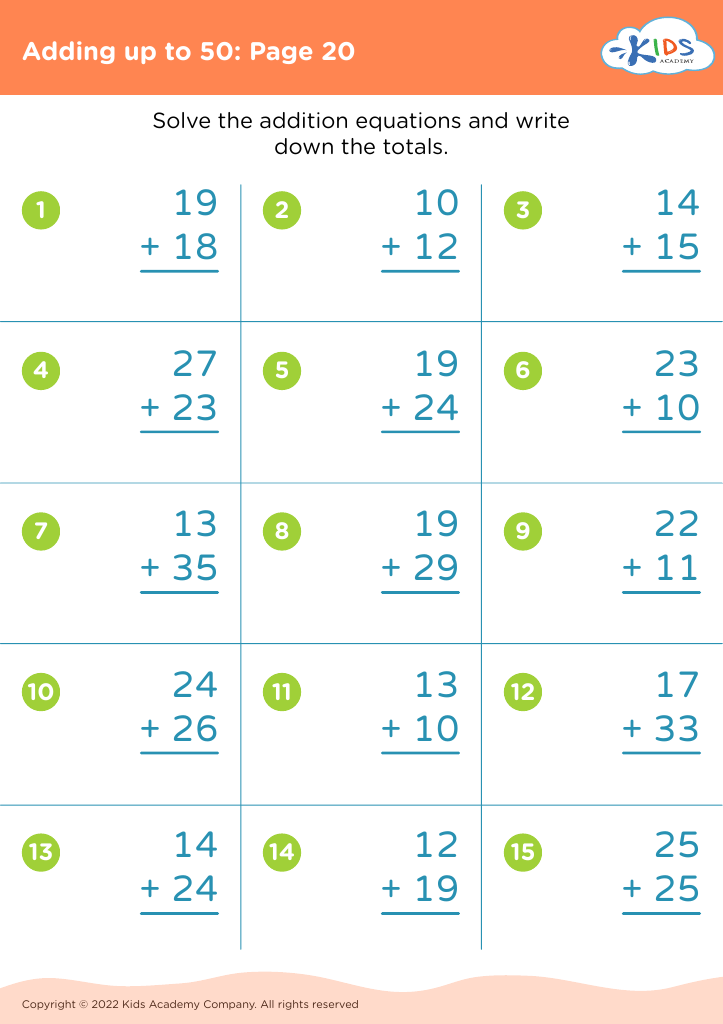
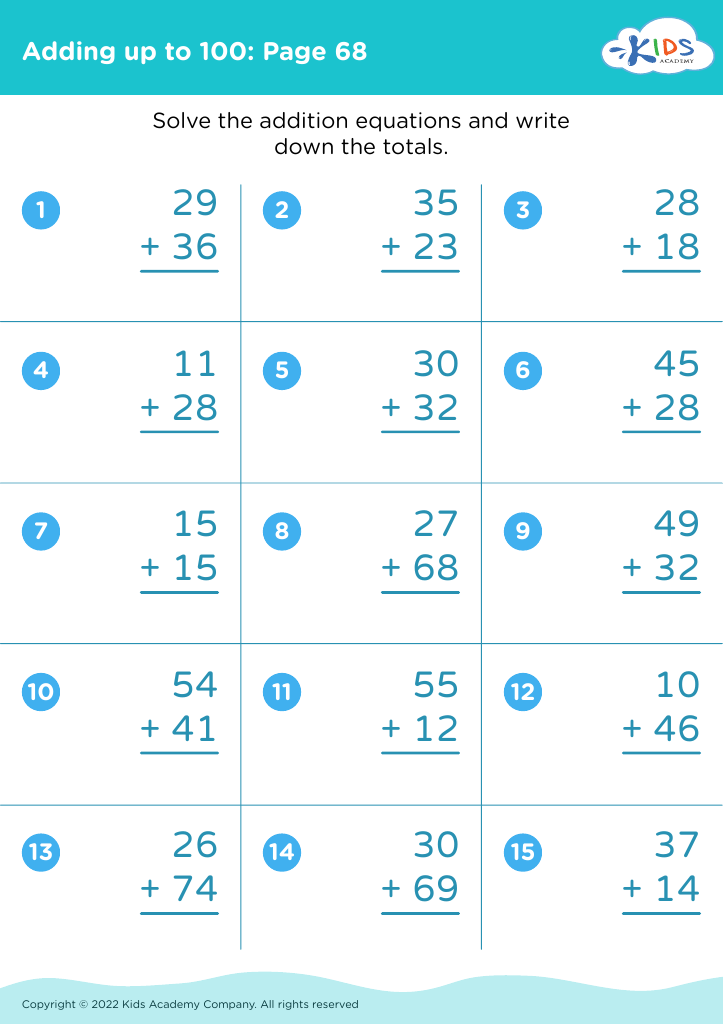








Developing problem-solving skills in addition for children ages 5 to 9 is foundational for their overall cognitive development and future academic success. At this developmental stage, children are mastering basic arithmetic, which is crucial not only for their current grade but also as a building block for more complex mathematical concepts encountered later. Strengthening problem-solving skills through addition helps them learn to think critically, identify patterns, and approach problems methodically.
Parents and teachers should care deeply about this because these skills extend beyond mathematics. Developing a problem-solving mindset encourages resilience and persistence, as children learn that challenges can be approached from multiple angles and often require patience and determination. This kind of critical thinking is beneficial in everyday life, from organizing a sequence of activities to understanding larger concepts in science and other subjects.
Moreover, fostering these skills at a young age builds confidence and a positive attitude towards learning. Children who feel competent in math are more likely to enjoy it and pursue it further, opening doors to STEM-related fields and careers in the future. By investing time and effort into developing problem-solving skills in addition, parents and educators are setting children on a path toward enhanced academic abilities and lifelong learning.








