Improves number recognition Addition Worksheets for Ages 5-9
3 filtered results
-
From - To
Enhance your child's math skills with our "Improves Number Recognition Addition Worksheets" designed for ages 5-9. These engaging worksheets focus on boosting number recognition through fun and interactive activities. Children will develop a solid foundation in addition while identifying numbers up to 20 in multiple formats such as pictures, number lines, and word problems. Our materials are designed to keep young learners motivated and excited about math. With our structured approach, students will gain confidence as they improve their number recognition skills alongside addition concepts. Perfect for home practice or classroom use, our worksheets cater to diverse learning styles for optimal success.
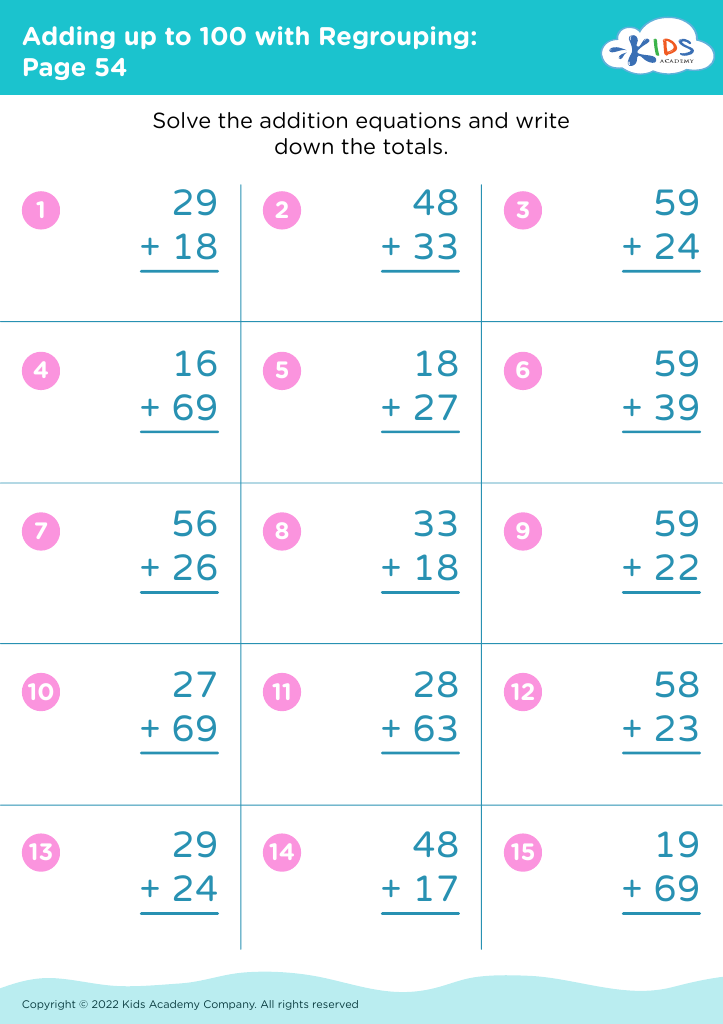
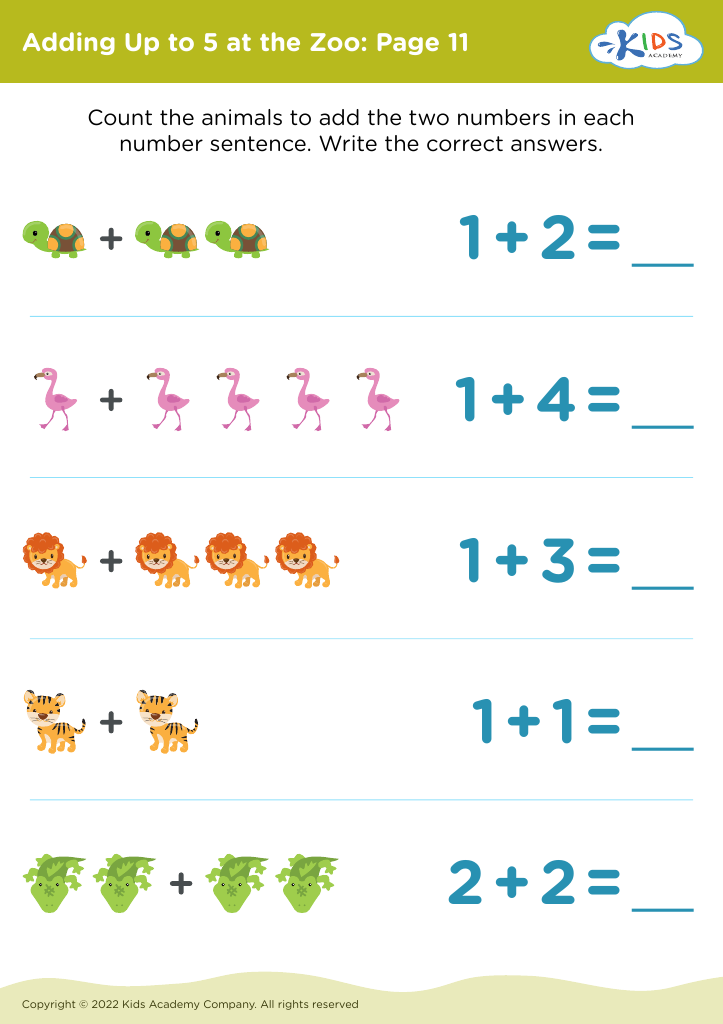
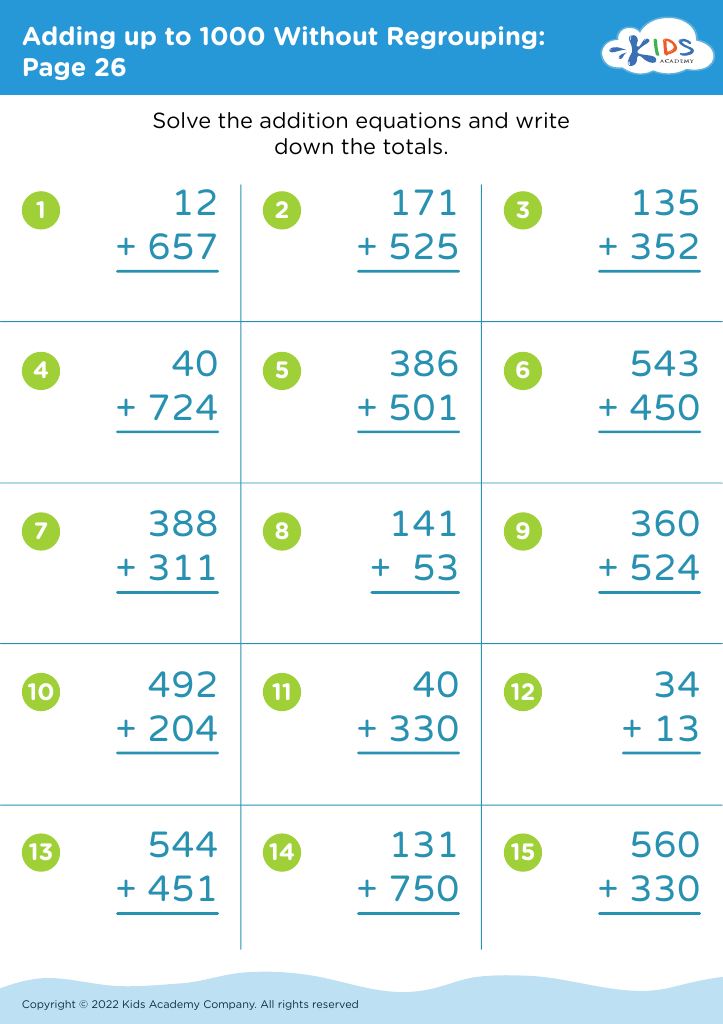








Number recognition and addition skills are fundamental for children aged 5-9, forming the building blocks for their mathematical development. Nurturing these abilities early on fosters a child's confidence and enjoyment in learning, which can have long-lasting implications for their academic journey. When parents and teachers prioritize number recognition, they help children identify, understand, and manipulate numbers within various contexts, paving the way for more complex mathematical concepts.
Strong foundational skills in addition are essential not only for academic success, but for everyday problem-solving situations children will encounter in life—whether it’s counting changes, managing simple budgets, or solving practical math problems. Furthermore, early mastery of these skills strengthens cognitive functions and enhances critical thinking abilities.
Incorporating playful and engaging activities—such as games, songs, and interactive tools—can make learning optimal for this age group. This approach keeps children motivated and encourages collaborative learning between peers, reinforcing essential social skills. Parents and teachers alike play a crucial role in creating a rich learning environment where positive attitudes towards math are cultivated. Ultimately, prioritizing number recognition and addition skills equips children not just for academic prosperity, but for a future of informed decision-making and problem-solving.








