Improving subtraction skills Addition Worksheets for Ages 5-9
3 filtered results
-
From - To
Enhance your child's subtraction skills with our engaging worksheets designed for ages 5-9! These carefully crafted activities provide young learners with numerous opportunities to practice subtraction in a fun and interactive way. From visual aids to step-by-step problems, our worksheets promote mastery through repetition and varied problem types. Perfect for home or classroom use, each worksheet encourages critical thinking while building confidence in math abilities. As children progress, they will develop vital skills that pave the way for future success in mathematics. Explore our collection today and watch as your child becomes a subtraction superstar!
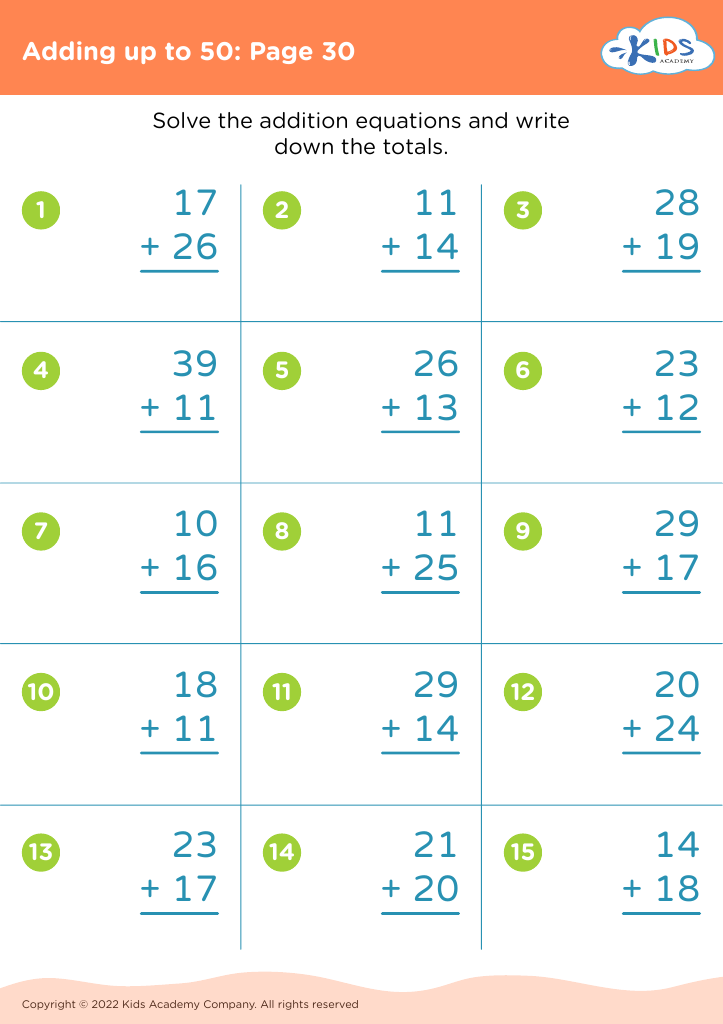
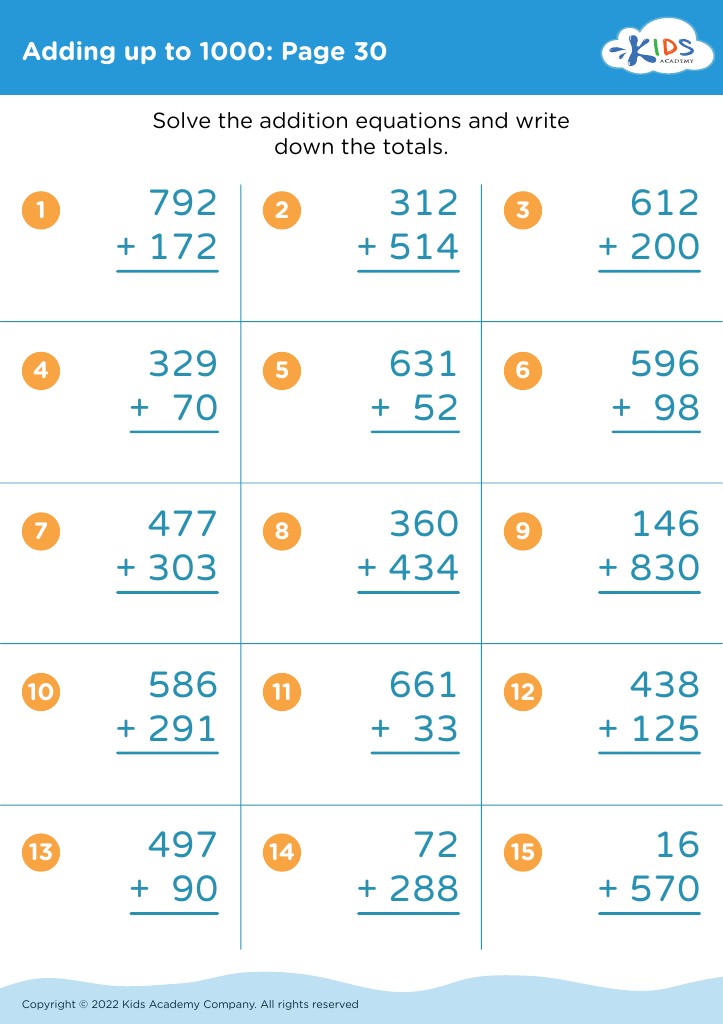
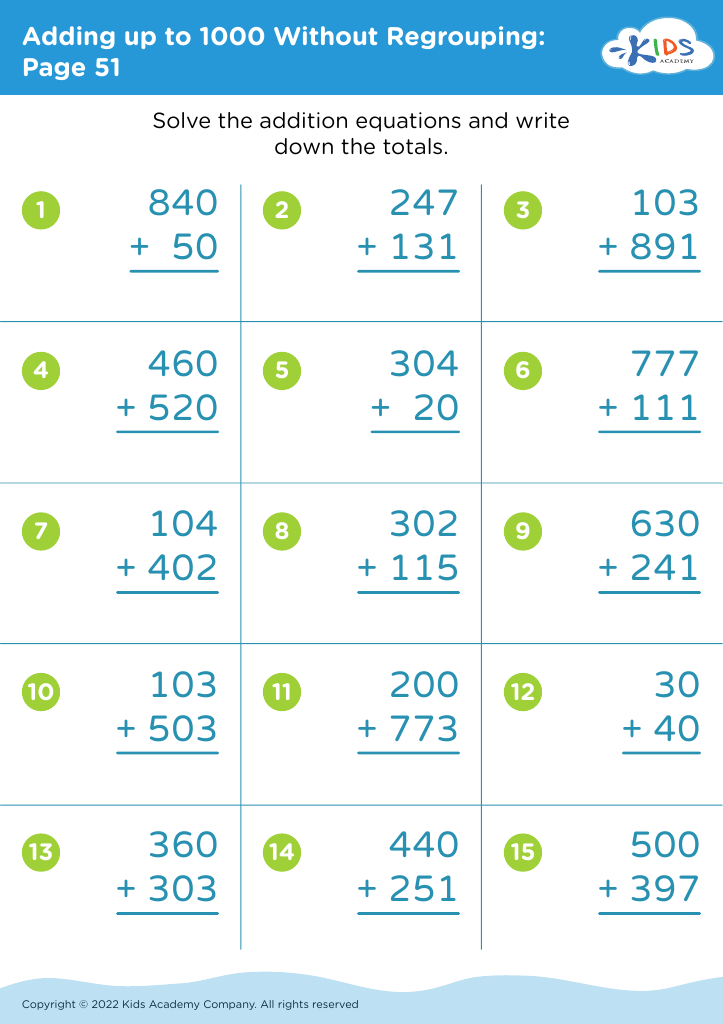








Improving subtraction skills in children aged 5-9 is vital for their overall mathematical development and future academic success. Mastering subtraction lays the groundwork for a strong understanding of mathematical concepts such as addition, multiplication, and division. It fosters logical thinking, problem-solving skills, and numerical fluency, which are critical in daily life and future learning.
Teachers and parents should focus on early subtraction skills as they begin to build a child’s confidence in mathematics. Struggling with subtraction can lead to negative attitudes toward math that may persist into higher grades, hampering their ability to engage with more complex concepts later. Engaging children with interactive games and hands-on activities can make learning enjoyable and effective, reinforcing their skills in a positive environment.
Additionally, subtraction is not just an academic skill; it has practical applications in daily life, such as budgeting, time management, and even cooking. When children understand subtraction, they can better navigate everyday tasks, fostering independence and critical thinking. Ultimately, a strong foundation in subtraction will benefit young learners, helping them develop a love for math and equipping them with necessary life skills.








