Observation skills Addition Worksheets for Ages 5-9
3 filtered results
-
From - To
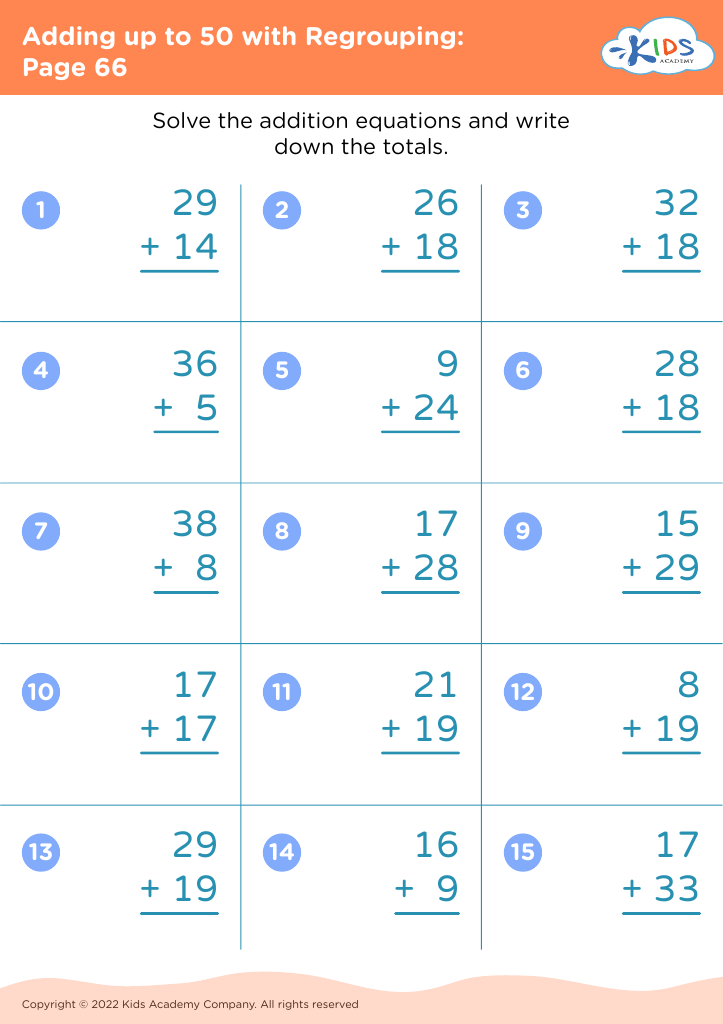
Enhance your child's math journey with our Observation Skills Addition Worksheets, specially designed for ages 5-9. These engaging worksheets not only focus on addition but also promote critical observation skills essential for mathematical success. Students will practice recognizing patterns, comparing numbers, and drawing conclusions through fun, interactive activities. Ideal for both classroom and home learning, these worksheets encourage kids to think critically and develop a strong foundation in mathematics. Watch as your child gains confidence in their abilities while honing their observational skills! Explore our collection today to make learning math a fun, effective experience!
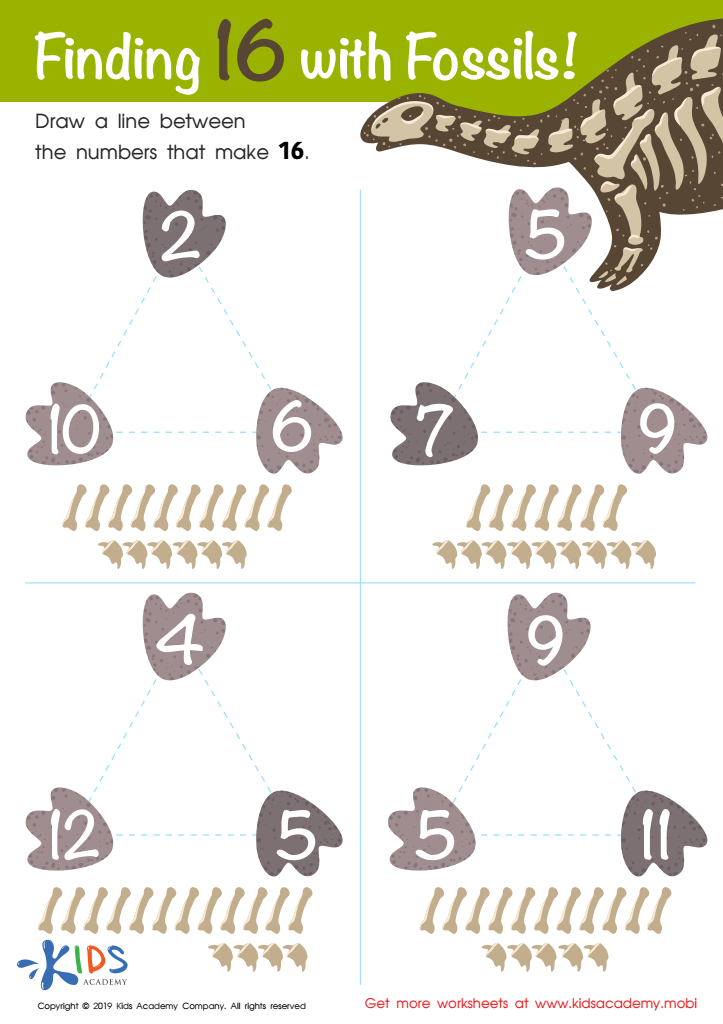
Finding 16 With Fossils Worksheet
 Assign to My Students








Observation skills are paramount for children's cognitive and social development, particularly for those aged 5-9. During this critical period, young learners are honing their ability to perceive and interpret their surroundings. Parents and teachers should prioritize observation skills as they directly impact academic success and emotional intelligence.
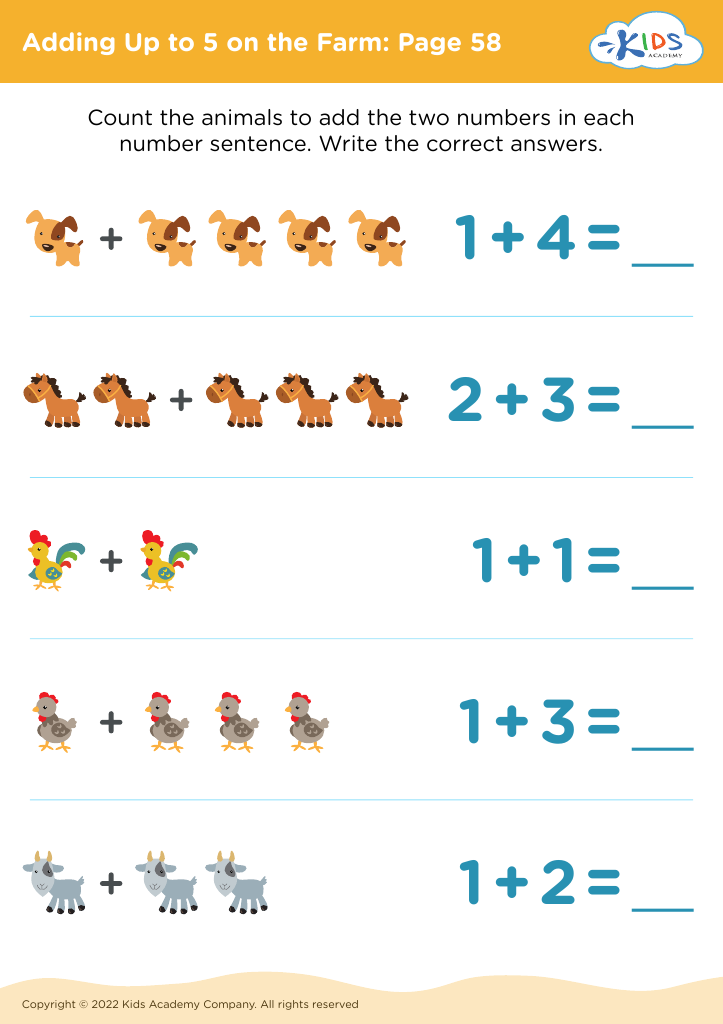
Firstly, strong observation skills enhance a child's understanding of mathematical concepts like addition. By encouraging children to observe and engage with real-life scenarios—like counting apples or sorting toys—they can translate these observations into mathematical expressions, making addition more relatable and fun.
Secondly, observation fosters curiosity, enabling children to ask questions and seek explanations about the world around them. This inquisitive nature supports lifelong learning. Additionally, developing these skills enhances the child's ability to focus, a key component in any academic setting, and encourages empathy and social skills by helping them better read social cues and understand peer interactions.
Moreover, when parents and teachers are aware of a child's observational abilities, they can tailor learning experiences that capture interest and promote engagement. In essence, prioritizing observation skills cultivates well-rounded learners ready to embrace new challenges both academically and socially.








