Practice problem-solving Addition Worksheets for Ages 5-9
4 filtered results
-
From - To
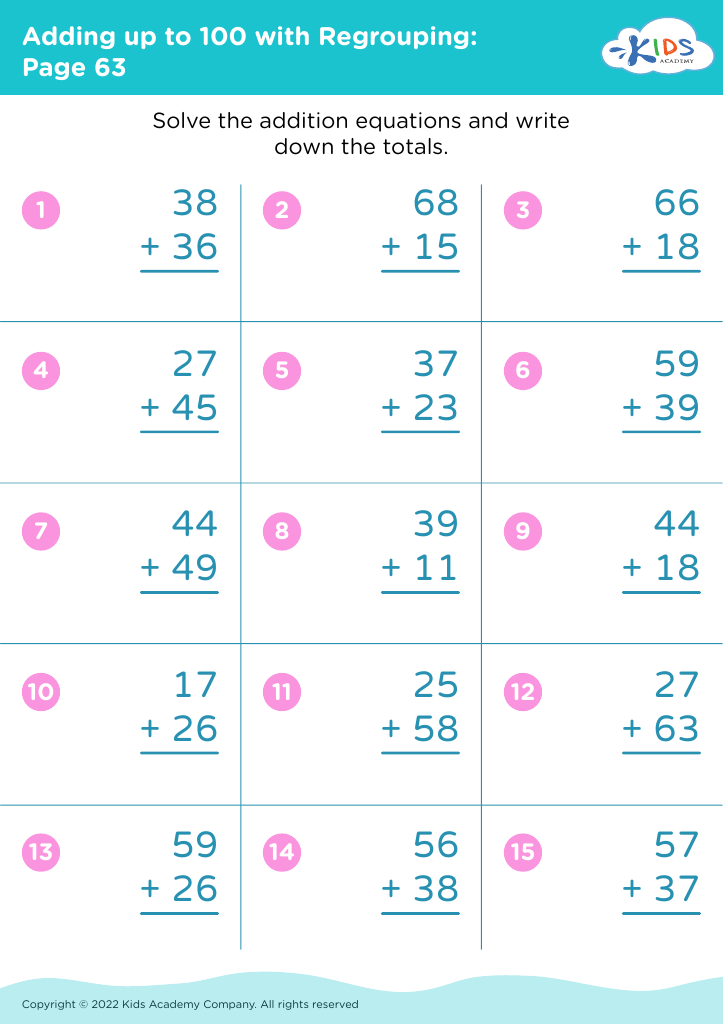
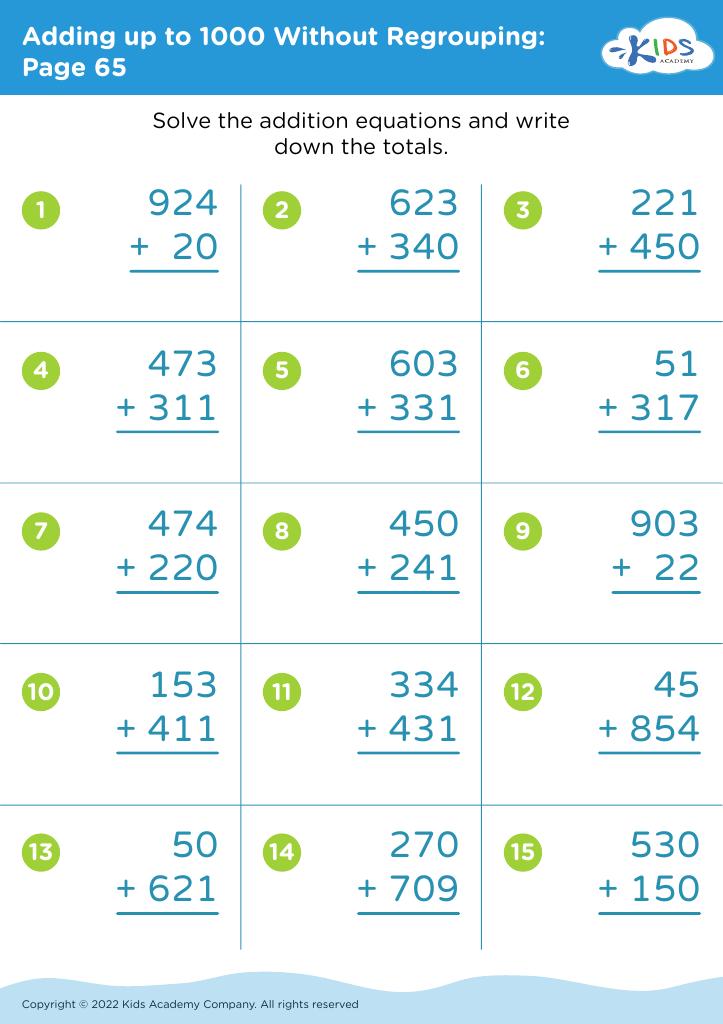
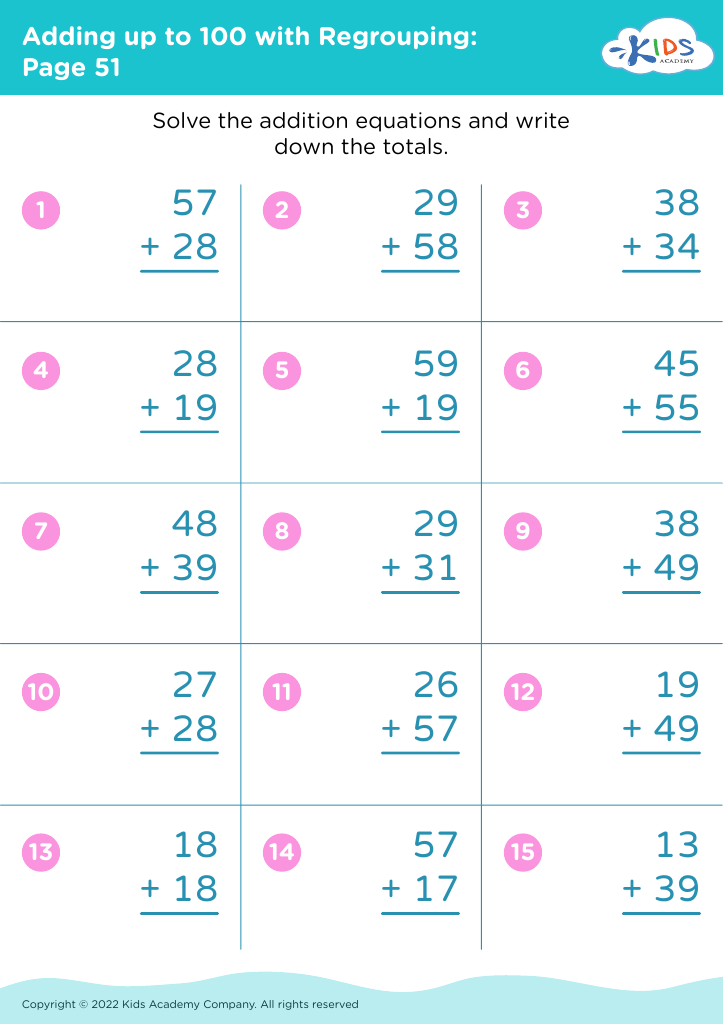
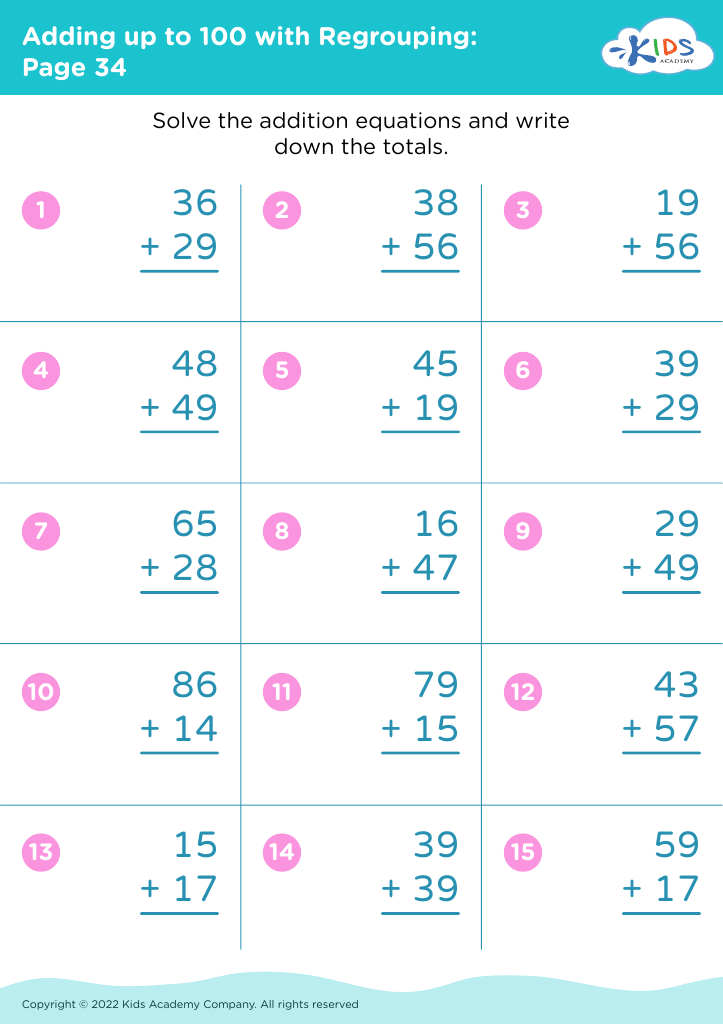
Unlock the potential of young minds with our Practice Problem-Solving Addition Worksheets, tailored for ages 5-9. These interactive, engaging worksheets help children master the foundational skill of addition through a variety of fun, problem-solving scenarios. Carefully designed to align with educational standards, our resources are perfect for both classroom and at-home learning. Boost your child's confidence and arithmetic abilities as they solve puzzles, complete challenges, and explore math concepts in a creative way. Ideal for building fluency and critical thinking, these worksheets make learning addition an enjoyable adventure. Explore our collection at Kids Academy!



.jpg)




Ensuring that children aged 5-9 practice problem-solving addition is crucial because it forms the foundation of their cognitive and mathematical development. At this age, children are not only learning to recognize and understand numbers but also developing critical thinking skills. Practicing addition helps solidify their understanding of numerical relationships and enhances mental arithmetic, which is essential for daily life activities such as handling money, telling time, and even cooking.
Moreover, engaging in addition exercises encourages a growth mindset. Children learn that perseverance and practice lead to improvement and success, fostering resilience and a positive attitude towards learning. These problem-solving skills translate beyond the realm of mathematics. By solving addition problems, children develop logical thinking, attention to detail, and spatial awareness, which are advantageous in subjects like science, reading comprehension, and even art.
From an emotional and social perspective, mastering addition gives children a sense of achievement, boosting their confidence to tackle more complex tasks in the future. It also facilitates cooperation and discussion with peers, as they often solve problems in groups, sharing strategies and solutions. Overall, emphasizing addition problem-solving at this stage equips children with essential tools for their academic journey and everyday resilience.








