Understanding division Addition Worksheets for Ages 5-9
5 filtered results
-
From - To
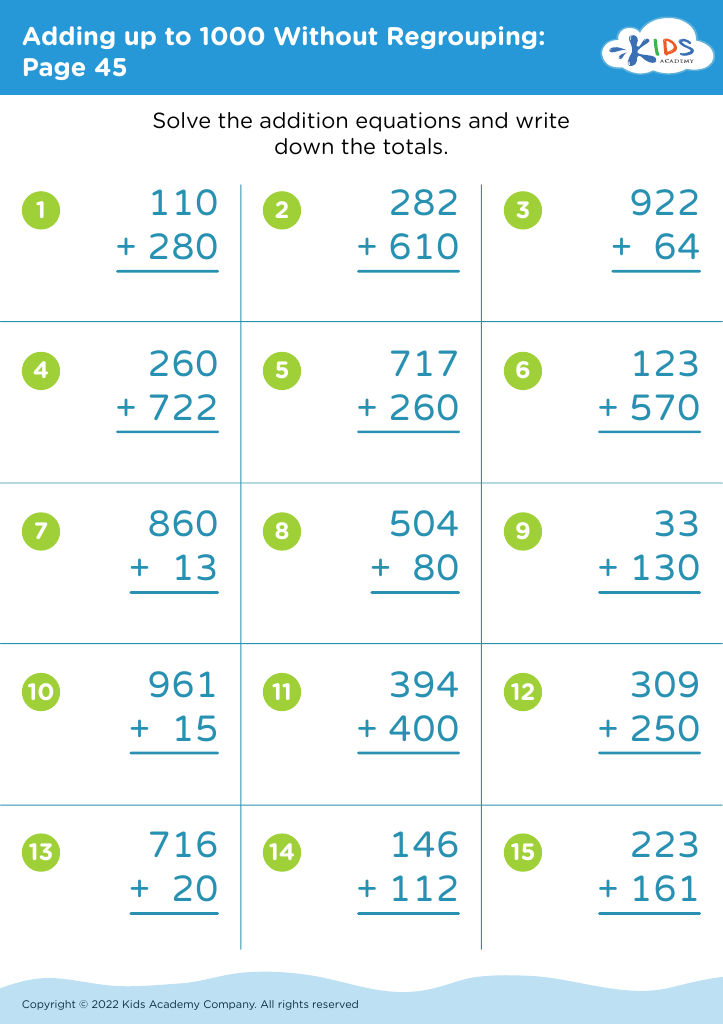
Unlock the magic of math with our "Understanding Division Addition Worksheets" tailored for children aged 5-9! These printable worksheets mix foundational division concepts with fun addition exercises, helping young learners grasp the essentials of sharing and partitioning numbers. Each page is designed to capture kids' attention with engaging activities that blend educational rigor and playful learning. With clear instructions and lively illustrations, our worksheets make mastering division straightforward and enjoyable. Perfect for classroom or at-home learning, these resources build confidence and ensure strong math skills for future success. Join us on the path to math excellence!
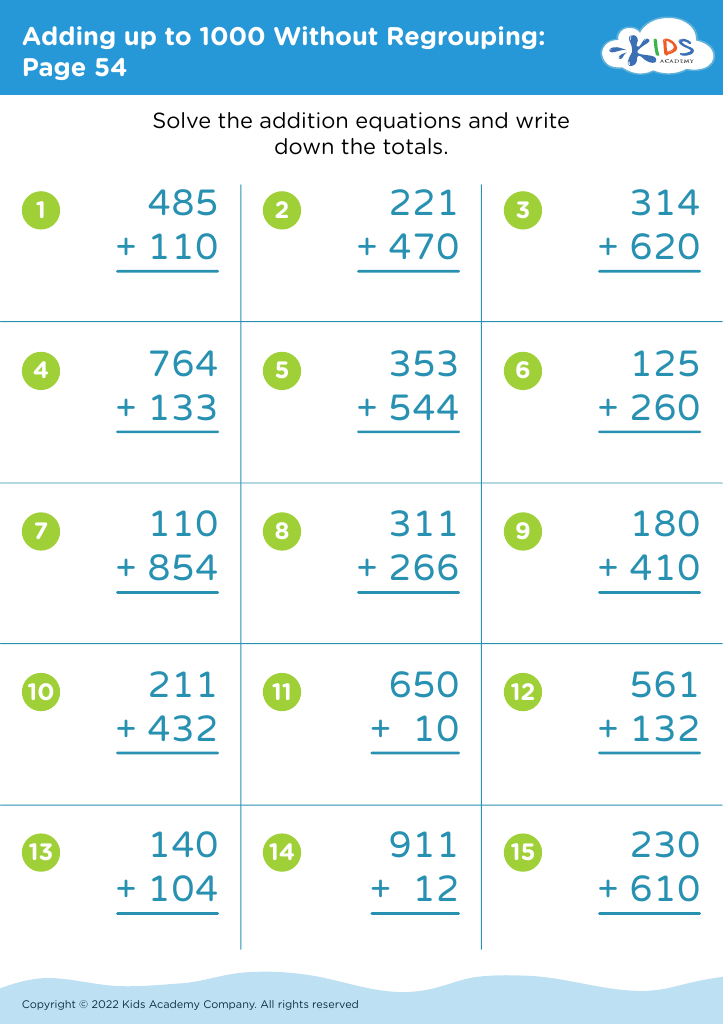
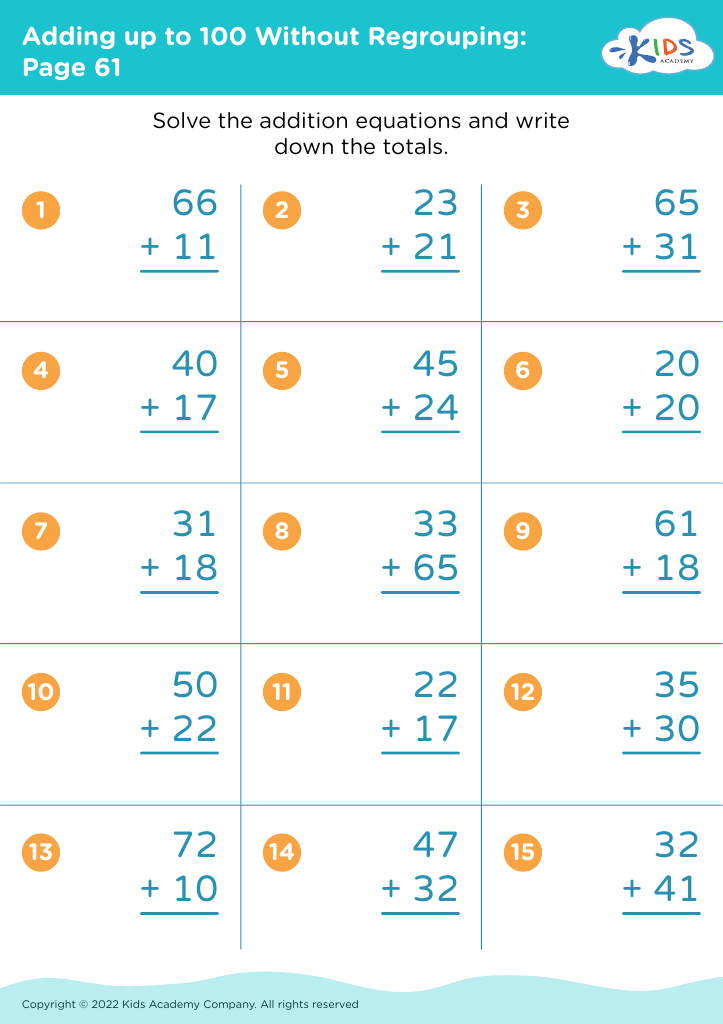
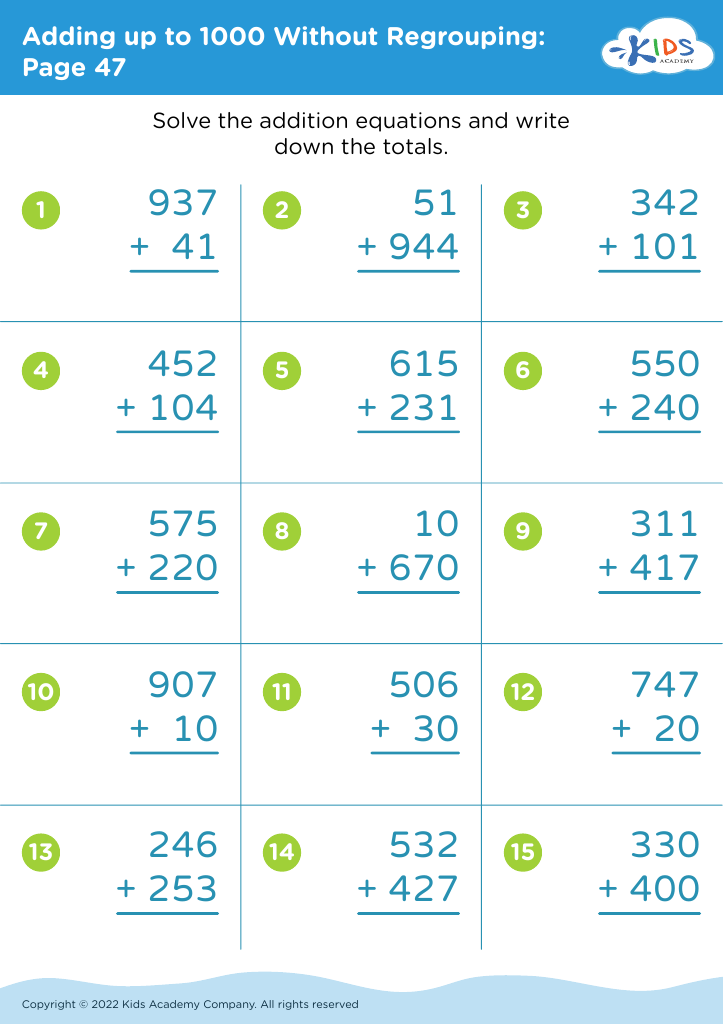
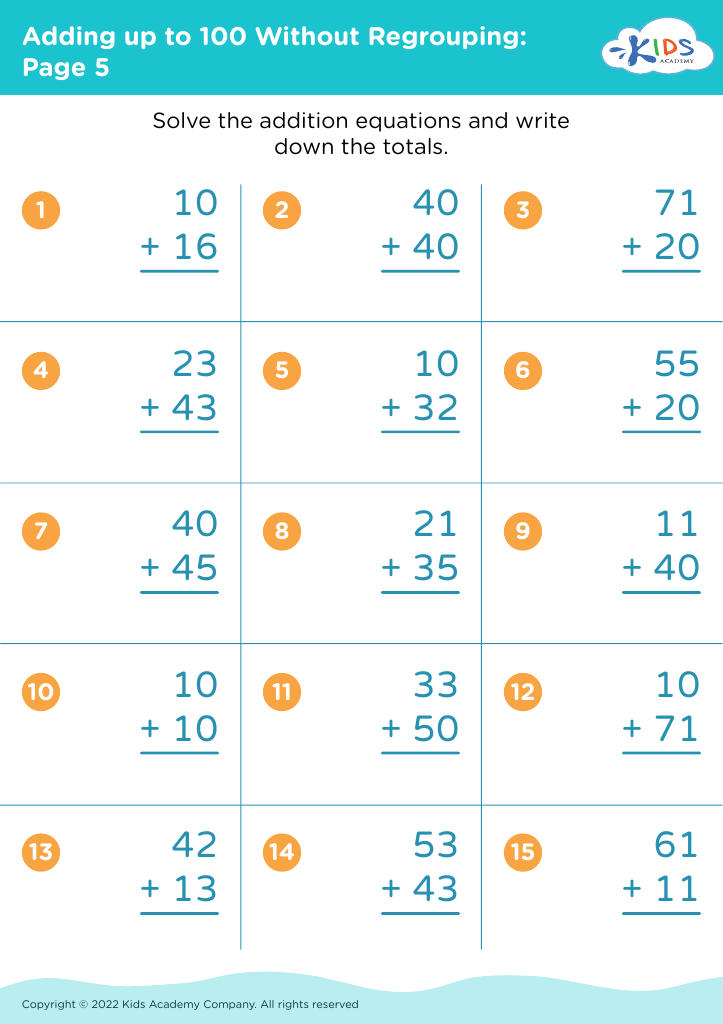







.jpg)
Understanding division and addition is crucial for children aged 5-9 as it lays the foundation for more advanced math concepts. During these formative years, children are highly receptive to new information. Here’s why parents and teachers should focus on these fundamental operations:
-
Building Blocks for Math: Division and addition form the core of arithmetic. A strong grasp of these skills enables children to approach more complex topics like multiplication, fractions, and algebra in the future with confidence.
-
Developing Problem-Solving Skills: Learning to divide and add not only helps with math problems but also enhances critical thinking and reasoning skills. Children learn how to break down problems into simpler parts and solve them systematically.
-
Real-Life Application: Beyond the classroom, these skills are essential in everyday life. Whether sharing snacks (division) or tallying scores (addition), children encounter situations where they need to apply these mathematical concepts practically.
-
Boosting Confidence and Enjoyment: When children understand fundamental math concepts, they build self-confidence. Success in these areas can spark a lifelong interest in mathematics or other STEM-related subjects.
By investing time in teaching division and addition, parents and teachers are providing children with essential tools for academic success and everyday decision-making.








