Understanding money Addition Worksheets for Ages 5-9
3 filtered results
-
From - To
Discover engaging and educational Understanding Money Addition Worksheets specially designed for children ages 5-9. These worksheets provide a playful and interactive way for young learners to master addition skills while developing essential money management concepts. Through various activities, students will practice adding different amounts of money using coins, bills, and real-life scenarios. These resources foster a deeper understanding of currency, enhance numerical fluency, and build confidence in handling financial situations. Perfect for classroom use or at-home learning, these worksheets will help your child gain valuable math skills while having fun with money! Unlock your child's potential in a dynamic and imaginative way.
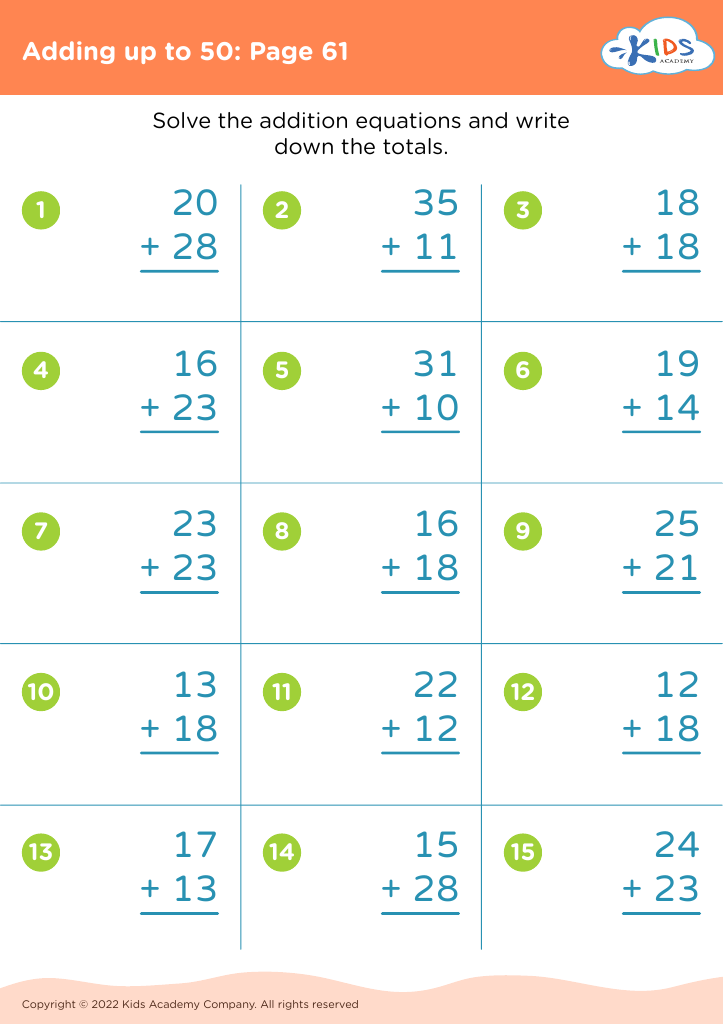
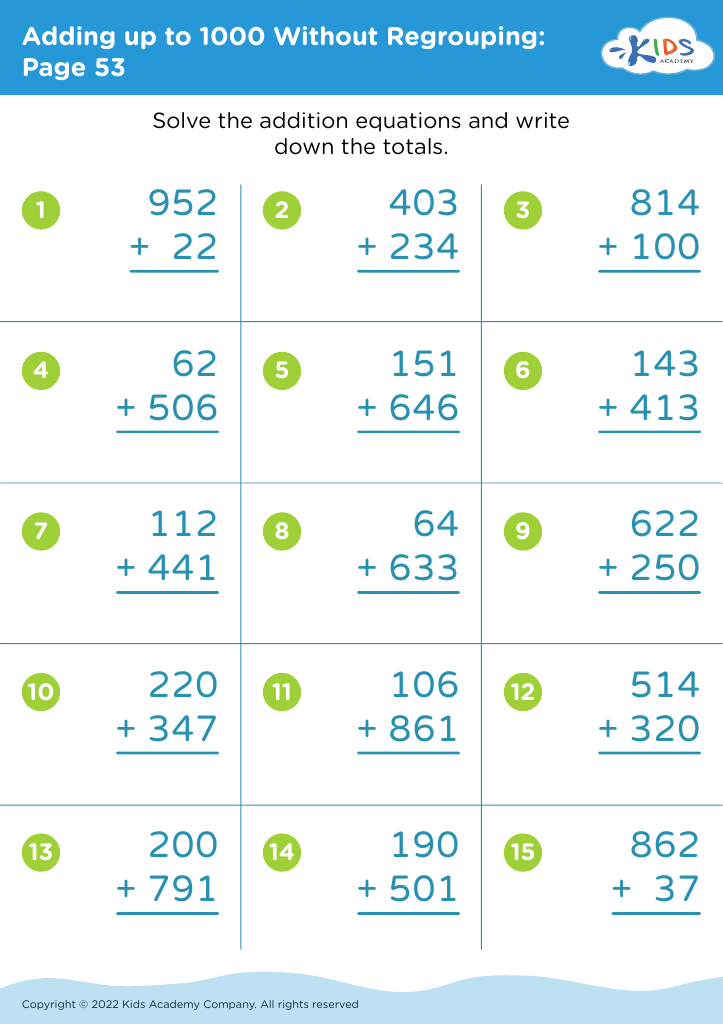
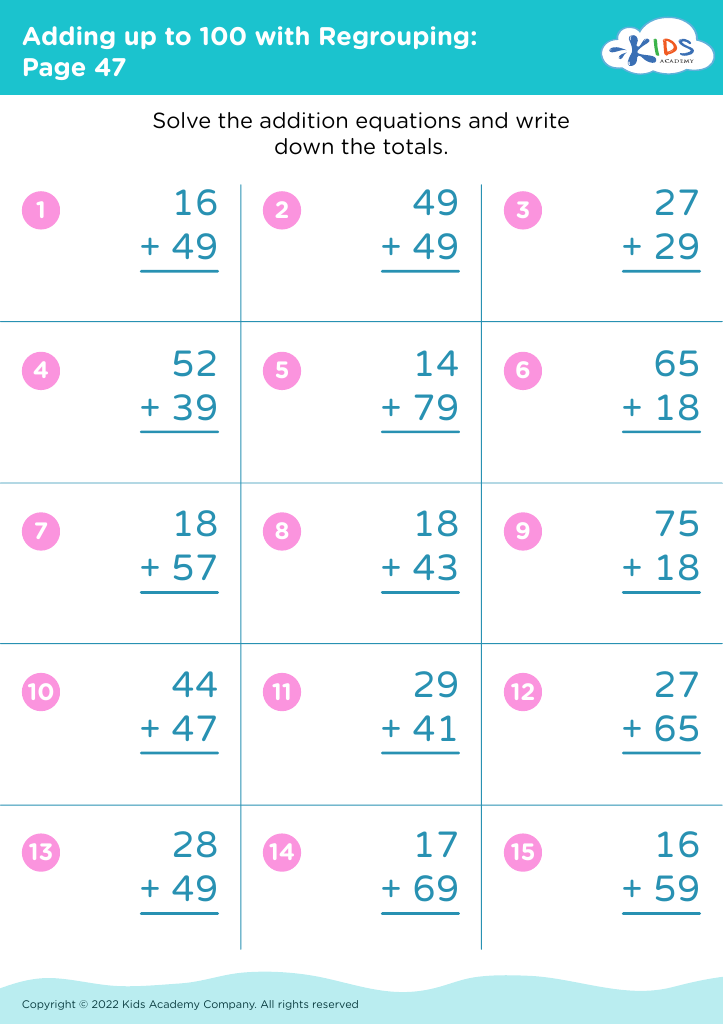








Understanding money and addition is crucial for children aged 5-9 as it lays the foundation for essential life skills. At this age, children are naturally curious and eager to explore concepts like buying, selling, and saving. By teaching them about money and addition, parents and teachers can help foster essential mathematical skills and promote financial literacy.
When children learn to add money, they grasp the practical application of math, which enhances their problem-solving abilities. For instance, when they practice addition with coins, they also develop skills in counting and recognizing different denominations. This knowledge will prepare them for real-world situations, such as shopping or saving for a desired item.
Moreover, understanding money-related concepts encourages children to make informed choices. They learn the value of earning and saving, fostering a sense of responsibility. This early exposure to financial awareness can significantly impact their attitudes toward money later in life, instilling mindfulness and goal-setting behavior.
Incorporating fun and engaging activities related to money and addition can also strengthen parent-child or teacher-student connections, making learning an enjoyable experience. Ultimately, nurturing these skills at a young age will empower children with confidence and competence in managing their finances as they grow.








