Understanding times tables Advanced Times Tables up to 12 Worksheets for Ages 5-9
3 filtered results
-
From - To
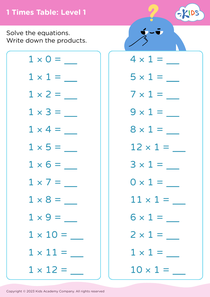
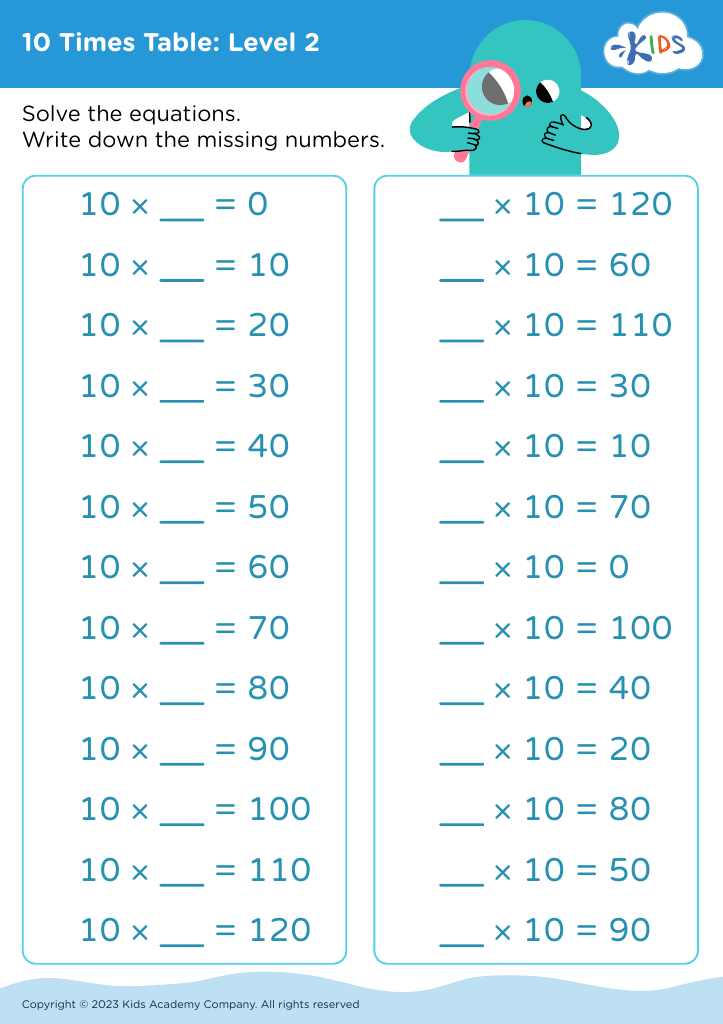
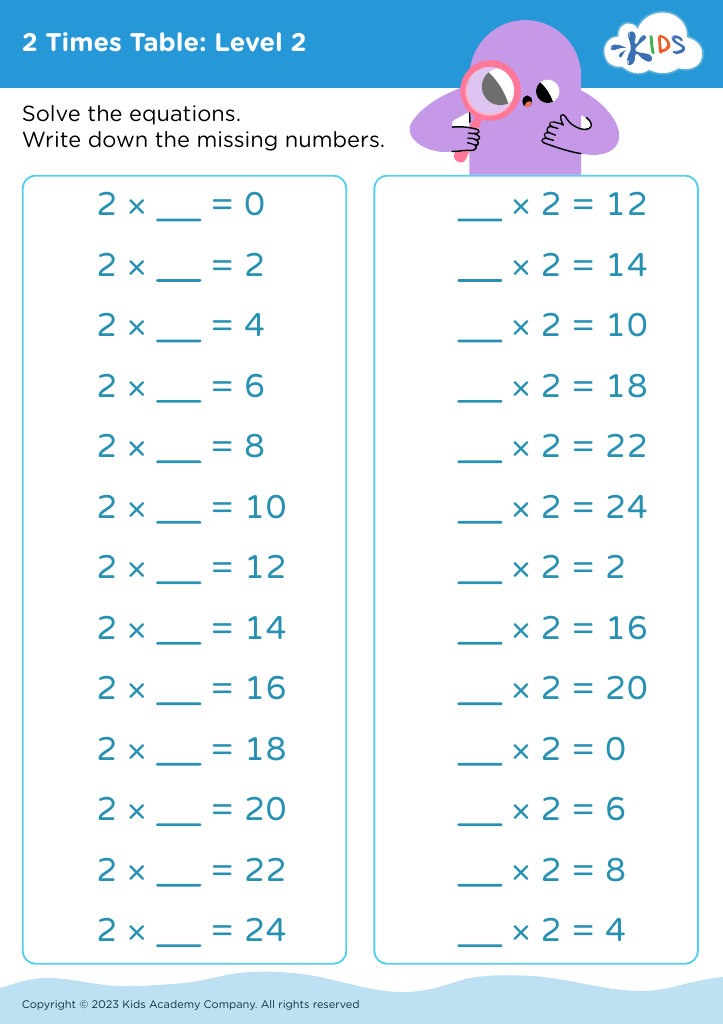
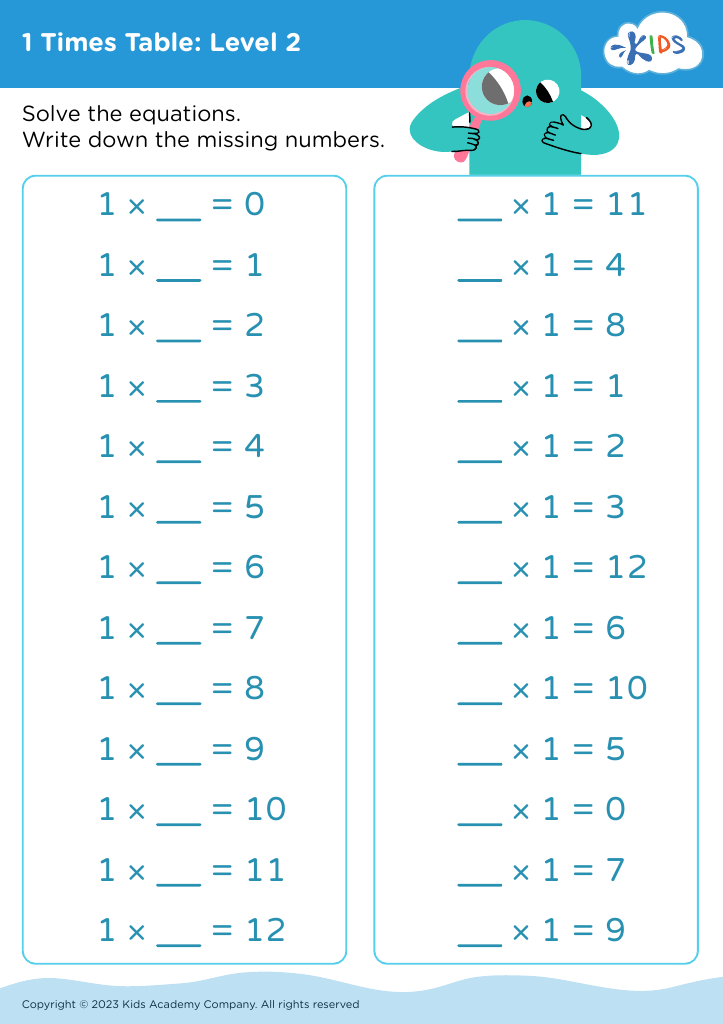
Unlock the secrets of multiplication with our "Understanding Times Tables: Advanced Times Tables up to 12" worksheets, designed specifically for children aged 5-9. These engaging and interactive resources foster a solid grasp of multiplication concepts while providing extensive practice. Each worksheet features vibrant visuals and step-by-step guidance, ensuring a fun learning experience that caters to young learners' varying skill levels. As your child navigates through tables up to 12, they’ll boost their confidence and mathematical abilities. Explore our collection today and turn times tables into a captivating adventure, laying the foundation for future math success! Perfect for home and classroom learning.



Understanding times tables, especially advanced ones up to 12, is essential for children aged 5-9 for several reasons. First, it lays a strong foundation for future mathematical concepts such as division, fractions, and algebra. When children memorize and grasp the relationships within multiplication tables, they develop number sense, enabling them to tackle complex problems with confidence.
Additionally, mastering times tables enhances children's problem-solving skills and logical thinking. These skills are not only vital for math but also apply to everyday situations, from shopping to cooking, where quick calculations are often necessary.
Moreover, proficient recall of times tables boosts children's self-esteem. When students can solve multiplication problems quickly, they feel accomplished, which fosters a positive attitude toward learning. This feeling is critical at ages 5-9 when children are forming their perceptions of their academic abilities.
Encouraging familiarity with advanced times tables also prepares children for standardized testing scenarios where quick mental math is advantageous. Therefore, both parents and teachers should invest time in helping children master these skills, ensuring they are well-equipped for future academic success and everyday challenges.