Basic Math knowledge Math Worksheets for Ages 5-9
3 filtered results
-
From - To
Discover our engaging Basic Math Knowledge Worksheets designed for children aged 5-9 at Kids Academy. These printable resources are perfect for building foundational math skills such as addition, subtraction, counting, and number recognition in a fun and interactive way. Our expertly crafted activities help boost your child's confidence and proficiency in mathematics while making learning enjoyable. Ideal for both classroom and at-home practice, these worksheets cater to various skill levels, ensuring comprehensive coverage of essential math concepts. Start your child's educational journey with our Basic Math Knowledge Worksheets and watch them succeed!
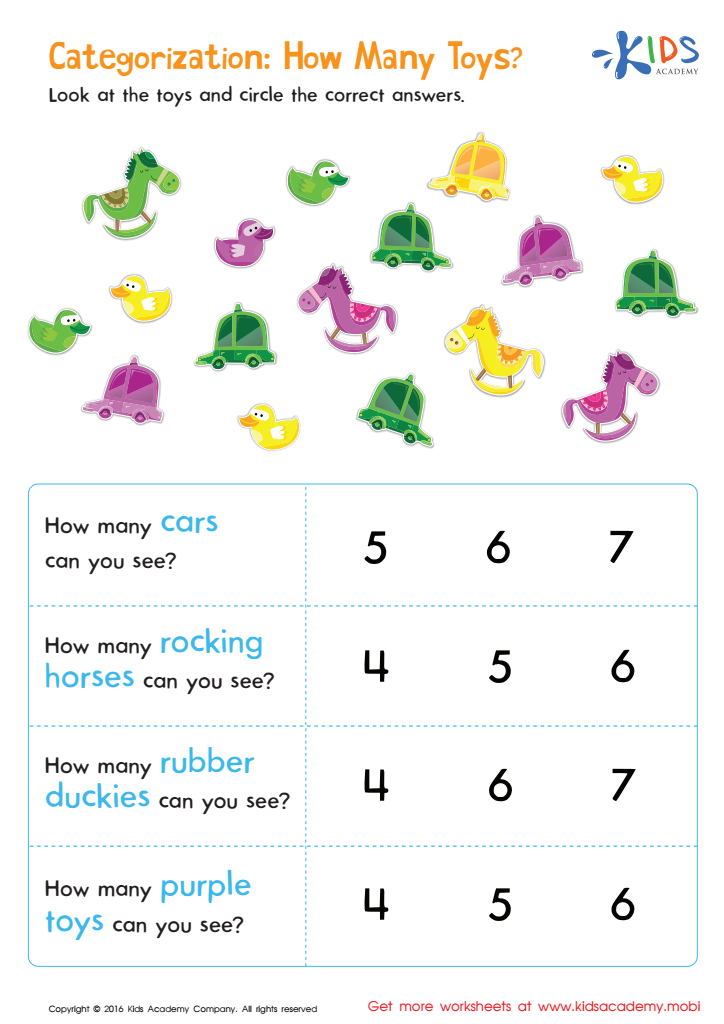
Classifying Toys by Type and Color Sorting Worksheet
 Assign to My Students
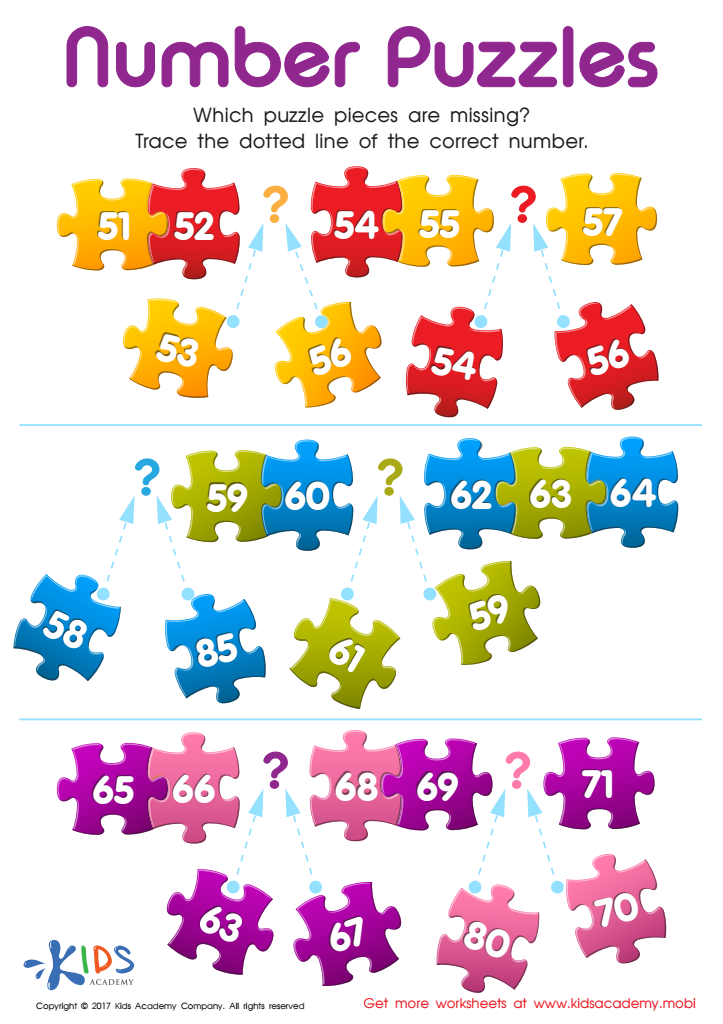
Number Puzzles Worksheet








Basic math knowledge for children ages 5-9 is vital for several reasons. Firstly, it lays a foundational framework for future academic success. Students who grasp basic math concepts like counting, addition, and subtraction can more easily tackle advanced problems in later grades. Without a strong foundation, children may struggle with math progressively, affecting their confidence and overall academic performance.
Furthermore, early math skills are crucial for cognitive development. Learning to solve math problems enhances critical thinking, problem-solving, and logical reasoning abilities. These cognitive benefits extend beyond math, contributing to overall intellectual growth and aiding in subjects like science and reading, where pattern recognition and analytical thinking are valuable.
Socially, early math proficiency can boost self-esteem and collaboration. Children who are comfortable with basic math are more likely to participate in class activities and group projects, fostering a positive learning environment.
Lastly, math skills are essential for real-world scenarios. Whether it's sorting toys, understanding the concept of time, or handling money, basic math is an everyday necessity. By ensuring children develop strong math skills early, parents and teachers equip them with the tools needed for day-to-day problem-solving and long-term academic achievements.








