
Object identification Math Worksheets for Ages 5-9
4 filtered results
Difficulty Level
Grade
Age
-
From - To
Subject
Activity
Standards
Discover our engaging Object Identification Math Worksheets designed for children ages 5-9. These activities help young learners enhance their math skills by recognizing and identifying various objects, shapes, and patterns. Our worksheets are perfect for developing critical thinking and problem-solving abilities, while fostering a love for learning. With colorful images and fun exercises, kids can easily stay motivated and build confidence in their mathematical comprehension. Ideal for both classroom and home use, our worksheets make learning math enjoyable and effective. Explore our collection today to support your child’s educational journey in a stimulating and interactive way.
Favorites
With answer key
Interactive
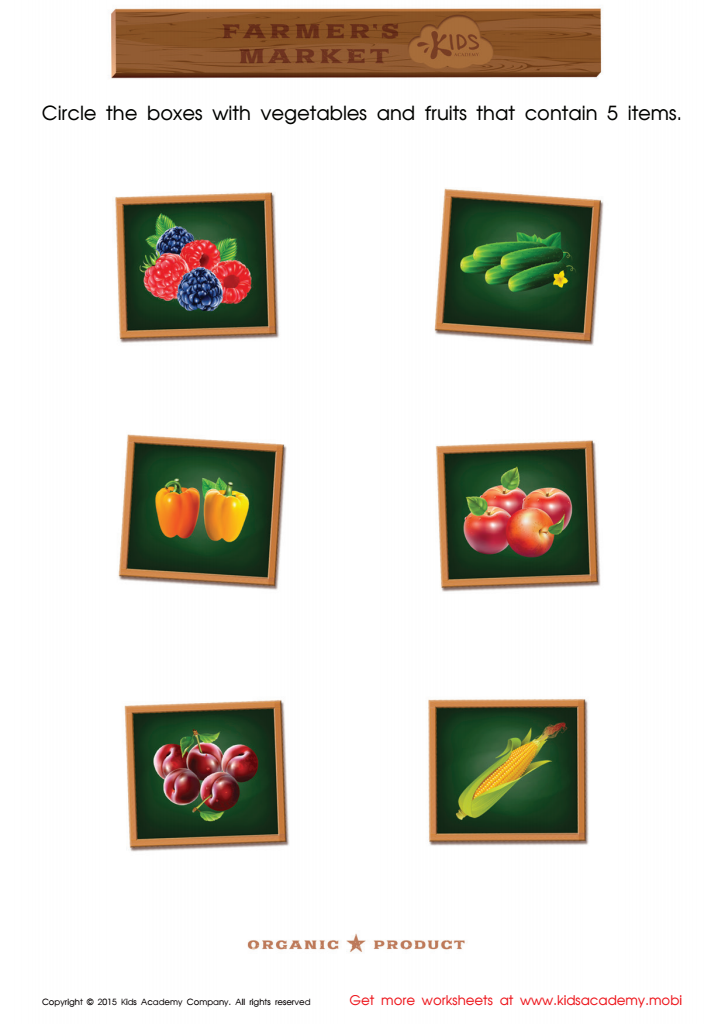
Count and Match Vegetables 1 – 7 Math Worksheet
Print this bright math worksheet from Kids Academy and give your child a fun way to enhance their counting skills. Based on Singapore Math, the colourful pictures make it easy for children to comprehend math. Get additional free worksheets here!
 Assign to My Students
Count and Match Vegetables 1 – 7 Math Worksheet
Worksheet
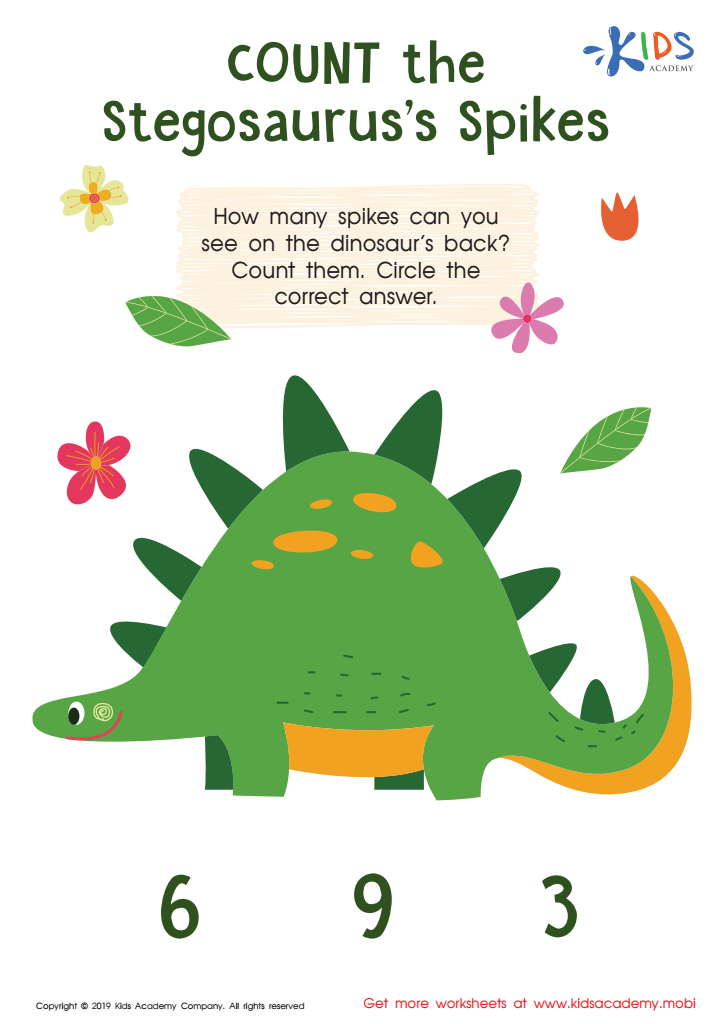
Count the Stegosaurus's Spikes Worksheet
Dinosaurs walked the earth long before humans, meaning no contact was made before they became extinct. Scientists have used research and diggings to find out about these animals, even giving them names. In this worksheet, help your students count the spikes on the stegosaurus and circle the correct answer.
Count the Stegosaurus's Spikes Worksheet
Worksheet
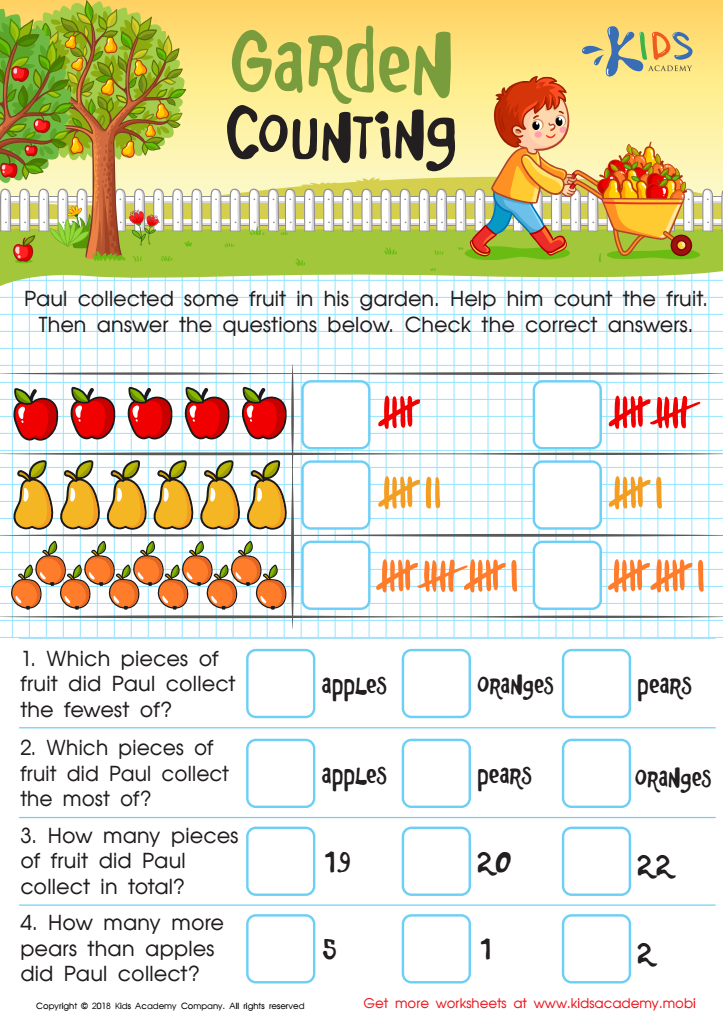
Garden Counting Worksheet
Help Paul count his fruit! Look at each type and count the total; check the box with the right number. Answer the questions below to report your findings and the types of fruit. Let's help Paul count his delicious harvest!
Garden Counting Worksheet
Worksheet
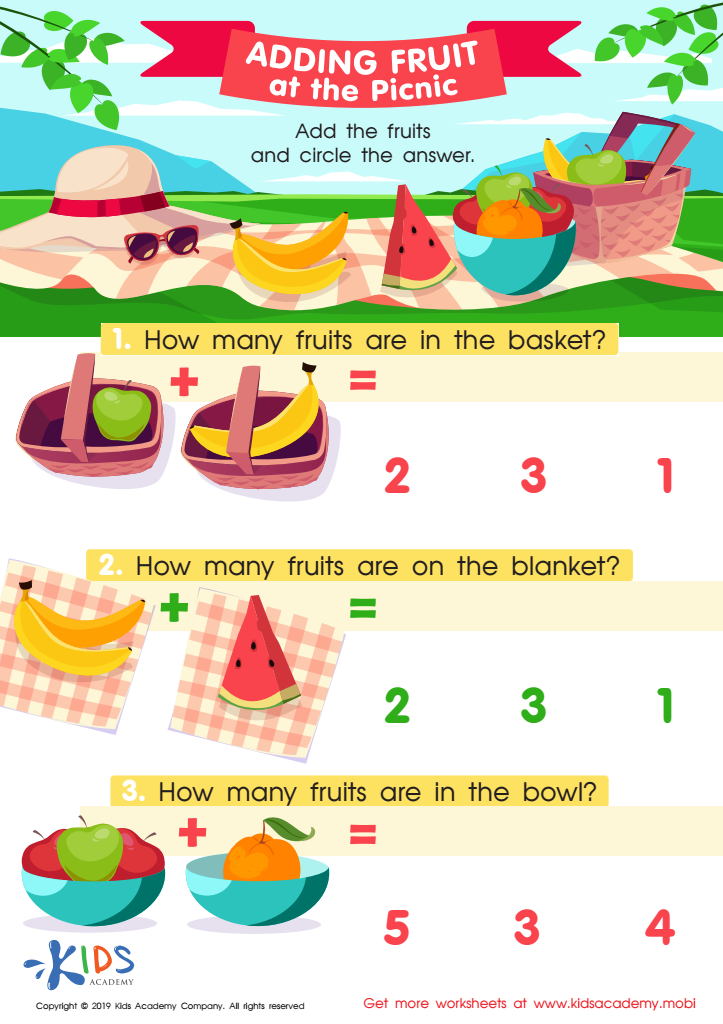
Adding Fruit at the Picnic Worksheet
Picnics are a great way for the family to enjoy a fun day in the sun! Get your kids involved by having them help load the picnic basket and do this worksheet to practice their math skills while they get ready. Identify the fruits in the picture, add them up, and circle the correct answer.
Adding Fruit at the Picnic Worksheet
Worksheet
Join Kids Academy for Free
Who is primarily going to use this learning content?







Understanding object identification in math is crucial for children aged 5-9 because it serves as the foundation for many essential mathematical concepts they will encounter later. For young learners, recognizing and identifying objects helps them develop spatial awareness, which is integral for geometry and comprehending patterns. These skills also aid in problem-solving and logical reasoning abilities as children learn to categorize, compare, and sequence objects based on attributes like shape, size, and color.
By mastering object identification, children can improve their visual discrimination skills, allowing them to observe subtle differences and commonalities between items. This ability is fundamental in early math as students begin to understand numbers, counting, and grouping, which are vital for operations such as addition, subtraction, and basic multiplication.
Moreover, integrating math with a child’s natural curiosity about the world around them can foster a love for learning. As they sort and identify objects, they aren’t just learning math—they’re also enhancing their language skills through the description of objects and interactions, which contributes to their overall cognitive development.
Parents and teachers can support these processes by creating engaging, hands-on learning experiences that encourage active exploration and participation, making math a meaningful and enjoyable part of everyday life for kids.








